Fact-checked by the CapitalLendingNews editorial team
Quick Answer
Buy now pay later (BNPL) is a short-term financing option that splits a purchase into installments — typically 4 equal payments over 6 weeks — often with zero interest. As of July 2025, over 360 million people use BNPL globally, and the U.S. market alone processed more than $75 billion in transactions in 2024.
Buy now pay later is a point-of-sale financing product that lets consumers receive goods immediately and pay in structured installments, usually without interest if payments are made on time. According to the Consumer Financial Protection Bureau’s research on BNPL, the five largest U.S. providers originated 180 million loans in a single year, a figure that has grown substantially since.
Understanding how BNPL works matters now more than ever, as regulators tighten oversight and lenders expand into groceries, healthcare, and rent. This guide explains the mechanics, costs, credit implications, and key risks so you can decide whether BNPL is the right tool for your situation.
Key Takeaways
- BNPL loans typically split purchases into 4 interest-free payments every two weeks, but late fees average $7 per missed payment (source: CFPB BNPL Report).
- The global BNPL market was valued at $30.38 billion in 2023 and is projected to reach $167.58 billion by 2032, according to Fortune Business Insights market research.
- Approximately 45% of U.S. adults have used a buy now pay later service at least once, per Pew Research Center’s 2023 consumer survey.
- The CFPB ruled in 2024 that BNPL lenders must provide the same consumer protections as credit card issuers, including dispute rights and refund obligations, per the CFPB’s 2024 interpretive rule.
- Longer-term BNPL installment loans can carry APRs between 10% and 36%, rivaling personal loan rates, as noted by NerdWallet’s BNPL analysis.
In This Guide
- How Does Buy Now Pay Later Actually Work?
- Who Are the Major Buy Now Pay Later Providers?
- Does Buy Now Pay Later Affect Your Credit Score?
- What Does Buy Now Pay Later Actually Cost You?
- How Does Buy Now Pay Later Compare to a Credit Card?
- How Is Buy Now Pay Later Regulated?
- What Are the Real Pros and Cons of Buy Now Pay Later?
How Does Buy Now Pay Later Actually Work?
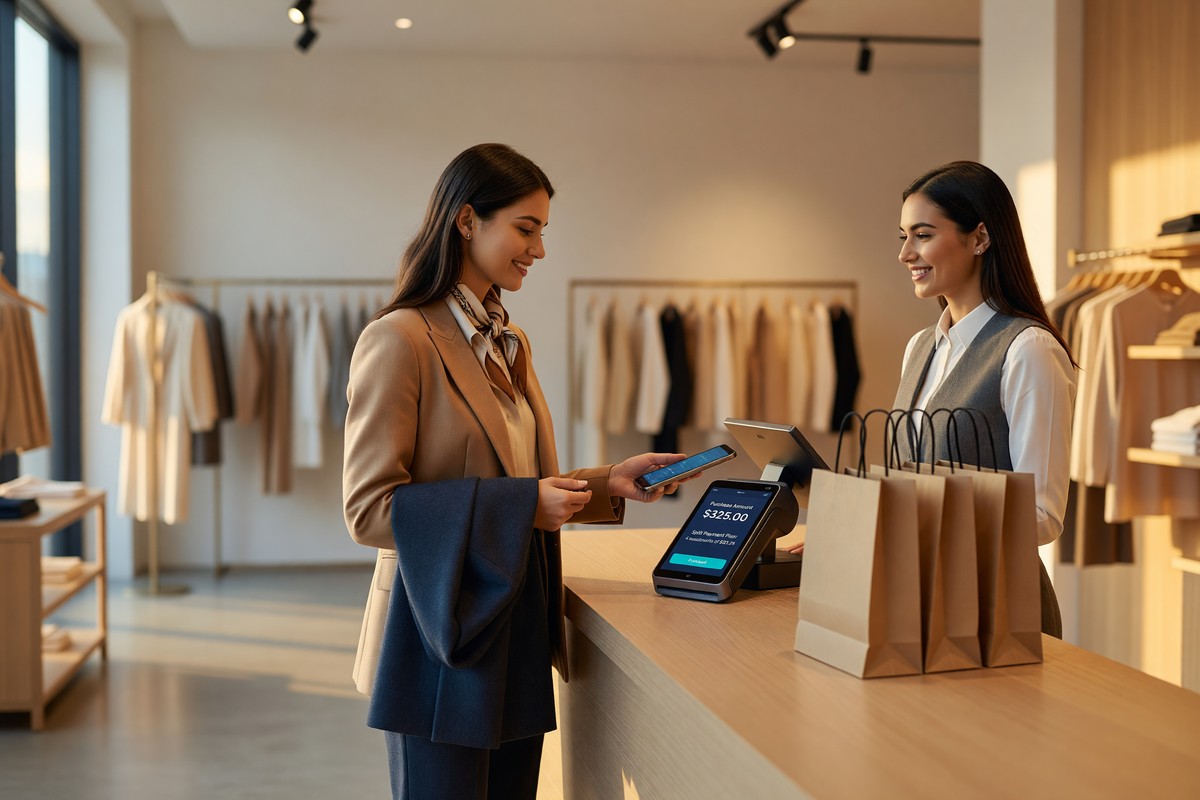
BNPL works by splitting a retail purchase into a set number of fixed payments, with the BNPL provider paying the merchant upfront and collecting repayment directly from the consumer. The most common structure is the “Pay in 4” model — four equal payments charged every two weeks, with the first payment due at checkout.
When you select a BNPL option at checkout, the provider performs a quick eligibility check — often a soft credit inquiry that does not affect your credit score. Approval decisions happen in seconds, and spending limits typically range from $50 to $17,500 depending on the provider and your history with them.
The Two Core BNPL Structures
There are two primary product types. The first is short-term, interest-free installments (e.g., Pay in 4), which charge no interest if all payments are made on time. The second is longer-term installment loans, which range from 3 to 60 months and carry an APR disclosed at origination.
Longer-term BNPL plans function more like personal loans. Providers such as Affirm offer plans explicitly stating an APR — which can be 0% for promotional offers or up to 36% for standard financing. Always read the loan agreement to identify which structure applies to your purchase.
The merchant, not the consumer, typically pays the BNPL provider a transaction fee of 2% to 8% of the purchase price — similar to a credit card interchange fee. This is how providers like Klarna and Afterpay generate revenue even when consumers pay zero interest.
Who Are the Major Buy Now Pay Later Providers?
The U.S. BNPL market is dominated by five key companies: Affirm, Afterpay (owned by Block, Inc.), Klarna, PayPal Pay Later, and Zip. Each has distinct terms, merchant networks, and credit reporting practices.
According to the CFPB’s BNPL market report, these five providers collectively originated 180 million loans totaling $24.2 billion in a single calendar year. That volume has since grown significantly as BNPL integrations expanded to major retailers including Amazon, Walmart, and Target.
Provider Feature Comparison
| Provider | Standard Plan | Interest Range (APR) | Late Fee | Credit Check Type |
|---|---|---|---|---|
| Affirm | Pay in 4 or monthly | 0% – 36% | $0 | Soft (some hard for long-term) |
| Afterpay | Pay in 4 (6 weeks) | 0% | Up to $8 | Soft only |
| Klarna | Pay in 4 or 30 days | 0% – 29.99% | Up to $7 | Soft only |
| PayPal Pay Later | Pay in 4 or monthly | 0% – 29.99% | $0 | Soft only |
| Zip | Pay in 4 (8 weeks) | 0% | Up to $7 | Soft only |
Does Buy Now Pay Later Affect Your Credit Score?
Whether BNPL affects your credit score depends on the provider and the type of plan — most Pay-in-4 products use only a soft inquiry at approval and do not report on-time payments to the three major credit bureaus. However, missed payments and collections can appear on your credit report and damage your score.
The three major credit bureaus — Equifax, Experian, and TransUnion — are actively developing standards for reporting BNPL data. Experian launched a dedicated BNPL bureau called Experian Go for some providers, while TransUnion has stated that BNPL tradelines will be incorporated into mainstream credit files over time, according to Experian’s consumer guidance on BNPL and credit.
When BNPL Does Hurt Your Credit
A BNPL debt sent to a collections agency will appear on your credit report as a negative item and can lower your FICO Score or VantageScore significantly. Longer-term BNPL loans from providers like Affirm may involve a hard credit inquiry, which temporarily reduces your score by a few points.
The CFPB has flagged “loan stacking” — taking multiple BNPL loans simultaneously — as a serious risk. Because most providers do not yet share data with each other or the bureaus, lenders cannot see your full BNPL debt load, making it easy to borrow more than you can repay.
“Buy now, pay later products can offer genuine convenience and value, but because most lenders don’t see these loans when evaluating creditworthiness, consumers can find themselves overextended without any traditional warning signal.”
What Does Buy Now Pay Later Actually Cost You?
For a standard Pay-in-4 plan paid on time, the total cost is zero — no interest, no fees. The real costs emerge from late fees, deferred interest traps, and high-APR long-term plans that consumers sometimes overlook at the point of sale.
Late fees vary by provider but are capped in most plans. Afterpay charges up to $8 per late payment, while Klarna and Zip charge up to $7. These fees may seem small, but they accumulate quickly if you miss multiple payments across multiple active BNPL loans — a pattern the CFPB found among heavy BNPL users.
Deferred Interest: The Hidden Trap
Deferred interest is different from standard interest. With deferred interest plans — common in retail store BNPL products — if you do not pay the full balance by the promotional period’s end, you are charged interest on the original purchase amount retroactively. This is not the same as Affirm or Klarna’s transparent APR model.
The Federal Trade Commission warns consumers about deferred interest on store financing products, noting that even one missed payment can trigger backdated charges that erase all prior savings from the promotional rate.
The CFPB found that 10.5% of BNPL borrowers were charged at least one late fee in a single year, and heavy users — those taking 10 or more BNPL loans annually — paid fees at significantly higher rates than occasional users.
How Does Buy Now Pay Later Compare to a Credit Card?
Buy now pay later and credit cards both provide short-term financing, but they differ significantly in cost structure, consumer protections, and credit-building potential. For a single planned purchase paid on time, BNPL is often cheaper than revolving credit card debt.
The average credit card interest rate reached 21.59% APR in 2024, according to Federal Reserve G.19 consumer credit data. A 0% BNPL plan is clearly cheaper if you pay on schedule. However, credit cards carry federally mandated protections under Regulation Z and the Truth in Lending Act — protections that BNPL historically lacked until recent regulatory action.
Key Differences in Consumer Protections
Credit cards issued under the Fair Credit Billing Act allow chargebacks for disputed purchases or undelivered goods. Prior to the CFPB’s 2024 interpretive rule, most BNPL providers had no equivalent legal obligation. The 2024 rule now requires BNPL lenders to investigate disputes and pause payment collection during investigations.
Credit cards also build credit history reported to all three bureaus with every billing cycle. BNPL’s inconsistent reporting means you may pay on time for years without gaining any credit benefit — a significant opportunity cost for consumers building or repairing their FICO Score.

Use BNPL’s Pay-in-4 only for purchases you have already budgeted for — not as a reason to spend more. Set automatic payments from your checking account on the BNPL provider’s app to avoid late fees. Never carry more than two active BNPL loans simultaneously to prevent loan stacking and cash-flow shortfalls.
How Is Buy Now Pay Later Regulated?
BNPL is now subject to federal consumer protection laws in the United States following the CFPB’s landmark 2024 interpretive rule, which classified BNPL lenders as credit card issuers under the Truth in Lending Act. This was the most significant regulatory development in the sector’s history.
The rule, issued in May 2024, requires BNPL providers to send periodic billing statements, offer refund rights when merchants issue credits, and investigate billing disputes — the same baseline requirements that apply to Visa and Mastercard issuers. Details are available at the CFPB’s official BNPL interpretive rule announcement.
State-Level and International Oversight
Several U.S. states have begun treating BNPL products as consumer loans requiring state lending licenses. California and Colorado have been among the most active in extending state consumer finance laws to cover BNPL providers operating within their borders.
Internationally, the Financial Conduct Authority (FCA) in the United Kingdom proposed formal BNPL regulation in 2023, requiring affordability checks before loan origination. The European Union’s updated Consumer Credit Directive, effective 2025, also explicitly covers BNPL products, mandating creditworthiness assessments and standardized disclosures, per European Commission consumer credit regulation guidance.
Before the CFPB’s 2024 ruling, BNPL providers were largely exempt from the Truth in Lending Act because their products were structured as four-payment plans — falling under an exemption designed for small installment loans. Regulatory arbitrage was a core part of the industry’s original business model.
What Are the Real Pros and Cons of Buy Now Pay Later?
BNPL’s core advantage is genuine: zero-interest short-term financing with instant approval and no impact on your credit score at the application stage. Its core risk is equally genuine: it lowers the psychological barrier to overspending and creates debt obligations that are harder to track than a single credit card statement.
A Pew Research Center survey found that 45% of U.S. adults have used buy now pay later, but that usage is disproportionately concentrated among lower-income households — those earning under $50,000 annually — raising concerns about whether BNPL relieves short-term cash-flow pressure or deepens financial fragility.
Advantages Worth Noting
- No interest on standard Pay-in-4 plans if paid on time.
- Soft credit check means no score impact at application.
- Instant approval — accessible to consumers with thin or fair credit files.
- Useful for large necessary purchases (medical, car repair) when cash is temporarily unavailable.
Risks That Require Caution
- Loan stacking across multiple providers with no shared visibility creates hidden debt loads.
- Returns and refunds can be complicated — you may still owe BNPL payments while awaiting a merchant refund.
- No universal credit-building benefit, unlike secured credit cards.
- Long-term BNPL loans with APRs up to 36% are expensive if not paid quickly.
Frequently Asked Questions
Is buy now pay later the same as a credit card?
No. Buy now pay later provides fixed installments for a single purchase, while a credit card is a revolving credit line used for multiple transactions. BNPL typically has no interest for short-term plans, but it also lacks the universal consumer protections and credit-reporting benefits that credit cards provide.
Does using BNPL hurt your credit score?
Most Pay-in-4 BNPL plans use only a soft credit inquiry and do not report to the major credit bureaus, so they neither help nor hurt your score in most cases. However, missed payments sent to collections, or hard inquiries from longer-term BNPL loans, can lower your FICO Score.
What happens if I miss a BNPL payment?
Most providers charge a late fee ranging from $7 to $8 and may pause your ability to make new purchases on the platform. Repeated missed payments can result in your debt being sent to a collections agency, which will appear on your credit report as a negative item.
Can I use BNPL for any purchase?
BNPL is available at a wide range of retailers online and in-store, but it is not universally accepted. Availability depends on whether the specific merchant has integrated a BNPL provider at checkout. Some providers offer virtual cards, such as Klarna’s virtual card, that work at any retailer accepting Visa or Mastercard.
Is buy now pay later safe to use?
BNPL is safe for consumers who use it for planned purchases they can afford to repay across the scheduled installments. The primary risk is behavioral — it makes spending feel less costly in the moment, increasing the likelihood of overspending or taking on more simultaneous loans than your budget can sustain.
How does BNPL affect my debt-to-income ratio?
Because most BNPL loans are not reported to credit bureaus, they do not appear in traditional debt-to-income calculations used by mortgage lenders or auto lenders. However, the actual cash outflow from BNPL payments still reduces your monthly disposable income, which lenders may uncover during manual bank statement reviews.
Are BNPL providers required to check my ability to repay?
In the United States, most BNPL providers are currently not required to conduct a full underwriting assessment for short-term Pay-in-4 loans. However, the CFPB’s 2024 interpretive rule and ongoing regulatory developments may expand affordability check requirements, particularly as the EU and UK already mandate them for BNPL products sold in those markets.