
Fact-checked by the CapitalLendingNews editorial team
Quick Answer
As of June 2026, mortgage rates first-time buyers typically encounter range from 6.4% to 7.1% for a 30-year fixed loan, with FHA loans averaging 6.2% — roughly 0.3 percentage points lower than conventional options for qualified borrowers with limited down payments.
As of June 2026, mortgage rates first-time buyers face remain elevated compared to the historic lows of 2020–2021, but have pulled back meaningfully from the 8% peak seen in late 2023. The national average for a 30-year fixed-rate mortgage sits at approximately 6.7%, according to Freddie Mac’s Primary Mortgage Market Survey — a figure that directly shapes what entry-level buyers can afford.
According to the Consumer Financial Protection Bureau (CFPB), first-time buyers now represent roughly 32% of all home purchase mortgage originations in 2026, down from a pre-pandemic high of 38%. Rising home prices combined with persistent borrowing costs have squeezed affordability — but targeted loan programs continue to create real opportunities for qualified applicants.
In this guide, you will find a clear breakdown of current rate ranges by loan type, a side-by-side comparison of first-time buyer programs, a step-by-step action plan for locking in your best rate, and answers to the most common questions buyers are asking right now. Every rate and data point is sourced, so you can make confident decisions.
Key Takeaways
- The average 30-year fixed mortgage rate in June 2026 is 6.74% (Freddie Mac Primary Mortgage Market Survey, June 2026), down from a cycle high of 7.79% in October 2023.
- FHA loans carry an average rate of 6.2% (Mortgage Bankers Association, 2026), making them the lowest-cost government-backed option for first-time buyers with credit scores of 580 or higher.
- A buyer purchasing a $350,000 home with a 5% down payment at 6.74% pays approximately $2,172 per month in principal and interest — compared to $1,610 at a 3% rate (Consumer Financial Protection Bureau mortgage calculator, 2026).
- The median down payment for first-time buyers fell to 8% in 2025 (National Association of Realtors, 2025 Profile of Home Buyers and Sellers), reflecting increased reliance on low-down-payment programs.
- More than 2,500 down payment assistance programs are currently active across the United States (Down Payment Resource, 2026), many of which can be stacked with FHA or conventional loans to reduce upfront costs.
- Improving your FICO Score from 660 to 740 can reduce your mortgage rate by up to 0.75 percentage points (myFICO Loan Savings Calculator, 2026), saving more than $47,000 in interest over a 30-year term on a $300,000 loan.
In This Guide
- What Are Current Mortgage Rates for First-Time Buyers in 2026?
- How Do Mortgage Rates Differ by Loan Type?
- What First-Time Buyer Programs Offer the Best Rates?
- How Does Your Credit Score Affect Your Mortgage Rate?
- How Does Your Down Payment Size Affect Your Rate?
- When Should First-Time Buyers Lock Their Mortgage Rate?
- How Do You Calculate What You Can Actually Afford?
- How Do You Shop for the Best Mortgage Rate as a First-Time Buyer?
- How Will Federal Reserve Policy Affect Mortgage Rates in 2026?
What Are Current Mortgage Rates for First-Time Buyers in 2026?
Current mortgage rates first-time buyers encounter in June 2026 average 6.74% for a 30-year fixed loan and 6.01% for a 15-year fixed loan, based on Freddie Mac’s weekly Primary Mortgage Market Survey. These figures represent a significant improvement from the October 2023 peak of 7.79% but remain well above the 3% range that defined 2020 and 2021.
Rates vary by lender, loan type, credit profile, and geographic market. A borrower in a competitive metropolitan area may receive offers that differ by as much as 0.5 to 0.75 percentage points across lenders — a gap large enough to matter enormously over a 30-year loan term.
Rate Context: Where We Are in the Cycle
The Federal Reserve held its benchmark federal funds rate steady through early 2026 before implementing two modest cuts totaling 50 basis points by mid-year, according to Federal Open Market Committee (FOMC) minutes. Mortgage rates do not move in lockstep with the Fed’s benchmark, but the trajectory has shifted from aggressive tightening to gradual easing.
Understanding how Federal Reserve policy flows through to your borrowing costs is covered in detail in our guide on what a Federal Reserve rate cut means for your debt.
The 30-year fixed mortgage rate peaked at 7.79% in October 2023 and has declined to 6.74% as of June 2026 — a drop of more than one full percentage point that translates to roughly $200 per month in savings on a $350,000 loan (Freddie Mac, 2026).
For first-time buyers, even a half-point improvement in rate has a compounding effect. On a $300,000 loan, the difference between 6.74% and 6.24% is approximately $96 per month — or more than $34,000 in total interest over 30 years.

How Do Mortgage Rates Differ by Loan Type?
Mortgage rates differ significantly by loan type, and first-time buyers have access to several government-backed programs that offer rates below the conventional market average. FHA loans, VA loans, and USDA loans each carry distinct eligibility requirements, mortgage insurance costs, and rate structures.
The table below compares current average rates across the major loan types available to first-time homebuyers in June 2026.
| Loan Type | Average Rate (June 2026) | Min. Down Payment | Min. Credit Score | Best For |
|---|---|---|---|---|
| 30-Year Fixed Conventional | 6.74% | 3% | 620 | Buyers with strong credit, avoiding PMI long-term |
| 15-Year Fixed Conventional | 6.01% | 3% | 620 | Buyers who can afford higher payments, want faster payoff |
| FHA 30-Year Fixed | 6.20% | 3.5% | 580 | Lower credit scores, limited savings |
| VA 30-Year Fixed | 5.95% | 0% | No minimum (lender sets) | Eligible veterans, active service members |
| USDA 30-Year Fixed | 6.05% | 0% | 640 | Rural and suburban buyers within income limits |
| 5/1 Adjustable-Rate (ARM) | 6.10% | 5% | 620 | Buyers planning to sell or refinance within 5 years |
Sources: Freddie Mac, Mortgage Bankers Association, U.S. Department of Veterans Affairs, USDA Rural Development — June 2026 averages. Individual rates vary by lender and borrower profile.
Conventional vs. Government-Backed Loans
Conventional loans are not insured by a federal agency and are subject to guidelines set by Fannie Mae and Freddie Mac, collectively known as government-sponsored enterprises (GSEs). Borrowers with FICO Scores above 740 and down payments of 20% or more generally receive the best conventional rates.
Government-backed loans — including FHA, VA, and USDA products — carry explicit federal guarantees that reduce lender risk, often translating into lower interest rates for borrowers who qualify. The trade-off is typically mandatory mortgage insurance premiums (MIP for FHA) or funding fees (for VA loans).
VA loans are available exclusively to eligible veterans, active-duty service members, and surviving spouses — and they require no down payment and no private mortgage insurance, making them the most affordable first purchase option for qualifying buyers (U.S. Department of Veterans Affairs, 2026).
What First-Time Buyer Programs Offer the Best Rates?
Several federal and state programs provide below-market mortgage rates first-time buyers can access directly, often combined with down payment assistance or reduced mortgage insurance costs. The most widely available include Fannie Mae’s HomeReady, Freddie Mac’s Home Possible, and HUD-approved state Housing Finance Agency (HFA) loans.
Fannie Mae HomeReady and Freddie Mac Home Possible
Both HomeReady and Home Possible allow down payments as low as 3% and offer reduced private mortgage insurance (PMI) rates compared to standard conventional loans. Borrowers must complete a homebuyer education course — typically available through HUD-approved counselors — to qualify.
HomeReady permits income from non-borrower household members to count toward qualification, expanding eligibility for multigenerational households. Home Possible allows certain sweat-equity contributions to count toward the down payment in approved cases.
“First-time buyers often overlook state Housing Finance Agency programs, which can offer rates a full half-point or more below the market average when combined with down payment assistance grants. These programs are underutilized because they require an extra application step, but the savings are substantial.”
State HFA Loan Programs
Every U.S. state operates a Housing Finance Agency that offers first-time buyer mortgage products at preferential rates. The National Council of State Housing Agencies (NCSHA) maintains a directory of all active state HFA programs, including income limits, purchase price caps, and current rate offerings.
State HFA rates in 2026 range from approximately 5.5% to 6.5% depending on the state, program type, and borrower income. Many programs also layer in grants of $5,000 to $20,000 for down payment or closing cost assistance, which do not require repayment if the buyer remains in the home for a specified period.
Use the Down Payment Resource tool to search more than 2,500 active assistance programs by ZIP code, income, and loan type. Many programs can be stacked — combining a state HFA loan with a local government grant can reduce your out-of-pocket costs by tens of thousands of dollars.
How Does Your Credit Score Affect Your Mortgage Rate?
Your FICO Score is the single most influential factor lenders use to set your mortgage rate. A borrower with a score above 760 will typically receive a rate 0.75 to 1.25 percentage points lower than a borrower with a score of 620, according to data from the myFICO Loan Savings Calculator.
| FICO Score Range | Estimated 30-Yr Rate (June 2026) | Monthly Payment ($300K Loan) | Total Interest Paid (30 Years) |
|---|---|---|---|
| 760–850 | 6.30% | $1,860 | $369,600 |
| 700–759 | 6.52% | $1,901 | $384,360 |
| 680–699 | 6.74% | $1,942 | $399,120 |
| 660–679 | 7.06% | $2,002 | $420,720 |
| 640–659 | 7.43% | $2,072 | $446,000 (est.) |
| 620–639 | 7.73% | $2,128 | $465,680 (est.) |
Estimates based on myFICO Loan Savings Calculator and Freddie Mac rate data, June 2026. Actual rates vary by lender.
How to Improve Your Credit Score Before Applying
Three credit reporting agencies — Equifax, Experian, and TransUnion — each maintain independent files on your credit history. Lenders use a merged credit report and typically apply your middle FICO Score (the median of all three agencies’ scores) when evaluating mortgage applications.
You can request free credit reports from all three bureaus at AnnualCreditReport.com, the only federally authorized free report source. Review each report for errors — the CFPB estimates that 1 in 5 consumers has at least one error on a credit report that could affect their score.
Raising your FICO Score from 660 to 760 on a $300,000 mortgage can reduce your interest rate by up to 1.43 percentage points, saving approximately $76,000 in total interest over 30 years (myFICO Loan Savings Calculator, 2026).
The most effective credit improvement tactics before a mortgage application include paying down revolving credit card balances below 30% utilization, disputing inaccurate negative items with each bureau directly, and avoiding opening new credit accounts in the 6–12 months prior to application.
How Does Your Down Payment Size Affect Your Rate?
A larger down payment directly lowers your mortgage rate by reducing the lender’s risk exposure and eliminating — or reducing — the cost of private mortgage insurance. Putting down 20% or more on a conventional loan removes PMI entirely, which can add 0.5% to 1.5% of the loan amount annually to your effective borrowing cost.
The True Cost of a Small Down Payment
On a $350,000 home, a 3% down payment means borrowing $339,500. At 6.74% with PMI of 0.9% annually, your total monthly housing payment increases by approximately $255 per month relative to a 20% down payment scenario — not just the rate difference.
The National Association of Realtors (NAR) reported that the median down payment for first-time buyers in 2025 was 8%, reflecting a blend of buyers using low-down-payment programs alongside those who received family gifts or assistance. Tracking how savings rates and account structures affect your ability to accumulate a down payment is relevant — see our analysis of why your savings account interest rate is lower than you think for context.
Depleting your entire savings for a larger down payment can leave you without an emergency fund. Financial planners generally recommend maintaining 3–6 months of living expenses in liquid savings after closing — running out of cash reserves is a leading cause of early mortgage default among first-time buyers (CFPB, 2025).
Down Payment Assistance Programs
More than 2,500 down payment assistance (DPA) programs are active across the country, according to Down Payment Resource’s 2026 market report. These programs include outright grants, forgivable second mortgages, and deferred-payment loans — all designed to bridge the gap between a buyer’s savings and the minimum required down payment.
Eligibility typically requires first-time buyer status (generally defined as not having owned a primary residence in the past 3 years), income at or below 80–120% of the area median income, and completion of a HUD-approved homebuyer education course.

When Should First-Time Buyers Lock Their Mortgage Rate?
First-time buyers should lock their mortgage rate as soon as they have a signed purchase agreement and a loan application submitted — typically 30 to 60 days before closing. Rate locks protect against upward market movement during the underwriting process, and in a volatile rate environment, even a week’s delay can cost several thousand dollars.
Rate Lock Periods and Costs
Most lenders offer rate lock periods of 30, 45, or 60 days at no additional cost, with longer locks — up to 90 or 120 days — available for an additional fee, typically 0.125% to 0.25% of the loan amount. On a $300,000 loan, a 90-day lock might cost $375 to $750 — often worth it if rates are rising.
Some lenders offer a float-down option, which allows the borrower to capture a lower rate if the market improves after locking, for an upfront fee. This feature is most valuable when rates are expected to decline during a longer escrow period.
A float-down rate lock typically costs an additional 0.5 to 1 point upfront (1 point equals 1% of the loan amount), but it allows you to capture a lower rate if market rates drop before closing — offering rate ceiling protection with some downside benefit (Mortgage Bankers Association, 2026).
How Do You Calculate What You Can Actually Afford?
The standard affordability benchmark used by most lenders is the 28/36 rule: your monthly housing costs (principal, interest, taxes, and insurance — PITI) should not exceed 28% of gross monthly income, and total debt payments should not exceed 36%. These thresholds align with Fannie Mae and Freddie Mac underwriting guidelines for conventional loans.
Debt-to-Income Ratio Requirements by Loan Type
Your Debt-to-Income ratio (DTI) is the percentage of your gross monthly income consumed by all recurring debt payments. Lenders calculate two DTI figures: the front-end DTI (housing expenses only) and the back-end DTI (all monthly debts including student loans, car payments, and credit cards).
FHA loans allow a maximum back-end DTI of 57% with compensating factors (strong credit, significant reserves), while conventional loans conforming to Fannie Mae guidelines cap at 45–50% DTI. VA and USDA loans use a residual income standard in addition to a general DTI guideline of approximately 41%.
The rise of digital personal finance tools has made DTI calculations more accessible than ever. Our roundup of the best fintech apps for managing loans and credit includes several tools that let you model your DTI before applying.
“Many first-time buyers focus exclusively on the interest rate and forget to model the full PITI payment — including property taxes and homeowners insurance, which can add $400 to $700 per month in high-cost markets. Your lender’s pre-approval letter is based on the full payment, not just principal and interest.”
Using a Mortgage Affordability Calculator
The CFPB’s mortgage rate exploration tool lets you input your credit score range, down payment, loan type, and location to generate realistic rate estimates from actual lender data. It is one of the most reliable free resources available and is regularly updated with current market data.
Adjustable-rate mortgage (ARM) products like the 5/1 ARM can appear affordable initially — and may be worth considering for buyers with a known short-term timeline — but carry inherent uncertainty after the fixed period ends. Understanding the mechanics of how lending products evolve is relevant, including how AI is changing the way people borrow money online and accelerating mortgage approvals.
How Do You Shop for the Best Mortgage Rate as a First-Time Buyer?
Comparing mortgage rates from at least three to five lenders is the single most impactful action a first-time buyer can take to reduce their borrowing cost. Research from the CFPB’s mortgage shopping study found that borrowers who obtained just one additional quote saved an average of $1,500 over the life of the loan, and those who collected five quotes saved up to $3,000 or more.
Where to Get Mortgage Rate Quotes
Rate quotes are available from four main lender categories: traditional banks and credit unions, mortgage bankers, independent mortgage brokers, and online lenders. Each channel offers distinct advantages in pricing, speed, and service.
Online lenders and fintech mortgage platforms have compressed quote timelines from days to minutes in many cases, increasing competitive pressure on traditional institutions. Credit unions, which operate as member-owned nonprofits, frequently offer rates 0.1 to 0.3 percentage points below comparable bank products, according to the National Credit Union Administration (NCUA).
Multiple mortgage credit inquiries within a 45-day window are counted as a single inquiry for FICO Score purposes under the latest scoring models (FICO, 2026). This means you can shop aggressively across multiple lenders without compounding damage to your credit score.
Understanding the Loan Estimate
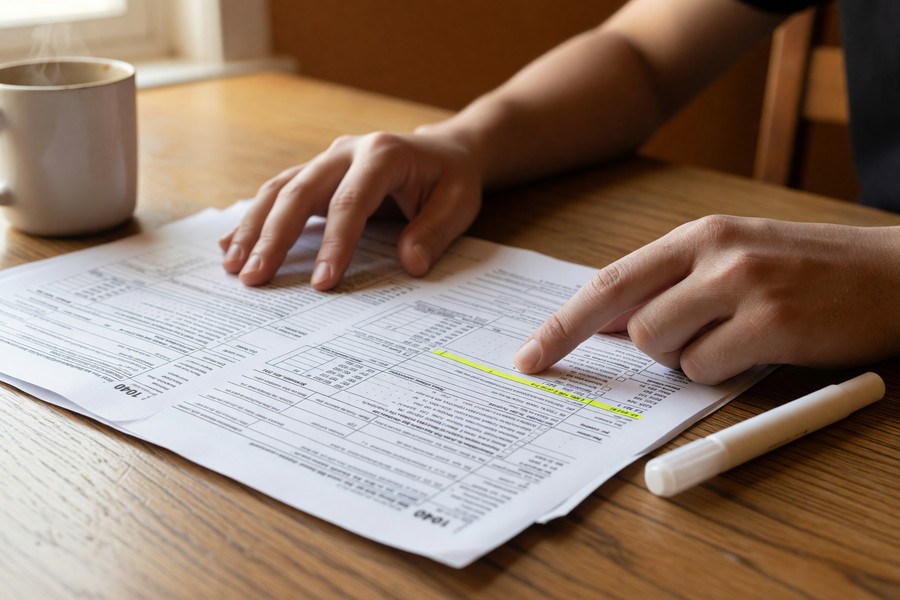
Under CFPB regulations, every lender is required to provide a standardized Loan Estimate (LE) within three business days of receiving a complete application. The LE discloses the interest rate, APR, estimated monthly payment, closing costs, and cash to close — all on a uniform three-page form designed for side-by-side comparison.
Always compare the Annual Percentage Rate (APR) — not just the interest rate — when evaluating lenders. The APR incorporates origination fees, discount points, and certain closing costs into a single annualized figure that reflects the true cost of the loan.
How Will Federal Reserve Policy Affect Mortgage Rates in 2026?
Federal Reserve monetary policy influences mortgage rates indirectly through its effect on the 10-year U.S. Treasury yield, which is the primary benchmark for 30-year fixed mortgage pricing. When the Fed cuts rates, mortgage rates do not automatically follow — but the broader bond market signal often pushes yields lower over time.
2026 Rate Forecast Overview
The Mortgage Bankers Association (MBA) projects that 30-year fixed mortgage rates will average between 6.4% and 6.8% through the second half of 2026, with a gradual downward drift expected if inflation continues to moderate toward the Federal Reserve’s 2% target. The MBA’s forecast as of Q2 2026 does not anticipate a return to rates below 6% before at least mid-2027.
Fannie Mae’s Economic and Strategic Research Group holds a similar outlook, projecting a year-end 2026 average of 6.5% — a modest improvement from current levels but well above the pre-pandemic norm. These projections assume no major geopolitical disruption or unexpected inflation resurgence.
The Mortgage Bankers Association forecasts $1.89 trillion in total mortgage origination volume for 2026 — up from $1.64 trillion in 2025 — driven primarily by purchase activity as rates gradually ease (Mortgage Bankers Association Mortgage Finance Forecast, Q2 2026).
What This Means for First-Time Buyers Deciding Whether to Wait
The decision to buy now versus wait for lower rates involves a trade-off between current affordability and future uncertainty. If rates decline to 6.0% in 2027 but home prices appreciate by 4–5% in the interim — consistent with the 10-year historical average for U.S. median home values — a buyer who waited may pay more in purchase price than they save in rate reduction.
Mortgage rates first-time buyers face today are not at historic lows, but they are functional — and the ability to refinance if rates fall meaningfully in future years remains a viable strategy. The phrase “marry the house, date the rate” has become common among real estate professionals for exactly this reason.
Real-World Example: First-Time Buyer Navigates the 2026 Rate Environment
Jordan, 29, a software project manager in Columbus, Ohio, began the home-buying process in January 2026 with a FICO Score of 694, $22,000 in savings, and a gross annual income of $82,000. Initial rate quotes from two large national banks came in at 6.95% for a 30-year conventional loan on a $285,000 purchase price — with a monthly payment of $1,893.
After completing a HUD-approved homebuyer education course (required for Ohio Housing Finance Agency loan eligibility), Jordan qualified for an Ohio HFA loan at 6.35% combined with a $7,500 forgivable down payment assistance grant. Jordan also spent six weeks paying down a $4,200 credit card balance, lifting the FICO Score from 694 to 718.
The combined effect: an Ohio HFA rate of 6.35%, a $277,500 loan amount (after the $7,500 grant reduced out-of-pocket costs), and a monthly principal-and-interest payment of $1,731 — a saving of $162 per month versus the initial quote. Over 30 years, that difference equals $58,320 in total payments. Jordan closed in April 2026 with $11,400 remaining in savings — well above the recommended 3-month emergency fund threshold of $10,250 for Jordan’s monthly expenses.
Your Action Plan
-
Pull Your Credit Reports and FICO Scores
Request your free credit reports from all three bureaus at AnnualCreditReport.com. Then check your actual FICO Scores (not VantageScore) through your credit card issuer’s free score tool, Experian’s free account, or myFICO.com. Identify any errors and dispute them directly with Equifax, Experian, and TransUnion before applying.
-
Identify and Pay Down High-Utilization Accounts
Calculate your credit utilization ratio on each revolving account and in total. Pay down any balances above 30% utilization — ideally to below 10% on all accounts — at least 60 days before submitting mortgage applications so the improvement is reflected in your scores.
-
Search for First-Time Buyer Programs in Your State
Visit the NCSHA state HFA directory and your state’s Housing Finance Agency website to review available loan programs, income limits, and purchase price caps. Use the Down Payment Resource tool at DownPaymentResource.com to search programs by ZIP code and income level.
-
Complete a HUD-Approved Homebuyer Education Course
Most state HFA programs, HomeReady, and Home Possible loans require a homebuyer education certificate. The HUD-approved counselor search tool lists both online and in-person courses, many of which are free or cost under $100. This certificate often unlocks lower rates and grant eligibility simultaneously.
-
Get Pre-Approved by at Least Three Lenders
Submit complete mortgage applications — not just pre-qualification estimates — to at least three lenders, including your state HFA, a credit union (search via NCUA’s credit union locator), and one online lender. All hard inquiries within a 45-day window count as one for FICO scoring purposes, so shop aggressively without credit score penalty.
-
Compare Loan Estimates Using APR, Not Just Interest Rate
When Loan Estimates arrive (within three business days of each application), compare lenders using the APR column on Page 1 and the total closing costs on Page 2. A lender offering a lower rate with higher origination fees may be more expensive overall. Ask each lender about the cost of buying down your rate with discount points if you plan to stay in the home long-term.
-
Lock Your Rate When You Go Under Contract
As soon as your purchase offer is accepted, contact your chosen lender to initiate a rate lock for a period matching your expected closing timeline — typically 30 to 45 days. Ask about float-down options if you anticipate potential rate improvements. Get the rate lock confirmation in writing, specifying the rate, expiration date, and any extension fees.
-
Budget for the Full PITI Payment and Closing Costs
Use the CFPB’s mortgage payment calculator at ConsumerFinance.gov to model your full PITI payment including local property tax rates (available from your county assessor’s website) and homeowners insurance estimates. Plan for closing costs of 2%–5% of the loan amount in addition to your down payment, and maintain a 3–6 month emergency fund in a liquid savings account after closing.
Frequently Asked Questions
What is the average mortgage rate for first-time buyers right now?
The average 30-year fixed mortgage rate for first-time buyers as of June 2026 is approximately 6.74% for conventional loans and 6.20% for FHA loans, based on Freddie Mac and Mortgage Bankers Association data. Your individual rate will depend on your credit score, down payment, loan type, and the lenders you contact.
What credit score do I need to get a mortgage as a first-time buyer?
The minimum credit score requirement varies by loan type: 620 for most conventional loans, 580 for FHA loans with a 3.5% down payment (or 500 with 10% down), 640 for USDA loans, and no official minimum for VA loans (though most lenders set a 580–620 internal floor). Higher scores above 740 unlock the lowest available rates.
How much do I need for a down payment as a first-time buyer?
First-time buyers can access down payments as low as 0% through VA and USDA loans, 3% through Fannie Mae HomeReady and Freddie Mac Home Possible programs, and 3.5% through FHA loans. Conventional loans are available with 3% down for qualifying buyers. Down payment assistance programs can cover part or all of the required amount for eligible applicants.
Should I choose a 15-year or 30-year mortgage as a first-time buyer?
A 30-year mortgage offers lower monthly payments — which improves affordability and reduces cash flow risk — while a 15-year mortgage carries a lower rate (currently averaging 6.01% vs. 6.74%) and builds equity much faster. Most first-time buyers benefit more from the payment flexibility of a 30-year loan, with the option to make extra principal payments when finances allow.
What is an FHA loan and is it good for first-time buyers?
An FHA loan is a mortgage insured by the Federal Housing Administration (FHA), a division of HUD, designed to expand homeownership access for buyers with lower credit scores or smaller down payments. FHA loans offer rates averaging 6.20% in June 2026 — below conventional averages — but require upfront and annual mortgage insurance premiums that add to the total cost. They are best suited for buyers with credit scores below 680 or limited savings.
How do mortgage points work and should I buy them?
Buying discount points means paying an upfront fee — 1 point equals 1% of the loan amount — to permanently reduce your interest rate by approximately 0.25 percentage points per point purchased. The break-even period is typically 4–7 years depending on loan size and rate reduction. Points make financial sense only if you are confident you will remain in the home longer than the break-even period.
How long does it take to get approved for a mortgage?
The mortgage approval timeline from application to closing typically ranges from 30 to 60 days for purchase loans, with some lenders offering expedited 21-day closings for fully documented borrowers. Government-backed loans (FHA, VA, USDA) may take slightly longer due to additional appraisal and inspection requirements. Pre-approval, which does not require a property, can be issued in as little as 1–3 business days.
What is the difference between a mortgage rate and APR?
The interest rate is the base cost of borrowing expressed as an annual percentage, while the Annual Percentage Rate (APR) incorporates the interest rate plus origination fees, discount points, mortgage broker fees, and certain closing costs into a single annualized figure. APR is always higher than or equal to the interest rate. When comparing lenders, always use APR — not the quoted rate — as your primary comparison metric.
Can I negotiate a lower mortgage rate?
Yes. Mortgage rates are not fixed retail prices — lenders have flexibility in their pricing, particularly on origination fees and discount points. Presenting competing Loan Estimates to your preferred lender and asking them to match or beat a competitor’s offer is a standard and effective negotiating tactic. The CFPB estimates that negotiation, combined with comparison shopping across five lenders, can save buyers $3,000 or more over the life of the loan.
Is it better to rent or buy in the current rate environment?
The rent-vs.-buy calculation in mid-2026 depends heavily on local market conditions, your down payment size, how long you plan to stay, and your tax situation. In markets where the price-to-rent ratio exceeds 20:1 (meaning purchase prices are very high relative to rents), buying becomes less financially advantageous in the short term. In markets with ratios below 15:1, buying typically builds more wealth over a 5+ year horizon even at current rates.
Our Methodology
The rate data cited in this article was sourced from Freddie Mac’s Primary Mortgage Market Survey (PMMS), the Mortgage Bankers Association’s Weekly Application Survey, and the CFPB’s rate exploration tool — all current as of the week of June 16, 2026. Rate estimates by credit score tier were derived from the myFICO Loan Savings Calculator using current national lender data inputs.
Loan program details, down payment assistance program counts, and eligibility criteria were verified against the NCSHA housing help directory, Down Payment Resource’s 2026 market database, and individual agency websites including FHA.gov, the VA, and USDA Rural Development. All figures represent national averages; individual borrower rates will vary based on lender, geography, credit profile, loan-to-value ratio, and debt-to-income ratio. This article is reviewed and updated on a monthly basis to reflect current market conditions.
Sources
- Freddie Mac — Primary Mortgage Market Survey (PMMS), June 2026
- Consumer Financial Protection Bureau (CFPB) — Mortgage Performance Trends
- CFPB — Explore Interest Rates Tool
- Federal Reserve — FOMC Meeting Calendars and Statements, 2026
- Mortgage Bankers Association — Mortgage Finance Forecast, Q2 2026
- National Association of Realtors — 2025 Profile of Home Buyers and Sellers
- myFICO — Loan Savings Calculator, 2026
- AnnualCreditReport.com — Free Credit Reports (Federally Authorized)
- National Council of State Housing Agencies (NCSHA) — State HFA Directory
- Down Payment Resource — 2026 Homeownership Program Index
- U.S. Department of Housing and Urban Development (HUD) — Approved Housing Counselor Search
- National Credit Union Administration (NCUA) — Quarterly Credit Union Data Summary
- Fannie Mae — Economic and Strategic Research Group Housing Forecast, 2026
- CFPB — Study: Consumers Leave Money on the Table by Not Shopping for a Mortgage
- U.S. Department of Veterans Affairs — VA Home Loan Benefits and Eligibility