

Fact-checked by the CapitalLendingNews editorial team
Quick Answer
Co-op apartment mortgage rates typically run 0.25–0.50 percentage points higher than comparable condo loans because lenders hold personal-property collateral (shares in a corporation), not a real-estate deed, and sit in a subordinated lien position behind the co-op’s maintenance claims and building-wide mortgage. Most borrowers need a credit score of at least 660–680 and a down payment of 20–30% to qualify.
Understanding co-op apartment mortgage rates starts with one fact most buyers miss: you are not getting a mortgage at all in the traditional sense. When you buy a co-op, you purchase shares in a housing corporation and receive a proprietary lease granting you the right to occupy a specific unit. The loan that finances this purchase is called a share loan, and lenders price it differently from a condo mortgage because the collateral, the legal structure, and the foreclosure path are all fundamentally different. That structural reality is why rates on co-op share loans consistently sit above rates on equivalent condo loans from the same lender.
The co-op market is also far smaller than most buyers realize. According to AmeriSave’s 2024 housing data citing Cooperative Housing International, there are approximately 1.2 million individual co-op dwellings in the United States, representing roughly 1% of all housing units. More than 75% of apartment buildings in New York City are structured as cooperatives, making the co-op mortgage market heavily concentrated in one metro area. That concentration matters for rates: fewer lenders means less competition, and less competition means borrowers pay more.
This guide is for buyers evaluating a co-op purchase in New York City or another urban market, current co-op shareholders looking to refinance, and anyone trying to understand why every lender seems to price these loans inconsistently. By the end, you will know exactly why the rate premium exists, how large it really is, and which levers you can pull to reduce it.
Key Takeaways
- Co-op share loan rates are typically 0.25–0.50 percentage points above comparable condo loans from the same lender, per published lender rate sheets and practitioner commentary.
- Co-op buyers in New York City skip the 1.925% mortgage recording tax that applies to condo loans of $500,000 or more, which can offset years of the rate premium on a mid-sized loan, according to PropertyClub’s NYC tax guide.
- Most co-op lenders require a minimum down payment of 20–30%, compared to as little as 10% commonly accepted for condo purchases, per Total Mortgage’s co-op loan guidelines.
- NYC co-op boards commonly cap debt-to-income ratios at 25–29%, far stricter than the 36–43% DTI condo mortgage lenders typically accept, according to BrickUnderground’s buyer requirements guide.
- FHA loans, VA loans, and Fannie Mae investment-property financing are categorically unavailable for co-op share loans, removing the most liquid, lowest-rate government-backed channels from the market entirely.
- A Fannie Mae rule bars conforming purchase of share loans in buildings where a flip tax exceeding 5% of unit value would apply to a foreclosing lender, a little-known policy that can make entire buildings ineligible for competitive conforming rates.
In This Guide
- Step 1: What You Are Actually Buying and Why Lenders See It Differently
- Step 2: The Lien Priority Problem, Why Your Lender Is Not First in Line
- Step 3: How the Building Itself Can Change Your Rate or Kill Your Loan
- Step 4: How Fannie Mae and Freddie Mac Shape the Rates You Are Quoted
- Step 5: What Co-op Mortgage Rates Actually Look Like vs. Condos in November 2024
- Step 6: Finding a Lender Who Will Actually Do the Loan
- Step 7: How to Get the Best Co-op Mortgage Rate Given the Constraints
- Frequently Asked Questions
Step 1: What You Are Actually Buying and Why Lenders See It Differently
When you buy a co-op apartment, you do not receive a deed to real property, you receive shares in a cooperative corporation and a proprietary lease that grants you the right to occupy a specific unit. That distinction is the root cause of every rate and approval complication that follows.
How the Collateral Works
A lender financing a condo purchase takes a first-lien mortgage on titled real estate, a well-understood legal instrument that any title company can examine and any court can foreclose in a predictable process. When a lender finances a co-op, the collateral is personal property: shares in a corporation. The loan is secured through a UCC filing (Uniform Commercial Code Article 9), not a recorded mortgage. Foreclosure on personal property is legally faster in some jurisdictions but practically more complicated, because the lender must sell shares, not a physical property, and must navigate the co-op board’s approval requirements even in a distressed sale.
This is not a minor technicality. Real-estate collateral has centuries of legal precedent behind it. Share-loan collateral is less standardized, varies in enforceability by state, and is harder to value independently of the building’s financial health. Lenders price that uncertainty into the rate.
What to Watch Out For
Buyers sometimes assume that because a co-op unit “feels” like real estate, it finances like real estate. It does not. No title insurance is required (or available) for the unit itself, which removes a protection lenders rely on in conventional mortgage transactions. The lender’s entire security depends on the validity of the share certificates and the terms of the proprietary lease, two documents the borrower’s attorney, not a title insurer, must verify.
Because co-op share loans are secured as personal property under UCC Article 9 rather than as real estate, they do not trigger the New York City Mortgage Recording Tax. Co-op buyers on a $500,000 loan avoid a tax that condo buyers must pay at a rate of 1.925% according to NYC tax law, a savings of $9,625 or more at closing.
Step 2: The Lien Priority Problem, Why Your Lender Is Not First in Line
The single most important reason co-op apartment mortgage rates are priced above condo rates, and the one almost never explained plainly, is lien priority. In a co-op transaction, your lender is not first in line to recover money if you default. They may be third.
How the Priority Stack Works
The co-op corporation holds a claim on your unit for unpaid monthly maintenance fees. In most states, including New York, this maintenance lien is senior to the individual shareholder’s share loan lender. That means if you stop paying your maintenance and your mortgage simultaneously, the co-op corporation gets paid before the bank does. This is not a hypothetical risk, it is a documented structural feature of cooperative ownership that lenders must price into every loan.
Above the maintenance lien sits the blanket mortgage, a building-wide loan that the cooperative corporation carries on the entire property. Most co-op buildings have an underlying mortgage on the physical structure itself. A lender financing your individual unit sits beneath both of these claims. In practice, that means the financing bank is in what practitioners call a third-position risk, even though the loan is priced and marketed as residential financing.
The Pricing Consequence
This subordinated position translates directly into a measurable rate add-on. Well-run lenders explicitly account for co-op collateral risk in their pricing. Because the lender’s recovery path in a default scenario involves selling shares (not a deed), navigating board approval, satisfying the building’s maintenance arrears first, and potentially dealing with the underlying blanket mortgage, the loan carries more workout complexity than a standard condo foreclosure. That complexity costs the borrower basis points on every loan, for the life of the loan.
If you are comparing a co-op loan to a conventional condo mortgage, and wondering why the numbers look different from the same institution, this lien stack is where the explanation starts. For a deeper look at how co-borrower credit profiles further affect the interest rate you receive on joint financing, the analysis at how co-borrowers with mismatched credit scores affect joint loan rates is directly applicable to co-op purchase scenarios where two buyers are combining finances.
What to Watch Out For
Some buyers assume the co-op board’s strict financial vetting reduces lender risk enough to offset the lien-priority problem. It partially does, boards that require strong reserves and low debt-to-income ratios do produce lower default rates. But lenders cannot rely on board vetting as a substitute for first-lien collateral. The structural subordination exists regardless of how financially healthy the building is today.
Never assume your share loan lender is in a first-lien position. Before closing, ask your attorney to confirm the priority of the co-op corporation’s maintenance lien and the status of the building’s blanket mortgage. A lender financing your unit beneath an unpaid or maturing blanket mortgage is taking on risk that can surface as higher rates, mid-process repricing, or a loan decline.
Step 3: How the Building Itself Can Change Your Rate or Kill Your Loan
With a condo purchase, the lender approves you. With a co-op purchase, the lender must approve both you and the building. This dual-approval requirement is not a formality, a financially weak co-op building can disqualify a financially strong borrower, or force the loan into a more expensive portfolio product.
What Lenders Examine in the Building
A lender evaluating a co-op building for financing eligibility reviews the building’s financial statements, reserve fund balance, owner-occupancy ratio (Fannie Mae requires at least 51% of units to be owner-occupied), maintenance delinquency rate (no more than 15% of shareholders may be 60 or more days late on maintenance), pending litigation, and the terms of the underlying blanket mortgage. Any of these factors can result in a rate adjustment, a loan condition, or an outright decline.
The building’s blanket mortgage deserves particular attention. If the co-op corporation’s underlying loan is a balloon mortgage approaching its maturity date with no confirmed refinancing in place, Fannie Mae may decline to purchase the individual share loan entirely. A lender that cannot sell the loan to Fannie Mae must either hold it as a portfolio loan (often at a higher rate) or decline it. Buyers rarely know to ask about this before going under contract.
The Flip Tax Problem
Here is a rule that does not appear in any major competitor article: Fannie Mae will not purchase a co-op share loan in a building where the co-op charges a flip tax that exceeds 5% of the unit’s value and would apply to the lender upon foreclosure. A flip tax is a transfer fee charged by many co-op corporations when a unit changes hands. Most are modest, 1–2% of sale price or a flat per-share fee. But some buildings, particularly older cooperatives with large underlying mortgages, set flip taxes high enough to cross Fannie Mae’s threshold. When that happens, no Fannie Mae-eligible lender will originate a share loan in that building, and the borrower is pushed into the portfolio lending market, where rates are typically higher.
Tax Abatement Expiration
Buildings with expiring tax abatements create a separate eligibility wrinkle. A co-op building benefiting from a 421-a tax abatement that expires within three years will see its property tax assessment rise substantially when the abatement ends. Lenders must factor that anticipated increase into the building’s monthly maintenance projections, which flows into the borrower’s debt-to-income calculation. A borrower who qualifies comfortably today may not qualify once the post-abatement maintenance increase is modeled in.

NYC co-op boards typically require debt-to-income ratios of 25–29%, compared to the 36–43% DTI that condo mortgage lenders generally accept, according to BrickUnderground’s buyer requirements guide. The board’s stricter standards often exceed the lender’s, creating a dual vetting process with two different financial bars to clear.
| Factor | Co-op Share Loan | Condo Mortgage |
|---|---|---|
| Collateral Type | Personal property (shares + proprietary lease, UCC-secured) | Real property (deed, recorded first-lien mortgage) |
| Minimum Down Payment | 20–30% (some luxury buildings require 50%) | 10–20% typical; 3–5% with PMI on conforming loans |
| Minimum Credit Score | 660–680 (most lenders); some portfolios allow 640 | 620 for conventional; 580 for FHA |
| DTI Ceiling (Board + Lender) | 25–29% (board); 43–45% (lender, where board allows) | 36–43% (lender only; no board) |
| Rate Premium vs. SFR | +0.25 to +0.50 percentage points | +0.00 to +0.25 percentage points (vs. single-family) |
| NYC Mortgage Recording Tax | None (personal property exemption) | 1.925% on loans $500,000+ (condo buyer pays) |
| FHA / VA / Investment Financing | Not available for any co-op transaction | FHA and VA available; investment financing available |
| Building Approval Required | Yes, lender reviews financial statements, reserves, DTI, litigation | Yes for condos, but less intensive than co-op review |
Step 4: How Fannie Mae and Freddie Mac Shape the Rates You Are Quoted
Most residential mortgage lenders operate on the assumption that they can originate a loan and sell it to Fannie Mae or Freddie Mac on the secondary market. That assumption does not hold cleanly for co-op share loans, and the secondary market bottleneck is a direct structural cause of higher rates.
Why the Secondary Market Is Thinner for Co-ops
Fannie Mae does purchase co-op share loans, but the documentation requirements are state-specific, no standard multistate form exists, and the lender must submit a project eligibility review that covers the building’s finances, underlying mortgage, owner-occupancy ratio, and litigation history. That paperwork burden discourages many national lenders from participating in the co-op market at all. Fewer lenders mean less competition, and less competition holds rates higher than they would be in a fully liquid market.
Fannie Mae’s own Selling Guide, a primary source, not a secondary one, documents that co-op share loan documentation “varies by state” and that no standardized multistate form exists for Recognition Agreements, the legal documents that bind the lender, the co-op corporation, and the borrower. That inconsistency is a documented barrier that Fannie Mae has acknowledged but not resolved, leaving the co-op conforming market structurally less liquid than the condo market.
The Investment Property Ban
Fannie Mae and Freddie Mac prohibit co-op share loans for investment properties entirely. Co-ops can only be financed as primary residences or second homes. This policy eliminates a significant category of potential borrowers and, with it, a competitive market for investor co-op loans that might otherwise push rates down. Neither FHA nor VA loans are available for any co-op transaction under any circumstances, meaning the government-backed channels that provide the most affordable financing for single-family homes and condos are completely closed off to co-op buyers.
The result is a structurally higher rate floor. Co-op borrowers are paying for a market that lacks the scale and standardization benefits that drive conforming loan rates lower everywhere else. Understanding this dynamic is also relevant when evaluating whether to buy down your rate, since the premium you are paying is structural, not necessarily negotiable at the lender level. The analysis of whether to buy down your mortgage rate with points applies directly here: on a loan that already carries a structural premium, points may offer a faster payback period than on a standard conforming mortgage.
What to Watch Out For
Do not assume that a lender advertising co-op loans is offering Fannie Mae-eligible terms. Ask directly: is this loan being underwritten to Fannie Mae’s co-op guidelines, or is it a portfolio product? The answer determines both the rate and your refinancing options later.
Request a copy of the building’s most recent Fannie Mae project eligibility approval (sometimes called a Project Approval through Fannie Mae’s PERS system) before applying for financing. Buildings with active approval on file can reduce underwriting time and may qualify for better conforming terms than buildings being reviewed for the first time.
Step 5: What Co-op Mortgage Rates Actually Look Like vs. Condos in November 2024
Co-op share loan rates in November 2024 are running approximately 0.25–0.50 percentage points above comparable condo loans from the same lender, based on published lender rate sheets and practitioner commentary. That is a real premium, but not a dealbreaker, and it needs to be weighed against the structural cost differences that run in the co-op buyer’s favor.
The Rate Gap in Practice
On a 30-year fixed-rate loan, a 0.50-percentage-point premium on a $400,000 share loan adds roughly $117 per month in interest cost over a comparable condo loan at the same balance. Over five years, that is approximately $7,000 in additional interest. Whether that cost is outweighed by the co-op’s lower purchase price and closing costs depends on the specific transaction, but the math is worth doing rather than assuming the co-op is more expensive overall.
The most important borrower variables for narrowing the rate gap are credit score, down payment, and post-closing liquid reserves. Most co-op lenders require a minimum credit score of 660–680, compared to 620 for conventional condo loans. Borrowers with scores above 720 and down payments of 25% or more can access the lower end of the co-op rate range. Some co-op buildings also require shareholders to demonstrate one to two years of combined mortgage and maintenance payments in liquid reserves after closing, a requirement that functions as a de facto risk reducer for lenders, even if it is not formally credited in the rate.
Where the Cost Advantage Lives
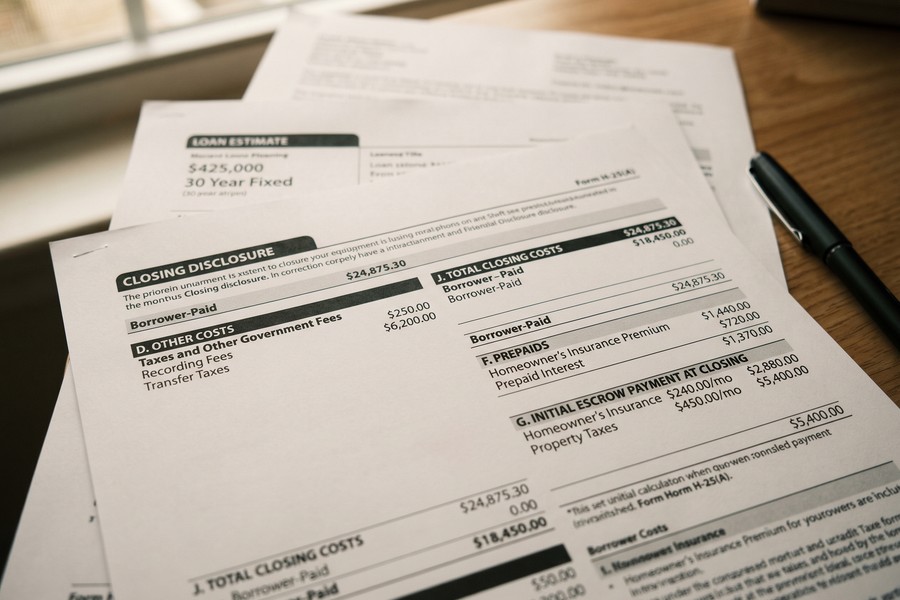
The rate premium on a co-op loan is partially or fully offset by closing cost savings that most buyers do not price correctly. Co-op buyers in New York City do not pay the NYC Mortgage Recording Tax of 1.925% on loans of $500,000 or more, because share loans are classified as personal property. On a $500,000 loan, that is $9,625 the co-op buyer keeps that a condo buyer does not. Title insurance on the unit itself is also not required for co-op purchases, saving an additional $1,500 or more on a mid-sized transaction. The rate premium on a co-op loan would need to persist for several years before it erases those upfront savings.
Co-op purchase prices also tend to run below comparable condo prices in the same neighborhoods, particularly in New York City, where the market is deep enough to make direct comparisons. A lower loan balance compounds the rate savings over time: a 0.50% premium on a $350,000 loan is a smaller absolute dollar figure than the same premium on a $500,000 loan. The gap in purchase prices between co-ops and condos in the same building class is a meaningful variable that many buyers overlook when they focus only on the interest rate.
What to Watch Out For
Rate comparisons between co-op and condo loans are only meaningful when they control for loan size, term, credit score, and down payment. A co-op rate quote that looks higher may simply reflect a smaller down payment or a lower credit score than the condo comparison is based on. Get quotes on the same terms before drawing conclusions.
It is also worth noting that the rate premium is a permanent feature of co-op financing, not a temporary market condition. The structural reasons for it, subordinated collateral, thinner lender market, excluded government programs, will not change when the Federal Reserve adjusts benchmark rates. For context on how rate decisions ripple through different loan types, the breakdown of whether to wait for rates to drop or lock in what you qualify for today is relevant for co-op buyers trying to time their purchase.
Step 6: Finding a Lender Who Will Actually Do the Loan
Many national lenders simply do not offer co-op share loans. They treat co-op financing as too specialized, too geographically concentrated, and too documentation-intensive to justify building the infrastructure. This market thinness is itself a rate driver, and knowing where to look is a concrete way to avoid overpaying.
Two Types of Lenders, and the Trade-offs Between Them
Co-op borrowers have access to two fundamentally different lender types, and understanding the difference matters for both rate and eligibility.
Fannie Mae-approved lenders underwrite co-op share loans to Fannie Mae’s guidelines and can sell the loans on the secondary market. These lenders offer the most competitive rates for co-op transactions, but their building eligibility requirements are strict: 51% owner-occupancy, no more than 15% maintenance delinquency, no problematic flip taxes, and a healthy underlying blanket mortgage. If the building does not meet Fannie Mae’s project standards, the loan will not close through this channel.
Portfolio lenders, including community banks, credit unions, and specialty lenders, keep the loan on their own books rather than selling it. They often offer more flexibility on building eligibility: higher sublet ratios, unconventional co-op structures, and buildings with expired Fannie Mae approvals can sometimes be financed through a portfolio lender when a conforming lender declines. The trade-off is pricing. Portfolio lenders price the additional flexibility into the rate, and the spread above conforming rates is not always predictable.
A Practical Shopping Framework
Get quotes from at least three sources before committing: one co-op specialist lender (National Cooperative Bank is the most prominent national option focused on this market), one local portfolio lender or credit union with a co-op track record in your market, and one Fannie Mae-approved lender who actively does co-op loans in your area. The spread across these three quotes will tell you more about your building’s eligibility profile than any rate chart can. If the co-op specialist and portfolio lender are pricing significantly above the Fannie Mae lender, the building itself may have characteristics that are disqualifying through conforming channels.
Because co-op financing is overwhelmingly concentrated in New York City, northern New Jersey, and a handful of other established markets, borrowers in smaller metro areas face an even thinner lender pool. Outside these markets, many co-op buildings are effectively unfinanceable through national lenders, and borrowers may be limited to one or two local institutions. That near-monopoly dynamic in smaller markets is an under-discussed reason co-op rates stay elevated in geographies where co-ops are uncommon.
What to Watch Out For
Do not use a lender who has never processed a co-op share loan before. The documentation, UCC filings, Recognition Agreements, proprietary lease review, underlying mortgage verification, requires experience that a generalist residential lender may not have. A first-time co-op lender can cause delays, mid-process surprises, or conditions that a specialist would have anticipated and addressed upfront. Ask directly how many co-op share loans the loan officer has closed in the past 12 months. If the answer is fewer than five, keep shopping.
The relationship between loan structure and total interest cost is something most co-op buyers do not examine carefully enough. The detailed breakdown of how loan term length controls total interest cost is worth reviewing before choosing between a 15-year and 30-year co-op share loan, since the term decision compounds the rate premium in ways that are not always obvious from the monthly payment alone.
National Cooperative Bank (NCB) is the most widely cited specialist co-op lender in the United States and operates in all major co-op markets. If you are in a market where co-ops are uncommon, contact NCB and two local credit unions before approaching any national bank, credit unions with co-op portfolios sometimes offer better rates than larger institutions because they are not repricing for secondary-market liquidity concerns.
Step 7: How to Get the Best Co-op Mortgage Rate Given the Constraints
The rate premium on a co-op loan is real and structural, but it is not fixed. Specific borrower and building variables move the rate meaningfully within the range lenders offer, and targeting the right combination can close most of the gap with condo pricing.
Borrower-Side Levers
Credit score is the single most effective lever. A borrower at 720 or above will be quoted materially better terms than a borrower at 670 on the same co-op. Because co-op lenders have fewer competing programs than condo lenders (no FHA floor, no VA option), the credit score pricing tiers are sharper. If your score is between 660 and 700, the time spent improving it before applying is likely worth more than any rate negotiation after the fact.
Down payment size matters for the same reason it does on any mortgage: it reduces the lender’s LTV exposure. A 25–30% down payment signals lower risk and can move you into a better rate tier, even at lenders where 20% is the stated minimum. Some luxury co-op buildings require 40–50% down regardless of the lender’s requirements, those buildings are self-selecting for a lower-risk borrower pool that lenders can sometimes price more favorably.
Post-closing liquid reserves beyond the board’s requirement are a less-discussed but effective negotiating point. If you can demonstrate two or more years of combined mortgage and maintenance payments in liquid assets after the down payment and closing costs, some portfolio lenders will treat that as a compensating factor that partially offsets a weaker building profile.
Building-Side Due Diligence
Before applying for financing, request the co-op’s most recent audited financial statement, the terms of the building’s underlying blanket mortgage (including rate, maturity date, and whether it is fixed or adjustable), the reserve fund balance, the owner-occupancy percentage, and the maintenance delinquency rate. This is not standard practice for buyers, but it should be. A building with a low underlying mortgage balance, a well-funded reserve, and high owner-occupancy is a fundamentally better collateral environment than a building with a balloon loan due in 18 months and a 20% sublet rate. Lenders price those differences, often informally, through a thin rate add-on or a loan condition, but the difference can be quantified if you ask.
Understanding how your own financial profile compares to a co-op’s DTI requirements is also worth examining before you apply. The broader discussion of how debt-to-income ratio affects lending decisions applies to co-op boards as well as lenders, and the co-op board’s 25–29% ceiling is the harder constraint for most buyers.
The Honest Trade-off
The rate premium on a co-op loan, typically 0.25–0.50 percentage points above a comparable condo loan, is real and permanent. It cannot be negotiated away entirely because its sources (subordinated collateral, thinner lender market, excluded government programs) are structural. What a well-prepared buyer can do is narrow the premium through strong credit, larger down payment, healthy reserves, and careful building selection. For many buyers in New York City and other deep co-op markets, the combination of lower purchase prices, lower closing costs, and the co-op board’s strict vetting of neighbors makes the total financial picture competitive with or better than a condo, but that conclusion requires running the actual numbers on a specific transaction, not assuming the outcome.

Buyers who focus exclusively on the co-op’s monthly maintenance fee often underestimate how maintenance increases (from a rising underlying mortgage, expiring tax abatement, or underfunded reserves) will affect their DTI and ongoing affordability. A building whose maintenance jumps 20% two years after purchase can strain a budget that was comfortable at closing, and lenders cannot underwrite future maintenance increases into the original approval.
Frequently Asked Questions
Why are co-op mortgage rates higher than condo rates from the same lender?
Co-op rates are higher because the lender’s collateral is personal property (shares in a corporation), not real estate, and the lender sits in a subordinated lien position behind the co-op’s maintenance claims and the building’s blanket mortgage. That structural position creates more recovery risk in a default than a standard condo first-lien mortgage does, and lenders price that risk into the rate, typically adding 0.25–0.50 percentage points above comparable condo loans.
Can I get an FHA or VA loan to buy a co-op apartment?
No. FHA loans and VA loans are not available for co-op share loan transactions under any circumstances. Co-op financing is limited to conventional conforming loans (Fannie Mae or Freddie Mac for primary residences and second homes) and portfolio loans from banks, credit unions, and specialty lenders. This exclusion from government-backed programs removes the lowest-rate financing channels available to other residential buyers and is a permanent structural feature of the co-op market.
What credit score do I need to get approved for a co-op share loan?
Most co-op lenders require a minimum credit score of 660–680, compared to 620 for conventional condo mortgages. A score above 720 will access the better rate tiers. Because co-op financing has no FHA floor and a thinner competitive market, the pricing difference between a 670 and a 740 credit score is sharper on co-op loans than on standard residential mortgages.
How much do I need to put down on a co-op apartment?
Most co-op lenders require a minimum down payment of 20–30%, per Total Mortgage’s co-op loan guidelines. Some luxury buildings require 40–50% down regardless of the lender’s minimum. This is stricter than conventional condo loans, where 10–20% is common and 3–5% is possible with private mortgage insurance.
What is a Recognition Agreement and why does my lender need one for a co-op loan?
A Recognition Agreement is a three-party contract between the borrower, the co-op corporation, and the lender that defines each party’s rights in the event of default. The lender requires it because, without the co-op board’s formal acknowledgment of the share loan, the lender has no legal standing to foreclose on the shares. Recognition Agreements vary by state and building, and the absence of a standardized national form is one of the documented reasons Fannie Mae’s co-op loan market is less liquid than its condo market.
Should I use a portfolio lender or a Fannie Mae-approved lender for a co-op purchase?
Use a Fannie Mae-approved lender first if your building qualifies, the rates are typically better because the loan can be sold on the secondary market. If the building has issues (high sublet ratio, unusual flip tax, imminent blanket mortgage maturity) that disqualify it from Fannie Mae guidelines, a portfolio lender offers more flexibility and may approve the loan where a conforming lender declines, though the rate will generally be higher. Get quotes from both types before deciding.
Does the co-op building’s underlying mortgage affect my individual loan rate?
Yes, indirectly but meaningfully. If the building’s blanket mortgage is an interest-only balloon due for renewal soon, or is adjustable and repricing upward, maintenance fees will likely increase, which lenders factor into your DTI calculation. A building with an impending blanket mortgage maturity and no confirmed refinancing may also fail Fannie Mae’s project eligibility review, forcing the loan into a more expensive portfolio product or triggering a decline.
What is the flip tax rule that can make a co-op building ineligible for conforming financing?
Fannie Mae will not purchase a co-op share loan in a building where the flip tax (a transfer fee charged by the co-op when a unit changes hands) exceeds 5% of the unit’s value and would apply to the lender upon foreclosure. This rule affects a meaningful number of older New York City co-ops with high flip taxes, effectively barring them from Fannie Mae-eligible financing and pushing borrowers into portfolio loans at higher rates. Ask your attorney to confirm the building’s flip tax amount and whether it would apply in a foreclosure scenario before applying.
How do co-op closing costs compare to condo closing costs in New York City?
Co-op closing costs are significantly lower than condo closing costs on equivalent transactions. Co-op buyers skip the NYC Mortgage Recording Tax (1.925% on loans of $500,000 or more) and do not pay title insurance on the unit, saving $10,000 or more compared to a condo buyer on a comparable loan. These savings partially offset the rate premium co-op buyers pay over the life of the loan and are an important part of the total-cost comparison that many buyers miss when they focus only on the interest rate.
Are co-op loans available outside New York City?
Co-op loans are technically available wherever co-op buildings exist, but the lender pool thins dramatically outside of New York City, northern New Jersey, Washington D.C., and a handful of other established markets. In smaller markets, many national lenders refuse co-op loans entirely, leaving borrowers with one or two local options. That limited competition in non-NYC markets can produce rate premiums wider than the 0.25–0.50 percentage point range typical in New York, and some buildings in smaller markets are effectively unfinanceable through any conventional channel.
Sources
- PropertyClub, NYC Mortgage Recording Tax Guide (2024)
- AmeriSave, Co-op Housing: What Home Buyers Need to Know (2024)
- Wikipedia, Housing Cooperative (cited for NYC co-op market share statistic)
- Total Mortgage, Co-op Home Loans: Down Payment and Qualification Requirements (2024)
- BrickUnderground, Minimum Down Payment and Asset Requirements for NYC Co-ops (2024)
- Consumer Financial Protection Bureau, Loan Options Overview