
Fact-checked by the CapitalLendingNews editorial team
Quick Answer
Your mortgage insurance premium rate adds a hidden layer to your true borrowing cost every month. For FHA loans, the annual MIP is 0.55% for most new borrowers (after HUD’s 2023 reduction), while conventional PMI ranges from 0.46% to 1.50% annually. To manage this cost: know which type applies to your loan, track your loan-to-value ratio, and plan your removal strategy before you close.
The mortgage insurance premium rate is one of the most consequential numbers in your mortgage that rarely appears in rate-comparison headlines. It sits quietly in your monthly payment, below the line item for principal and interest, adding real dollars to what you pay every month without altering the interest rate your lender advertises. For FHA borrowers, the annual premium currently sits at 0.55% for most 30-year loans after HUD’s Mortgagee Letter 2023-05, which cut the rate by 30 basis points effective March 2023. For conventional borrowers, the cost lands somewhere between 0.46% and 1.50% of the loan amount annually, according to the Urban Institute’s Housing Finance Policy Center.
What makes this cost particularly worth understanding right now is who is bearing it. According to U.S. Mortgage Insurers’ 2024 volume data, more than 800,000 low down payment borrowers used private mortgage insurance to qualify for home financing last year, with 65% of them being first-time buyers. That is a large group of people paying a cost that most financial media treats as a footnote rather than a real factor in the true rate they pay.
This guide is written for borrowers who are actively comparing loan types, already in a loan with mortgage insurance, or trying to figure out when and how to get out from under it. By the end, you will be able to calculate what your mortgage insurance is actually costing you on a true-rate basis, understand the meaningful differences between PMI and MIP removal rules, and make a more informed decision about whether FHA or conventional financing makes more financial sense for your situation.
Key Takeaways
- The annual FHA mortgage insurance premium rate was reduced to 0.55% for most new 30-year borrowers effective March 20, 2023, per HUD Mortgagee Letter 2023-05, while the upfront MIP remains 1.75% of the base loan amount.
- Conventional PMI rates range from 0.46% to 1.50% annually depending on credit score and LTV ratio, according to the Urban Institute Housing Finance Policy Center, meaning two borrowers with the same down payment can pay very different amounts.
- Rolling the FHA upfront MIP of 1.75% into the loan balance generates its own interest cost: on a $300,000 loan at 7%, financing the $5,250 premium adds roughly $12,000 in additional interest over 30 years.
- FHA borrowers who put less than 10% down are locked into MIP for the life of the loan, while conventional PMI must be automatically cancelled by law at 78% LTV under the Homeowners Protection Act.
- The PMI and MIP tax deduction expired after tax year 2021 per IRS Publication 936 and has not been reinstated, meaning borrowers filing 2024 and 2025 returns cannot deduct these premiums.
- More than 800,000 borrowers used PMI to buy homes in 2024, with 65% being first-time buyers, according to U.S. Mortgage Insurers.
In This Guide
- What is a mortgage insurance premium and why am I paying for insurance that protects my lender?
- How do PMI and MIP rates differ, and which type of mortgage insurance applies to my loan?
- How is my mortgage insurance premium rate calculated each month?
- How does mortgage insurance inflate my effective interest rate beyond what my lender advertises?
- When do I stop paying mortgage insurance, and does that depend on whether I have FHA or conventional?
- What factors actually change my mortgage insurance premium rate, and which ones are outside my control?
- What are my options for removing mortgage insurance, and how do I calculate whether refinancing makes sense?
- Frequently Asked Questions
Step 1: What is a mortgage insurance premium and why am I paying for insurance that protects my lender?
A mortgage insurance premium is a fee charged to the borrower that compensates the lender or a third-party insurer if the borrower defaults. You pay it, but it covers the lender’s risk. That is the core paradox most borrowers never have explained to them plainly.
Why the Lender’s Risk Becomes Your Monthly Bill
When a borrower puts down less than 20% of a home’s purchase price, the lender takes on a statistically higher risk of loss in a foreclosure scenario, since there is less equity cushion between the loan balance and the home’s market value. Rather than refusing those loans outright, lenders use mortgage insurance to transfer that risk to an insurer. The borrower funds that transfer through monthly premiums or an upfront fee. Without this mechanism, a large share of lower-down-payment borrowers would simply be unable to get a mortgage at any price.
There is also a meaningful distinction in terminology. Mortgage insurance premium (MIP) is the specific term for the insurance attached to FHA loans, administered under the Federal Housing Administration and governed by HUD. Private mortgage insurance (PMI) applies to conventional loans and is provided by private insurers such as Radian, MGIC, and Enact. Neither is the same as homeowner’s insurance, which covers damage to the property itself. All three can appear in a single monthly mortgage payment, and confusing them is one of the most common mistakes borrowers make at closing.
It is also worth knowing that government-backed loans outside FHA carry analogous costs, just with different names. VA loans charge a VA funding fee (a one-time upfront charge, not an ongoing premium). USDA loans carry an upfront and annual guarantee fee. These function similarly as risk-transfer mechanisms, but their structures differ enough that comparing them to PMI or MIP directly requires care.
Mortgage insurance protects the lender, not the homeowner. A borrower who defaults still loses their home; the insurance simply ensures the lender recovers a portion of its loss. This is why the cost falls on the borrower despite providing the borrower no direct benefit in a default scenario.
Step 2: How do PMI and MIP rates differ, and which type of mortgage insurance applies to my loan?
The loan type you chose determines which form of mortgage insurance you carry, and the two systems price risk in fundamentally different ways. Knowing which one applies to you changes every downstream calculation in this guide.
PMI on Conventional Loans: Individually Risk-Priced
PMI rates on conventional loans are set by private insurance companies and priced to the individual borrower. Your credit score, loan-to-value ratio, loan term, occupancy type (primary residence vs. investment property), and property type all feed into the rate you receive. Two neighbors buying identical homes with identical down payments but different credit scores will pay different PMI rates. This risk-based pricing means high-credit borrowers can often get PMI at the lower end of the 0.46% to 1.50% annual range cited by the Urban Institute’s data as reported by NerdWallet.
MIP on FHA Loans: HUD-Set and Largely Flat
FHA MIP rates are established by HUD and applied by loan category rather than individual credit profile. After the rate reduction announced in HUD Mortgagee Letter 2023-05, most new FHA borrowers on 30-year loans with less than 10% down pay an annual MIP of 0.55%. This uniformity is one of the reasons FHA loans remain attractive to borrowers with lower credit scores: a borrower with a 620 score and a borrower with a 680 score pay virtually the same annual MIP on the same loan size. Credit score barely moves the needle on FHA MIP the way it moves PMI on a conventional loan.
The FHA also charges a dual structure. There is an upfront mortgage insurance premium of 1.75% of the base loan amount, paid at closing or rolled into the loan balance. Then there is the ongoing annual premium divided into monthly installments. That upfront fee is a detail that deserves more attention than it usually gets.
Rolling the 1.75% upfront MIP into the loan rather than paying it at closing avoids a large out-of-pocket sum, but it is not free. On a $300,000 loan, the upfront MIP is $5,250. Financed at 7% over 30 years, that single fee generates roughly an additional $12,000 in interest charges over the life of the loan, making the real cost of the upfront premium considerably higher than 1.75% suggests at face value. Most articles on FHA loans mention rolling in the fee as a benefit without mentioning the compounding cost attached to it.
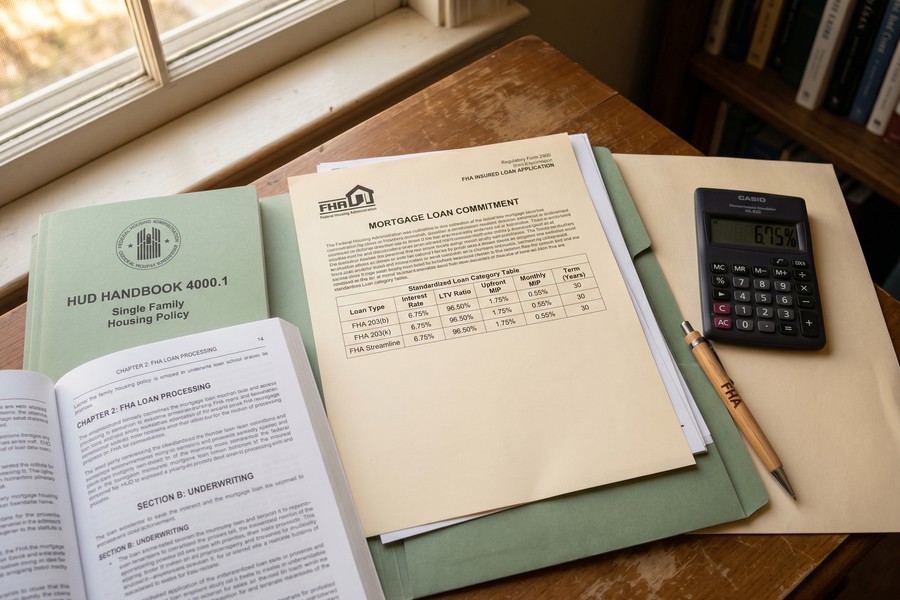
Rolling the FHA upfront MIP into your loan feels convenient at closing, but it increases your loan balance and generates years of compounding interest. If you have the cash to pay it at closing, doing so can save thousands over the life of the loan.
Step 3: How is my mortgage insurance premium rate calculated each month?
Your monthly mortgage insurance charge is calculated by multiplying your annual mortgage insurance rate by your outstanding loan balance, then dividing by 12. The exact figure changes slightly as your balance decreases, though the timing and method vary between loan types.
The Basic Math
The formula is straightforward: Annual Rate x Current Loan Balance / 12 = Monthly MI Payment. For a conventional PMI borrower, this recalculates as the balance decreases, which gradually reduces the monthly MI charge over time. For FHA borrowers, the calculation applies to the outstanding balance at each point in the loan, but the rate itself is fixed by HUD for the life of the insurance period.
Here is a side-by-side dollar example using comparable loan amounts:
| Loan Type | Purchase Price | Down Payment | Loan Amount | Annual MI Rate | Monthly MI Payment |
|---|---|---|---|---|---|
| FHA (0.55% MIP) | $350,000 | 3.5% ($12,250) | $337,750 | 0.55% | $155/month |
| Conventional (0.80% PMI) | $350,000 | 5% ($17,500) | $332,500 | 0.80% | $222/month |
| Conventional (0.46% PMI, 740+ score) | $350,000 | 10% ($35,000) | $315,000 | 0.46% | $121/month |
The table above illustrates that the monthly MI cost is not simply a function of loan size. Credit score and down payment work together to determine the rate tier, and the resulting monthly payment can swing by over $100 per month on similar loan amounts. Over five years, that $100 difference amounts to $6,000 in additional premiums before considering the interest rate on the loan itself.
What to Watch Out For
Servicers are not always prompt about recalculating your PMI charge as your balance drops. For conventional loans, the recalculation should happen automatically, but tracking your own balance and verifying your monthly MI charge at least once a year is worth the five minutes it takes. Errors do occur, and borrowers who are not watching may overpay. This is a separate issue from the formal cancellation process covered later in this guide.
Use Freddie Mac’s mortgage insurance calculator to estimate your monthly PMI before you close on a conventional loan. Entering different down payment amounts shows you precisely where the breakpoints are between rate tiers, which can help you decide whether a slightly larger down payment makes financial sense.
Step 4: How does mortgage insurance inflate my effective interest rate beyond what my lender advertises?
The advertised mortgage rate and your true all-in borrowing cost are not the same number, and mortgage insurance is one of the main reasons they diverge. Translating your mortgage insurance premium rate into an effective interest rate equivalent gives you a far more useful comparison tool than looking at rates alone.
Calculating Your True All-In Rate
Adding your annual MI rate to your mortgage’s stated interest rate gives you a rough but useful approximation of your effective borrowing cost per dollar outstanding. A borrower with a 6.75% mortgage rate and a 0.85% annual MIP (the pre-2023 FHA rate for reference) was effectively paying closer to 7.60% on a cost-per-dollar-borrowed basis. After HUD’s 2023 reduction to 0.55%, that same calculation yields approximately 7.30%, a meaningful improvement but still a gap most borrowers do not account for when comparing FHA to conventional offers. If you are comparing loan quotes, add the MI rate to the stated rate on each offer before making a final call.
This framing also clarifies why the choice between FHA and conventional is not simply about which loan has the lower stated interest rate. A conventional loan at 7.00% with a 0.60% PMI rate (effective: 7.60%) may cost more than a conventional loan at 7.25% with a 0.40% PMI rate (effective: 7.65%) over a short holding period, but the PMI on the conventional loan will eventually disappear. The FHA MIP on a sub-10%-down loan will not.
Lender-Paid Mortgage Insurance: The Invisible Rate Increase
There is a version of mortgage insurance that does not appear as a separate line item at all: lender-paid mortgage insurance (LPMI). With LPMI, the lender pays the PMI premium upfront and recoups that cost by charging the borrower a higher interest rate. The monthly payment looks cleaner, but the cost is embedded permanently in the rate. According to the NCUA’s compliance guidance on the Homeowners Protection Act, lender-paid mortgage insurance cannot be cancelled by the borrower, and it typically results in a higher mortgage interest rate for the life of the loan unless the borrower refinances out of it.
This is a meaningful trade-off that deserves honest treatment. LPMI removes a visible line item and can lower your monthly cash outlay in the early years. But once your equity crosses 20%, borrower-paid PMI disappears and your effective rate drops. With LPMI, the rate never drops unless you refinance, which has its own costs. For borrowers who expect to hold a property for more than five to seven years and build equity steadily, borrower-paid PMI is almost always the better long-term choice. Understanding how loan term length controls total interest cost is essential context for this calculation.
On a $300,000 FHA loan with 3.5% down, the combined cost of upfront MIP, annual MIP, and the interest generated by rolling the upfront fee into the loan can exceed $50,000 over 30 years if the borrower never refinances out of the FHA structure.
Step 5: When do I stop paying mortgage insurance, and does that depend on whether I have FHA or conventional?
Whether you ever stop paying mortgage insurance depends almost entirely on the loan type you chose at the outset. The rules for conventional PMI and FHA MIP are structured so differently that the gap in long-term cost between the two can exceed tens of thousands of dollars for the same borrower.
Conventional PMI: Legal Cancellation Rights Under Federal Law
Conventional PMI is governed by the Homeowners Protection Act of 1998. Under this law, as clarified by the CFPB’s compliance bulletin (Bulletin 2015-03), lenders must cancel borrower-paid PMI when the loan balance reaches 80% LTV upon the borrower’s written request, provided the borrower has a good payment history. Lenders must also automatically terminate PMI at 78% LTV based on the original purchase price, without the borrower needing to ask. Collecting PMI premiums beyond 30 days after the required termination date is prohibited.
There is also an equity-via-appreciation path for conventional borrowers. If your home has appreciated significantly, you can request a new appraisal to demonstrate that your loan balance is now below 80% of the current market value, even if you have not paid the balance down to that threshold. Many lenders require at least two years of ownership and a clean payment history before they will accept an appraisal-based request, but the option exists and can accelerate PMI removal by years in a rising-value market.
FHA MIP: The Permanent-Cost Problem
FHA MIP does not follow the same rules. For FHA loans originated on or after June 3, 2013, with a down payment of less than 10%, the annual MIP applies for the full life of the loan. There is no LTV threshold that triggers automatic removal, no appraisal path that helps, and no request process that works the way it does for conventional PMI. Appreciation means nothing to an FHA borrower who needs MIP removed: a home that doubles in value still carries MIP on the original FHA loan.
Borrowers who put down 10% or more on an FHA loan receive somewhat better terms: MIP cancels after 11 years. But for the majority of first-time FHA borrowers using the minimum 3.5% down payment, the only practical exit from MIP is refinancing into a conventional loan once sufficient equity exists. That refinancing decision carries its own cost calculus, covered in the next section.

Servicer errors on PMI cancellation are documented and real. Once you reach 78% LTV on a conventional loan, verify that your servicer has actually removed the charge from your monthly payment. If it has not, submit a written request and cite your rights under the Homeowners Protection Act.
Step 6: What factors actually change my mortgage insurance premium rate, and which ones are outside my control?
The variables that move your mortgage insurance premium rate are different depending on loan type, and knowing which levers you can pull before closing can meaningfully change your monthly cost.
What Moves Your PMI Rate on a Conventional Loan
Conventional PMI is individually underwritten, so the following factors directly affect what you pay:
- Credit score: This is the single largest driver. A borrower with a 760 score may pay 0.46% annually, while a borrower with a 640 score on the same loan might pay 1.20% or more.
- Loan-to-value ratio: The closer you are to 80% LTV at closing, the lower the premium. Every percentage point of additional down payment generally improves your rate tier.
- Loan term: 15-year loans typically carry lower PMI rates than 30-year loans because the shorter payback period reduces the insurer’s exposure window.
- Occupancy type: Investment properties carry higher PMI rates than primary residences. Second homes typically fall in between.
- Property type: Single-family homes get the best rates. Condominiums and multi-unit properties often carry higher premiums, though this also intersects with lender-level guidelines. Buyers evaluating condo financing should also understand what high-rise condo buyers often get wrong about mortgage eligibility.
What Moves Your MIP Rate on an FHA Loan
FHA MIP rates are set by HUD in categories based on loan size, term, and LTV bucket rather than individual borrower risk. Your credit score has minimal effect on the annual MIP rate, which is why FHA loans can be more cost-competitive for lower-credit borrowers who would receive a high PMI rate on a conventional loan. The relevant categories are loan amounts at or below the conforming limits, loan terms over 15 years, and LTV ratios above 90%, which together land most first-time buyers at the 0.55% annual rate.
The meaningful implication: a borrower with a score of 620 comparing FHA to conventional should not assume conventional is the cheaper path just because the stated rate might be lower. Running the full cost including MI for each loan type, over the actual expected holding period, is the only reliable way to compare. For borrowers also weighing joint financing options, understanding how co-borrowers with mismatched credit scores affect loan pricing adds another layer to this analysis.
If your credit score is between 680 and 720, run the MI cost comparison for both FHA and conventional before committing. At this score range, the crossover point where conventional PMI becomes cheaper than FHA MIP on a total-cost basis often falls within five to eight years of ownership, depending on home appreciation rate and your likelihood of refinancing.
Step 7: What are my options for removing mortgage insurance, and how do I calculate whether refinancing makes sense?
Removing mortgage insurance is one of the most impactful financial moves a homeowner can make after purchase, and the right path depends on your loan type, current equity position, and the interest rate environment at the time you act.
Three Exit Paths and Their Trade-Offs
Path 1: Reach the LTV threshold on a conventional loan. For conventional borrowers, this is the cleanest exit. Paying the balance to 80% of the original purchase price allows you to request PMI cancellation. At 78%, cancellation is automatic under the Homeowners Protection Act. No refinancing required, no closing costs, no new loan. If your home has appreciated, an appraisal-based request at 80% of current market value is also available in most cases after two years of ownership. This path costs nothing beyond normal monthly payments or modest accelerated payments.
Path 2: Refinance an FHA loan into a conventional loan. This is the primary exit route for FHA borrowers locked into life-of-loan MIP. Once you have built at least 20% equity (through payments, appreciation, or both), you can refinance into a conventional loan that carries no PMI requirement at all. The calculation that matters: compare your current effective all-in rate (FHA rate plus MIP) against a new conventional rate, factor in closing costs (typically 2% to 5% of the loan amount), and calculate the break-even month. If you plan to stay in the home well past that break-even point, refinancing is usually the right call. Timing this decision against rate movements is its own discipline; one useful frame is whether waiting for rates to drop or locking in today changes the break-even math on your specific scenario.
Path 3: Accelerated paydown. Making additional principal payments each month shortens the time to your LTV threshold. For a conventional borrower, this is a direct way to accelerate PMI removal. For an FHA borrower with less than 10% down, accelerated paydown alone does not trigger MIP removal; it only shortens the time until you have enough equity to refinance into a conventional loan. Worth knowing: on a $300,000 FHA loan at 7%, paying an extra $200 per month accelerates reaching 20% equity by roughly three to four years, potentially saving thousands in MIP before the refinance becomes possible.
The Tax Deduction Question
Many borrowers still believe that PMI and MIP premiums are tax-deductible. They are not, for current tax years. The mortgage insurance premium deduction expired after tax year 2021 under IRS Publication 936. Congress has not reinstated it. Borrowers filing 2024 and 2025 returns should not include PMI or MIP premiums as itemized deductions. Older articles on personal finance sites frequently describe this deduction as available or frame it as something that “may be extended,” which is accurate for its history but misleading about the current situation. The deduction is gone until and unless Congress acts to restore it, and there is no indication that such action is imminent.
Choosing the Right Path: A Simple Decision Framework
If you have a conventional loan with PMI: monitor your balance relative to the original purchase price, request cancellation when you reach 80% LTV, and consider an appraisal request if appreciation has been significant. If you have an FHA loan with less than 10% down: treat refinancing into a conventional loan as a planned future step once you reach 20% equity, and model the break-even on closing costs against the monthly MIP savings you will realize. If you are still pre-purchase and comparing loan types: a borrower with a credit score above 700 and 10% available for a down payment will almost always come out ahead on a conventional loan with PMI versus an FHA loan with life-of-loan MIP when the holding period exceeds five years.
For borrowers evaluating whether to also buy down the mortgage rate with discount points, the interaction between a lower rate and your MI cost is worth modeling separately; buying down the rate does not reduce your MI rate and can distort the apparent savings if you do not account for MI in the full-cost comparison.

Appreciation-driven equity helps conventional PMI borrowers but does nothing for FHA MIP borrowers. A conventional borrower whose home value rises can request an appraisal to prove 80% LTV and cancel PMI years ahead of schedule. An FHA borrower in the same home with the same appreciation still carries MIP until they refinance out of the FHA structure entirely.
For buyers who previously experienced a short sale or other credit event, the path to conventional financing and its associated PMI removal timeline is also affected by waiting periods that determine loan eligibility. Understanding how a short sale on your record changes the mortgage rate you qualify for is relevant context before deciding between FHA and conventional.
Frequently Asked Questions
Is mortgage insurance premium the same as PMI?
No. Mortgage insurance premium (MIP) specifically refers to the insurance on FHA loans, governed by HUD. Private mortgage insurance (PMI) applies to conventional loans and is provided by private insurance companies. Both serve the same economic purpose but are structured and priced differently. FHA MIP includes both an upfront fee of 1.75% and an ongoing annual premium, while PMI on conventional loans is typically only an ongoing charge with no mandatory upfront component.
How do I get rid of PMI on my conventional loan?
You can request PMI cancellation in writing once your loan balance reaches 80% of the original purchase price and you have a good payment history. Under the Homeowners Protection Act, your lender must automatically cancel it at 78% LTV without any action on your part. If your home has appreciated, you may also be able to request cancellation based on a new appraisal showing current LTV below 80%, typically after at least two years of ownership. The CFPB’s guidance on PMI cancellation and termination requirements outlines your rights in detail.
Can I ever remove MIP from an FHA loan without refinancing?
Only under specific conditions. FHA borrowers who put down 10% or more can have MIP removed after 11 years of payments. For the majority of FHA borrowers who use the 3.5% minimum down payment, MIP on loans originated after June 3, 2013, stays for the life of the loan. The only practical removal strategy for this group is refinancing into a conventional loan once at least 20% equity exists.
Does my credit score affect my FHA mortgage insurance rate?
Minimally. FHA MIP rates are set by HUD in fixed tiers based on loan amount, term, and LTV ratio, not individual credit score. This is one of the reasons FHA loans attract borrowers with lower credit scores: the MIP rate does not punish a 620 score the way conventional PMI pricing does. A borrower with a 700 score and a borrower with a 620 score on the same FHA loan will pay essentially the same annual MIP of 0.55%.
How much does FHA mortgage insurance add to my monthly payment on a $300,000 loan?
At the current annual MIP rate of 0.55%, the monthly charge on a $300,000 FHA loan is approximately $137.50 per month (0.55% x $300,000 / 12). This is in addition to your principal, interest, homeowner’s insurance, and property taxes. The upfront MIP of 1.75%, or $5,250 on a $300,000 loan, is a separate one-time charge that can be paid at closing or rolled into the loan balance.
Is PMI tax deductible in 2025?
No. The PMI and MIP tax deduction expired after tax year 2021 under IRS Publication 936 and has not been reinstated by Congress. Borrowers who file 2024 or 2025 returns cannot deduct mortgage insurance premiums as itemized deductions. This is a common misconception because many older personal finance articles still describe the deduction as available or imply it may be renewed; currently it is not.
Should I choose FHA or conventional if I have a 680 credit score and 10% down?
At a 680 score with 10% down, you are in the range where the comparison is genuinely close and worth modeling carefully. The FHA annual MIP would be 0.55%, while conventional PMI at a 680 score with 10% LTV might land around 0.80% to 1.00%. However, that conventional PMI is removable once you reach 80% LTV, while FHA MIP with 10% down cancels only after 11 years. Over a 7-to-10-year holding period, the conventional route is often cheaper in total even if the monthly MI charge is initially higher, purely because of the earlier removal date.
What is lender-paid mortgage insurance and is it a good deal?
Lender-paid mortgage insurance (LPMI) is a structure where the lender pays the PMI premium upfront and recovers that cost by charging you a higher interest rate for the life of the loan. According to NCUA guidance on the Homeowners Protection Act, LPMI cannot be cancelled by the borrower even after crossing the 80% LTV threshold. For borrowers who expect to sell or refinance within five years, LPMI can reduce early monthly costs. For longer holding periods, borrower-paid PMI that eventually drops off is almost always the better financial outcome.
How do I calculate my effective mortgage rate including mortgage insurance?
Add your annual mortgage insurance rate to your loan’s stated interest rate for a rough effective-rate equivalent. For example, a 6.75% mortgage with 0.55% annual MIP gives you an effective borrowing cost of approximately 7.30%. This is an approximation rather than a precise calculation, but it is a useful tool for comparing different loan type offers that have different combinations of stated rate and MI cost. The more rigorous approach is to calculate total interest plus total MI premiums paid over your expected holding period for each option.
What happens if my servicer keeps charging PMI after I hit 78% LTV?
This is a violation of the Homeowners Protection Act, and the CFPB has clarified that lenders cannot collect PMI premiums beyond 30 days after the required automatic termination date. If your balance has crossed 78% LTV based on the original purchase price and you are still being charged, submit a written request to your servicer documenting the violation. If the servicer does not act, you can file a complaint with the Consumer Financial Protection Bureau. Keep records of every monthly statement showing the charge after the termination date.
Sources
- U.S. Department of Housing and Urban Development, HUD Mortgagee Letter 2023-05: Annual MIP Rate Reduction
- Consumer Financial Protection Bureau, Bulletin 2015-03: Private Mortgage Insurance Cancellation and Termination
- Urban Institute Housing Finance Policy Center, Mortgage Insurance Data At A Glance 2023
- Freddie Mac My Home, Mortgage Insurance Calculator
- National Credit Union Administration, Homeowners Protection Act: PMI Cancellation Compliance Guide
- U.S. Mortgage Insurers (USMI), 800,000 Low Down Payment Borrowers Used PMI in 2024
- NerdWallet, PMI Calculator and Rate Range Data (Urban Institute)
- Consumer Financial Protection Bureau, Official Homepage
- Internal Revenue Service, Publication 936: Home Mortgage Interest Deduction