
Fact-checked by the CapitalLendingNews editorial team
The Verdict
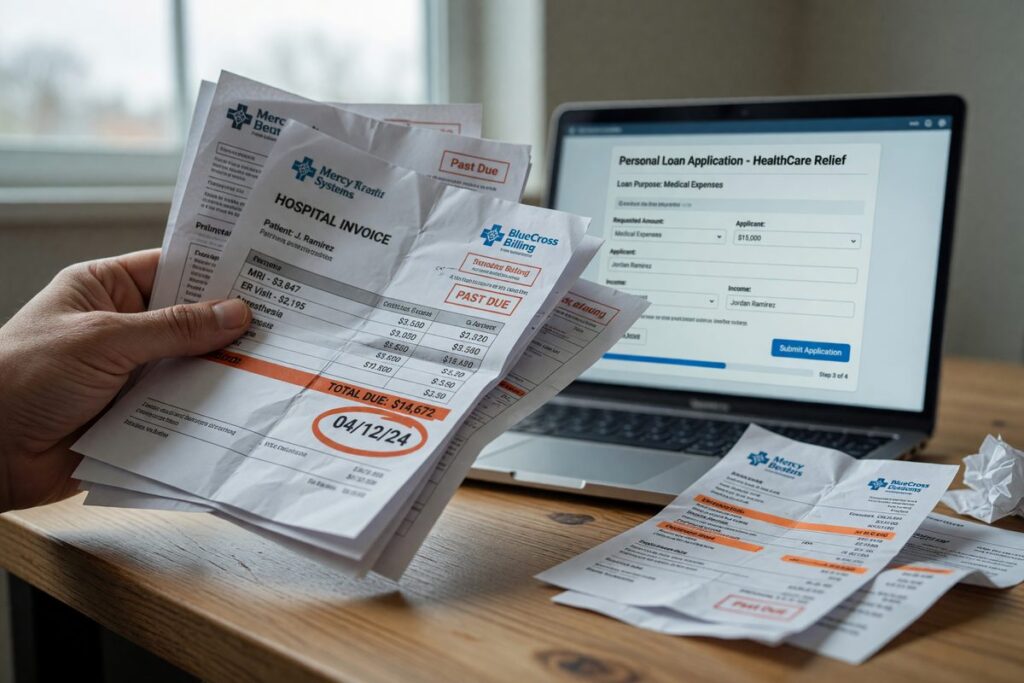
Medical debt digital loan approval is generally achievable if your unpaid medical collections total less than $500 or were paid before you apply, since major bureaus have already removed those from most credit files. It becomes a real obstacle if you carry large unpaid balances that still appear on your report and your debt-to-income ratio is stretched thin. For most borrowers, the credit reporting changes since 2022 matter more than the lender you choose.
Medical debt occupies a strange position in lending: it is the most common reason Americans end up in collections, yet it is among the weakest predictors of whether someone will repay a loan. That tension is exactly what drives the medical debt digital loan approval question, and the single factor that swings it most is whether the debt actually appears on the credit report the lender pulls., Urban Institute research shows roughly 9.7 million consumers still carry medical debt in collections on their credit records, with a median balance of $1,465. But that number has dropped sharply from where it was two years ago, and the reason is policy, not payoff.
The credit bureau rule changes that took effect between 2022 and 2023 quietly wiped medical debt off millions of files before most borrowers even knew it happened. If you are applying for a personal loan through a fintech platform right now, understanding what the bureaus report, what the lender’s model actually scores, and how digital underwriting differs from a bank loan officer are the three things that determine your outcome.
| Factor | Reasons to Apply Despite Medical Debt | Reasons to Wait or Be Cautious |
|---|---|---|
| Bureau reporting rules | Paid medical collections removed since 2022; debts under $500 erased; 365-day delay before any new medical debt can appear | Unpaid balances over $500 can still appear and drag your score by 20+ points |
| Score model used | FICO 9, FICO 10, and VantageScore 4.0 all assign lower weight to medical collections; some fintechs use VantageScore which excludes medical debt entirely | Many lenders still use FICO 8, which does not distinguish medical from non-medical collections |
| Digital underwriting breadth | Platforms like Upstart and LendingClub supplement credit scores with income, employment history, and education, creating approval paths that bypass score-only cutoffs | Alternative data helps most when your credit score is borderline, not when DTI is already high |
| Debt-to-income ratio impact | Medical collections in passive status are often not counted the same as active installment or revolving debt in DTI calculations | If a lender is manually underwriting, a large unpaid medical account can raise DTI concerns |
| Dispute and correction options | Medical billing errors are common; correcting them can rapidly improve your score before a hard pull | Disputes take 30-45 days; timing matters if you need funds quickly |
| Prequalification tools | Most digital lenders offer soft-pull prequalification, letting you compare offers without score damage | Prequalification rates can shift meaningfully once a hard pull reveals additional derogatory items |
Key Takeaways
- Your unpaid medical collections total less than $500, meaning the major bureaus have already removed them from your file.
- Any medical collections on your report are paid and satisfied, since Equifax, Experian, and TransUnion stopped reporting paid medical accounts in 2022.
- Your credit score is at or above 620 after accounting for any remaining medical entries, which keeps you in the competitive range for most digital personal loan platforms.
- Your debt-to-income ratio sits below 40%, even if you include the medical balance as a contingent liability in the calculation.
- You have stable, verifiable income, whether W-2 or documented self-employment, since income verification carries heavy weight in AI-driven underwriting models.
- You have used a soft-pull prequalification tool with at least two lenders to compare actual rate offers before committing to a hard pull.
- If any medical collections appear in error, you have filed a dispute with the relevant bureau more than 45 days before your planned application date.
How Digital Lenders Actually Read Your Credit File
Digital lenders pull your credit the same way traditional banks do: from Equifax, Experian, and TransUnion, using either a soft inquiry for prequalification or a hard inquiry when you formally apply. The difference is what they do with that data once it arrives. Traditional banks typically underwrite against a single FICO 8 score and a manual review of tradelines. Most fintech platforms feed the raw bureau data into proprietary models that weight dozens of variables, sometimes hundreds, simultaneously.
Here’s the thing: the model a lender uses changes everything for borrowers with medical debt. FICO 8, still the most widely used score, treats a medical collection the same as any other collection account. FICO 9 and FICO 10 explicitly downweight unpaid medical collections and ignore paid ones entirely. VantageScore 4.0, used by a growing number of digital platforms, excludes medical debt from its scoring algorithm altogether. So the same applicant with a $1,200 unpaid medical collection could see meaningfully different scores depending on which model a lender pulls. That spread can be 20 points or more, enough to shift an application from approved to declined at a cutoff-sensitive lender.
Understanding how debt-to-income ratio is calculated on digital lending platforms matters here too. A medical collection sitting in passive status is typically not treated as a monthly payment obligation in DTI math, unlike a credit card minimum or auto loan. That distinction gives applicants with medical debt more DTI room than they often expect.
Why Medical Debt Shows Up Differently Than Other Debt
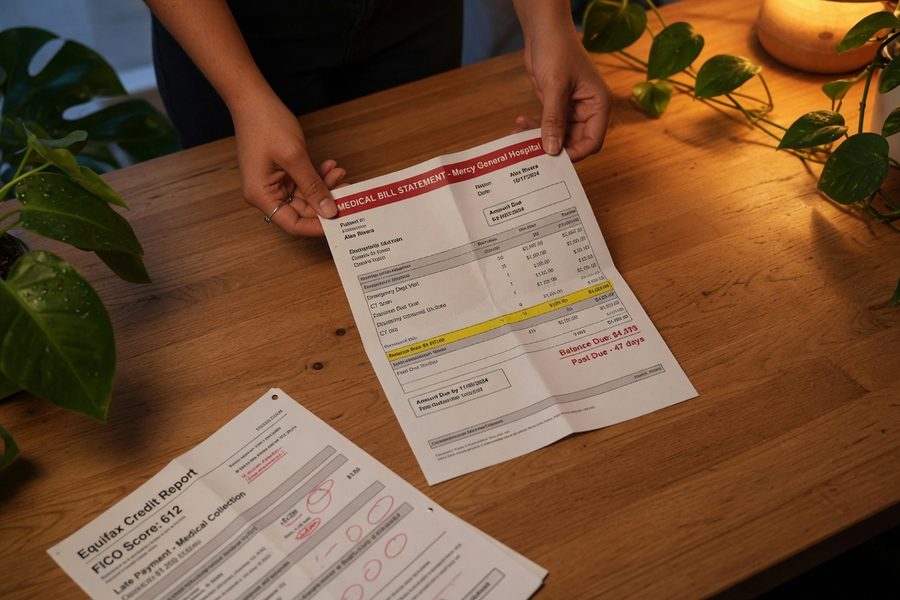
The three major credit bureaus changed how they handle medical debt in stages between 2022 and 2023, and the effect on credit reports has been substantial. First, they stopped reporting paid medical collections. Then they removed accounts under $500. Finally, they introduced a 365-day waiting period before any new medical debt in collections can even appear on a report, giving borrowers almost a full year to resolve a billing dispute or negotiate a payoff before a lender sees it.
The numbers bear this out. CFPB data shows that 14 percent of consumers had at least one medical collections tradeline in March 2022, before the reporting changes took effect. By June 2023, that share had dropped to just 5 percent. That is a meaningful reduction in the pool of borrowers whose digital loan applications are even touched by medical debt on paper.
For those still in the 5 percent, the CFPB found that consumers likely to have all medical collections removed saw an average FICO Score 8 increase of 20 points. A 20-point swing is not trivial. Depending on where your score sits, that can be the difference between qualifying for a prime-rate digital loan and landing in a subprime tier with a significantly higher APR. The Consumer Financial Protection Bureau has pushed for further restrictions, including a proposed rule that would ban medical debt from credit reports entirely, though that rule had not been finalized.
Do AI-Driven Platforms Treat Medical Debt as a Dealbreaker?
For most digital lenders using modern underwriting models, medical debt alone is not a dealbreaker. The CFPB’s own research has documented that medical debt is a weaker predictor of loan repayment than other types of delinquency, and lenders building AI-driven models have taken that signal seriously. Platforms like Upstart have publicly noted that their models incorporate more than 1,000 variables beyond credit score, including income, employment tenure, and education history, precisely to approve creditworthy borrowers who look risky on a traditional score alone.
Here’s the thing about alternative data: it helps most when your score is suppressed by something that does not actually reflect your ability to repay. Medical debt fits that description almost perfectly. A borrower with a stable $75,000 annual income, no revolving debt, and a $2,000 unpaid medical bill from an ER visit two years ago is a very different risk than someone with the same credit score who has defaulted on three personal loans. AI models can distinguish between those profiles in ways that a FICO 8 cutoff cannot.
That said, fintech lenders increasingly use payroll data to approve borrowers that banks would otherwise reject, and this matters for medical debt applicants specifically. Verified income from a payroll provider like Argyle or Pinwheel can offset a depressed credit score caused by a medical collection, particularly on platforms that explicitly weight cash flow signals alongside bureau data. The caveat is that this works best when the medical debt is the primary blemish. If it accompanies late payments on credit cards, auto loans, or other installment debt, the underwriting model is seeing a broader pattern and will respond accordingly.
Who Should and Who Should Not
Good candidates
Borrowers in these situations tend to see the least friction from medical debt during digital loan underwriting.
- Your medical collection was paid or settled before applying, making it invisible to lenders since the bureaus stopped reporting paid medical accounts in 2022.
- Your balance was under $500, which the bureaus removed from reporting regardless of payment status.
- You have stable W-2 or verifiable self-employment income above $50,000 annually, which gives AI-driven platforms enough positive data to offset a suppressed score.
- You are applying to a lender that uses FICO 9, FICO 10, or VantageScore 4.0, all of which treat medical debt more favorably than FICO 8.
- Your debt-to-income ratio is below 36%, leaving room to absorb any conservative lender interpretation of a medical balance.
Who should skip it
Some borrower profiles face enough friction that waiting, disputing, or paying down medical debt first will likely produce a better outcome.
- You have an unpaid medical collection above $500 that is less than a year old, meaning the 365-day delay has not yet cleared it from your report.
- Your credit score is below 580, and the medical debt is not the only derogatory account; the combination signals a broader credit risk that alternative data is unlikely to fully offset.
- Your debt-to-income ratio already exceeds 45%, so even a loan approval would come at a rate that adds financial strain rather than relieving it. Reading up on how loan term length quietly controls total interest costs is worthwhile before committing to a high-rate offer.
- You are applying for a mortgage rather than a personal loan, where manual underwriting, government-backed guidelines from the FHA or Fannie Mae, and stricter documentation standards make medical debt considerably harder to work around.
Frequently Asked Questions
Does medical debt hurt your chances of getting a personal loan from an online lender?
It depends on whether the debt appears on your credit report and which scoring model the lender uses. Paid medical collections and balances under $500 were removed from the three major bureau reports starting in 2022-2023, so many applicants are no longer affected at all. For unpaid balances above $500, the impact ranges from minimal on platforms using FICO 9 or VantageScore to more significant on those still using FICO 8.
Will a digital lender count my medical debt in my debt-to-income ratio?
Usually not in the same way as active installment or revolving debt. A medical collection sitting in passive status typically does not generate a monthly payment obligation, so lenders often exclude it from DTI calculations unless it has been converted into a formal payment plan. That said, DTI is still the number that quietly kills many digital loan applications, so the overall picture matters.
What happens if I pay off my medical debt right before applying?
Paying it off removes it from your credit report, since the bureaus stopped reporting satisfied medical collections in 2022. That can translate to an immediate score improvement, potentially 20 points or more based on CFPB data, which may shift your application into a better rate tier. Timing the application 30-60 days after payment gives bureaus time to update their records.
Do fintech platforms like Upstart treat medical debt differently than traditional banks?
Yes, in practice. AI-driven platforms typically supplement credit scores with income verification, employment history, and education data. Because the CFPB has documented that medical debt is a weaker repayment predictor than other delinquencies, models built on this research tend to downweight it. A traditional bank underwriting manually against a FICO 8 score has less flexibility to make that distinction.
Can I use a personal loan from a digital lender to pay off medical debt in collections?
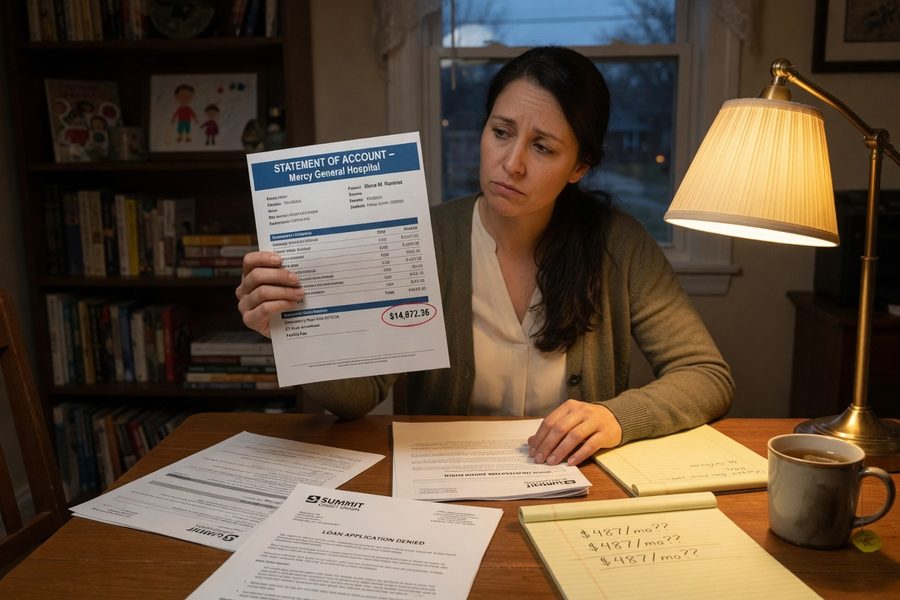
Yes, and in some cases it makes financial sense. If you can qualify for a personal loan at an APR below what a collections agency or hospital would charge in continued fees and interest, consolidating through a fintech platform reduces both your balance and the number of derogatory accounts on your report. Compare the total cost carefully: a $1,465 median medical balance (per Urban Institute) at a 20% personal loan APR over 24 months costs roughly $160 in interest, which may be worth the credit repair benefit.
Should I wait for the CFPB’s proposed medical debt credit reporting ban before applying?
Not necessarily. The proposed rule had not been finalized, and regulatory timelines are unpredictable. If your medical debt is already off your report due to the existing bureau changes, waiting adds no benefit. If it is still appearing, the more practical move is to dispute any errors, pay down balances under $500 that may have slipped through, and use soft-pull prequalification tools to test your approval odds now rather than holding out for a rule that may take years to take effect. For borrowers considering refinancing existing debt in the meantime, understanding how fintech refinancing works can help frame the decision.