

Fact-checked by the CapitalLendingNews editorial team
Quick Answer
A first-generation college graduate can use a digital personal loan to cover relocation and first-month expenses, with funds typically arriving in 1-2 business days after approval. For a move to a major metro, total costs often run $5,000-$8,000, covering a security deposit, first-month rent, moving truck, and essentials. Online lenders assess thin-file applicants differently than banks, making approval more accessible for recent grads without an established credit history.
Using a digital loan for relocation expenses is increasingly practical for first-generation graduates who need to close the cash-flow gap between degree completion and the first paycheck. Unlike traditional banks, online personal loan platforms reviewed by the Consumer Financial Protection Bureau commonly fund approved applications within one to two business days, giving recent grads a workable path even when family financial support is not an option.
First-generation students face a distinct combination of pressures: thinner credit files, fewer family resources, and often the expectation that a better-paying job in a new city will offset the upfront cost of getting there. This guide walks through how the digital borrowing process works for someone in that position, what a realistic cost breakdown looks like, and where the trade-offs honestly land after one year of repayment.
Key Takeaways
- First-generation students are 10% more likely than continuing-generation peers to leave college for financial reasons, according to NASPA’s First-Generation Student research.
- Digital personal loans for relocation typically carry APRs starting around 7-12% for qualified borrowers, with funds deposited in as little as one business day after approval (Bankrate, 2024).
- A cross-country move costs between $1,000 and $3,000 for a typical recent graduate, not counting first-month rent or security deposits (Moving.com cost estimates).
- The average starting salary for a 2024 college graduate is approximately $68,500, but one-bedroom rents in high-demand cities like New York exceed $3,000 per month, creating an immediate affordability gap (NACE Salary Survey 2024).
- 37% of first-generation students report running out of money during college, compared to 22% of their continuing-generation peers, making post-graduation cash reserves especially scarce (NASPA First-Generation Research).
In This Guide
- The Unique Financial Pressures Facing First-Generation Graduates
- Why Traditional Financing Falls Short for Recent Grads
- How the Digital Loan Application Actually Worked
- Itemized Breakdown of Relocation and First-Month Costs
- Building a Repayment Plan on a Starting Salary
- Risks, Trade-Offs, and Honest Outcomes After One Year
- Frequently Asked Questions
The Unique Financial Pressures Facing First-Generation Graduates
First-generation graduates start the post-college chapter with a structural disadvantage: less family capital, thinner credit files, and more financial obligations pulling in multiple directions at once. NASPA’s landmark research on first-generation students found that 37% ran out of money during their college years, compared to 22% of continuing-generation peers. That gap does not close on graduation day.
Relocation is rarely optional. Entry-level positions in high-growth fields, technology, finance, healthcare administration, cluster in expensive metros. Turning down a role because moving costs are out of reach is a real career cost that compounds over years of foregone salary growth. Yet the upfront capital required to say yes can reach six to eight months of a student’s total college savings.
The Remittance Factor Most Guides Ignore
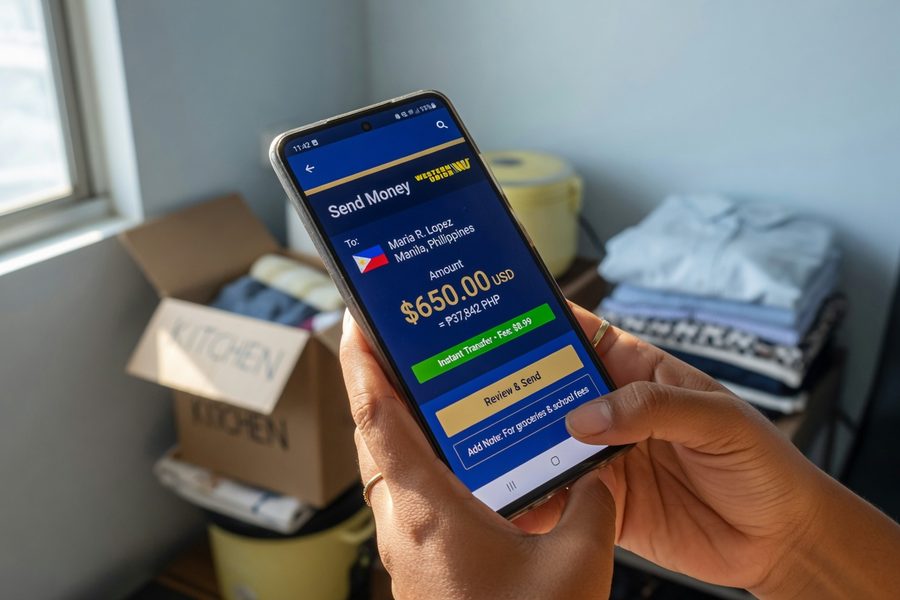
Here’s the thing: most articles about moving loans treat the borrower’s budget as a closed system. For many first-generation graduates, it is not. Financial expectations from family, whether formal remittances or informal help with a parent’s utility bill, reduce the effective share of a loan that can go toward the graduate’s own first-month costs. Sizing a loan without accounting for this leads to shortfalls. A realistic budget needs a line item for family obligations alongside rent and deposits, even if that number is uncomfortable to write down.
Why Traditional Financing Falls Short for Recent Grads
Traditional banks deny recent graduates for a simple reason: the underwriting models rely heavily on credit history length and income verification, two things a person two months out of college often cannot provide at scale. Without a co-signer, many first-gen graduates have no co-borrower option either, their parents may carry high debt-to-income ratios or limited credit of their own.
Digital lenders take a different approach. Platforms that use alternative data like payroll records and employment history to approve borrowers banks would reject have opened the door for thin-file applicants with verified job offers. The practical difference in speed matters too: a conventional bank personal loan can take two to three weeks from application to funding. A digital lender can execute the same transaction in one to two business days.
How the Digital Loan Application Actually Worked
Pre-qualification took under ten minutes. That is the realistic starting point for most digital loan applications in 2024: a soft credit pull, a few fields about income and employment status, and an estimated rate range that does not affect the applicant’s credit score. The hard inquiry comes only after the borrower selects an offer.
Documents, Timeline, and Thin-File Handling
For a recent graduate, the key documents were an offer letter from the employer, a government-issued ID, bank account information for deposit, and proof of the current address. Some platforms, Upstart, LendingPoint, and Avant are among those known for thin-file underwriting, also consider educational attainment and field of study as part of their models. This matters because a graduate with a computer science degree and a signed offer letter from a tech employer reads very differently to an algorithmic underwriter than the same applicant’s raw credit score would suggest.
The timeline from completed application to funds in the account ran approximately 24-48 hours in most documented cases for applicants with clean applications and verified income. Same-day funding is available at some platforms, though the gap between same-day and next-day funding promises is worth scrutinizing before you choose a platform. Choosing a lender based on rate alone is a mistake; origination fees ranging from 1% to 8% of the loan principal can materially change the effective cost, and repayment term length has its own compounding effect on total interest paid, something worth understanding before signing. See how loan term length quietly controls how much interest you actually pay for a detailed breakdown.
Some digital lenders use educational background and employment field as underwriting signals for thin-file applicants, allowing recent graduates with a signed job offer to qualify for rates closer to what a borrower with a two-year credit history might receive.
Itemized Breakdown of Relocation and First-Month Costs
A move from a mid-size college town to a major metro has real, predictable costs, and several that catch first-time movers off guard. The table below reflects typical figures for a single recent graduate relocating to a high-cost city as of mid-2024.
| Expense Category | Low Estimate | High Estimate |
|---|---|---|
| Security Deposit (1-2 months rent) | $1,500 | $3,200 |
| First Month’s Rent | $1,500 | $3,200 |
| Moving Truck or Shipping | $800 | $2,500 |
| Travel (flight or gas) | $150 | $600 |
| Utility Deposits and Setup | $150 | $400 |
| Household Essentials | $300 | $800 |
| Family Support / Remittances | $200 | $800 |
| Total Estimated Range | $4,600 | $11,500 |
The right loan size sits at the low end of what actually covers these costs. Over-borrowing to create a cushion sounds prudent, but every additional thousand dollars borrowed at a 12% APR over a 36-month term adds roughly $195 in interest. Sizing the loan to match documented expenses rather than a round number is the cleaner discipline.
According to Moving.com’s 2024 cost data, a cross-country move for a single person averages between $1,000 and $3,000 for truck rental and transport alone, before accounting for deposits or first-month rent in the destination city.
Why Borrowing Exactly What You Need Matters
Debt-to-income ratio becomes a real constraint almost immediately after the move. A graduate earning $68,500 annually, about $5,700 per month gross, who also carries student loan payments and a new digital loan repayment starts the job with limited financial slack. Understanding your debt-to-income ratio and how digital platforms weigh it before applying can prevent an approval from becoming an affordability trap post-move.

Building a Repayment Plan on a Starting Salary
The first paycheck arrives two to four weeks after the start date. That gap is a real risk: rent is due, loan payments are on a fixed schedule, and income has not yet begun. Planning for this means holding a small cash buffer, even $500-$800, separately from the loan funds themselves before the move date.
Practical Strategies That Keep Repayment on Track
Autopay discounts are small but real. Most digital lenders, including SoFi, LightStream, and Marcus by Goldman Sachs, offer a 0.25% APR reduction for borrowers who enroll in automatic payments. On a $6,000 loan at 11%, that is modest, but it also eliminates the risk of a missed payment damaging a credit score that is just starting to build depth.
Refinancing after 12 months of on-time payments is a legitimate strategy. A borrower who started with a 13% APR on a thin-file application and has since added 12 months of positive payment history and a higher income may qualify for a meaningfully lower rate. Whether to pay down the original loan or redirect that capacity toward savings depends on the rate differential, a decision framework covered in detail in whether to pay off a personal loan or build an investment portfolio first.
Set your first loan payment to auto-draft three days after your expected paycheck deposit date, not the first of the month. This single adjustment eliminates the most common cause of missed payments for first-time borrowers in new jobs with irregular start dates.
Risks, Trade-Offs, and Honest Outcomes After One Year
Here’s the thing: a digital loan for relocation is not a clean win. The interest cost is real money, and for most borrowers with entry-level salaries and student loan obligations, the monthly payment competes directly with savings rate and financial stability. A $6,000 loan at 12% APR over 36 months costs approximately $1,150 in total interest. That is the price of mobility, sometimes worth it, sometimes not.
Credit Score Impact and What Actually Happened
Taking out a new loan triggers a hard credit inquiry and reduces average account age, two factors that typically cause a short-term score drop of 5-10 points according to FICO’s credit education guidelines. For a borrower with a thin file, this temporary dip matters less than the long-term benefit of 12-24 months of on-time installment payment history, which builds the kind of credit depth that opens better rates on future borrowing. The trade-off is asymmetric in the borrower’s favor, as long as payments stay current.
Unexpected expenses in the first year, a car repair, a medical bill, a month of underemployment, are the real risk factor. A loan already stretching the budget leaves no room for these. Graduates who borrowed the minimum necessary and held even a small emergency reserve reported fewer repayment difficulties than those who borrowed up to their approval limit.
Frequently Asked Questions
Can a recent graduate with no credit history qualify for a digital loan to cover relocation costs?
Yes, though the rate will reflect the risk. Several digital lenders specialize in thin-file underwriting, using employment offers, income projections, and educational background as additional signals. A signed offer letter from a verified employer is often the most powerful document a recent graduate can provide. Expect APRs in the 12-20% range without a strong credit file, compared to 7-12% for borrowers with established histories.
How much should a first-generation graduate borrow for relocation?
Borrow based on documented, itemized costs rather than a round estimate. Total first-move expenses in a high-cost city typically fall between $5,000 and $8,000 when including security deposit, first-month rent, transport, and essentials. Add a realistic line for family obligations if applicable. Borrowing more than the specific need increases interest costs without adding financial security.
Do digital loan applications affect your credit score?
Pre-qualification uses a soft pull and has no impact on your score. The hard inquiry at formal application typically reduces a score by 5-10 points temporarily. Twelve months of on-time payments more than offset this initial dip by building positive installment history, which FICO and VantageScore both weight significantly.
What documents do digital lenders typically require from a new graduate?
Most platforms require a government-issued ID, proof of income (which can include an employer offer letter if the position has not yet started), bank account details for direct deposit, and a current address. Some lenders may also request recent bank statements to verify cash flow patterns. The process is largely paperless and conducted through the lender’s secure portal.
Is a digital personal loan better than a credit card for covering moving costs?
For most borrowers in this situation, a personal loan is the stronger choice. Credit cards carry average APRs above 20% as of late 2024 according to Bankrate’s credit card rate tracker, compared to personal loan APRs starting around 7-12% for qualified applicants. A fixed installment loan also forces a defined payoff timeline, which a revolving credit line does not.
Sources
- NASPA, First-Generation Student Success Research and Fact Sheets
- Bankrate, Average Personal Loan Interest Rates 2024
- National Association of Colleges and Employers, Salary Projections 2024
- Moving.com, How Much Does It Cost to Move? 2024 Estimates
- FICO, Credit Education: New Credit and Score Impacts
- Bankrate, Current Credit Card Interest Rates 2024
- Federal Reserve, Consumer Credit Statistical Release (G.19)