

Reviewed by the CapitalLendingNews Editorial Team
Our Take
For most borrowers, your data doesn’t disappear when your digital loan closes, it stays with the lender for at least 7 years under tax and anti-money laundering rules, and often longer. The right move is to submit a formal deletion request once you’ve confirmed the legal retention window has passed, then opt out of marketing uses immediately after closing. The case against acting: if you plan to borrow from the same lender again, your retained payment history could work in your favor. But for borrowers who won’t return, the marketing and resale risk outweighs the convenience of stored data.
Digital lender data privacy has become one of the more consequential fine-print issues in personal finance. The average American now holds multiple open credit accounts, and fintech lenders often collect far more personal data during underwriting than traditional banks, including bank transaction history, employment verification records, and sometimes alternative data like payroll feeds. Once the loan is repaid, most borrowers assume that data is gone. It isn’t.
This article is for borrowers who’ve recently closed a digital loan or are about to, and want to understand exactly what happens to their information afterward. What makes the recommendation here work is the gap between what lenders are legally required to retain versus what they choose to keep for commercial purposes, and knowing the difference gives you real leverage.
Key Takeaways
- Federal law requires lenders to retain credit application and adverse action records for at least 25 months after notifying an applicant of action taken, per CFPB Regulation B.
- TILA disclosure records must be kept for a minimum of 2 years (and up to 5 years for closing disclosures), according to CFPB Regulation Z, but most lenders hold onto loan files well beyond this floor.
- Payday and short-term digital lenders must retain compliance evidence for 36 months after a covered loan ends, per CFPB Regulation 1041.
- Under the CFPB’s 2024 Personal Financial Data Rights rule, authorized third parties must delete your data upon revocation of authorization, but this obligation falls on the third party, not necessarily the originating lender.
- In my read of dozens of fintech privacy policies, the standard retention period cited post-repayment runs 7 years, the same benchmark used for tax and AML purposes, though the marketing use of that retained data varies significantly by lender.
How Long Digital Lenders Actually Keep Your Data
Seven years is the practical floor for most closed digital loan files, not two, not one. The legal minimums set by federal regulators are actually quite short. The CFPB’s Regulation Z requires retention of TILA-related disclosures for as little as two years. Regulation B adds a 25-month minimum for application files and adverse action notices. Neither of these reflects what lenders actually do.
In practice, anti-money laundering rules under the Bank Secrecy Act push most lenders to keep identity verification records for five years. Tax reporting obligations extend that to seven years for income-related data. Dispute resolution exposure, particularly the risk of a borrower challenging a payment record, gives compliance teams reason to hold onto full loan files even longer. For payday-style digital products, the CFPB mandates 36 months of compliance evidence post-closing, but again, that’s the floor.
Application Data vs. Account Data
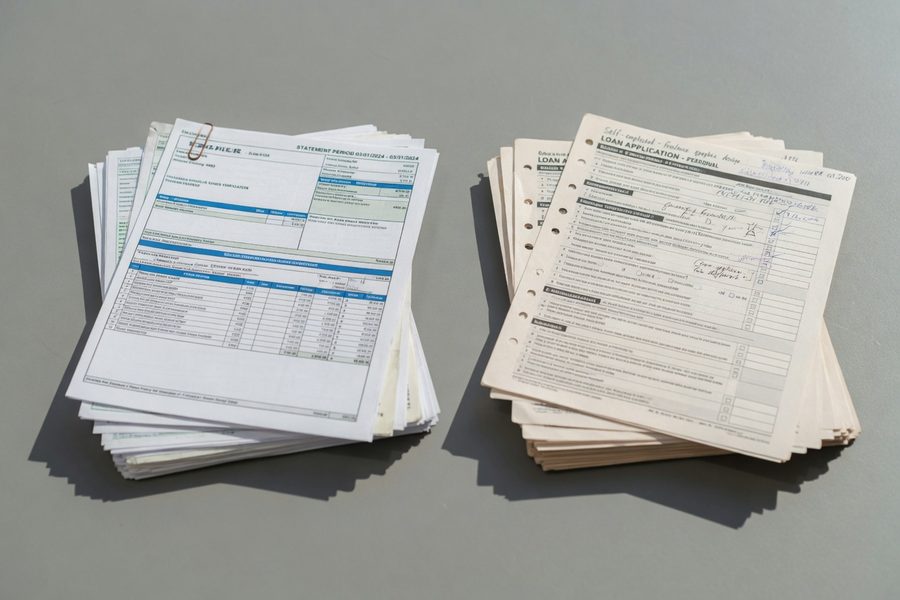
Not all retained data is treated equally. Your application details, income documentation, bank statements, employment verification, are often stored separately from ongoing payment records. Many fintech lenders now follow a data minimization principle, particularly for identity documents like passports and driver’s licenses, which are increasingly purged once underwriting is complete. This is a meaningful distinction. The sensitive identity verification material may actually disappear faster than your transaction history. Payment performance data, on the other hand, gets reported to Equifax, Experian, and TransUnion and lives on your credit report independently of what the lender retains.
What I see in practice: Borrowers are often surprised to learn that a fintech lender holds their full bank transaction history for years after repayment. The loan is closed, but the PDF of three months’ statements pulled during underwriting still sits in an S3 bucket somewhere. That’s the file worth asking about.
Who Accesses Your Data After the Loan Closes
Access doesn’t end at repayment. The parties who can legitimately touch your closed-loan data include credit bureaus, loan servicers, bank regulators, state attorneys general, fraud prevention vendors, and the lender’s own internal marketing teams.
The Federal Trade Commission’s Gramm-Leach-Bliley Act guidance is explicit: privacy notices about information-sharing practices continue to apply to former customers, and opt-out directions you gave during the loan remain effective after the relationship ends, but only if you actually gave them. Most borrowers don’t. This creates a standing window for affiliate marketing and product cross-selling that persists long after your last payment clears.
Do Digital Lenders Sell or Monetize Your Financial Data?
The honest answer: most don’t sell identifiable data outright, but many monetize it through channels that feel equivalent to a sale. Aggregated and anonymized datasets get licensed to market research firms. Behavioral data from the loan application flow feeds internal algorithms used to pre-approve you for credit cards, insurance products, or new loan offers without fresh consent.
Trigger leads are the clearest example of this exposure. When a lender pulls your credit for a loan application, that inquiry is visible to other lenders through the credit bureaus, who sell prescreened lists to competing lenders almost immediately. This is legal and common, and it explains the flood of loan offers that often follows a fintech application. If you’ve ever borrowed through an embedded finance platform, you’ve likely seen this happen inside the same app ecosystem.
Where this gets tricky: The line between “using your data to serve you better” and “using your data to sell you more” is thin in fintech. Lenders that offer payroll-connected underwriting, like those described in our piece on how fintech lenders use payroll data for approvals, may retain payroll feed permissions long past repayment unless you explicitly revoke them.
The CFPB’s 2024 Personal Financial Data Rights Final Rule addresses this directly. Under that rule, authorized third parties may collect, use, and retain covered data only as reasonably necessary to provide the consumer’s requested product or service, and must delete retained data upon revocation of authorization. Critically, this obligation falls on the third party receiving the data, not necessarily the originating lender, which means revoking authorization with the lender doesn’t automatically scrub data held by downstream vendors. The rule’s full text is available at the CFPB’s Personal Financial Data Rights page.
The distinction between pure digital lenders and banks offering digital loan products matters here. Bank-affiliated digital lenders operate under OCC and Federal Reserve supervision with stricter data governance expectations. Pure fintech lenders, especially those without a bank charter, historically faced lighter-touch oversight, though the CFPB’s 2024 data rights rule has begun narrowing that gap.

| Data Type | Who Receives It | Typical Retention Period | Can You Request Deletion? |
|---|---|---|---|
| Payment History | Credit bureaus (Equifax, Experian, TransUnion) | 7 years on credit report | No (bureau-controlled) |
| Identity Documents | Lender + ID verification vendor | Often purged post-underwriting (best practice) | Yes, if purpose fulfilled |
| Bank Statements / Transaction Data | Lender, fraud vendors, sometimes servicers | 5–7 years (AML / tax) | Partial, legal holds apply |
| Application Details (income, employment) | Lender, regulators on request | 25 months minimum (Reg B); often 7 years | Yes, after legal hold expires |
| Behavioral / App Data | Lender’s internal analytics; third-party vendors | Varies; often indefinite unless policy specifies | Yes, under CCPA / state laws |
Your Rights After Closing, And What to Actually Do
Borrowers have more leverage here than most realize, but only if they exercise it deliberately. Under the California Consumer Privacy Act (CCPA) and its 2023 amendments, California residents can request deletion of personal information no longer needed for the original business purpose. Comparable rights exist in Virginia (VCDPA), Colorado, Connecticut, and Texas as of mid-2026, with coverage expanding. Federal protections remain patchwork, which means your actual options depend heavily on which state you live in.
Start with the opt-out. Every GLBA-covered financial institution must honor your request to stop sharing data with non-affiliated third parties for marketing purposes. This doesn’t erase retained records, but it cuts off the pipeline feeding affiliate marketers and data brokers. Submit this in writing and keep a copy. Then, once the legal retention window has elapsed (typically 7 years post-repayment for most loan types), file a formal deletion request citing the specific data categories and your state’s applicable privacy statute.
What Lenders Must Provide When You Ask
Under state privacy laws, a covered business must tell you what categories of data it holds, disclose who it has shared that data with in the past 12 months, and provide a copy of your personal information in a portable format. This portability right matters: it lets you see whether lenders are retaining data you assumed was deleted. Before submitting any digital loan application, reading the privacy policy with an eye toward retention schedules is one of the digital lending mistakes first-time borrowers commonly skip.
What clients often miss: The opt-out of marketing sharing and a deletion request are two separate actions. Many borrowers submit one believing it covers both. It doesn’t. A lender can honor your marketing opt-out while still retaining and using your data internally for product development or risk modeling.
For borrowers concerned about downstream exposure, particularly those who used alternative income data during a fintech application, monitoring data broker sites like LexisNexis Risk Solutions and Acxiom is worth doing annually. These aggregators often receive derived data from lender networks, and their suppression request processes are separate from anything the original lender controls.
Where This Recommendation Falls Short
The advice to submit deletion requests and opt out of data sharing is the right call for most borrowers who don’t plan to return to the same lender. But it carries real tradeoffs worth naming.
The catch is that retained loan data can work in your favor. If you apply for a second loan with the same lender, your stored payment history provides an underwriting shortcut that can speed approval and potentially improve your rate. Lenders that use proprietary scoring, which weighs your behavior inside their own platform, may offer meaningfully better terms to returning customers whose data they already hold. Deleting that record removes the advantage. For borrowers planning to use the same fintech lender for future borrowing, this tradeoff is real.
There’s also a practical limitation to deletion requests themselves. Legal holds are broad. Anti-money laundering rules, ongoing litigation risks, tax audit exposure, and regulatory examination needs all create carve-outs that exempt large portions of your file from deletion even when you formally request it. A lender can acknowledge your request, honor the portions not subject to a legal hold, and still retain the majority of your financial data. The letter you receive confirming “your deletion request has been processed” may cover less than you think.
The drawback of opt-outs is similar. GLBA opt-outs stop non-affiliated third-party sharing for marketing purposes, but they don’t restrict sharing with affiliates, service providers performing functions on the lender’s behalf, or parties required by law. A lender with a large affiliate network, say, a fintech parent company offering insurance, investment accounts, and credit cards, can share your data across all of those products without triggering your opt-out.
Finally, the state privacy law patchwork means borrowers in states without comprehensive privacy statutes have substantially fewer enforceable rights than those in California, Virginia, or Colorado. Federal digital lender data privacy protections, as of mid-2026, remain fragmented. If you live in a state without a standing privacy law, your practical options narrow to GLBA opt-outs and whatever the lender’s own policy commits to, which varies considerably.
How We Sourced This
This article draws on federal regulatory text from the Consumer Financial Protection Bureau (Regulations B, Z, and 1041, current), the Federal Trade Commission’s Gramm-Leach-Bliley Act compliance guidance, and the CFPB’s 2024 Personal Financial Data Rights Final Rule. Retention period claims are grounded in these primary regulatory sources rather than industry surveys. State privacy law references (CCPA, VCDPA) reflect statutory provisions active as of the article date; Colorado, Connecticut, and Texas law references reflect statutes in force as of mid-2026. All hyperlinked sources were verified as accessible in June 2026. No statistics were cited that could not be traced to a named regulatory or institutional source.
Frequently Asked Questions
Does a digital lender delete your data when you pay off the loan?
No, repayment triggers no automatic deletion. Most lenders retain your full loan file for at least 7 years to satisfy anti-money laundering, tax, and dispute resolution requirements. Identity verification documents may be purged sooner under data minimization principles, but payment records and application data typically remain.
Can you request that a fintech lender delete your information after closing?
In many states, yes. Under the CCPA and comparable laws in Virginia, Colorado, Connecticut, and Texas, you can request deletion of personal information no longer needed for its original purpose. The lender can deny the request for any data subject to a legal hold, which covers most of the substantive loan file, so deletion requests often succeed only partially.
Do digital lenders sell your financial data to third parties?
Most don’t sell identifiable data outright, but many share it with affiliates and data vendors for analytics, fraud prevention, and marketing. Aggregated and anonymized datasets are commonly licensed to third parties. The trigger lead market means your credit inquiry is sold through the bureau network almost immediately after application, regardless of whether your loan closes.
Is your data safer with a bank-affiliated digital lender than a pure fintech?
Generally, yes, bank-affiliated digital lenders operate under OCC, Federal Reserve, and FDIC oversight with stricter data governance requirements than non-bank fintechs. The gap has narrowed since the CFPB’s 2024 data rights rule extended obligations to non-bank covered entities, but bank supervision still carries more teeth in practice.
What’s the difference between opting out of data sharing and requesting deletion?
They are separate actions with different effects. An opt-out under GLBA stops the lender from sharing your data with non-affiliated third parties for marketing. A deletion request asks the lender to erase your personal information entirely. You need both if your goal is to both stop ongoing marketing exposure and remove your records from the lender’s systems.
Sources
- Consumer Financial Protection Bureau, Regulation Z (TILA): Record Retention Requirements
- Consumer Financial Protection Bureau, Regulation B (ECOA): Record Retention
- Consumer Financial Protection Bureau, Regulation 1041: Payday Lending Record Retention
- Federal Trade Commission, How to Comply with the Gramm-Leach-Bliley Act Privacy Rule
- Consumer Financial Protection Bureau, Personal Financial Data Rights Final Rule (2024)
- California Department of Justice, California Consumer Privacy Act (CCPA) Overview