

Updated December 2025
Key Takeaways
- The average interest rate on 24-month personal loans at commercial banks was 11.86%, according to the Federal Reserve G.19 release.
- Between June 2023 and March 2024, 466 people received a Zero Percent Loan for IT training and certification through Per Scholas’ workforce access program, showing subsidized alternatives do exist for the right applicants.
- The Federal Funds Effective Rate held at 3.63% in June 2026, unchanged from May, per FRED series FEDFUNDS, meaning personal loan pricing has been stable rather than climbing this quarter.
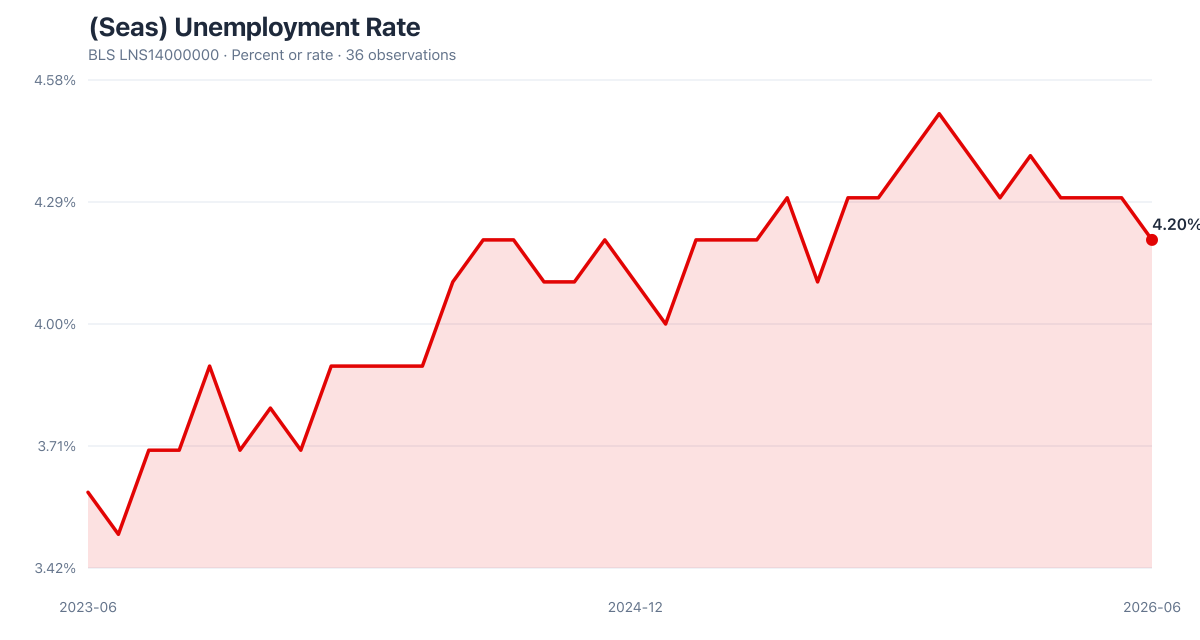
- The national unemployment rate fell to 4.20% in June 2026 (from 4.30% in May), per FRED series UNRATE, a modest tailwind for anyone betting a certification will lead to a job change.
- The 24-month personal loan rate above sits well under the 48-month new auto loan rate of 7.47% (FRED TERMCBAUTO48NS) once you account for the shorter term and higher category pricing on unsecured credit.
- Broad equity indexes pulled back this week, with SPY down 1.02% and QQQ down 1.46% as of July 23, 2026, a reminder that rate-sensitive borrowing decisions are happening against a choppier market backdrop, per Yahoo Finance market coverage.
A certification loan strategy only works if you treat the loan like a business expense with a return date, not a shortcut around saving up. Right now, personal loan pricing is holding closer to 11.86% for 24-month terms at commercial banks, per the Federal Reserve’s G.19 consumer credit release, which is the number every borrower comparing a PMP, CPA prep course, or IT bootcamp against a credit card should start with.
This matters this month because the Federal Funds Rate has been flat at 3.63% for two straight readings through June 2026, per FRED, while mortgage rates have ticked up and equity markets wobbled this week. Borrowing costs for shorter-term consumer credit aren’t moving much either direction right now, which means the decision to finance a certification hinges more on your own cash flow and career math than on trying to time a rate dip.
Data as of
Interest rate figures come from the Federal Reserve’s G.19 Consumer Credit release and FRED series FEDFUNDS, MORTGAGE30US, MORTGAGE15US, TERMCBAUTO48NS, and PCEPI, with observations dated May through July 2026. Labor data reflects BLS series LNS14000000 and FRED’s UNRATE for June 2026. Market snapshots (SPY, QQQ) and news sentiment are from Finnhub and Marketaux as of July 23, 2026, and are included only for context on market mood, not as substitutes for the official rate and labor prints above.
When a Personal Loan Beats the Alternatives for a Certification Loan Strategy
Most articles skip the real starting point: eligibility. The average professional certification costs between $1,000 and $5,000. Some IT or healthcare credentials go higher. That range often falls below the minimums many private education lenders require. Or it lands outside their “approved school” lists. A general-purpose personal loan disburses directly to your bank account. That’s flexibility. But many lenders now require an education-purpose disclosure, or even a self-certification form, if you say what the funds are for. Some credit unions also apply a three-day rescission window. You can back out before funds are locked in. That’s a real safety net.
Before you sign, run the numbers. Employer tuition reimbursement? Free money. But capped annually. Paid only after you finish. So you still need bridge financing. A 0% APR credit card? Only works if you pay it off before the promotional window ends, typically 12 to 18 months. After that, deferred interest hits. You lose everything. Payment plans from providers like PMI or AICPA-affiliated prep courses? Sometimes no interest if paid in full within a short window. That’s cheaper than the Fed’s 11.86% average for 24-month personal loans, per G.19 release. If you’re weighing a personal loan against other short-term borrowing during a period of elevated rates, the reasoning in How to Use a Personal Loan Strategically During a High-Inflation Period applies directly here too.
Choosing Loan Terms That Keep Your Budget Intact
Term length is where most borrowers quietly overpay. A 24- to 36-month term keeps total interest under control. It also keeps payments within reach for most working professionals. Stretching to 60 or 72 months lowers the monthly payment. But it can nearly double total interest paid, especially at rates near the current 11.86% average for 24-month terms tracked by the Federal Reserve. Longer terms also mean you’re still paying off a five-year-old certification long after its resume value has faded. That’s inefficient.
Ask lenders for both fixed-rate quotes and any variable-rate option. Fixed rates cost slightly more upfront, but they remove the risk of a payment jump if benchmark rates move. The Fed Funds Rate has sat flat at 3.63% for two consecutive months through June 2026, per FRED. That risk is low now. But it’s not zero over a multi-year loan.
Origination fees are easy to overlook. A 3% to 6% fee on a $5,000 loan adds $150 to $300 off the top. That raises your real APR above the quoted number. Always ask for the total repayment amount, not just the monthly figure, before comparing offers. If you’re carrying other installment debt, read Five Things Borrowers Get Wrong About Debt-to-Income Ratio before applying. A new certification loan changes your DTI calculation. That can affect a mortgage or auto loan application down the road, not just your budget this year.
Calculating Real ROI and Stress-Testing Repayment
Do the math before you borrow. Not after. Say a project management certification costs $2,500. You finance it over 24 months at the Fed’s tracked average of 11.86% for that term length, per the G.19 release. That means a monthly payment of roughly $117. Total repayment: $2,808. Interest: $308. Over two years. If that credential adds $3,000 to $6,000 in annual salary within your field, a common range for mid-tier IT and project management certifications, you recoup the full loan cost, principal and interest, within the first four to six months of the new pay rate. That’s ROI that justifies the debt.
Now stress-test the downside. IT and project management fields often see a six- to twelve-month job search window after a career pivot. The national unemployment rate at 4.20% per FRED’s UNRATE series is healthy. But it’s not a guarantee of a fast transition. Model your repayment plan assuming you don’t get the raise for six months past your original estimate. Confirm the payment still fits inside 10% to 15% of your take-home pay. If it doesn’t? Shorten the loan amount. Delay the certification until you’ve saved a partial cushion. Or wait for your employer’s next training budget cycle. Most companies reset annually.
The DTI ratio point matters. Lenders reviewing a mortgage or auto loan within a year or two of your certification loan will see the new installment debt on your credit file, even after you’ve paid it off in your head. That’s a real edge case. If you’re weighing consolidation, the tradeoffs are laid out in Consolidate Multiple Personal Loans or Pay Them Off Separately.
Key Takeaway: A $2,500 certification loan at the Fed’s 11.86% average rate for 24-month terms (May 2026 G.19 release) costs roughly $308 in total interest, a cost most professionals recoup within months if the credential produces a real salary increase.
What Markets Are Reacting To
No certification-specific news this week. But the broader backdrop matters. Major indexes pulled back on July 23, 2026. SPY down 1.02% to 739.81. QQQ down 1.46% to 695.05. Yahoo Finance. Coverage also highlighted Nasdaq-100 index changes tied to SpaceX’s growing weight in tech benchmarks. A July 22 report. And a more upbeat piece on South Korean equity flows carried a positive sentiment score.
None of this changes personal loan pricing directly. Consumer installment rates track bank funding costs and the Fed Funds Rate, not daily equity swings. But a jumpier stock market signals broader financial uncertainty. That’s a cue to keep your certification loan amount conservative. Don’t borrow to the max of what a lender offers.
Key Takeaway: Equity market volatility this week (SPY down 1.02%, QQQ down 1.46% as of July 23, 2026, per Yahoo Finance) doesn’t change personal loan pricing directly, but it’s a reasonable cue to borrow conservatively rather than max out an offer.
Your Action Plan
If your certification costs under $2,000 and you have three to four months of runway, saving up beats borrowing. You avoid interest. No repayment risk if your job situation shifts mid-program. If the cost is between $2,500 and $10,000, and the credential has a documented salary bump in your field, a personal loan at or near the current 11.86% average (Federal Reserve G.19) is defensible. Provided the monthly payment stays under 10% to 15% of your take-home pay.
Watch your credit utilization. A new installment loan initially dings your score through a hard inquiry and lower average account age. But it doesn’t hurt your revolving utilization ratio like a credit card balance would. Pay down any existing card balances first if you’re planning to apply for a mortgage or auto loan within the next year. That combination of loans is exactly what lenders in the DTI misconceptions piece flag as a common approval snag.
If you qualify for a subsidized program, the Per Scholas model, funding 466 individuals between June 2023 and March 2024 through a Zero Percent Loan structure, shows these programs are real. Search for them in your field before defaulting to a bank loan.
Plan for the edge case. What if you don’t finish? Most personal loans don’t care why you borrowed once it’s disbursed. You’re still on the hook. That’s a meaningful downside compared to some provider payment plans that pause or refund fees if you withdraw early. Read the certification body’s own cancellation policy before committing loan funds.
Real-World Scenarios for Real Readers
Consider this: if you have a 620 FICO score, earn $48,000 annually, and need $7,200 for a cybersecurity certification with a 36-month repayment window, a personal loan at 11.86% would cost $1,200 in interest. Monthly payment: $228. That’s 14.5% of your take-home pay. It’s tight. But if the certification leads to a $10,000 raise in 18 months, the math still works. Still, you’d want to wait until your next paycheck cycle to apply, so you can avoid new credit inquiries while saving for a partial down payment.
Or: if you’re a mid-career project manager with a 680 score, $72,000 salary, and a $4,000 PMP prep course, borrowing only $4,000 at 11.86% over 24 months gives you a $187 monthly payment. That’s 10.3% of take-home pay. You can afford it. But if your employer’s reimbursement cycle resets in three months, waiting could save you $500 in interest. That’s clearer.
When You Should Wait
Act now only if your certification directly unlocks a confirmed promotion, raise, or job change. And the payment fits comfortably under that 10% to 15% income threshold, even if the raise is delayed. Wait if you’re speculating. Or if your employer’s tuition reimbursement cycle resets within the next two or three months. Or if you’re already carrying revolving debt that’s pushing your utilization ratio high. Pay down existing balances first. That protects your score. It also lowers future borrowing costs more than a new credential would.
Don’t stack a certification loan on top of an existing personal loan or 0% intro card balance without mapping total monthly obligations first. Loan stacking across multiple platforms is a documented way borrowers quietly overextend themselves, a pattern covered in detail in Digital Loan Stacking: Why Borrowing From Multiple Platforms at Once Quietly Backfires.
Key Takeaway: Move forward only if the payment survives a stress test against a delayed raise; otherwise, wait for an employer reimbursement cycle or build savings for a few more months before financing at 11.86% (Federal Reserve, May 2026).

Frequently Asked Questions
Is a personal loan better than a credit card for a certification?
Only if you can’t pay off the credit card before the 0% APR window ends. Most run 12 to 18 months. After that, deferred interest hits all at once. A fixed-rate personal loan at 11.86% according to Federal Reserve Board gives you predictable payments, with no surprise interest.
How much should I borrow?
Only the cost of the certification and required materials. Not a rounded-up cushion. Most programs fall between $1,000 and $5,000. Borrowing more just to have cash on hand defeats the purpose of a targeted loan.
What if I don’t finish the program?
You still owe the full loan balance. The lender doesn’t care if you pass or drop out. Check the certification provider’s refund policy separately. Some offer partial credit or pauses, something a lender never will.
Will a certification loan hurt my mortgage chances?
Yes. The new installment payment adds to your DTI ratio. Mortgage lenders watch that closely. Paying it off before applying helps offset the impact. Avoid new credit card balances in the meantime.
Should I wait for employer reimbursement?
If your employer reimburses up to $5,000 annually and hasn’t used the allotment yet, wait. If the cycle resets in two months and covers the cost, definitely wait. If you’ve already used your annual allowance, or reimbursement pays only after completion, then a short-term loan to bridge the gap can make sense.
Are zero-interest loans still available?
Yes. But they’re rare and tied to specific programs. Per Scholas funded 466 people through a Zero Percent Loan structure for IT training between June 2023 and March 2024, per its own published data. Search for similar nonprofit or workforce-development programs in your field. Don’t assume a bank loan is your only option.
Sources
- Federal Reserve Board, G.19 Consumer Credit Release
- Per Scholas, Zero Percent Loan: Transforming Workforce Access
- FRED, Federal Funds Effective Rate (FEDFUNDS)
- FRED, Unemployment Rate (UNRATE)
- FRED, Finance Rate on Consumer Installment Loans, New Autos 48 Month (TERMCBAUTO48NS)
- FRED, 30-Year Fixed Rate Mortgage Average (MORTGAGE30US)
- FRED, Personal Consumption Expenditures Price Index (PCEPI)
- BLS, Labor Force Statistics, Unemployment Rate (LNS14000000)
| Indicator | Latest | Prior / YoY | Source |
|---|---|---|---|
| 24-Month Personal Loan Rate | 11.86% (May 2026) | N/A | Federal Reserve G.19 |