

Fact-checked by the CapitalLendingNews editorial team
Quick Answer
College graduates with student debt are using fintech tools to qualify for personal loans by working with income-based underwriting apps, credit-builder products, and open banking platforms that look beyond traditional credit scores. Most graduates can complete the process in 30 to 60 days by improving their debt-to-income ratio, building an alternative credit profile, and choosing lenders that use AI-powered models to assess repayment ability.
Using fintech tools for student debt management is now one of the most effective strategies for recent graduates who want to qualify for their first personal loan. The average federal student loan borrower carries over $37,000 in student loan debt, which creates a high debt-to-income ratio that can derail traditional loan applications. A new generation of digital lenders and financial apps has changed the qualification equation, though not without its own trade-offs.
The shift matters because conventional banks still rely heavily on FICO scores and rigid debt-to-income thresholds, leaving millions of creditworthy graduates locked out. Fintech lenders, by contrast, now use alternative data, including rent payments, bank cash flow, and employment history, to build a fuller picture of a borrower’s ability to repay. This trend accelerated sharply in 2024 and 2025 as open banking regulations expanded access to real-time financial data.
This guide is written for recent college graduates who have student loans, limited credit history, and a genuine need for a personal loan, whether for an emergency expense, debt consolidation, or a major life transition. By the end, you will know which tools to use, which lenders to target, and which steps to take in the right order.
Key Takeaways
- Over 43 million Americans hold federal student loan debt, making this one of the most common financial barriers to first-time personal loan approval, according to Federal Student Aid data.
- Fintech lenders using alternative underwriting models approve borrowers at rates up to 27% higher than traditional banks for applicants with thin credit files, per CFPB research on alternative lending.
- Graduates who use credit-builder loans and secured cards for 6 months can raise their FICO score by an average of 40 points, according to Experian credit education data.
- A debt-to-income ratio below 43% is the threshold most fintech personal loan lenders require, and income-sharing apps can help graduates document the income needed to hit that target, per CFPB DTI guidelines.
- Personal loan interest rates on fintech platforms ranged from 7.99% to 35.99% APR in mid-2025, with the best rates reserved for borrowers with scores above 680, according to NerdWallet’s 2025 personal loan data.
- Borrowers who connect bank accounts via open banking APIs receive loan decisions in as little as minutes compared to the 3–5 business day average for traditional bank applications, per open banking lending research.
In This Guide
- Step 1: How Does Student Debt Affect My Chances of Getting a Personal Loan?
- Step 2: Which Fintech Tools Can Help Me Build Credit Fast With Student Loans?
- Step 3: How Do I Find Lenders That Don’t Just Use My Credit Score?
- Step 4: How Can I Lower My Debt-to-Income Ratio Before Applying for a Loan?
- Step 5: How Does Open Banking Help Me Get Approved for a Personal Loan?
- Step 6: How Do I Apply for a Personal Loan Without Hurting My Credit Score?
- Frequently Asked Questions
Step 1: How Does Student Debt Affect My Chances of Getting a Personal Loan?
Student debt affects your personal loan application primarily through your debt-to-income ratio (DTI), not just your credit score. Lenders calculate DTI by dividing your total monthly debt payments, including student loans, by your gross monthly income. A DTI above 43% is a hard stop for most lenders, and many graduates hit that ceiling before adding any new loan payment.
How to Do This
Calculate your own DTI before applying anywhere. Add up your monthly minimum payments for student loans, any credit cards, and any other debts. Divide that total by your gross monthly income. If the result is above 0.43, you need to address your DTI before applying, either by increasing income or reducing existing debt obligations through tools like income-driven repayment (IDR) plans on federal loans.
Enrolling in an income-driven repayment plan through Federal Student Aid can dramatically lower your required monthly student loan payment, sometimes to as little as $0, which directly reduces your DTI and improves your loan eligibility. This is one of the most underused fintech-adjacent strategies available to graduates.
What to Watch Out For
Some fintech lenders use a back-end DTI calculation that includes potential new loan payments. Run the numbers with the new loan included before you apply. Also note that private student loan lenders calculate DTI differently than federal servicers, so the IDR strategy only applies to federal loan balances.
The average monthly student loan payment for a borrower with a bachelor’s degree is approximately $503 per month, according to Education Data Initiative research. For someone earning $45,000 per year, that single payment pushes their DTI to over 13% before any other debts are counted.
Your credit score is the second major factor. Most recent graduates have a thin credit file, fewer than five credit accounts, which makes automated underwriting models uncertain about lending risk. Fintech tools specifically designed to address thin credit files are the subject of the next step.

Step 2: Which Fintech Tools Can Help Me Build Credit Fast With Student Loans?
The most effective fintech tools for student debt holders looking to build credit quickly include credit-builder loans, rent-reporting services, and secured credit cards, all of which add positive payment history to your credit report within 30 to 90 days. These tools work because they create a track record of on-time payments that bureaus like Experian, TransUnion, and Equifax use to calculate your score.
How to Do This
Start with a credit-builder loan from a platform like Self Financial or Credit Strong. These products let you “borrow” money that is held in a savings account while you make monthly payments. When you complete the loan term, you receive the funds and gain a positive installment loan history on your credit report.
Next, add your rent payments to your credit file using a service like Experian Boost or Rental Kharma. Experian Boost also adds utility and streaming service payment history, entirely free. Graduates who have been paying rent on time for a year or more often see an immediate score increase just from adding this data. You can learn more about how similar tools help borrowers who are building from scratch in this guide on using fintech tools to build credit from scratch.
If you want to add revolving credit history, apply for a secured credit card with a low deposit, typically $200, from issuers like Discover or Capital One. Use it for a single recurring bill and pay it in full each month. This adds a revolving account to your profile without risk of overspending.
What to Watch Out For
Avoid applying for multiple credit products at the same time. Each hard inquiry lowers your score by approximately 5 to 10 points, and several inquiries within a short window can signal desperation to underwriting algorithms. Space out your applications by at least 30 days.
Report your student loan payments to credit bureaus consistently by confirming your federal loan servicer is reporting monthly. Contact your servicer directly and verify that your account appears on all three credit bureau reports using a free check at AnnualCreditReport.com. Student loan payment history is one of the most powerful credit-building assets graduates already have.
One honest caveat worth naming: credit-builder tools work, but they work slowly. Six months is a realistic minimum before you see meaningful score movement, and some graduates are surprised to find their scores stall if they already have a long student loan history pulling in the wrong direction. These tools are most effective for borrowers who are starting nearly from zero, not for those trying to overcome a pattern of late payments. If your credit report shows missed payments rather than just a thin file, address those derogatory marks first through dispute processes or goodwill adjustment requests before adding new accounts.
Step 3: How Do I Find Lenders That Don’t Just Use My Credit Score?
Look for fintech personal loan lenders that explicitly advertise alternative underwriting models, these lenders assess your employment history, education, cash flow, and bank account behavior in addition to (or instead of) your FICO score. Key platforms to evaluate include Upstart, Avant, LendingPoint, and Oportun, each of which uses proprietary AI or machine-learning models to evaluate borrower risk.
How to Do This
Upstart is particularly well-suited for college graduates because its model was originally designed around educational attainment and area of study as proxies for future earnings potential. Upstart’s lending model uses over 1,600 data variables and has been shown to approve 27% more borrowers than traditional models at similar loss rates, according to the company’s published research.
Avant and LendingPoint target borrowers with credit scores in the 580 to 680 range, precisely the segment where many graduates land after leaving school with limited credit history. These lenders focus heavily on income stability and employment length rather than credit score alone.
For graduates with very thin credit files, Oportun offers personal loans specifically designed for first-time borrowers and does not require a Social Security Number for initial qualification. Understanding how these AI-powered systems work can give you a strategic advantage, read more in this breakdown of how AI-powered underwriting changed for loan applicants in 2026.
What to Watch Out For
Alternative underwriting lenders often charge higher APRs to offset the risk of lending to thin-file borrowers. Always compare the total cost of the loan, not just the monthly payment, before accepting any offer. A rate of 29% APR on a $5,000 loan over 36 months costs you significantly more than a 12% APR from a credit union.
| Lender | Min. Credit Score | APR Range | Max Loan Amount | Key Alternative Data Used |
|---|---|---|---|---|
| Upstart | 580 | 7.80% – 35.99% | $50,000 | Education, employment, bank cash flow |
| Avant | 580 | 9.95% – 35.99% | $35,000 | Income stability, employment length |
| LendingPoint | 585 | 7.99% – 35.99% | $36,500 | Bank account behavior, income trends |
| Oportun | None required | 35.95% – 35.99% | $18,500 | Rent, utility payments, income |
| SoFi | 650 | 8.99% – 29.99% | $100,000 | Career trajectory, income, education |
Use pre-qualification tools on each of these platforms before submitting a full application. Pre-qualification uses a soft credit pull that does not affect your score, letting you shop rate offers across multiple lenders without consequence. This is covered in more detail in Step 6.
The Consumer Financial Protection Bureau (CFPB) has published guidance supporting the use of alternative data in underwriting, noting that it can expand credit access for historically underserved populations, including recent graduates with limited credit histories. This regulatory backing gives fintech lenders more confidence to deploy these models at scale.
Step 4: How Can I Lower My Debt-to-Income Ratio Before Applying for a Loan?
The fastest ways to lower your DTI before applying for a personal loan are enrolling in income-driven repayment on federal student loans, increasing your documented income, and paying down any revolving debt with high minimum payments. Even a 5 to 10 percentage point drop in DTI can move you from a declined application to an approved one with a competitive rate.
How to Do This
First, use the SAVE Plan (Saving on a Valuable Education) or another IDR plan to reduce your federal student loan monthly payment. Under the SAVE Plan, payments can drop to as low as 5% of your discretionary income, sometimes reducing a $400/month payment to under $100. This single change can drop your DTI by 8 to 15 percentage points for someone earning under $55,000 per year.
Second, document all income streams you currently have. Fintech lenders using open banking connections or pay stub uploads can see freelance income, part-time job income, and side-hustle revenue that traditional bank underwriters often miss. Tools built on Plaid connections allow lenders to verify your real cash flow directly from your bank account rather than relying solely on your tax returns.
Third, pay down any credit card balances before applying. A card with a $1,000 balance and a $25 minimum payment adds $25 to your monthly debt obligation. Eliminating even two or three small card balances can meaningfully reduce your DTI. For a structured approach to paying down debt efficiently, the debt avalanche vs. debt snowball comparison breaks down which method fits your situation.
What to Watch Out For
Closing paid-off credit card accounts can actually hurt your credit score by reducing your total available credit and increasing your utilization ratio. Pay off the balances, but keep the accounts open. This is a common mistake outlined in more detail in this article on mistakes people make when paying off credit card debt.
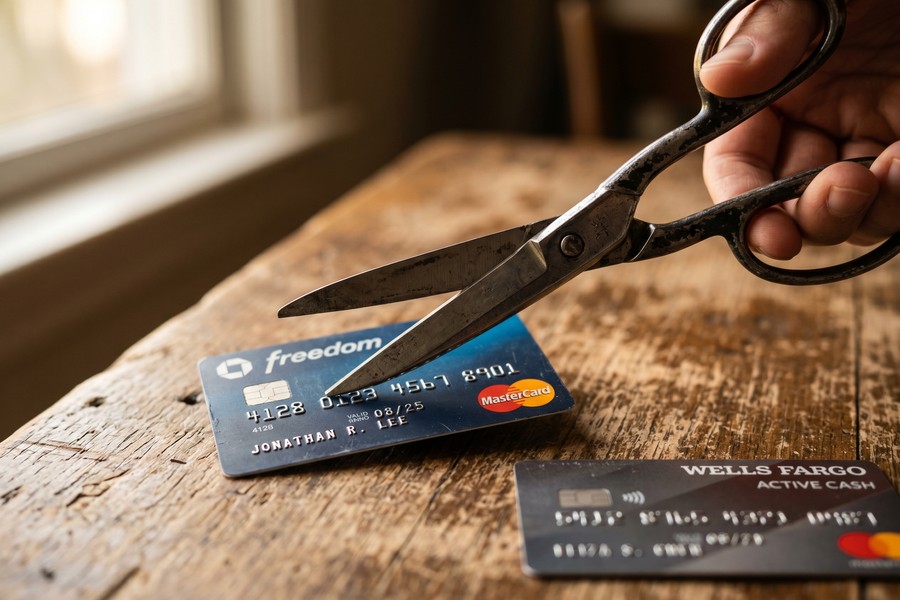
Some graduates refinance federal student loans into private loans to get a lower monthly payment, which can reduce DTI. However, this permanently eliminates access to IDR plans, loan forgiveness programs, and federal hardship deferments. Never refinance federal loans into private loans solely to improve a personal loan application, the long-term cost can far exceed the short-term benefit.
Step 5: How Does Open Banking Help Me Get Approved for a Personal Loan?
Open banking allows fintech lenders to access your real bank account data, with your explicit permission, to verify income, assess spending behavior, and evaluate repayment capacity in real time. For student debt holders with thin credit files, this is one of the most practical tools available, because it lets you show lenders what your financial life actually looks like rather than what your credit report reflects.
How to Do This
When a fintech lender asks you to connect your bank account, use a service like Plaid, MX Technologies, or Finicity (owned by Mastercard) to share your data securely. These platforms use encrypted API connections, not your login credentials, to pull 12 to 24 months of transaction history directly from your bank.
The lender’s algorithm then analyzes your average monthly deposits, consistency of income, recurring expenses, and savings behavior. A graduate who has $3,200 depositing into their account each month with stable rent payments and a growing savings balance looks very different to an algorithm than a static credit report with a 620 score. For a deeper look at how this works in practice, read how open banking is reshaping how digital lenders assess creditworthiness.
What to Watch Out For
Only connect your bank account to lenders that explicitly describe how they use and store your data. Look for lenders that mention read-only access, this means they can see your transactions but cannot move money. Reputable platforms will clearly state this in their data-sharing consent screen.
Open banking also enables faster approvals. Traditional bank personal loan applications can take three to five business days. Fintech lenders using real-time bank data often issue conditional approval within minutes and fund loans within one business day. This speed advantage matters most for graduates facing an unexpected expense.
There is one real limitation here, though. Open banking data only helps if your bank account history is clean. Graduates with frequent overdrafts, irregular deposit patterns, or months with near-zero balances may find that sharing bank data actually hurts their application rather than helping it. If your account history has rough stretches, review 60 to 90 days of statements before consenting to share them, and consider waiting until your cash flow stabilizes.
The Consumer Financial Protection Bureau finalized its Personal Financial Data Rights Rule in 2024, establishing a legal framework for open banking in the United States. This rule gives consumers the explicit right to share their financial data with third parties like fintech lenders, and requires that data be deletable upon request. This regulatory clarity has accelerated fintech lender adoption of open banking models throughout 2025.
Step 6: How Do I Apply for a Personal Loan Without Hurting My Credit Score?
Apply for a personal loan strategically by using pre-qualification tools that run only soft credit inquiries, then submitting your formal application only to the lender offering the best terms. A soft pull does not affect your credit score, a hard pull does, typically by 5 to 10 points, and multiple hard pulls within a short period compound the damage.
How to Do This
Use loan marketplace platforms like LendingTree, Credible, or Even Financial to pre-qualify with multiple lenders simultaneously using a single soft pull. These platforms will return pre-qualified rate offers from multiple fintech lenders, letting you compare APR, loan term, and monthly payment side by side without committing to any application.
Once you identify the best offer, submit a full application to that single lender. Gather your documents in advance: recent pay stubs or bank statements (for income verification), your most recent federal student loan statement, a government-issued ID, and your Social Security Number. Having these ready reduces delays that could cause a rate quote to expire.
If you are comparing loan rates across multiple platforms, be aware that rate shopping within a focused window, typically 14 to 45 days, depending on the scoring model, is treated as a single inquiry by FICO and VantageScore. This means you can apply to several lenders in the same two-week period with minimal score impact. To avoid other common application errors, review these mistakes borrowers make when comparing loan interest rates.
What to Watch Out For
Avoid applying to lenders you have no realistic chance of qualifying for. Being denied for a loan is not only a wasted hard pull, it can also signal to other lenders that you were recently rejected. Target lenders whose stated minimum credit score and DTI requirements align with your current profile.
After you are approved for a personal loan, verify that the lender reports your payment history to all three major credit bureaus. On-time payments on your new personal loan will add to your positive payment history and further improve your score over time. Not all lenders report to all three bureaus, confirm this before signing. This issue is explored fully in our guide to digital lending platforms that report to credit bureaus.

Related reading: Pro Techniques for Using Fintech Budgeting Tools to Build Credit Faster.
Frequently Asked Questions
Can I get a personal loan if I have $50,000 in student loan debt and a 610 credit score?
Yes, it is possible to get a personal loan with $50,000 in student loan debt and a 610 credit score if you apply with a fintech lender that uses alternative underwriting. Platforms like Upstart and Avant accept borrowers with scores as low as 580, and they weigh income, employment, and bank cash flow heavily. Your best strategy is to use an IDR plan to reduce your student loan monthly payment before applying, which lowers your DTI and improves your approval odds significantly.
What is the best fintech app to help me qualify for a personal loan with student debt?
The best fintech tools for student debt holders trying to qualify for a personal loan are Upstart for alternative underwriting, Self Financial for credit building, and Experian Boost for adding payment history to your credit file. Use Upstart if you want to apply directly for a loan; use Self and Experian Boost if you need 3 to 6 months to strengthen your credit profile first. Combining all three as a sequence is the most effective strategy.
How long does it take to get approved for a personal loan through a fintech lender?
Most fintech personal loan lenders issue approval decisions within minutes to hours after a completed application, compared to three to five business days at a traditional bank. Funding typically arrives within one business day of signing your loan agreement. Delays usually occur when income verification cannot be completed automatically, requiring manual review of uploaded documents.
Will applying for a personal loan hurt my credit score if I already have student loans?
Applying for a personal loan generates a hard inquiry that typically reduces your credit score by 5 to 10 points temporarily. This effect is minor and usually recovers within 3 to 6 months of on-time payments. Use pre-qualification tools that run soft pulls to shop rates first, and limit your formal applications to one or two lenders whose requirements match your profile.
Should I pay off my student loans before applying for a personal loan?
No, you do not need to pay off your student loans before applying for a personal loan, but you should reduce your effective monthly student loan payment using an income-driven repayment plan. Lenders calculate DTI based on minimum required monthly payments, not total balances. Lowering your IDR payment from $400 to $100 has the same DTI benefit as eliminating $36,000 in debt, without requiring you to liquidate savings.
What credit score do I need to get a personal loan from a fintech lender?
The minimum credit score accepted by major fintech personal loan lenders ranges from no minimum (Oportun) to 650 (SoFi). Lenders like Upstart, Avant, and LendingPoint accept applicants with scores as low as 580. However, borrowers with scores below 620 typically receive APR offers in the 28% to 35.99% range, so building your score to at least 640 before applying will result in substantially better terms.
Can I use a personal loan to consolidate my student debt and other debts together?
You can use a personal loan to consolidate private student loans with other consumer debts, but you should never use a personal loan to pay off federal student loans. Doing so converts federal debt to private debt, permanently eliminating access to IDR plans, Public Service Loan Forgiveness, and hardship deferments. Personal loan consolidation works best for combining high-interest credit card balances, not for replacing federally protected student debt.
What documents do I need to apply for a personal loan with student debt?
To apply for a personal loan as a recent graduate with student debt, you typically need: a government-issued photo ID, your Social Security Number, proof of income (recent pay stubs, bank statements, or a bank account connection via open banking), and your current student loan statement showing your monthly payment amount. Some lenders also request your most recent tax return, especially if you have freelance or self-employment income alongside a salaried job.
How do fintech lenders verify my income if I am a recent graduate with a new job?
Fintech lenders verify income through three primary methods: pay stub upload, employer verification, or bank account connection via open banking APIs like Plaid. A new job does not disqualify you, most lenders require only 30 to 60 days of employment history at your current employer, though some require 3 months. Connecting your bank account directly is the fastest method and often the most favorable, since it shows your actual deposited income in real time.
Are fintech personal loan lenders regulated the same way as banks?
Fintech personal loan lenders are regulated, but not always in the same way as federally chartered banks. They are subject to state lending laws and must comply with the Truth in Lending Act (TILA), the Equal Credit Opportunity Act (ECOA), and CFPB oversight. However, they are not subject to the same capital reserve requirements as FDIC-insured banks. Always verify that a fintech lender is licensed in your state before sharing personal financial data or signing a loan agreement.
Who is this approach NOT a good fit for?
Fintech personal loans are a poor fit for graduates who need a very large loan amount at low cost. Most alternative underwriting lenders cap out at $36,500 to $50,000, and the APRs for thin-file borrowers can exceed 28%. If you have a co-signer with strong credit, a credit union personal loan will almost always beat a fintech lender on rate. Similarly, graduates with a pattern of missed payments, rather than a simply thin file, will likely face rejection even from flexible platforms. In those cases, 6 to 12 months of disciplined on-time payment history across existing accounts is a better first step than applying for new credit.