

Fact-checked by the CapitalLendingNews editorial team
Quick Answer
Self-employed borrowers can overcome the hidden interest rate penalty lenders apply by preparing two years of tax returns, using bank statement loans, boosting their credit score above 720, and shopping among credit unions and fintech lenders. In July 2025, the gap between rates offered to W-2 and self-employed borrowers can reach 1.5–3 percentage points — but it is fully closeable with the right documentation strategy.
If you are self-employed and have ever applied for a loan, you have likely encountered the self employed loan interest rate penalty — a quiet surcharge lenders build into your offer because they view irregular income as higher risk. As of July 2025, self-employed borrowers routinely pay 1 to 3 percentage points more than salaried applicants with identical credit scores, according to Consumer Financial Protection Bureau research on non-traditional income borrowers. That difference on a $40,000 loan over five years can cost you more than $4,000 in extra interest charges.
The penalty is not disclosed in any fee schedule. Lenders justify it through underwriting models built for W-2 employees — models that treat self-employment income as inherently unpredictable. With the Bureau of Labor Statistics estimating over 16 million self-employed workers in the United States as of early 2025, the problem affects a massive and growing segment of borrowers who deserve better options.
This guide is for freelancers, independent contractors, small business owners, and gig workers who want to qualify for a competitive rate — not just get approved. Follow these steps in order and you will know exactly how to document your income, choose the right lender type, and negotiate from a position of strength.
Key Takeaways
- The self employed loan interest rate premium averages 1.5–3 percentage points above rates offered to W-2 borrowers with the same credit profile, according to CFPB analysis.
- Borrowers who submit 24 months of bank statements as income documentation reduce lender-perceived risk significantly, often cutting the rate gap by half, per Urban Institute housing finance research.
- A credit score above 720 is the single most powerful lever self-employed borrowers control — it can offset income volatility in most underwriting models, according to FICO’s credit education resources.
- Credit unions offer personal loan rates averaging 10.59% APR compared to 12.17% APR at banks, according to National Credit Union Administration rate data — making them a better starting point for self-employed applicants.
- Fintech lenders using bank transaction data rather than tax returns approved self-employed borrowers at rates 23% higher than traditional banks in 2024, per FDIC household credit survey data.
- Adding a creditworthy co-signer can reduce a self-employed borrower’s offered interest rate by 2–4 percentage points at most major lenders, according to Federal Reserve consumer credit data.
In This Guide
- Why do lenders charge self-employed borrowers a higher interest rate?
- What income documents do self-employed borrowers need to get a good loan rate?
- How do I improve my credit score as a self-employed borrower to get a lower rate?
- Which lenders are best for self-employed borrowers who want a competitive interest rate?
- How can I structure my loan application to get a lower self employed loan interest rate?
- How do I negotiate my interest rate as a self-employed borrower?
- Frequently Asked Questions
Step 1: Why Do Lenders Charge Self-Employed Borrowers a Higher Interest Rate?
Lenders add a rate premium to self-employed loans because their underwriting models are calibrated for W-2 income — predictable, verifiable, and consistent month to month. Self-employed income is none of those things by default, and lenders price that uncertainty directly into your APR.
How Traditional Underwriting Works Against You
Standard loan underwriting relies on a debt-to-income (DTI) ratio calculated from gross income. For a salaried employee, gross income is simple to verify with two pay stubs. For a self-employed borrower, lenders use net income after business deductions — which is typically far lower than actual cash flow. This artificially inflated DTI triggers higher-risk tier pricing.
A self-employed business owner earning $120,000 in revenue but claiming $40,000 in legitimate deductions appears on paper to earn only $80,000. That $40,000 gap changes the entire risk calculation the lender applies, even though the borrower’s real cash availability has not changed.
What to Watch Out For
The penalty is not labeled as such. Your loan offer will simply show a higher APR than you expected. Always request a loan estimate breakdown and ask which income figure was used in the DTI calculation — this tells you exactly where you were penalized.
Most lenders use a two-year average of your net self-employment income from Schedule C or Schedule K-1 on your federal tax returns. If year two is significantly lower than year one, some lenders will use only the most recent year — which could hurt you further. Ask your lender specifically how they average irregular income before submitting your application.
Understanding this mechanism is the foundation for everything else in this guide. If you know how the penalty is applied, you can take steps at every stage — documentation, lender selection, and loan structure — to neutralize it. For a deeper look at how alternative data is beginning to change this calculus, see how fintech lenders are using bank transaction data to approve loans beyond traditional income documents.
Step 2: What Income Documents Do Self-Employed Borrowers Need to Get a Good Loan Rate?
The single most effective action a self-employed borrower can take before applying for a loan is assembling a complete, organized income documentation package. Lenders price risk — and thorough documentation directly reduces perceived risk, which lowers your rate.
How to Do This
Prepare the following documents before you contact any lender:
- Two years of federal tax returns (personal and business, signed and complete with all schedules)
- 12 to 24 months of business bank statements showing consistent deposits and healthy account balances
- A profit and loss statement prepared or reviewed by a licensed CPA, dated within 60 days of your application
- Proof of business existence: business license, DBA registration, or incorporation documents
- Client contracts or recurring invoices demonstrating ongoing revenue commitments
- 1099 forms from clients if applicable, covering the most recent two tax years
Bank statement loans — offered by lenders who use 12 or 24 months of deposits to calculate income rather than tax returns — are particularly valuable here. These products are explicitly designed for the self-employed, and qualifying through them often bypasses the net-income penalty entirely.
What to Watch Out For
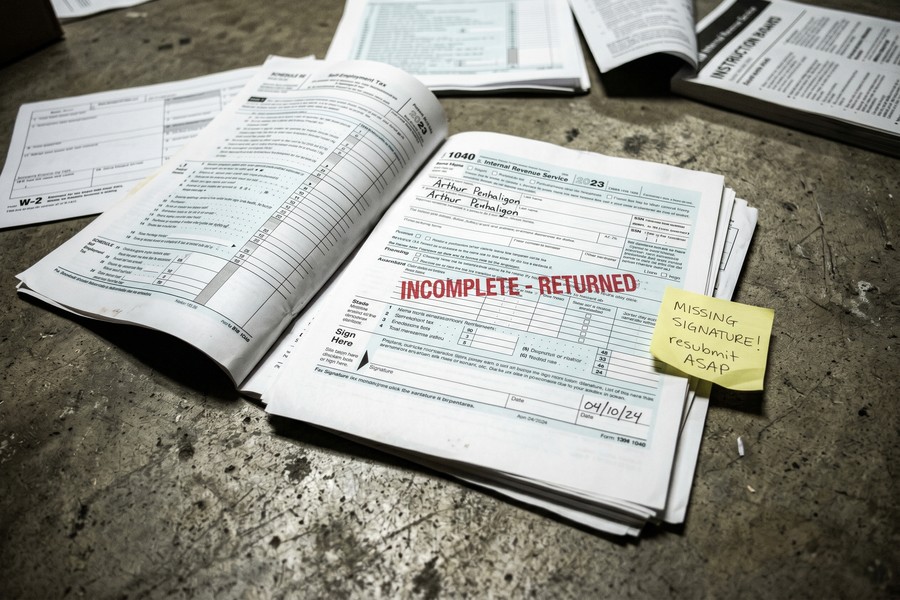
Never submit incomplete tax returns. Missing schedules or unsigned returns are an automatic red flag in underwriting and can result in an immediate denial or an elevated risk tier — meaning a higher rate. Use a CPA familiar with self-employed borrowers, not a general tax preparer.
If your most recent tax year shows significantly lower income due to aggressive deductions, consider asking your CPA to prepare a CPA letter explaining the discrepancy alongside a year-to-date profit and loss statement. Many lenders will accept this as supplemental income evidence, especially credit unions and community banks that manually underwrite loans.
It is also worth noting that newer open banking tools are reshaping how digital lenders assess creditworthiness — some platforms can now pull real-time cash flow data with your permission, replacing the document collection process almost entirely for certain loan types.
Step 3: How Do I Improve My Credit Score as a Self-Employed Borrower to Get a Lower Rate?
Your credit score is the most controllable variable in your self employed loan interest rate. A score above 720 signals to lenders that your repayment behavior is reliable — and many underwriting systems will partially compensate for income irregularity when the credit profile is strong.
How to Do This
Focus on these four high-impact actions in the 90 days before applying:
- Pay down revolving balances to below 10% credit utilization on every card. Utilization accounts for 30% of your FICO score, according to FICO’s official scoring breakdown.
- Dispute any errors on your credit reports at all three bureaus — Equifax, Experian, and TransUnion. The CFPB found that 1 in 5 Americans has an error on at least one credit report, per CFPB dispute guidance.
- Avoid opening new credit accounts in the 60 days before applying. Each hard inquiry can reduce your score by 5–10 points temporarily.
- Keep all accounts current. Payment history makes up 35% of your FICO score — a single missed payment can cost 60–110 points.
“Self-employed borrowers who walk into a loan application with a credit score above 740 and clean repayment history are treated almost identically to salaried borrowers in automated underwriting systems. The income documentation requirements shift, but the pricing penalty largely disappears.”
What to Watch Out For
Many self-employed borrowers mix personal and business expenses on personal credit cards, driving up their utilization ratio. Separate business and personal credit completely before applying. If you do not yet have a dedicated business credit card, open one at least six months before your loan application to begin building a business credit profile alongside your personal one.
Borrowers with credit scores between 720 and 759 receive personal loan APRs averaging 13.5%, while borrowers in the 660–719 range pay an average of 17.8%, according to Federal Reserve G.19 consumer credit data. That 4.3-point gap on a $30,000 loan over four years equals over $2,800 in additional interest paid.
| Credit Score Range | Avg. Personal Loan APR (Self-Employed) | Avg. Personal Loan APR (W-2) | Extra Cost on $30K / 4 Years |
|---|---|---|---|
| 760+ | 10.5–12.9% | 9.5–11.5% | ~$800–$1,200 |
| 720–759 | 13.5–16.0% | 11.5–13.5% | ~$1,500–$2,100 |
| 680–719 | 17.0–21.0% | 13.5–16.0% | ~$2,800–$4,000 |
| 640–679 | 22.0–28.0% | 17.0–20.0% | ~$4,500–$6,200 |
| Below 640 | 28.0–36.0% | 20.0–25.0% | ~$6,500–$9,800 |
Rate estimates are based on 2025 lender survey data compiled by Bankrate’s personal loan rate tracker and adjusted to reflect the documented self-employment premium. Your exact rate will vary by lender and loan type.
Step 4: Which Lenders Are Best for Self-Employed Borrowers Who Want a Competitive Interest Rate?
Not all lenders treat self-employed income the same way. Choosing the right lender type is as important as any document you prepare — because some institutions are structurally better suited to evaluating non-traditional income than others.
How to Do This
Evaluate lenders in this order of likelihood to offer a competitive self employed loan interest rate:
- Credit unions: Member-owned institutions with manual underwriting and lower average rates. The NCUA reports credit unions offer personal loan rates averaging 10.59% APR versus 12.17% at commercial banks. Apply to credit unions where you already have a checking or savings relationship.
- Community banks: Local and regional banks that manually underwrite loans are more likely to consider your full financial picture rather than relying solely on automated systems. Call before applying and ask if they offer bank statement loans or manual underwriting for self-employed applicants.
- Fintech lenders using alternative data: Platforms like Upstart, Avant, and LightStream use machine learning models that incorporate cash flow, education, and payment history — not just tax-reported income. These lenders have approved self-employed borrowers at significantly higher rates than traditional banks.
- Online marketplace lenders: Sites like LendingTree and Credible allow you to submit one application and receive multiple competing offers. Competition among lenders drives rates down — and you can see in real time which underwriting approach produces the best offer for your profile.
- SBA loan programs: If you need business financing rather than a personal loan, the U.S. Small Business Administration’s 7(a) loan program offers government-backed financing at rates tied to the prime rate plus a small spread — significantly lower than unsecured personal loans.
What to Watch Out For
Avoid applying to multiple traditional banks simultaneously. Each application generates a hard credit inquiry. Rate shopping is protected under FICO’s 45-day rate shopping window for mortgage loans — but personal loan inquiries are not always consolidated. With fintech and marketplace lenders, pre-qualification checks are soft pulls and will not affect your score.

The rise of AI-driven underwriting is also worth tracking. As explored in our guide on how AI-powered underwriting changed the landscape for loan applicants in 2026, some platforms now assess employability, industry stability, and cash flow patterns — all factors that can work in favor of established self-employed professionals.
Some online lenders that market specifically to self-employed borrowers charge origination fees of 5–8% of the loan amount, which can effectively add 2–3 percentage points to your true cost of borrowing. Always calculate the full APR including fees — not just the stated interest rate — before accepting any offer. Use the Consumer Financial Protection Bureau’s loan calculator to compare total costs side by side.
Step 5: How Can I Structure My Loan Application to Get a Lower Self Employed Loan Interest Rate?
How you structure your loan request — the amount, term, collateral, and co-signer arrangement — directly affects the rate you receive, independent of your income documentation or credit score. Strategic structuring can reduce your rate by 1–4 percentage points.
How to Do This
Use these four structuring levers before you submit your application:
- Add collateral: Secured personal loans — backed by a savings account, vehicle, or investment portfolio — carry significantly lower rates than unsecured loans. A secured loan converts your application from a character-based risk assessment to an asset-based one. Lenders report secured personal loan rates averaging 2–5 percentage points lower than unsecured equivalents.
- Add a creditworthy co-signer: A co-signer with a W-2 income and a credit score above 720 essentially removes the self-employment risk flag from the underwriting calculation. The loan is assessed primarily on the co-signer’s profile, with your income as supporting documentation.
- Borrow less than you need and supplement with savings: Loan-to-income ratio matters. Requesting a smaller loan relative to your documented income improves your DTI, which directly lowers your risk tier.
- Choose a shorter repayment term: Lenders price longer terms with higher rates to compensate for extended exposure. A 36-month term will almost always carry a lower rate than a 60-month term, even on the same loan amount.
What to Watch Out For
Do not use retirement accounts as collateral unless absolutely necessary. Some lenders allow 401(k) or IRA assets to back a loan, but doing so creates early withdrawal risk if you ever default — triggering taxes and penalties on top of loan consequences.
If you have been self-employed for more than three years and your income has grown consistently year over year, explicitly include a one-page income trend summary with your application. Show the lender your trajectory — year one, year two, year three income — and frame your current income as conservative compared to your business growth. Many manual underwriters will credit upward income trends when formally documented.
For those managing a personal loan alongside irregular freelance income, the strategies in our guide on how a freelancer with irregular income should handle a high-interest loan pair well with the structuring techniques above.
Step 6: How Do I Negotiate My Interest Rate as a Self-Employed Borrower?
Many borrowers do not realize that loan interest rates — especially at credit unions, community banks, and fintech lenders — are often negotiable. Getting a competing offer is the most powerful negotiating tool available to any self-employed borrower.
How to Do This
Follow this three-step negotiation process after receiving your first offer:
- Get at least three competing offers before accepting anything. Use marketplace tools like Credible, LendingTree, or NerdWallet’s loan marketplace to generate multiple APR quotes with a single soft-pull application. Competition among lenders is your greatest asset.
- Present competing offers directly. Call your preferred lender — ideally one where you have an existing banking relationship — and say: “I have received an offer at [lower rate] from [named competitor]. Can you match or beat it?” Relationship banks and credit unions routinely discount rates to retain existing customers.
- Negotiate on fees, not just rate. If a lender cannot lower your APR, ask them to waive or reduce the origination fee. A 1% reduction in a $40,000 origination fee saves you $400 immediately — the equivalent of a meaningful rate reduction.
“Self-employed borrowers leave money on the table by accepting the first offer. The initial quote from any lender is a starting point, not a final answer. Especially for borrowers with strong credit and solid documentation, rate negotiation is not just possible — it is expected.”
What to Watch Out For
When comparing offers, always use the APR (Annual Percentage Rate), not the stated interest rate. The APR includes fees, which means it is the true cost of borrowing. Two loans with the same interest rate but different origination fees will have different APRs — and the one with the lower APR costs less overall.

Before locking in any rate, it is also worth understanding whether a fixed or variable structure better suits your cash flow patterns. Our breakdown of fixed vs. variable interest rates and which loan type saves more covers this decision in detail. And if you are considering refinancing an existing loan once your financial profile improves, read whether you should refinance now or wait for rates to drop further — particularly relevant as Fed rate decisions in 2025 continue to shift the landscape.
Borrowers who obtained three or more loan quotes saved an average of $1,500 compared to those who accepted the first offer, according to CFPB research on personal loan shopping behavior. For self-employed borrowers facing elevated starting rates, the savings potential is even higher.
Frequently Asked Questions
Why is my self employed loan interest rate higher than my friend’s rate when we have the same credit score?
Lenders set your rate based on both credit score and income stability — and self-employment income is treated as higher risk than W-2 income by default, even at identical credit scores. Your friend’s salaried income is easier to verify and harder to lose suddenly, which places them in a lower risk tier in most underwriting models. To close the gap, focus on thorough income documentation and lenders that use bank statement or cash flow underwriting rather than purely tax-return-based income verification.
Can I get a personal loan as a self-employed borrower with only one year in business?
Yes, but your options narrow considerably. Most traditional banks and many credit unions require at least two years of self-employment history verified by tax returns. However, some fintech lenders and bank statement loan programs accept 12 months of business bank statements as sufficient proof of income. Your personal credit score and the strength of your cash flow documentation will carry more weight when your business history is short.
What is a bank statement loan and is it a good option for self-employed borrowers?
A bank statement loan is a product where the lender calculates your qualifying income from 12 to 24 months of bank deposits rather than your tax returns. This bypasses the net income problem created by business deductions. Bank statement loans are widely used in mortgage lending for self-employed borrowers and are increasingly available for personal and small business loans through alternative lenders. The tradeoff is that rates are typically 0.5–1.5 percentage points higher than standard loans — but they may still be lower than what you would receive through conventional underwriting as a self-employed applicant.
Do lenders verify self-employment income the same way for a personal loan versus a mortgage?
No — mortgage lenders have the strictest verification requirements, typically mandating two years of tax returns, a year-to-date profit and loss statement, and CPA verification. Personal loan lenders vary widely. Some require only bank statements and a business license. Others use automated income verification tools connected to your bank account via open banking APIs. When applying for a personal loan, ask each lender upfront what documentation they require — the answer will tell you immediately whether their process works in your favor.
Should I apply for a business loan or a personal loan if I am self-employed?
It depends on how you will use the funds. If the purpose is business-related — equipment, working capital, or expansion — a business loan or SBA loan product will typically offer better rates and larger borrowing limits. If the purpose is personal — debt consolidation, home improvement, or a major purchase — a personal loan is the appropriate product. Mixing the two can create tax complications and may confuse underwriters. Keep business and personal borrowing separate when possible.
How many years of tax returns do I need to show lenders as a self-employed borrower?
The standard requirement is two years of federal tax returns, both personal and business. Some lenders will accept one year if your income is strong, your credit score is above 720, and you supplement with 12 months of bank statements. A few fintech lenders waive the tax return requirement entirely in favor of bank transaction data. If your most recent tax year shows lower income due to deductions, a CPA-prepared profit and loss statement can provide context that prevents your rate from being set based solely on the lower figure.
Can I get a lower interest rate by putting up collateral as a self-employed borrower?
Yes — adding collateral is one of the most effective rate-reduction strategies available to self-employed borrowers. A secured personal loan backed by a savings account, vehicle title, or brokerage account converts your application from an unsecured credit risk to an asset-backed obligation. Lenders consistently price secured loans 2–5 percentage points lower than unsecured equivalents for the same borrower profile. The risk is that the lender can seize the collateral if you default, so only use assets you can afford to lose in a worst-case scenario.
What if my income went down last year because I took more deductions — will that hurt my loan rate?
Yes, it can — if the lender uses a two-year average and your most recent year is significantly lower. To counter this, ask your CPA to prepare an addendum letter explaining the deductions and their non-recurring nature, alongside a current-year profit and loss statement showing your income trajectory. Some lenders, particularly credit unions and community banks with manual underwriting, will take this supplemental documentation into account. Fintech lenders using bank statement underwriting often bypass this issue entirely by looking at actual deposit history rather than tax-reported figures.
How does my debt-to-income ratio affect my self employed loan interest rate?
Your DTI ratio is one of the two primary rate-setting inputs alongside your credit score. Lenders generally want to see a DTI below 43% for personal loans — though some fintech lenders accept up to 50%. Self-employed borrowers are penalized here because lenders use net income (after deductions) in the calculation rather than gross revenue, which inflates the apparent DTI. Paying down existing debts before applying and providing documentation that supports a higher qualifying income figure are the two fastest ways to improve your DTI-driven rate tier.
Sources
- Consumer Financial Protection Bureau — Research Reports on Consumer Credit and Non-Traditional Income
- U.S. Bureau of Labor Statistics — Employed Persons by Class of Worker and Part-Time Status
- National Credit Union Administration — Credit Union and Bank Rates Comparison
- Federal Deposit Insurance Corporation — FDIC National Survey of Unbanked and Underbanked Households
- Federal Reserve Board — G.19 Consumer Credit Statistical Release
- FICO — Understanding Your FICO Score and What Affects It
- Consumer Financial Protection Bureau — How to Dispute an Error on Your Credit Report
- Bankrate — Personal Loan Interest Rates Tracker 2025
- U.S. Small Business Administration — 7(a) Loan Program Overview
- Urban Institute — Housing Finance at a Glance: Monthly Chartbook
- Consumer Financial Protection Bureau — Study on Borrower Savings from Personal Loan Shopping