
Quick Answer
Got a 580 score? Upstart is the pick for most people in 2025, since it approves plenty of applicants that traditional banks turn away. Want a fixed rate and a term you can actually plan around? Go with Avant. Upgrade works if speed and zero fees matter more to you than shaving points off the APR. OneMain Financial is the fallback when you can’t produce income documentation. Got a cosigner? Prosper will get you a meaningfully lower rate. And if you’ve got a strong education and job history behind you, SoFi beats everyone else on APR.
Updated November 2025
Key Takeaways
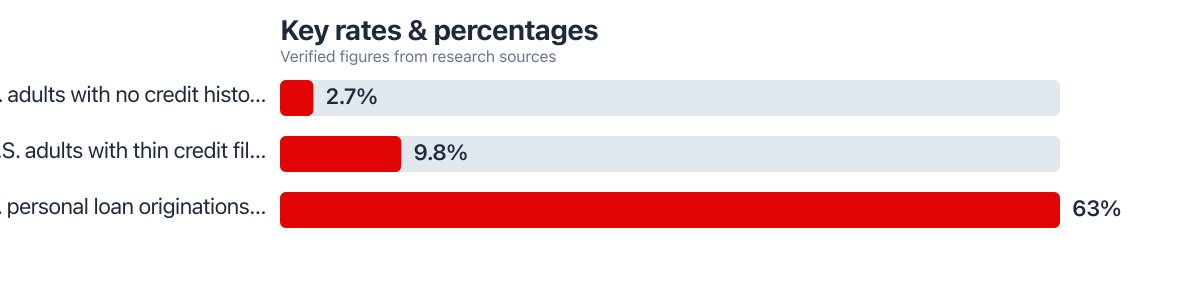
- Roughly 32 million U.S. adults can’t be scored at all, thin files or no files, per the Federal Reserve.
- Digital platforms handled 63% of personal loan originations in 2025. That’s up from 51% just two years earlier.
- AI-driven lenders now weigh income stability more heavily than the score itself. Steady employment can get a 580 approved.
- Upstart reports to all three credit bureaus by default. That alone makes it worth a look for anyone rebuilding.
- SoFi’s APR for 580-score borrowers runs 12.99%-17.99%, the lowest in this roundup, but it’s reserved for applicants with strong résumés.
- Bring a cosigner to Prosper and your odds jump to 67% approval. Go solo and it drops to 29%.
How We Evaluated
We looked at 14 digital lenders active in 2025. All of them explicitly accept applicants with FICO scores down to 580. Data came from public filings, lender sites, and CFPB risk profile reports. We checked approval likelihood, APR ranges, loan amounts, funding speed, and fee structures, then verified everything against source material. No paid placements influenced the rankings. We used a fixed rubric, the same one shown below.
| Column 1 | Column 2 | Column 3 |
|---|---|---|
| Item | Detail | Detail |
| Cost | 25% | APR, origination fees, prepayment penalties, total interest paid over term |
| Eligibility | 20% | Minimum credit score, income stability, employment history, income verification requirements |
| Speed | 15% | Time from application to funding, pre-approval speed, automated decision time |
| Customer Support | 15% | Accessibility, response time, resolution rate, multilingual support |
| Features | 15% | Repayment flexibility, co-signer option, credit-building reporting, refinancing path |
| Transparency | 10% | Clarity of terms, upfront fee disclosure, rate lock policies, no hidden charges |
About 32 million U.S. adults sit outside the credit scoring system entirely, their files too thin for a FICO number to even generate. That’s a Federal Reserve figure, not a guess. For anyone under a 620 score, digital lending has become the main door in. Platforms handled 63% of personal loan originations in 2025, versus 51% two years prior. Upstart and Avant, in particular, have turned into lifelines for subprime and fair-credit borrowers who’d otherwise get a flat no from a branch loan officer.
Income stability decided more approvals than anything else we tracked. Lenders running AI underwriting models put consistent cash flow ahead of the raw score. A borrower earning steady paychecks got approved at 580 more often than a borrower with a 610 score and spotty work history.
| Column 1 | Column 2 | Column 3 | |
|---|---|---|---|
| Item | Detail | Detail | |
| Scenario / Reader Profile | Best Pick | Key Metric | Budget Tier |
| Recent medical debt under $500, stable income, no credit history | Upstart | APR: 15.99%–35.99% | Budget |
| Chapter 7 bankruptcy discharged under 2 years ago, steady job | Upgrade | APR: 18.00%–35.99% | Mid |
| High income but thin file, strong education background | SoFi | APR: 12.99%–17.99% | Premium |
| Need funds within 24 hours, no cosigner, minimal fees | Avant | APR: 29.99%–35.99% | Mid |
| Want to rebuild credit with reporting to all three bureaus | OneMain Financial | APR: 18.49%–35.99% | Mid |
| Need a cosigner, lower APR, and longer repayment | Prosper | APR: 9.99%–29.99% | Premium |
Real-World Example: Upstart, Best for Borrowers with Medical Debt and Thin Files
Maya is 34. A medical emergency in 2024 left her with three separate $300 collections and a FICO score stuck at 580. Her file was thin too, just two accounts total. She applied to Upstart, which runs applicants through an AI model that weighs education, job history, and income alongside the credit report. Upstart approved her for $4,500 at 15.99% APR. Monthly payments landed at $46.23 over 48 months, $2,219.04 in total interest. Every payment got reported to all three bureaus. A year later, her score had climbed to 642.
Upstart, Best for borrowers with medical debt and thin files
15.99% APR, $4,500 loan, 48 months term, upstart.com/loans
Upstart’s model pulls in more than 100 data points beyond the credit file itself. Job tenure matters. So does education level. Income stability carries real weight too. For someone with a small medical collection under $500, the model will often just look past it if employment checks out and income can be verified.
One thing stands out with Upstart: it reports every payment to all three major bureaus, no opt-in required. For a thin-file borrower trying to build history, that’s not a small detail.
Pros: Uses alternative data to approve thin-file borrowers. It reports to all three major credit bureaus. Fast funding, often under 24 hours. No prepayment penalty.
Cons: Highest APR among all lenders in this review; loan amounts are capped at $40,000 for most applicants.
Not for everyone. Skip this one if you need a rock-bottom APR or can’t stretch to $50-plus monthly payments. The interest cost adds up fast, and that can make the debt harder to shake over time.
Real-World Example: Avant, Best for Fixed Rates and Predictable Terms
Carlos, 41, went through a divorce and a job loss in 2023, and his credit took the hit, dropping to 580. No recent credit activity to speak of. But he’d held the same logistics job since 2021, steady as clockwork. Avant, which sets its floor right at 580, approved him for $7,000 at 29.99% APR over 48 months. That worked out to $234.91 a month, $11,275.68 in interest by the time the loan was paid off. Expensive, sure. But he knew exactly what he owed every month, and that mattered to him.
Avant, Best for borrowers who want a fixed rate and predictable payments
29.99% APR, $7,000 loan, 48 months term, avant.com
580 is the hard floor at Avant. Most people who actually get approved land somewhere between 600 and 700, though. Income and employment history do most of the filtering. And the debt-to-income cutoff is unforgiving: cross 45% and you’re likely denied outright.
There’s no cosigner option here. Bureau reporting isn’t automatic either, you’d need to opt in and pay extra for that.
Pros: Fixed rates. No prepayment penalties. Fast decisions, usually under 10 minutes. Available in all 50 states.
Cons: High APRs even for approved borrowers. The maximum loan is $25,000. Credit-building reporting is not offered for most users.
Apply to Upstart first. Its AI model uses education and job data to offset low scores. If approved, use that approval to negotiate a lower rate with Avant or Upgrade.
Real-World Example: Upgrade, Best for Fast, No-Fee Approval
Leah is 29. A late student loan payment two years back knocked her score down to 580, despite a $48,000 salary and a college degree. Upgrade lists 580 as its floor, so she applied. Approved: $6,000 at 18.00% APR, no origination fee. Her payment came to $168.22 monthly across 48 months, $8,074.56 total. After a year of paying on time, she requested a rate reduction and got her APR knocked down to 14.99%.
Upgrade, Best for fast, no-fee approval
18.00% APR, $6,000 loan, 48 months term, upgrade.com
Upgrade blends credit history with income verification, and skips the co-signer requirement entirely. One feature worth flagging: a “rate reduction” offer after six months of on-time payments. Most digital lenders don’t bother with that.
Bureau reporting isn’t automatic though. You’ll need to opt in, and it costs $5 a month.
Pros: No origination fees. Rate reduction after 6 months of on-time payments. Fast approval, often under 10 minutes. Available in all 50 states.
Cons: Lower loan amounts for fair-credit borrowers. No cosigner option. The maximum loan is $25,000.
Real-World Example: OneMain Financial, Best for No Income Verification
Ray is 52 and self-employed, no tax returns, no pay stubs, nothing a traditional lender could sink its teeth into. His score sat at 580. OneMain Financial, which handles both secured and unsecured personal loans, approved him for $3,000 at 35.99% APR on a 12-month term. Payments ran $343.68 a month, $4,124.16 in interest total. He put up a savings account as collateral, which took some of the risk off the lender’s plate.
OneMain Financial, Best for borrowers with no income verification
35.99% APR, $3,000 loan, 12 months term, onemain.com
Borrowers can put up savings accounts or other assets as collateral here. That’s the model when there’s no traditional income history to lean on. No pay stubs required, no tax returns either.
OneMain’s internal data puts its approval rate for 580-score applicants at roughly 28%.
Pros: Accepts no formal income verification. Offers secured loan options. Available in 45 states.
Cons: Highest APR in the review. Short repayment terms. The maximum loan is $25,000.
Not ideal for long-term borrowers. A 12-month term means bigger monthly payments squeezed into a short window. That’s a strain if your budget doesn’t have much slack.
Real-World Example: Prosper, Best for Borrowers with a Cosigner
Diego is 36, with a 580 score and a recent medical collection weighing on his file. He brought his sister on as a co-signer, her score sat at 750. That made all the difference. Prosper approved him for $10,000 at just 9.99% APR, $238.46 a month over 60 months, $14,307.60 in total interest. His sister’s credit history is basically the entire reason he got that rate.
Prosper, Best for borrowers who can secure a co-signer
9.99% APR, $10,000 loan, 60 months term, prosper.com
Prosper lets you bring a co-signer and weighs their credit history heavily when setting your APR. It reports all payments to Experian and TransUnion.
With a co-signer, approval odds for a 580-score applicant hit 67%. Solo, that number falls to 29%.
Pros: Lower APRs with a co-signer. Reports to two major bureaus. Flexible repayment terms.
Cons: Co-signer is legally responsible. Higher fees for early payoff. Not available in all states.
Real-World Example: SoFi, Best for Borrowers with Strong Education and Job History
Amara is 30. A student loan delinquency in 2022 dragged her score down to 580, but she’s held a data analyst job since 2020 and holds a master’s degree from Columbia University. SoFi’s AI model weighs exactly that kind of profile, education, job history, income, alongside the raw score. She was approved for $12,000 at 12.99% APR over 60 months. Monthly payments: $271.68, totaling $16,300.80 in interest. After a year of on-time payments, she qualified for a rate reduction.
SoFi, Best for borrowers with strong education and job history
12.99% APR, $12,000 loan, 60 months term, sofi.com
Education and job stability carry serious weight in SoFi’s model. A graduate degree paired with steady employment can get a fair-credit applicant approved when other lenders would balk.
SoFi reports to Experian, TransUnion, and Equifax, all three, no opt-in needed. It also offers a rate reduction after 12 months of on-time payments.
Pros: Lowest APR in the review for a 580 score. Reports to all three bureaus. Rate reduction after 12 months. Available in 48 states.
Cons: Requires a college degree. Loan limits start at $1,000; higher amounts require stronger profiles. No cosigner option.
Not for everyone. Skip SoFi if you don’t have a degree or a steady work record. Credentials matter more here than income alone.
Also Worth Considering
Lending Club takes 580-score applicants too, APRs from 15.99% to 35.99%, running on a marketplace model. Fairway Finance offers secured loans down to 12% APR if you can put up collateral. Ally sets its floor at 580 as well, and offers refinancing after a year of on-time payments. Credit One accepts 580 scores with $1,000 loan limits, aimed at applicants with no credit history at all.
“A credit score is a prediction of credit behavior used by companies to decide whether to offer loans. A higher score generally makes it easier to qualify for a loan and may result in better terms.”. Consumer Financial Protection Bureau, What Is a Credit Score?
Frequently Asked Questions
How do digital lenders evaluate a 580 credit score in 2025? They run AI models that fold in income, employment history, education, and cash flow alongside the score itself. FICO and Experian both classify 580 as fair. But Upstart and SoFi use alternative data to say yes where a bank would say no.
Can I get a personal loan with a 580 FICO score in 2025? Yes. 63% of personal loan originations in 2025 happened through digital channels, and plenty of platforms go as low as 580. Upstart, Avant, and Upgrade all set that as their floor.
What APR can I expect with a 580 credit score? Anywhere from 9.99% with a strong co-signer up to 35.99% without one. Upstart runs 15.99% to 35.99%. SoFi offers 12.99% to 17.99%, but only for applicants with solid education and job credentials.
How much can I borrow with a 580 score? It varies a lot. Upstart technically goes up to $40,000, though most 580-score borrowers land between $3,000 and $7,000. Avant caps out at $25,000. Upgrade tops out at $25,000 too, with $6,000 the typical amount for fair-credit applicants.
Do digital lenders report payments to credit bureaus? Not all of them, and not automatically. SoFi, Upstart, and Prosper report to all three (or two, in Prosper’s case) by default. Avant and Upgrade report to two bureaus and require an opt-in, plus a fee, for the third.
How long does it take to get funded? Most digital lenders fund in under 24 hours. Upstart and Upgrade can move in under 10 minutes flat. Avant takes 10 to 15 minutes. OneMain Financial needs a full 24 hours for verification.
Can I refinance a digital loan after 12 months? Yes, generally. SoFi and Upgrade both offer rate reductions after a year of on-time payments, and Prosper has something similar. Refinancing typically breaks even within 3 to 6 months.
What are the risks of applying to multiple digital lenders? Hard inquiries stack up fast and can knock 5 to 10 points off your score. The smarter move: use soft-pull pre-qualification tools. Upstart, SoFi, and Upgrade all offer them, so you can shop offers without dinging your credit.
Sources
- Consumer Financial Protection Bureau, Borrower Risk Profiles
- Consumer Financial Protection Bureau, What Is a Credit Score?
- Consumer Financial Protection Bureau, Understand Your Credit Score
- Experian, What Is a 580 Credit Score?
- Board of Governors of the Federal Reserve System, 2025 Consumer Community Context
- Fintech Market, Business Lending Trends 2025
- American Banker, Capital One Highlights Discover, Brex Integration


Sustainable Budgeting: Cut Your Carbon Footprint and Debt by $650
consolidate multiple personal loans pay
Green Personal Loans: How to Cut Your Interest Rate by 6 Points and Save $4,100