

Fact-checked by the CapitalLendingNews editorial team
Quick Answer
Fixer-upper properties typically carry mortgage rates 0.25% to 1.0% above standard conforming rates, driven by property condition risk adjustments, loan-level price adjustments (LLPAs), and mortgage insurance requirements. Specialized renovation loans, FHA 203(k), Fannie Mae HomeStyle, and Freddie Mac CHOICERenovation, let buyers finance repairs into the purchase mortgage using the home’s projected post-renovation value. Your credit score and down payment are the two most controllable variables affecting how much premium you pay.
You found the perfect house, good bones, quiet street, priced $40,000 below market. Then your lender quoted you a rate half a point higher than what your neighbor paid for a move-in-ready place down the block. That gap doesn’t feel fair. Honestly, though, it’s completely intentional. Understanding your fixer upper mortgage rate before you sign anything could save you tens of thousands of dollars over the life of the loan.
According to the National Association of Realtors, distressed and fixer-upper properties made up nearly 15% of all home sales in 2024. Yet most buyers walk into these purchases with a conventional mortgage mindset and get blindsided by rate adjustments, loan program restrictions, and renovation financing complexity they never saw coming. The Federal Reserve’s rate environment has already pushed 30-year fixed averages above 6.5% in many markets. Add a fixer-upper premium on top of that, and some buyers are staring down effective borrowing costs north of 7.5%.
This guide breaks down exactly why lenders charge more for damaged or dated properties, which loan programs actually reward renovation buyers with competitive rates, and how to structure your purchase so you’re not leaving money on the table. Real numbers. Program-by-program comparisons. A step-by-step action plan.
Key Takeaways
- Fixer-upper properties can trigger rate premiums of 0.25% to 1.0% above standard conforming rates, adding $150–$600 per month to a $300,000 mortgage.
- FHA 203(k) loans allow borrowers to finance up to $35,000 in minor repairs (Limited) or full structural renovations (Standard) into a single mortgage starting around 6.5%–7.0% in 2025.
- Fannie Mae HomeStyle Renovation loans offer conventional pricing and allow renovations up to 75% of the property’s as-completed appraised value.
- Properties with health-and-safety deficiencies, exposed wiring, roof damage, or no functional heating, can be declined outright by conventional lenders, forcing buyers into costlier loan products.
- A 20% down payment on a fixer-upper can reduce your rate premium by 0.375%–0.625% compared to putting 5% down, saving over $22,000 on a 30-year $250,000 loan.
- Renovation loan closing timelines run 45–60 days on average, roughly 10–15 days longer than standard purchase loans, which affects rate lock strategy and negotiation leverage.
In This Guide
- Why Fixer-Upper Mortgage Rates Differ From Standard Rates
- How Property Condition Standards Affect Lender Decisions
- Loan Programs Built for Fixer-Uppers: A Side-by-Side Look
- FHA 203(k): The Most Popular Renovation Loan Explained
- Conventional Renovation Loans and When They Beat FHA
- How Your Down Payment Changes the Rate Equation
- The As-Is vs. As-Completed Appraisal Problem
- Rate Lock Strategy for Renovation Loans
- Credit Score Thresholds and Their Rate Impact on Fixer-Uppers
- Negotiating With Sellers to Offset Rate Costs
- Frequently Asked Questions
Why Fixer-Upper Mortgage Rates Differ From Standard Rates
Mortgage rates aren’t purely a product of the broader interest rate environment. Lenders price individual loans based on risk, and a distressed property carries risk that a move-in-ready home simply doesn’t. When a borrower defaults on a renovated home, the lender can unload that collateral fairly quickly. A half-gutted kitchen or a cracked foundation is a much harder asset to liquidate.
This risk adjustment gets baked into pricing through what lenders call loan-level price adjustments (LLPAs). LLPAs are fees expressed as a percentage of the loan amount, and they convert directly into rate increases. A property condition risk LLPA can add 0.25% to 0.75% to your rate before your credit score or down payment even enter the conversation. Most buyers have no idea this mechanism exists.
On a $300,000 loan at a 0.5% rate premium, that’s $1,500 in additional interest in year one alone. Over 30 years, assuming no refinance, that premium costs roughly $18,000 in extra interest.
The Collateral Risk Framework
Lenders evaluate collateral risk using a combination of appraisal findings, inspection reports, and property condition ratings. Fannie Mae and Freddie Mac use a six-tier property condition rating (PCR) system, C1 being brand-new construction, C6 being severely deteriorated. Properties rated C5 or C6 are typically ineligible for standard conventional financing. Full stop.
Most fixer-uppers land in the C3–C4 range. A C4 rating signals deferred maintenance but still-functional systems. Lenders will close these loans, but pricing adjustments apply. Knowing which tier your target property falls into is one of the most important steps you can take before making an offer, not after.
Secondary Market Pressures
Most residential mortgages get sold on the secondary market to investors like Fannie Mae, Freddie Mac, or private mortgage-backed securities pools. Renovation properties are harder to bundle and sell. That means the originating lender absorbs more balance-sheet risk and passes that cost to the borrower as a higher rate. This is exactly why how mortgage rates have shifted in 2026 matters even more for fixer-upper buyers: secondary market dynamics amplify the premium in ways that don’t affect conventional purchases the same way.
Fannie Mae’s Selling Guide classifies properties into six condition ratings. A C4 rating, the most common for fixer-uppers, triggers automatic underwriting scrutiny and often requires a desk review or field appraisal beyond the standard appraisal report.
How Property Condition Standards Affect Lender Decisions
Every government-backed and conventional loan program has minimum property condition requirements. These aren’t suggestions. They’re gatekeeping mechanisms, and a property that fails these standards doesn’t just get a higher rate. It gets declined entirely, pushing buyers toward costlier alternatives they may not have budgeted for.
FHA Minimum Property Standards (MPS) are among the strictest in the market. The FHA requires that a property be safe, sound, and secure. Issues like peeling lead paint in homes built before 1978, missing handrails, active roof leaks, or non-functional HVAC systems will trigger an FHA appraisal flag. Fix it before closing, or the property gets disqualified.
Conventional loans backed by Fannie Mae and Freddie Mac rely on the appraiser’s condition rating rather than a mandated inspection checklist. But when an appraiser notes significant deficiencies, the lender’s underwriting system frequently flags the file for additional review or condition-based pricing anyway. Different mechanism, similar outcome.
The Five Categories That Trigger Rate Adjustments
| Property Issue | FHA Impact | Conventional Impact | Estimated Rate Effect |
|---|---|---|---|
| Active roof leak | Repair required before closing | C5 rating likely, may be declined | +0.50%–0.75% |
| No functioning heat | Mandatory repair or 203(k) required | Appraiser flags condition | +0.375%–0.625% |
| Exposed electrical wiring | Safety hazard, requires repair | C4–C5 impact depending on scope | +0.25%–0.50% |
| Foundation cracking | Structural review required | May require engineer’s report | +0.50%–1.0% |
| Peeling paint (pre-1978) | Lead paint test may be required | Condition note only | +0.125%–0.25% |
What Appraisers Are Actually Looking For
Appraisers are trained to note deficiencies, not necessarily quantify them. Their job is to assign a condition rating and estimate value, not produce a repair cost estimate. That gap is one buyers need to fill themselves by hiring a licensed home inspector before making any offer.
A thorough pre-offer inspection ($300–$600) gives you objective data on the severity of what you’re dealing with. Armed with that report, you can approach lenders with a clear picture of the property’s risk profile and sometimes negotiate a rate based on your planned remediation timeline. If you’re already managing debt from other obligations, understanding debt payoff strategy before stacking on a renovation loan is genuinely worth your time.
Ordering a standard home inspection is not the same as an FHA appraisal inspection. Lenders use the appraiser’s findings, not the buyer’s inspection report, to make property condition determinations. Always request the appraisal report as soon as it’s available and read every condition note carefully.
Loan Programs Built for Fixer-Uppers: A Side-by-Side Look
The mortgage market has developed several specialized products designed for renovation purchases. Each carries different rate structures, down payment requirements, and renovation scope limits. Picking the wrong program can cost you $10,000 or more over the loan’s life.
The four primary programs are the FHA 203(k) Standard, the FHA 203(k) Limited, the Fannie Mae HomeStyle Renovation loan, and the Freddie Mac CHOICERenovation loan. VA renovation loans also exist for eligible veterans, though far fewer lenders actively offer them.
Here’s a direct comparison across the metrics that matter most to rate-sensitive buyers.
| Program | Min. Down Payment | Typical Rate vs. Standard | Max Renovation Amount | Min. Credit Score |
|---|---|---|---|---|
| FHA 203(k) Limited | 3.5% | +0.25%–0.50% | $35,000 | 580 |
| FHA 203(k) Standard | 3.5% | +0.25%–0.75% | No set cap (loan limits apply) | 580 |
| Fannie Mae HomeStyle | 3% (primary home) | +0.125%–0.375% | 75% of as-completed value | 620 |
| Freddie Mac CHOICERenovation | 3% (primary home) | +0.125%–0.375% | 75% of as-completed value | 620 |
| VA Renovation Loan | 0% | +0.25%–0.50% | Varies by lender | 620 (typical) |
The conventional renovation products, HomeStyle and CHOICERenovation, generally offer better rates than FHA products because they don’t carry mandatory mortgage insurance premiums (MIP) for borrowers with 20% or more equity. For buyers with strong credit and a 20% down payment, the conventional path almost always wins on total cost. No question.
One honest caveat: not every lender originates renovation loans. Some banks offer conventional purchase mortgages but have never processed a 203(k) or HomeStyle file. Borrowers in rural areas or smaller markets may find their local lender options limited to one or two institutions with renovation experience, which reduces your ability to shop rates. In that situation, working with a mortgage broker who can access multiple wholesale lenders is often the more practical path.
A HomeStyle Renovation loan at 7.0% on a $300,000 balance costs approximately $1,996 per month. The same loan at 7.5% costs $2,098 per month, a $102 monthly difference that compounds to over $36,720 across 30 years.
FHA 203(k): The Most Popular Renovation Loan Explained
The FHA 203(k) program is the federal government’s flagship renovation mortgage, in existence since 1978. The basic premise: buy a home and finance repairs into a single loan, using the property’s projected post-renovation value to determine how much you can borrow. For buyers who can’t qualify for conventional products, it’s often the only real path forward.
Two tracks exist. The Limited 203(k) caps repairs at $35,000 and excludes structural work. The Standard 203(k) has no repair cap (subject to FHA loan limits) and covers structural repairs, room additions, and full gut renovations. Standard loans require a HUD-approved consultant to manage the draw process, that adds $400–$1,000 in cost, but also provides project oversight that inexperienced renovation buyers often need.
The MIP Factor and Its Rate Equivalent
All FHA loans carry mortgage insurance premiums (MIP). For loans with less than 10% down, MIP runs 0.55% annually for loans up to 30 years . On a $300,000 loan, that’s $1,650 per year, $137.50 hitting your payment every single month. Unlike PMI on conventional loans, it doesn’t disappear until you refinance.
When you factor in MIP, the FHA 203(k)’s effective cost runs considerably higher than its note rate implies. A 6.75% FHA loan with MIP carries an effective borrowing cost closer to 7.3%. For credit-challenged buyers who genuinely don’t qualify for conventional products, this is still frequently the best available path. But for buyers with 620+ scores and 20% down, it’s often the wrong choice, and an expensive one.
The FHA 203(k) is also not well-suited for investment properties or second homes. The program is restricted to owner-occupied primary residences, which eliminates it as an option for buyers planning to flip or rent the property after renovation. That restriction catches some buyers off guard late in the process.
According to the U.S. Department of Housing and Urban Development, the FHA 203(k) program’s MIP structure means borrowers with less than 10% down pay mortgage insurance for the entire loan term, a cost that accumulates to tens of thousands of dollars on a 30-year loan and doesn’t automatically drop off the way private mortgage insurance does on conventional loans once equity reaches 20%.
Renovation Draw Process and Rate Lock Challenges
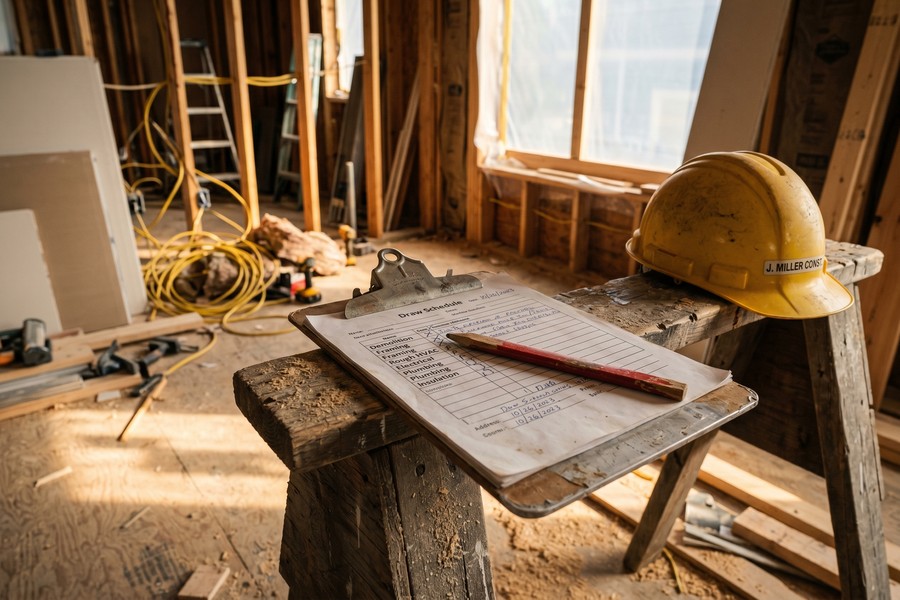
FHA 203(k) loans disburse renovation funds through a draw schedule, contractors get paid in installments as work is completed and inspected. It protects the borrower, but it extends everything. Work must be completed within six months of closing, and the whole process moves slower than most buyers expect.
The draw process also creates a rate lock headache. Because 203(k) closing timelines run 45–60 days, you need a longer rate lock, typically 60 days minimum. Extended locks cost money: expect 0.125%–0.25% in added fees for each 15-day extension beyond a standard 30-day lock. On a $350,000 loan, that adds up fast. For more on lock timing strategy, our guide on when to lock vs. wait on rates applies directly here.
Conventional Renovation Loans and When They Beat FHA
The Fannie Mae HomeStyle Renovation loan and the Freddie Mac CHOICERenovation loan are the conventional market’s answer to the 203(k), and in the right circumstances, they win convincingly. Both allow buyers to finance renovation costs into the purchase mortgage using the as-completed appraised value. Neither carries mandatory mortgage insurance for buyers with 20% down or more. That alone changes the math substantially.
HomeStyle has been around since 1994 and has evolved into one of the most flexible renovation products available. It allows financing for luxury upgrades, pools, landscaping, custom kitchens, that the FHA 203(k) explicitly excludes. CHOICERenovation, which Freddie Mac launched in 2018, offers similar terms with slightly different lender implementation standards. Both are worth exploring.
Rate Differentials Between HomeStyle and 203(k)
| Scenario | FHA 203(k) Effective Rate | HomeStyle Effective Rate | 10-Year Interest Savings |
|---|---|---|---|
| 750 score, 20% down | 7.25% (incl. MIP) | 6.75% | ~$10,800 on $300K loan |
| 680 score, 10% down | 7.30% (incl. MIP) | 7.25% | ~$1,800 on $300K loan |
| 620 score, 5% down | 7.50% (incl. MIP) | 7.875% (with PMI) | FHA wins by ~$7,000 |
Look at that bottom row carefully. Conventional renovation loans beat FHA at higher credit scores and larger down payments, but below 660 with minimal down, FHA often offers better effective pricing despite the MIP. Your credit profile is the single most important lever in choosing between programs. Not the program’s marketing materials. Your actual score.
HomeStyle Loan Limits and Renovation Caps
HomeStyle renovation financing is capped at 75% of the property’s as-completed appraised value. For a home with a post-renovation value of $400,000, the maximum renovation budget would be $300,000, generous enough for almost any project short of a complete teardown. Loan amounts must also stay within conforming loan limits, which in 2025 are $766,550 for most counties and higher in designated high-cost areas.
If you’re deciding between FHA 203(k) and HomeStyle, run both quotes with actual lenders using your real credit score and down payment. Request an Annual Percentage Rate (APR) comparison, not just the note rate. APR includes MIP, PMI, and fees, giving you a true apples-to-apples comparison.
How Your Down Payment Changes the Rate Equation
Your down payment does more than reduce your loan balance. On a fixer-upper, it directly affects the loan-to-value ratio (LTV), one of the primary inputs lenders use to price risk. Higher LTV means more lender exposure if the property’s value drops, and on a fixer-upper, that’s a real concern before renovations are complete and verified.
Conventional loan pricing is structured in 5% LTV bands. Moving from 95% LTV to 90% LTV triggers a meaningful rate improvement. The jump from 90% to 80%, the point where PMI disappears entirely, is the single biggest rate reducer available to borrowers who can reach it.
Down Payment Impact Table
| Down Payment | LTV | Rate Premium (Fixer-Upper) | Monthly PMI/MIP (on $300K loan) | Estimated Monthly Payment |
|---|---|---|---|---|
| 3% | 97% | +0.75%–1.0% | $175–$225 | $2,200–$2,400 |
| 5% | 95% | +0.50%–0.75% | $150–$200 | $2,100–$2,300 |
| 10% | 90% | +0.375%–0.50% | $100–$150 | $1,980–$2,100 |
| 20% | 80% | +0.125%–0.25% | $0 (no PMI) | $1,700–$1,800 |
The difference between a 5% down payment and a 20% down payment on a $300,000 fixer-upper can exceed $400 per month in total housing cost when rate premiums, PMI, and MIP are all factored in together. Over five years, that’s more than $24,000, enough to fund a substantial kitchen renovation without borrowing an extra dollar.
Gift Funds and Down Payment Assistance
Both FHA and conventional renovation loans allow gift funds for down payments, subject to documentation requirements. Down payment assistance (DPA) programs are available in most states for buyers meeting income limits. The HUD homebuyer resources portal maintains a searchable database of approved DPA programs by state. Here’s something worth knowing: using DPA to reach a 10% down payment threshold can actually save more in rate reductions than the assistance amount itself.
According to the Urban Institute, down payment assistance programs reduce the probability of mortgage default by 29% compared to loans without assistance, largely because recipients tend to choose more affordable properties relative to their income.
The As-Is vs. As-Completed Appraisal Problem
Renovation loans require two appraisals, or a single appraisal with two value opinions. The as-is value tells the lender what the property is worth today, in its current damaged or dated condition. The as-completed value estimates what it will be worth after all planned renovations wrap up. The gap between those two numbers determines how much renovation financing the lender will extend. And that gap creates real complexity.
Appraisers must estimate future value based on a renovation scope described in contractor bids, bids that may not even be finalized yet when the appraisal is ordered. If the as-completed value comes in lower than expected, your renovation loan amount shrinks and your rate may be affected by the new LTV calculation. It’s a domino effect nobody warns you about upfront.
Why As-Completed Values Come in Low
Appraisers use comparable sales (comps) to estimate as-completed value. In neighborhoods where few renovated properties have sold recently, appraisers may struggle to justify a high post-renovation value, even when the planned work is genuinely high-quality. This is sometimes called the comp desert problem, and it’s more common than you’d think.
In markets where distressed properties dominate, a fully renovated home may simply not have sufficient comparable sales within a 1-mile radius. Appraisers expand their search area, pull comps from higher-value neighborhoods that adjust downward, and still don’t capture the full value of the renovation. It’s one of the top reasons renovation loans fall through entirely.
Challenging a Low Appraisal
You have the right to challenge an as-completed appraisal through a formal Reconsideration of Value (ROV) request. This involves providing the appraiser with additional comparable sales data that was overlooked in the original analysis. According to Fannie Mae guidelines, lenders must have a documented process for handling ROV requests. Most buyers have no idea this option exists, and leave real value on the table as a result.
According to Fannie Mae’s Selling Guide and independent appraisal research, as-completed valuations on renovation properties can fall $30,000 to $50,000 below the justifiable market value when appraisers rely on outdated or geographically distant comparable sales. A well-documented ROV submission that includes more recent sales data can change that outcome, but the burden is on the buyer to identify those comps and submit them through the lender’s formal review process.

Rate Lock Strategy for Renovation Loans
Rate locks on renovation loans require a different strategy than standard purchase loans. Renovation loan closings take longer, 45 to 60 days is typical, and complex 203(k) Standard projects can push past 75 days. Meanwhile, rate lock periods on most lender products default to 30 days. That mismatch either forces expensive extensions or leaves buyers exposed to rate drift at exactly the wrong moment.
The cost of extending a rate lock varies by lender but typically runs 0.125%–0.25% of the loan amount per 15-day extension. On a $350,000 loan, a single 15-day extension costs $437–$875. Two extensions? Nearly $1,750. Most buyers are so focused on the renovation budget that they completely miss this line item until they’re staring at a closing disclosure.
Float-Down Options
Some lenders offer a float-down provision on extended locks. If market rates drop by a defined threshold, usually 0.25% or more, during your lock period, the float-down lets you capture the lower rate. These options typically cost an additional 0.125%–0.375% upfront. For renovation buyers operating in a declining rate environment, a float-down lock can be a smart hedge. If you want to understand the broader rate environment before making this call, our analysis of how to lock in a low rate before the Fed moves is worth reading first.
When to Request Your Lock
The optimal time to lock a renovation loan rate is after the appraisal is complete and the loan is conditionally approved. Lock too early and you’re burning lock period days while underwriting grinds along. Lock too late and you’re exposed to rate movement during the final stretch.
Most experienced renovation loan officers recommend locking at conditional approval, typically 20–30 days into the file. That’s the sweet spot.
Mortgage rates moved more than 0.75% in a single 30-day period at least four times between 2022 and 2024, according to Freddie Mac’s Primary Mortgage Market Survey. For a renovation buyer without a locked rate, that volatility could add $135 per month to a $300,000 loan payment.
Credit Score Thresholds and Their Rate Impact on Fixer-Uppers
Credit scores influence mortgage rates for every borrower, but the stakes get amplified on fixer-upper loans. Lenders are layering multiple risk adjustments simultaneously: property condition risk, renovation loan program risk, and credit risk. When all three land in the same file at the same time, the combined rate premium can be significant.
FICO score thresholds create pricing tiers, not a smooth continuum. A 619 score may carry a rate 0.75% higher than a 620 score because 620 is the minimum qualifying threshold for many conventional renovation products. The difference between 679 and 680 can trigger a 0.25% rate reduction. These cliff effects are well-documented in CFPB mortgage origination data, and most borrowers never see them coming.
Score Thresholds That Matter for Fixer-Upper Buyers
| FICO Score Range | Best Available Program | Estimated Rate (7% Market) | Renovation Loan Access |
|---|---|---|---|
| 760+ | HomeStyle / CHOICERenovation | 6.875%–7.125% | Full access, best pricing |
| 720–759 | HomeStyle / CHOICERenovation | 7.0%–7.25% | Full access, minor premium |
| 680–719 | HomeStyle / FHA 203(k) | 7.25%–7.50% | Full access, moderate premium |
| 640–679 | FHA 203(k) | 7.50%–7.875% | Limited conventional access |
| 580–639 | FHA 203(k) only | 7.875%–8.25% | FHA only; higher risk tier |
The practical implication: if your score sits at 618, spending 60 days paying down revolving balances before applying could push you past the 620 threshold and save you $3,000–$5,000 in rate costs over the first five years of the loan. That’s a better return than almost any renovation you could do in that same timeframe.
Negotiating With Sellers to Offset Rate Costs
Seller concessions are one of the most underused tools available to fixer-upper buyers. In a market where distressed properties sit longer and attract fewer competing offers, sellers are often willing to contribute to closing costs or buy down the buyer’s interest rate, if you know how to ask.
A seller-paid rate buydown works by having the seller contribute funds at closing to prepay mortgage interest points, permanently reducing your rate. One point typically equals 1% of the loan amount and reduces the rate by roughly 0.25%. On a $300,000 loan, two points ($6,000) could drop a 7.5% rate to 7.0%, saving approximately $100 per month and over $36,000 over the life of the loan.
Temporary Buydowns as a Negotiating Tool
A 2-1 temporary buydown reduces the rate by 2% in year one and 1% in year two before settling at the note rate from year three onward. Sellers sometimes prefer this structure because the upfront cost ($4,000–$7,000 on a typical loan) is lower than a permanent buydown. For buyers expecting income growth or planning to refinance within 3–5 years, the temporary buydown can be the smarter ask.
On distressed properties where the seller is motivated to close, requesting $5,000–$8,000 in concessions is rarely off the table. The key is structuring the ask correctly in the purchase contract and ensuring your lender confirms the concession amount falls within program limits. FHA allows seller concessions up to 6% of the purchase price; conventional loans cap them at 3% for LTVs above 90% and 6% for LTVs at 90% or below.
Ask your lender to run a breakeven analysis on any permanent rate buydown. Divide the upfront cost by the monthly savings to find out how many months it takes to recoup the expense. If you plan to sell or refinance before that breakeven point, the buydown doesn’t pay off, regardless of how the math looks on paper.
Frequently Asked Questions
Do fixer-upper homes automatically get higher mortgage rates?
Not automatically, but often yes. Lenders apply loan-level price adjustments (LLPAs) based on property condition ratings. A home rated C4 or worse by the appraiser will typically trigger a rate premium of 0.25%–0.75% above what you’d pay for a comparable move-in-ready property. The severity of the adjustment depends on which specific deficiencies the appraiser documents.
What credit score do I need to get a renovation loan?
FHA 203(k) loans are available with scores as low as 580. Conventional renovation products, Fannie Mae HomeStyle and Freddie Mac CHOICERenovation, generally require a minimum of 620. The difference matters: below 620, your options narrow to FHA products, which carry mandatory mortgage insurance for the life of the loan.
Can I use an FHA loan to buy a fixer-upper?
Yes, but a standard FHA purchase loan won’t work if the property has health-and-safety deficiencies that violate FHA Minimum Property Standards. In that case, you’d need an FHA 203(k) loan, which allows you to finance the repairs into the mortgage. Properties with active roof leaks, non-functional heating, or exposed electrical wiring typically require the 203(k) route.
What is the difference between FHA 203(k) Limited and Standard?
The Limited 203(k) caps repairs at $35,000 and excludes structural work, it covers things like flooring, roofing, HVAC replacement, and cosmetic updates. The Standard 203(k) has no hard repair cap (subject to FHA loan limits), allows structural repairs and room additions, and requires a HUD-approved consultant to oversee the draw process. Standard loans cost more to set up but cover a far broader scope of work.
Is the Fannie Mae HomeStyle loan better than FHA 203(k)?
It depends on your credit score and down payment. For borrowers with 620+ scores and 20% down, HomeStyle almost always wins on total cost because there’s no mandatory mortgage insurance. For borrowers with lower scores or minimal down payment, particularly below 660 with 5% down, FHA 203(k) often produces a lower effective rate despite the MIP. Run an APR comparison with real quotes from actual lenders before deciding.
How much more will I pay per month for a fixer-upper vs. a move-in-ready home at the same purchase price?
On a $300,000 loan, a 0.5% rate premium adds roughly $100–$105 per month. Add PMI or MIP on top of that, and the total added cost can reach $250–$350 per month for buyers putting less than 20% down. Over five years, that gap exceeds $15,000–$21,000 in additional housing costs, before accounting for renovation expenses themselves.
What is a loan-level price adjustment (LLPA) and how does it affect my fixer-upper rate?
An LLPA is a fee charged by Fannie Mae or Freddie Mac based on specific loan characteristics, including property condition, LTV, and credit score. These fees are expressed as a percentage of the loan and get converted into a higher interest rate by the lender. A distressed property condition can add a 0.25%–0.75% LLPA independently of any credit-related adjustments. Most borrowers never see these adjustments itemized; they just see a higher rate.
Can I buy a fixer-upper with no money down?
VA renovation loans allow eligible veterans to purchase with 0% down, and they typically carry lower rate premiums than FHA products. Outside of VA eligibility, USDA renovation financing is available in designated rural areas with no down payment requirement. Conventional and FHA renovation products require at least 3% and 3.5% respectively. Going in with minimal equity significantly increases both your rate and your monthly payment through higher LLP adjustments and mortgage insurance.
How long does it take to close a renovation loan compared to a regular mortgage?
Standard purchase mortgages typically close in 30–45 days. Renovation loans average 45–60 days, and complex FHA 203(k) Standard transactions can run past 75 days. The longer timeline requires a longer rate lock, which adds 0.125%–0.25% per 15-day extension beyond a standard 30-day lock. Building that cost into your budget before you make an offer is worth doing.
Are renovation loans a good idea for investment properties?
FHA 203(k) loans are restricted to owner-occupied primary residences, so they’re off the table for investment purchases. Fannie Mae HomeStyle and Freddie Mac CHOICERenovation can be used for investment properties, but expect higher rate premiums, typically an additional 0.50%–0.75% above what a primary-residence borrower would pay, on top of the property condition adjustments. For most investors, a conventional portfolio loan or hard money bridge loan followed by a refinance is a more practical structure.
Sources
- U.S. Department of Housing and Urban Development, FHA 203(k) Rehabilitation Mortgage Insurance Program
- U.S. Department of Housing and Urban Development, Buying a Home Resources
- Freddie Mac, CHOICERenovation Mortgage
- Freddie Mac, Primary Mortgage Market Survey (PMMS)
- Fannie Mae Selling Guide, Reconsideration of Value (ROV) Policy
- Consumer Financial Protection Bureau, Loan Options Guide
- Federal Reserve, Selected Interest Rates (H.15 Release)
- HUD, FHA Single Family Housing Policy Handbook 4000.1 (Minimum Property Standards)