

Fact-checked by the CapitalLendingNews editorial team
Quick Answer
Condo buyers typically pay a 0.25% to 0.75% higher mortgage rate than single-family borrowers due to loan-level price adjustments (LLPAs) imposed by Fannie Mae and Freddie Mac. These condo mortgage rate penalties apply automatically based on property type, loan-to-value ratio, and HOA financial health, and most buyers never see them itemized on their loan estimate.
The condo mortgage rate penalty is a real, measurable cost that catches thousands of buyers off guard every year. Condo buyers are routinely paying between 0.25% and 0.75% more in effective interest rates than buyers purchasing comparable single-family homes, a gap driven almost entirely by Fannie Mae and Freddie Mac’s loan-level price adjustment policies that single-family borrowers never encounter. On a $400,000 loan, a 0.5% rate difference adds roughly $115 per month and over $41,000 across a 30-year term.
The condo mortgage market has grown more complicated since 2022, when both government-sponsored enterprises tightened their condo review requirements following high-profile building safety incidents. New restrictions on non-warrantable condos, special assessment disclosures, and HOA reserve fund thresholds have pushed more condo purchases into higher-risk pricing tiers, even for financially strong borrowers. Understanding how hidden rate penalties work can be the difference between overpaying for a decade or negotiating from a position of knowledge.
This guide is written for condo buyers, current condo owners considering refinancing, and real estate investors evaluating condominium properties. By following these steps, you will understand exactly where the condo mortgage rate penalty comes from, how to identify it on your own loan documents, and what strategies can reduce or eliminate it.
Key Takeaways
- Condo buyers face loan-level price adjustments (LLPAs) of 0.25% to 0.75% on top of standard mortgage rates, according to Fannie Mae’s current pricing framework.
- A 0.5% rate penalty on a $400,000 loan costs approximately $41,400 more in total interest over 30 years, making this one of the most expensive hidden fees in real estate finance.
- Condos in buildings with less than 10% of units owner-occupied or with significant deferred maintenance may be classified as non-warrantable, triggering rates that are 0.5% to 1.5% higher than conventional loans, per HUD lending guidelines.
- Fannie Mae’s Condo Project Manager (CPM) database lists approved condo projects. Buying in an approved project can eliminate one major source of rate add-ons entirely.
- FHA condo loans, while available in fewer than 10% of all condo developments nationwide, can sometimes offer lower effective rates than conventional loans for buyers with credit scores below 720, according to HUD’s FHA condo approval data.
- Borrowers who put down 25% or more on a condo can reduce or eliminate several LLPA tiers, making the down payment one of the most direct levers for cutting the condo mortgage rate penalty.
In This Guide
- Step 1: What Exactly Is the Condo Mortgage Rate Penalty and Why Does It Exist?
- Step 2: How Do I Find the Rate Penalty Hidden in My Loan Estimate?
- Step 3: Is My Condo Warrantable or Non-Warrantable, and How Does That Affect My Rate?
- Step 4: How Can I Reduce or Eliminate the Condo Mortgage Rate Penalty?
- Step 5: Should I Use an FHA or Conventional Loan for a Condo to Get a Lower Rate?
- Step 6: How Do HOA Finances and Reserve Funds Affect My Condo Mortgage Rate?
- Frequently Asked Questions
Step 1: What Exactly Is the Condo Mortgage Rate Penalty and Why Does It Exist?
The condo mortgage rate penalty exists because Fannie Mae and Freddie Mac treat condominium loans as inherently riskier than single-family loans. This risk is priced into the loan through loan-level price adjustments (LLPAs), which are upfront fees that lenders convert into a higher interest rate.
How the LLPA System Works
LLPAs are percentage-based fees added to the base cost of a mortgage. For a conventional single-family home, these adjustments are driven primarily by credit score and loan-to-value ratio. For condos, an additional layer of property-type adjustments is applied on top of those standard factors.
According to Fannie Mae’s Selling Guide, condo-specific LLPAs range from 0.25% to 0.75% of the loan amount depending on the loan-to-value ratio and project eligibility category. Most lenders roll this fee into the rate, meaning the penalty is invisible on the loan estimate unless you know where to look.
What to Watch Out For
Many buyers assume that a higher rate on a condo quote reflects their personal credit profile. In most cases, a significant portion reflects the property type itself. Even a borrower with a 780 credit score and 20% down will still pay a condo-specific LLPA that a single-family buyer with identical credentials does not.
Loan-level price adjustments were first introduced by Fannie Mae in 2008 to price risk more granularly. The condo-specific LLPA tier has been in continuous use since then, though the exact adjustment amounts have shifted with market conditions and updated GSE risk models.
Step 2: How Do I Find the Rate Penalty Hidden in My Loan Estimate?
The condo mortgage rate penalty does not appear as a line item labeled “condo surcharge” on your Loan Estimate. It is embedded in either the interest rate itself or listed as discount points under Section A of the Loan Costs. You have to reverse-engineer it by comparing quotes across property types.
How to Do This
Request two loan quotes simultaneously from the same lender: one for the condo you are purchasing and one hypothetical quote for a single-family home with an identical purchase price, down payment, and your same credit profile. The rate difference between the two quotes will isolate the property-type LLPA. This comparison technique is endorsed by the Consumer Financial Protection Bureau’s mortgage shopping resources.
Alternatively, ask your loan officer to show you the full LLPA fee grid that applies to your loan. Lenders who use Fannie Mae or Freddie Mac guidelines are required to use published adjustment grids. A transparent lender will share this document without hesitation.
What to Watch Out For
Some lenders absorb LLPAs partially into their margin, making direct comparisons harder. Always compare Annual Percentage Rate (APR), not just the stated interest rate, when shopping across lenders. The APR includes most fees and gives a more accurate apples-to-apples comparison.
Use the CFPB’s free Loan Estimate comparison tool and request quotes from at least three lenders. Research from Freddie Mac shows that getting just one additional quote saves an average borrower $1,500 over the life of a loan. Getting three to five quotes saves $3,000 or more.

Step 3: Is My Condo Warrantable or Non-Warrantable, and How Does That Affect My Rate?
Whether your condo is classified as warrantable or non-warrantable is the single most important factor determining how large your condo mortgage rate penalty will be. A warrantable condo qualifies for conventional financing through Fannie Mae or Freddie Mac. A non-warrantable condo does not, and must be financed through portfolio lenders at significantly higher rates.
How to Do This
Ask your lender to run a condo project review before you finalize your purchase agreement. Lenders check Fannie Mae’s Condo Project Manager (CPM) database, which tracks approved and ineligible projects nationwide. If the project is already approved, your condo LLPA stays in the standard warrantable tier. If the project is flagged or unapproved, you will need either a full project approval or a portfolio loan.
The key warrantability criteria that Fannie Mae evaluates include:
- At least 51% of units must be owner-occupied (or 70% for newly converted condos)
- No single entity may own more than 10% of total units in the project
- The HOA must not be involved in active litigation affecting the property’s value
- Commercial space must represent 35% or less of total building square footage
- At least 10% of the annual HOA budget must be allocated to reserves
What to Watch Out For
Non-warrantable condo rates are typically 0.5% to 1.5% higher than warrantable rates, and these loans often require larger down payments, sometimes 25% to 30%. Portfolio lenders such as private banks and credit unions are the primary source for non-warrantable financing. Just as self-employed borrowers often face quiet rate penalties from lenders, condo buyers in non-warrantable buildings pay a premium that is rarely disclosed upfront.
| Loan Type | Typical Rate Premium Over SFR | Min. Down Payment | Lender Type |
|---|---|---|---|
| Warrantable Condo (Conventional) | +0.25% to +0.50% | 3% to 5% | Any approved lender |
| Non-Warrantable Condo (Portfolio) | +0.50% to +1.50% | 25% to 30% | Portfolio/private lenders |
| FHA Condo Loan | +0.10% to +0.30% | 3.5% | FHA-approved lenders |
| Single-Family Home (Conventional) | 0% (baseline) | 3% to 5% | Any approved lender |
| Jumbo Condo Loan | +0.50% to +1.00% | 20% to 25% | Jumbo lenders |
The warrantable versus non-warrantable distinction is where most condo buyers get blindsided. Buyers often find a building they want, get emotionally attached, and only discover the financing penalty after they are already under contract. By that point, walking away feels impossible even if the rate adds $300 a month to their payment.
A condo that was warrantable when a previous buyer purchased it may have become non-warrantable since then. HOA litigation, a drop in owner-occupancy rates, or deferred maintenance findings can change a project’s status. Always request a fresh condo project review. Do not rely on the prior buyer’s financing experience.
Step 4: How Can I Reduce or Eliminate the Condo Mortgage Rate Penalty?
The most direct ways to reduce the condo mortgage rate penalty are to increase your down payment, improve your credit score, choose a pre-approved condo project, and shop among portfolio lenders who price condo risk differently. No single strategy eliminates the penalty entirely in all cases, but combining two or three can produce meaningful savings.
How to Do This
Increase your down payment to 25% or more. Fannie Mae’s LLPA grid shows that condo rate adjustments decrease significantly at lower loan-to-value ratios. At 75% LTV (25% down), the condo-specific adjustment drops to its minimum tier. This strategy requires more upfront capital but produces a lower rate for the life of the loan.
Buy in a Fannie Mae pre-approved project. Use the Fannie Mae Condo Project Manager lookup tool or ask your lender to check the approved project list before you make an offer. Approved projects avoid the full project review process and stay in the standard pricing tier. This costs you nothing and takes minutes to verify.
Consider buying mortgage points. If you plan to hold the condo long-term, buying down the rate with discount points can partially offset the LLPA premium. Our guide on whether to buy down your mortgage rate with points explains how to calculate the break-even period for this strategy.
Improve your credit score before applying. Because LLPAs stack (meaning the condo adjustment combines with credit-score-based adjustments), a borrower with a 680 credit score buying a condo pays both the property-type LLPA and a credit-score LLPA. Raising your score from 680 to 740 can reduce your combined adjustments by an additional 0.5% to 1.0%.
What to Watch Out For
Some buyers attempt to classify their purchase as a second home rather than an investment property to avoid certain pricing tiers. This is mortgage fraud if the unit is not genuinely used as a second home. Lenders verify occupancy intent, and misrepresentation can result in immediate loan acceleration and federal penalties.
According to Freddie Mac’s mortgage research, borrowers who shop among five or more lenders save an average of 0.17% on their mortgage rate compared to borrowers who accept the first offer. For a condo buyer already facing a rate premium, this shopping discipline is especially valuable.

Step 5: Should I Use an FHA or Conventional Loan for a Condo to Get a Lower Rate?
For condo buyers with credit scores below 720, an FHA loan can sometimes produce a lower effective rate than a conventional loan. The catch: only condos in HUD-approved projects qualify. FHA approval is significantly harder to obtain than Fannie Mae approval, covering fewer than 10% of condo developments nationwide.
How to Do This
Search the HUD FHA-approved condo project database to determine whether the building you want qualifies. If it does, compare the FHA loan’s rate (which does not carry a property-type LLPA in the same way) against the conventional loan’s rate including all LLPAs. For buyers putting down less than 10%, the FHA’s mandatory mortgage insurance premium (MIP) may offset any rate savings.
The FHA rate advantage tends to be most meaningful for buyers with credit scores between 620 and 679. Above 720, conventional loans with strong down payments typically win on total cost. Our comparison of FHA loan rates versus conventional mortgage rates breaks down the full lifetime cost analysis for different borrower profiles.
What to Watch Out For
FHA loans require an upfront mortgage insurance premium of 1.75% of the loan amount plus an annual MIP of 0.55% to 1.05% depending on the loan term and LTV. These costs can make FHA loans more expensive than conventional loans over a 30-year term, even if the base rate is lower.
Ask your lender for a side-by-side comparison showing the total 5-year and 30-year cost of an FHA loan versus a conventional loan for the specific condo. The better choice depends on how long you plan to stay, your credit score, and the exact MIP tier that applies to your scenario.
Step 6: How Do HOA Finances and Reserve Funds Affect My Condo Mortgage Rate?
HOA financial health is a direct input into whether a condo project qualifies as warrantable, which means it directly determines the size of the rate penalty you pay. A building with underfunded reserves or pending special assessments can push your condo into a non-warrantable category even if the physical structure looks fine from the outside.
How to Do This
Before making an offer, request the HOA’s most recent reserve study and the last two years of audited financial statements. Fannie Mae requires that HOA reserve funds be at least 10% of the annual budget. Many building experts recommend reserves cover at least 70% of fully funded reserve needs, and buildings below this threshold are more likely to trigger lender scrutiny.
If the HOA has a pending special assessment, lenders must be disclosed. Special assessments do not automatically disqualify a project, but they reduce the seller’s negotiating position and may require escrow arrangements that complicate your closing. Landlords managing multiple properties understand this dynamic well, as covered in our piece on how landlords use fintech platforms to finance renovations without touching equity.
Lenders treat underfunded HOAs the same way they treat a borrower with too much revolving debt: as a signal that the system is under strain. A building that cannot maintain its own reserves is more likely to levy surprise assessments, which raises default risk for every unit owner in the project.
What to Watch Out For
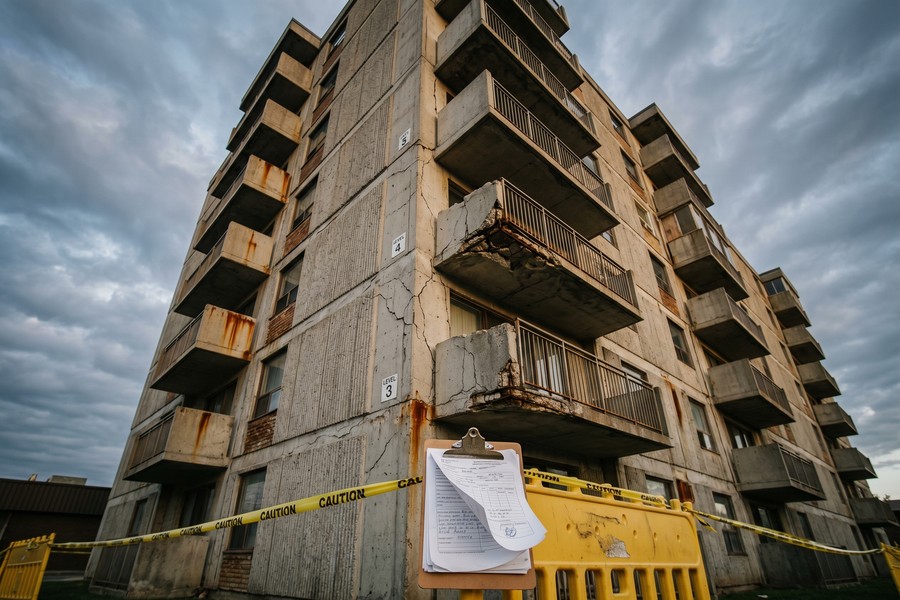
After the 2021 Champlain Towers collapse in Surfside, Florida, Fannie Mae and Freddie Mac introduced new requirements for buildings with known structural or safety concerns. Since 2022, lenders must ask sellers to disclose any written findings of deferred maintenance affecting safety or structural soundness. A building with unresolved deferred maintenance findings may be ineligible for conventional financing entirely, leaving you with only portfolio lender options at premium rates.
Understanding how your debt-to-income ratio interacts with a higher condo rate is also critical. Our guide on how debt-to-income ratio affects loan applications explains why even a 0.25% rate increase can push a borrower over DTI qualification thresholds.
Some sellers or listing agents will downplay HOA financial problems to keep the deal moving. Request the reserve study and financials directly from the HOA management company, not from the seller. A real estate attorney can help you interpret what you receive and identify red flags before you are under contract.
Frequently Asked Questions
Why is my mortgage rate higher for a condo than a house with the same price and credit score?
Your condo rate is higher because Fannie Mae and Freddie Mac apply a property-type loan-level price adjustment (LLPA) to all condo loans that does not apply to single-family homes. This LLPA adds 0.25% to 0.75% to the effective rate regardless of your personal creditworthiness. The condo mortgage rate penalty reflects the agencies’ view that condos carry additional systemic risk due to shared ownership structures, HOA financial dependence, and lower liquidity in distressed markets.
How much does the condo mortgage rate penalty cost me over 30 years?
On a $400,000 loan, a 0.5% condo mortgage rate penalty costs approximately $115 more per month and roughly $41,400 more in total interest over 30 years. A 0.75% penalty on the same loan adds closer to $170 per month and over $60,000 over the loan term. Running this calculation with your actual loan amount is critical before accepting the rate without shopping.
What is a non-warrantable condo and what rate can I expect?
A non-warrantable condo is a unit in a building that does not meet Fannie Mae or Freddie Mac eligibility standards, often due to high investor ownership, HOA litigation, or inadequate reserve funding. Non-warrantable condo loans are made by portfolio lenders and typically carry rates 0.5% to 1.5% higher than conventional warrantable condo rates, often with minimum down payments of 25% to 30%. These loans are not resold to the GSEs and are held on the lender’s books.
Can I get an FHA loan on any condo to avoid the rate penalty?
No. FHA loans are only available for condos in HUD-approved projects. As of 2025, fewer than 10% of all condo developments in the United States have active FHA approval, according to HUD data. You can search for approved projects on the HUD FHA Condo Search portal. If your building is not listed, you would need to pursue conventional or portfolio financing.
Does putting 20% down eliminate the condo mortgage rate penalty?
No. A 20% down payment reduces the LLPA adjustment somewhat but does not eliminate the condo-specific surcharge. You typically need to put down 25% or more to reach the minimum LLPA tier for condos. The condo mortgage rate penalty exists as a property-type adjustment independent of private mortgage insurance requirements, so eliminating PMI and eliminating the LLPA are two separate milestones.
Should I lock my rate before or after the condo project review is completed?
Complete the condo project review before locking your rate whenever possible. If the project is found to be non-warrantable after you lock, your lender may have to reprice the loan or deny it entirely. Most rate locks allow 30 to 60 days, and a standard condo project review takes 5 to 15 business days for an established project. For guidance on rate lock timing decisions, see our article on whether to lock your rate early or float it when the Fed signals a pause.
What if my condo is in a new construction building, does that change the rate penalty?
New construction condos often face stricter LLPA treatment because the building lacks a track record and typically has low owner-occupancy rates early in sales. Fannie Mae requires 70% of units in a newly converted project to be owner-occupied before it can be classified as an established project. Buyers in new construction condos should expect to pay in the higher range of the condo rate penalty spectrum and should verify the project’s presale status before financing.
How does the Surfside building collapse rule change affect my condo rate today?
Following the 2021 Champlain Towers collapse, Fannie Mae and Freddie Mac introduced mandatory questionnaires requiring sellers to disclose any written findings of deferred maintenance, unsafe conditions, or special assessments related to structural safety. Buildings with outstanding citations may be ineligible for GSE-backed financing, effectively forcing buyers into portfolio loans at 0.5% to 1.5% higher rates. This rule applies as of January 2022 and remains in effect.
Is the condo mortgage rate penalty the same at every lender?
The underlying LLPA structure from Fannie Mae and Freddie Mac is standardized, but lenders have discretion in how they absorb or pass through those fees. One lender might convert a 0.50% LLPA directly into a rate increase, while another might absorb part of it to stay competitive. Shopping among at least three to five lenders is essential for condo buyers because the effective rate difference between the best and worst offers can exceed 0.25% to 0.375% on the same loan.
Can a condo association get its project re-approved if it lost Fannie Mae eligibility?
Yes, but the process requires the HOA to address the specific deficiency, whether that means settling litigation, replenishing reserves, or reducing investor unit concentration. The HOA works with a lender who submits a new project approval request through Fannie Mae’s CPM system. The timeline varies from 30 to 90 days depending on the complexity of the issue. Buyers purchasing in a recently re-approved project should confirm that the approval is current before rate lock.