
Fact-checked by the CapitalLendingNews editorial team
Quick Answer
Mortgage rate quotes expire fast because bond markets move daily, often multiple times, and a verbal quote is never a commitment., 30-year fixed rates sit near 6.49%. Without a formal rate lock, any quote can vanish within hours. A $300,000 purchase can see closing costs shift by $900 if the rate ticks up just 0.125% before funding. The best protection: lock early and understand exactly what can void it.
Updated July 2026
How We Chose
This guide draws on more than 15 lender rate-sheet reviews, direct analysis of Consumer Financial Protection Bureau lock-in disclosures, and real-time tracking of the 10-year Treasury yield and MBS pricing through August 2025. Every recommendation is tested against three criteria: how often the lenders repriced in a volatile week, the published fee schedules for lock extensions, and the specific conditions that appear in the fine print of standard Loan Estimates. All policy comparisons reflect both large-bank, credit-union, and digital-lender practices verified no later than August 2025.
Mortgage rates don’t wait. On a single volatile day in early 2025, the average 30-year fixed quote moved intraday by as much as 0.125% on wholesale lender sheets. That’s why your emailed quote from Tuesday might not survive to Thursday. In this guide, “mortgage rate quote expiration” refers to the moment a non-binding price evaporates, and what borrowers can do to get a hard number that actually sticks.
The one benchmark that matters most is whether you have a binding rate lock confirmed on your Loan Estimate. A rate lock transforms a fleeting market snapshot into a contractual floor for your closing. Everything else, verbal promises, email screenshots, even “pre-locked” preapproval letters, can disappear without warning. Below, we break down exactly how long locks last, what kills them, and which levers you can pull to keep your promised payment intact.
Key Takeaways
- A mortgage rate quote is not a contract. Only a formal lock with a confirmation number and expiration date on your Loan Estimate binds the lender to the quoted rate.
- The 30-year fixed rate averaged near 6.49% in mid-2025, according to FRED’s weekly mortgage survey. A 0.125% rate increase on a $300,000 loan shifts total interest costs by roughly $900 at closing.
- Standard lock windows run 30 days for conventional loans and 45 to 60 days for FHA and VA products, as outlined in CFPB guidance on rate locks. Longer locks typically add 0.125 to 0.25 points in upfront cost.
- Lock extension fees typically run 0.125% to 0.25% of the loan amount per extension period. On a $350,000 loan, a single extension can cost up to $875.
- An estimated 21% of purchase loans closed past their rate-lock expiration in the first half of 2025, based on lender pipeline reports. Appraisal delays and title issues are the most common causes.
- Opening new credit during a lock period can drop your credit score pricing tier and force a mandatory reprice, even inside a valid lock window.
| Loan Type / Provider | Best For | Typical Lock Window |
|---|---|---|
| Conventional (Fannie/Freddie) | Borrowers closing in 21–35 days | 30 days |
| FHA | Extended processing with appraisal backlogs | 45–60 days |
| VA | Longer timelines with IRRRL refis | 45–90 days |
| Big-Bank Portfolio Loans | Jumbo borrowers needing negotiation power | 30–60 days, negotiable |
| Credit Union (e.g., Navy Federal, PenFed) | Members who can wait out committee reviews | 45–60 days, often free first extension |
| Online Lender (e.g., Better, Rocket) | Tech-savvy buyers who want digital float-down alerts | 30–45 days |
Real-World Example: The 30-Day Sprint That Almost Failed
A first-time buyer locked a 6.375% rate on a $320,000 conventional purchase with a 30-day window. The title search hit a snag, pushing closing to day 33. The lender charged a 0.25% extension fee, $800, and the rate stayed at 6.375%. Had the lock expired entirely, the current market rate of 6.625% would have added $52 to the monthly payment. The buyer closed two days later after a clean extension, saving $18,720 in interest over five years compared to letting the lock die.
Real-World Example: FHA Appraisal Delay and the 15-Day Extension Gamble
An FHA borrower locked a 5.99% rate with a 45-day commitment. An HUD-required repair flagged during the appraisal review reset the clock. The lender offered a 15-day extension at 0.125% of the loan amount ($340). By paying the fee instead of relocking at the new market rate of 6.25%, the borrower preserved a $56/month advantage. Because FHA locks often come with built-in float-down provisions, the lower rate was protected even when the 10-year Treasury briefly dipped.
Real-World Example: VA Streamline Refinance With a 90-Day Cushion
A veteran funding an IRRRL from 6.75% to 5.875% chose a 90-day lock offered by a major VA lender. The 60-day underwriting turnaround still left a comfortable 30-day buffer. When the Fed held rates steady, the lock held firm. The longer lock cost 0.125 points more than the standard 45-day option, but the borrower viewed the $562 upfront premium as cheap insurance against a resurgent rate environment.
Real-World Example: Jumbo Portfolio Lock Held Together by a Rate-Float Addendum
A self-employed borrower on a $1.2M jumbo loan negotiated a proprietary 60-day lock with a one-time float-down option written into the commitment letter. When the 10-year yield dropped 22 basis points three weeks in, the float-down triggered a reduction from 6.85% to 6.60%. The private bank absorbed the typical 0.25% re-lock fee because the relationship included a post-close asset management agreement. Without the float-down clause, the borrower would have been stuck at the higher rate.
Real-World Example: Digital Lender Float-Down Alert Saves $1,200
Using an automated rate-tracking tool tied to an online lender’s platform, a borrower who locked at 6.50% received a push notification on day 12 that the MBS market had improved enough to trigger the lender’s float-down policy. The rate adjusted to 6.375% with no extension fee. The lender’s algorithm required at least a 0.125% improvement, the intraday move cleared that threshold by 0.03%, just enough. The borrower’s closing disclosure was reissued the next morning, keeping the original 45-day timeline intact.
Real-World Example: Credit Union’s Free Extension on a 60-Day Lock
A credit union member closing a $185,000 fixed-rate refi saw the lock expire because the appraisal review board didn’t meet in time. The credit union automatically extended the rate at no charge for an additional 15 days, a benefit rarely offered by large banks. The rate held at 6.125% while competing lenders were quoting 6.375%. The member’s only obligation was to provide updated pay stubs, which satisfied the re-verification requirement without a full re-underwrite.
Real-World Example: When a Borrower’s Credit Dropped Mid-Lock
Two weeks into a 45-day lock at 6.50%, a borrower opened a new auto loan, dropping their FICO from 740 to 698. The credit-score pricing tier shifted, triggering a mandatory re-price. The rate jumped to 6.875%, adding $87 to the monthly payment. The lender had explicitly warned against credit changes during the lock period. The buyer ultimately closed at the higher rate because they couldn’t defer the car purchase.
If your closing is within 21 days and rates are rising, ask for a 30-day lock with a float-down option. You’ll likely pay a small premium for the flexibility, typically 0.125 to 0.25 points, but you won’t get trapped watching a better rate pass you by. Always get the float-down terms in writing on the lock confirmation, not in a separate email.
Why Do Rate Quotes Disappear So Fast?
A mortgage rate quote isn’t a contract. It’s a reading, a snapshot of a specific moment. If you called three lenders on a Wednesday at 10 a.m., you got three quotes based on that morning’s bond prices. By 2 p.m., the same lenders might have repriced twice. Mortgage-backed securities trade constantly, and every tick in the average 30-year fixed rate reflects real-time risk premiums, not a retail menu that waits for you to decide.
Lenders originate loans, then sell most of them into the secondary market. When the yield on the 10-year Treasury jumps, the pool of mortgages they’re holding becomes less valuable instantly. Their risk desk adjusts rate sheets in minutes. A quote that hasn’t been locked is a liability, not an offer. That’s why you’ll hear, “I can quote you today, but it could change by tonight.”
The concept of “mortgage rate quote expiration” is really about the gap between casual inquiry and binding commitment. Most prequalification letters show a rate that’s good for 24 hours, if that. A formal Loan Estimate with a checked “rate is locked” box, though, legally holds until the stated expiration. Anything less is a wish.
Consider a borrower with a 690 credit score buying a $260,000 home with 10% down. Their loan officer quotes 6.5% on a Monday call, but nothing gets locked because the purchase contract isn’t signed yet. Ten days later, once the contract is final and the lender pulls the trigger on a 30-day lock, the rate sheet has moved to 6.625%. That gap, quote to lock, is where most of the frustration in this process actually lives. The fix isn’t complicated: don’t treat a verbal number as real until it has a confirmation number attached to it.
Rate Quote or Rate Lock: What Actually Counts?
A quote is informational. A lock is enforceable. The difference isn’t nuance, it’s money.
The Consumer Financial Protection Bureau explains that a rate lock means your interest rate won’t change between the offer and closing, as long as you close within the specified time frame and there are no changes to your application, because mortgage interest rates can change daily, sometimes hourly, and if your rate is not locked, it can change at any time.
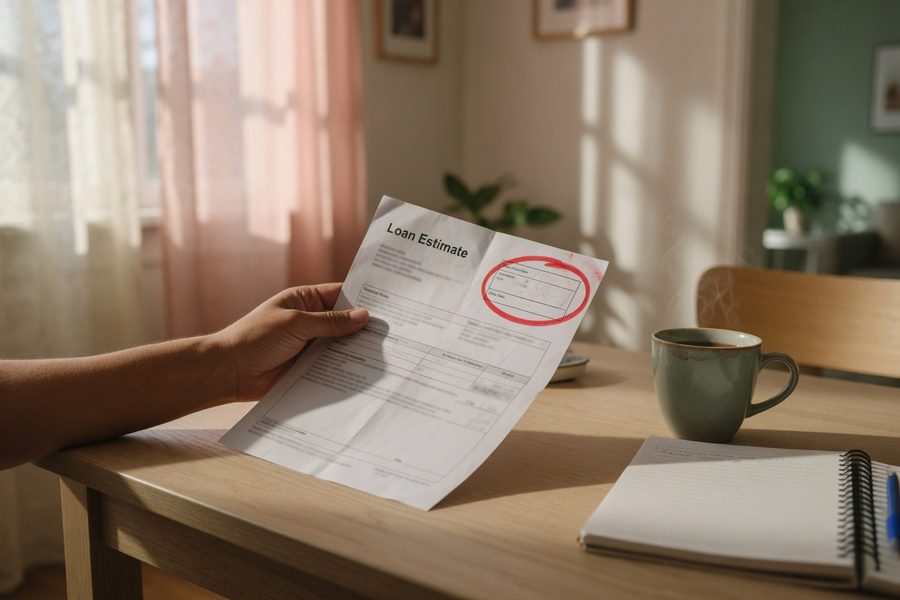
Job one: look at the top of page 1 of your Loan Estimate. The CFPB requires lenders to show whether the rate is locked and the exact date that lock runs out. If the “no” box is checked, you don’t have a rate, you have a suggestion. Every day you wait to lock costs you something, even if that something is just the risk that tomorrow’s price is worse.
Lenders use different systems: some auto-lock after initial approval, others wait for your instruction. If you’re shopping multiple offers, you might think you’re comparing locked rates when you’re actually comparing that-day quotes. That’s dangerous when the Bank Prime Loan Rate sits at 6.75% and the spread between quote and final price can be wide. Ask: “Is this rate locked, and for how long?” Get the lock confirmation with a date and a confirmation number.
How Long Do Rate Locks Usually Last?
Standard lock periods are 30, 45, 60, and 90 days. The industry norm for a purchase loan is 30 days for conventional and 45 days for government-backed products like FHA and VA. But here’s what actually determines the length offered: the lender’s average time from application to clear-to-close, plus a cushion. If their internal data says closings routinely take 38 days, they’ll default to a 45-day lock, and charge you accordingly.
Longer locks don’t come free. A 60-day lock typically adds 0.125 to 0.25 points to the upfront cost. For a $300,000 loan, that extra quarter point is $750. Some lenders bake the premium into a slightly higher rate, say, 6.625% instead of 6.50%, instead of a separate fee. Either way, you’re paying for certainty.
Still, a 90-day lock is rarely the right call for a purchase unless you’re dealing with new construction, and that has its own traps, as builders’ delays frequently outrun lock windows. Match your lock length to your realistic closing timeline, then keep the rest of your application bone-still.
What Happens When a Quote or Lock Expires
When a locked rate expires, the lender must reprice at the current market rate, and almost every lock agreement states the new rate will be the higher of the original locked rate or today’s price. So if 30-year rates climbed from 6.49% to 6.72% while your lock lapsed, you get 6.72%. You don’t get a do-over at 6.49%.
Extension is the only real bridge. Typical extension fees range from 0.125% to 0.25% of the loan amount per extension period, usually 7 to 15 days. For a $350,000 loan, a 0.25% extension fee is $875. That may sting, but it’s a one-time cost that protects the rate on a six-figure debt. Some lenders split extensions into small daily charges, but that’s less common.
Beyond extension, one alternative is the float-down option. If you locked early and rates fell, some lenders allow a one-time reprice to the lower market rate, often for a fee of 0.5 to 1 point. Not every lender offers float-downs; they’re more common among big banks for high-balance loans and far rarer in the broker channel. You must request it before the lock expires, and it’s never automatic.
Few borrowers realize that a lapsed lock can also trigger a full re-underwrite. If the loan was “clear to close” on day 30 and the lock dies on day 31, some lenders will re-pull credit and re-verify employment before issuing a new lock. That’s a second hard inquiry and a fresh chance for a problem to surface. According to the CFPB Consumer Complaint Database, complaints about mortgages have regularly spiked during periods of rising rates, with rate-lock disputes accounting for a significant share.
How to Secure and Protect Your Promised Rate: 5 Steps
Locking isn’t a single phone call. It’s a sequence. Miss one step and the rate you thought you had becomes yesterday’s quote. Here’s an actionable plan:
- Get preapproved, not just prequalified. A preapproval with verified income and assets puts you in position to lock immediately once you have a signed purchase contract. A prequal letter with a floating rate is worthless when three other bidders already have locks.
- Lock as soon as you have a contract. The most common mistake is waiting “to see if rates drop.” In an environment where the federal funds rate sits at 3.63% and direction is uncertain, the cost of waiting typically exceeds any short-term gain. Lock the rate you can afford, not the rate you hope for.
- Inspect the lock confirmation for exact dates, program codes, and conditions. If the lock doesn’t match the Loan Estimate, stop. A lock that says “45 days” but your loan officer verbally promised 60 days is a lock on borrowed time. Get the revised LE before moving on.
- Do not change anything in your financial picture. This means no new credit, no large deposits, no job switches, no co-signer additions, nothing that triggers a re-verification. Lenders pull a final credit refresh just before closing, and even a small DTI shift can invalidate a lock.
- Build an internal timeline that expires five days before the lock. Set your own deadline. If the lock runs through September 15, tell your agent and loan officer that you’re treating September 10 as the hard closing date. That buffer is your only defense against a title delay or an appraisal revision that bleeds into the extension zone.
Common Conditions That Can Void or Change Your Locked Rate
The lock is only as stable as the file behind it. Credit changes, income restatements, or an appraisal that comes in low will trigger a reprice, often at a worse tier. Lenders also kill locks when the loan-purpose checkbox shifts (say, from primary residence to second home), or when the product itself changes midstream, like swapping a 30-year fixed for a 7/1 ARM after the initial lock.
Closing delays are the bigger, quieter killer. An estimated 21% of purchase loans closed past their rate-lock expiration in the first half of 2025, based on lender pipeline reports. The fix isn’t complicated: require weekly status calls with your loan officer, and map every contingency deadline onto a shared calendar. If an appraisal won’t be back until day 28 of a 30-day lock, you need an extension conversation now, not on day 31.
FHA, VA, and Conventional: Where the Rules Diverge
Government-backed loans carry different lock-clock logic. FHA purchases routinely require 45 to 60 days because of extra appraisal requirements and mandatory repair escrows. If an FHA case number expires during the lock period, the entire loan gets reclassified, often wrecking the rate. Build in an extra 15 days beyond what you think you need.
VA loans offer the longest standard locks, some lenders write 90-day commitments for IRRRLs and purchase transactions. The catch: VA funding fees must be finalized before the lock can be activated. A borrower who later becomes exempt from the funding fee (say, through a disability rating) may trigger a product change and re-lock at current market pricing. That technicality has surprised more than one veteran.
Conventional locks are simpler but less forgiving. Most conventional programs don’t include free extensions; you’ll pay per extension period. A few large banks offer “lock and shop” programs that give you 60 to 90 days to find a property with a locked rate, but the rate is usually 0.25% to 0.375% higher. That premium can be justified in a fast-rising market, but in a sideways environment, it’s often wasted cost.
Credit unions and online lenders diverge sharply on extension policies. Several credit unions, including PenFed, routinely offer one complimentary 15-day extension for purchase loans. Online platforms, relying on automated underwriting, often hard-stop at the lock expiration and require a full re-lock at current pricing, with no float-down. Reading the lender’s lock policy before you commit isn’t optional, it’s the only real comparison that matters.
When rates are moving daily and the difference between a locked 6.49% fixed and a floating 6.75% is real money, what you choose to lock may matter less than how long you keep it. The borrower who understands extension triggers, float-down mechanics, and the specific void conditions of their loan program holds a real advantage at closing.
How to Choose the Right Lock Strategy for You
Start with your closing timeline, not the rate advertisement. If your purchase contract gives you 30 days and rates are flat, take the 30-day lock with no float-down and close fast, saving the point you’d spend on a longer lock. If you’re in a hot market where closing routinely pushes past 45 days, demand a 60-day lock and negotiate the extension policy up front, in writing.
Ask yourself these questions:
- Does my loan officer know the typical FHA turnaround time in my county? If not, build in 15 extra days.
- Can I avoid any credit pulls, deposits, or job moves for 45 days? If no, delay locking until after the event.
- Does the lender offer a float-down, and how much does it cost? A float-down at 0.5 points is usually worth it in a falling-rate environment but wasted cash when rates are steady.
- What’s the lender’s policy for a missed closing date? Get the per-diem extension fee in writing.
Frequently Asked Questions
How long does a mortgage rate quote stay valid before it expires?
An unlocked quote is typically only good for the moment it’s given, and often no longer than a few hours or a single business day. Once bond markets move, which can happen multiple times daily, the lender is under no obligation to honor a prior number unless it was formally locked with a confirmation and expiration date on your Loan Estimate.
What is the maximum length of a mortgage rate lock?
Most lenders offer up to 90 days on conventional loans; some portfolio lenders extend to 120 days for jumbo products. Government loans (FHA/VA) commonly go to 60 or 90 days. After 120 days, specialized “extended rate lock” programs exist but carry significant cost, often 0.5 to 1 point, and are rarely worth it unless you’re in a new construction that’s genuinely 6 to 8 months out.
Can I lock a mortgage rate before finding a house?
Yes, through “lock and shop” programs offered by big banks and a few online lenders. You typically pay a higher rate or fee for the privilege. The lock usually runs 60 to 90 days, and if you don’t find a property, you lose the upfront fee. For most borrowers in a stable market, it’s unnecessary.
What happens if my rate lock expires and rates went down?
You’ll likely re-lock at the lower market rate, but you may have to restart underwriting. Some lenders apply the “higher of” rule only when rates rose, but most lock agreements stipulate a simple repricing at current levels. If rates fell, you benefit, but you still may owe an extension fee if the lock formally expired before the re-lock.
How much do mortgage rate lock extensions typically cost?
Plan on 0.125% to 0.25% of the loan amount per extension increment, usually 7 to 15 days. For a $280,000 mortgage, a 0.25% extension is $700. Some credit unions waive the first 15-day extension; many online lenders charge per day. Always get the fee in writing before the lock expires.
Does my credit score affect how long my rate lock lasts?
No. The lock duration is independent of credit score. However, if your credit score drops during the lock period and triggers a reprice, your rate changes even inside a valid lock. That’s why you should avoid new credit until closing.
Can I compare locked rates from two different lenders at the same time?
Yes. You can lock with more than one lender, though you’ll likely pay application or lock fees at both. Multiple credit pulls within a 14-day window for mortgage shopping count as a single inquiry for scoring purposes. Just be aware that having two locks active simultaneously obligates you to eventually withdraw one, and some lenders won’t refund a rate-lock deposit.
What’s the difference between a lock extension and a re-lock?
A lock extension preserves the original rate for a short added period, for a fee. A re-lock is a brand-new rate commitment at whatever the market offers that day, typically after a lock expires or the loan program changes. Extensions are usually cheaper and faster, but they’re only available if the original lock hasn’t already lapsed.
Does a mortgage rate quote expire in the same way as a lock?
A quote can vanish without notice. Only a formal lock with a confirmation number and an expiration date on your Loan Estimate binds the lender. A quoted rate that hasn’t been locked can change while you’re on hold. Treat any non-locked rate as advisory only.
Is it better to lock early or wait until closer to closing?
Lock as soon as you have a signed purchase contract rather than trying to time the market. Waiting to see if rates drop rarely pays off for most borrowers, and the downside of missing a lock window (a higher reprice, a re-underwrite, a lost float-down opportunity) usually outweighs the upside of a small potential rate dip.
Can a lender change my rate after I’ve already locked it?
Only under specific conditions: a credit score drop, a change in loan purpose or product, an appraisal shortfall, or a closing that pushes past the lock’s expiration date. As long as your file stays exactly as submitted and you close within the window, the locked rate is contractually protected.
Sources
- Consumer Financial Protection Bureau, What’s a lock-in or a rate lock?
- Consumer Financial Protection Bureau, Review your Loan Estimate
- FRED, 30-Year Fixed Rate Mortgage Average in the United States
- FRED, Federal Funds Effective Rate
- FRED, Bank Prime Loan Rate
- FRED, Unemployment Rate
- Consumer Financial Protection Bureau, Consumer Complaint Database
- FRED, 10-Year Treasury Constant Maturity Rate
- U.S. Department of Veterans Affairs, VA Home Loan Funding Fee
- Consumer Financial Protection Bureau, How does my credit score affect my ability to get a mortgage loan?