

Quick Answer
A 3.2% green auto loan is possible in 2026 only for super-prime borrowers (typically 781+ credit scores) who stack a credit union green discount on top of an already low base rate. With average new-car rates near 6.39%, per Experian’s Q1 2026 data, hitting 3.2% requires exceptional credit, a qualifying EV or hybrid, and aggressive lender shopping.
Updated July 2026
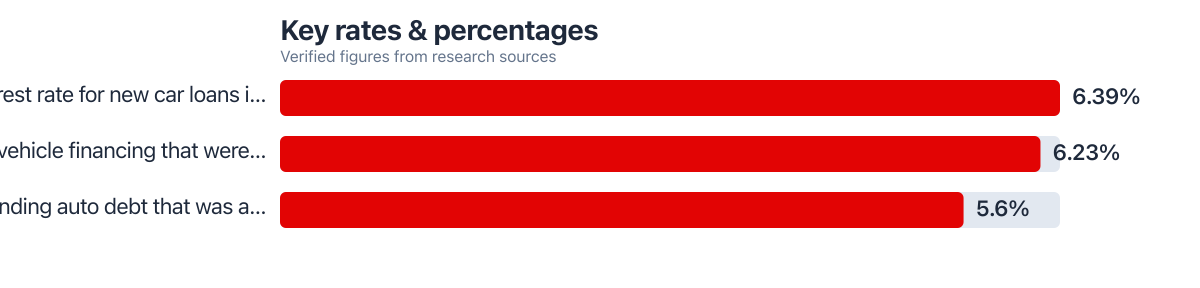
Getting a green auto loan 2026 rate anywhere near 3.2% has become one of the harder feats in consumer lending. The average rate on new auto loans sat at 6.39% in the first quarter of the year, according to Experian’s State of the Automotive Finance Market report. Separate Federal Reserve data pegs 48-month new auto financing at commercial banks at 7.47%, up from 7.37% three months earlier, per the Federal Reserve’s TERMCBAUTO48NS series. A rate under half that average is not a marketing gimmick. It’s a real but narrow lane, reserved for borrowers who check nearly every box a lender cares about.
Federal EV tax credits expired after September 2025. That means the loan rate itself now carries more weight in total cost math than it did a year ago. This guide walks through who actually qualifies for 3.2%, which lenders offer the deepest green discounts, how to time an application, and where the math breaks down if a borrower’s credit or vehicle choice falls short.
Key Takeaways
- The average new auto loan rate was 6.39% in Q1 2026, meaning a 3.2% offer sits roughly half the market average (Experian, 2026).
- Electric vehicles made up 6.23% of new vehicle financing in Q1 2026 (Experian’s automotive finance report).
- Consumers financed 2.1 million auto loans totaling $67.1 billion in October 2025 alone, per the Consumer Financial Protection Bureau’s credit trends data.
- The 48-month bank auto loan rate reached 7.47%, up from 7.37% in February, according to Federal Reserve economic data.
- The average new vehicle payment climbed to $770 per month in Q1 2026, per LendingTree’s auto debt statistics, while 90-plus day delinquencies held at 5.6% of outstanding auto debt (New York Fed data via LendingTree).
In This Guide
- What Makes a 3.2% Rate Possible?
- What Credit Score Do You Need for Sub-4% Rates?
- Which Lenders Offer the Deepest Discounts?
- When Should You Time Your Application?
- Stacking Discounts With Other Savings
- Negotiation Tactics That Actually Move the Needle
- What About Used EVs, Co-Signers, and Rate Floats?
What Makes a 3.2% Rate Possible?
A 3.2% rate is possible only when a green discount stacks on top of an already elite base rate reserved for the strongest credit tier. Super-prime new-car rates averaged 4.66% in the fourth quarter of 2025. Credit unions advertising 0.25% to 1% APR discounts on qualifying EVs and hybrids can push a well-qualified borrower below that baseline into the low 3% range.
This is not the average outcome. Most buyers are financing at rates closer to the broader market’s 6.39% average reported by Experian for Q1 2026, and bank-based 48-month financing has actually ticked upward to 7.47% as of May, per Federal Reserve data. A 3.2% offer sits nearly four full points below that figure. The pool of eligible borrowers is small.
Realistically, 3.2% shows up in three overlapping scenarios: a credit union member with a long account history buying a qualifying EV, a captive finance arm running a manufacturer-subsidized promotional rate on a specific model, or a borrower using a green discount to shave the last fraction of a point off an already sub-4% super-prime quote. Outside those lanes, 3.2% is not a realistic target for 2026. If your credit sits in the mid-600s or your down payment is thin, this rate simply is not on the table this year, no matter how the vehicle is marketed.
What Credit Score Do You Need for Sub-4% Rates?
Lenders generally reserve sub-4% auto rates for borrowers in the super-prime tier, commonly defined as a FICO score of 781 or higher. Below that threshold, even the most generous green discount usually cannot offset the base rate a lender assigns to moderate credit risk.
Credit score is not the only gate. Debt-to-income ratio matters just as much: most lenders want total monthly obligations, including the new auto payment, to stay under roughly 40% of gross income. A common misconception about debt-to-income ratio is that a strong credit score alone can offset a high DTI. It usually cannot. Employment stability and a down payment of at least 10% to 20% of the purchase price also factor into whether an underwriter approves the greenest tier of pricing.
Thin credit files create a quieter problem. A borrower with a 790 score but only two open accounts, or someone with two recent hard inquiries from shopping other loans, can get bumped out of the top pricing tier even though the score itself looks strong. Lenders read file depth and recent inquiry activity as separate risk signals from the score itself.
Electric vehicles accounted for 6.23% of new vehicle financing in the first quarter of 2026, according to Experian’s automotive finance report, a small but growing slice of the overall lending pool that green discounts are built around.
Which Lenders Offer the Deepest Discounts?
Credit unions currently offer the largest green auto loan discounts, with several advertising 0.25% to 1% off their standard APR for qualifying EVs and hybrids as of mid-2026. Banks and captive finance arms (the lending divisions tied to specific automakers) offer smaller, more targeted incentives, often limited to specific models during a sales push.
How the Three Lender Types Compare
Regional programs add another layer. Some California-based credit unions pair a green rate discount with state EV rebate stacking rules, while other regions have no comparable overlay at all. Online marketplaces and rate-comparison aggregators can surface green-specific offers side by side, useful for borrowers who do not belong to a credit union but still want to see the spread between lender types before committing.
| Lender Type | Typical Green Discount | 2026 Eligibility Notes |
|---|---|---|
| Credit Unions | 0.25% to 1.00% off standard APR | Membership required; often needs 690+ FICO minimum, EV/hybrid model list |
| Captive Finance (OEM) | Promotional rates as low as 0%-2.9% on select models | Limited to specific new EV trims; often requires super-prime credit and in-stock inventory |
| Traditional Banks | Rarely offer a distinct green discount | Base rate closer to national 6.39% average; green vehicle has no built-in pricing edge |
| Online Lenders | 0.10% to 0.50% off via aggregator promotions | Fast pre-qualification; state incentive stacking varies by lender platform |
When Should You Time Your Application?
The best timing window is typically the last few weeks of a model year clearance period or the end of a fiscal quarter, when dealerships and captive lenders are more willing to subsidize a rate to move inventory. Federal Reserve rate decisions also ripple into seasonal lender promotions, so watching the Fed’s calendar alongside dealership sales cycles gives a fuller picture than either signal alone.
One overlooked risk: if the vehicle is not in stock, the quoted rate can float between approval and funding. A buyer who locks in 3.2% on a special-order EV might find the rate has drifted upward by the time the vehicle actually arrives, particularly during a rising-rate stretch like the one reflected in the Fed’s move from 7.37% to 7.47% on 48-month bank auto loans between February and May 2026, per FRED data. Ask directly. Buyers ordering a vehicle rather than buying off the lot should confirm with the lender whether the quoted rate is locked through delivery or subject to reissue.
Stacking Discounts With Other Savings
Green loan discounts stack most effectively with loyalty or employee pricing programs and trade-in bonuses, since these reduce the amount financed rather than competing with the interest rate itself. A borrower trading in a paid-off vehicle worth $8,000 lowers the loan principal directly, which shrinks total interest paid even if the rate stays fixed.
If the best available rate at signing is higher than hoped, refinancing after six to twelve months of on-time payments is a reasonable fallback, especially if credit improves or a credit union rolls out a better green promotion. Borrowers should watch for pitfalls that quietly inflate the financed amount, like extended warranties or gap insurance rolled into the loan. These add-ons raise the principal on which interest accrues, eroding the benefit of a low rate. For a broader look at how green financing costs compare to conventional loans across categories, see this true cost green loans guide.
Before financing an EV, check whether your state offers a rebate or HOV lane access tied to the purchase; these indirect savings do not touch the loan rate but can meaningfully offset the total cost of ownership over the loan term.
Negotiation Tactics That Actually Move the Needle
Getting pre-approved with at least three lenders before visiting a dealership is the single most effective negotiating tactic, since it establishes a real rate floor rather than relying on the dealer’s first offer. Rate shopping within a focused 14-day window is generally treated as a single inquiry by credit scoring models, which limits the credit score impact of comparing multiple offers.
Have documentation ready: recent pay stubs, bank statements, proof of the trade-in’s condition. This speeds underwriting and strengthens a borrower’s position when asking a lender to match or beat a competing green rate quote. A useful script is straightforward: tell the lender the exact competing APR and ask whether they can match it before you commit, rather than negotiating in the abstract. This works better than negotiating the vehicle price and the loan terms in the same conversation, since bundling both invites the dealer to shift savings from one column to the other.
What About Used EVs, Co-Signers, and Rate Floats?
Used EVs and hybrids older than three years rarely qualify for the deepest green discounts, since most credit union programs restrict eligibility to newer model years with verified battery warranties still in force. Mileage caps, often around 60,000 to 80,000 miles, further narrow which used vehicles qualify, and buyers should confirm this detail before assuming a green rate applies.
The expiration of federal EV tax credits after September 2025 changes the math for used EV buyers specifically, since the credit previously offset some of the price gap between EVs and comparable gas vehicles. Without it, the loan rate itself carries more of the total cost burden. That’s part of why the 3.2% target has become more consequential rather than less. Co-signers can help thin-file or lower-score applicants reach the credit thresholds needed for green pricing, though every co-signer becomes equally liable for the debt, a commitment worth stating plainly before either party signs.
Auto loan delinquencies of 90 days or more held at 5.6% of outstanding auto debt in Q1 2026, according to New York Fed data reported by LendingTree, a reminder that even low-rate financing requires a payment the household can sustain long term.
A worked example clarifies the stakes. On a $35,000 loan over 60 months, a 3.2% APR produces a monthly payment of roughly $630 and total interest of about $2,800. The same loan at the national average of 6.39% (Experian, Q1 2026) runs about $685 per month with total interest near $6,100. That gap, roughly $3,300 over the life of the loan, is the real dollar value of qualifying for the green rate rather than settling for an average one. It also explains why the average new vehicle payment sits at $770 a month, per LendingTree’s Q1 2026 data: most buyers are financing larger amounts at higher rates than the scenario above assumes.
None of this changes the calculus for someone who simply does not have the credit profile for it yet. If you’re rebuilding credit, chasing 3.2% this year can mean delaying a needed vehicle purchase for marginal savings that may not materialize. In that case, financing at the going market rate now and refinancing later, once the score improves, is often the more sensible path than waiting on a rate tier that may stay out of reach.
Buyers weighing this decision against other debt priorities may also want to review sinking funds explained: budgeting strategy as a way to build a larger down payment before financing, which shrinks the loan amount and reduces the interest gap regardless of which rate tier a borrower ultimately lands in.
Related reading: Best Green Renovation Financing Options for Texas Homeowners in 2025.
Frequently Asked Questions
Is a 3.2% green auto loan realistic for most buyers in 2026?
No, it is realistic only for super-prime borrowers with scores near 781 or higher who combine a credit union green discount with an already low base rate. Most buyers will see rates closer to the national average of 6.39%, per Experian’s Q1 2026 data.
What credit score do I need to qualify for the lowest green auto loan rates?
Lenders typically reserve sub-4% rates for the super-prime tier, generally a FICO score of 781 or above. Borrowers below that threshold can still get green discounts, just not usually enough to reach 3.2%.
Do green auto loan discounts apply to used electric vehicles?
Rarely, and mostly only to used EVs under three years old with an active battery warranty. Many credit union programs also impose mileage caps around 60,000 to 80,000 miles that exclude older used vehicles from green pricing.
How does the expired federal EV tax credit affect green auto loan math?
Since the credit expired after September 2025, the loan rate now carries more weight in total cost calculations because there is no federal offset reducing the effective purchase price. This makes securing the lowest possible rate more financially significant than it was in prior years.
Can I lose my quoted green rate if the vehicle isn’t in stock yet?
Yes. Rates on special-order or backordered vehicles can float between approval and delivery, especially during periods when benchmark auto loan rates are rising, as they did from 7.37% to 7.47% between February and May 2026 per Federal Reserve data.
Should I add a co-signer to qualify for a green auto loan discount?
Adding a co-signer can help a thin-file or lower-score applicant reach the credit thresholds lenders require for the deepest green discounts. Both parties become equally responsible for the debt, so this should be treated as a shared financial commitment rather than a simple formality.
Are credit unions or traditional banks better for green auto loan discounts?
Credit unions generally offer larger green discounts, often 0.25% to 1% off their standard APR for qualifying EVs and hybrids. Traditional banks rarely build in a distinct green pricing tier, so their rates tend to track closer to the broader market average.
Sources
- Experian, Average Auto Loan Rates by Credit Score, Q1 2026
- Experian, Automotive Finance Market Press Release, 2026
- Consumer Financial Protection Bureau, Consumer Credit Trends: Auto Loans
- LendingTree, Auto Loan Debt Statistics, 2026
- Federal Reserve Economic Data (FRED), Finance Rate on Consumer Installment Loans, New Autos 48 Month
- Bureau of Labor Statistics, Consumer Price Index
- RTTNews, U.S. Stocks May See Initial Strength On Upbeat Earnings News
- Fortune, Alliance for America’s Skilled Trades
- Zacks, Should State Street SPDR S&P 500 ETF Trust (SPY) Be on Your Investing Radar?