

Quick Answer
For most buyers closing within 30 to 45 days, locking now beats waiting: 30-year fixed rates sit at 6.55% as of mid-July 2026, and forecasts show little room to fall further this year. If your closing is 60+ days out and you can tolerate a rate that might move either way, a float-down lock is the better middle path. Buyers building extra cash for points should still lock the base rate first.
Updated July 2026
Key Takeaways
- 30-year fixed mortgage rates averaged 6.55% in the week ending July 16, 2026, according to Freddie Mac.
- Only 22% of mortgage experts surveyed by Bankrate in July 2026 expected rates to fall, while 33% anticipated further increases.
- The Federal Funds Effective Rate has stayed at 3.63% since May 2026, with no change in June, per FRED.
- Home prices showed no meaningful softening in mid-2026, with IYR trading near 105.70 in late July.
- A 0.25 percentage point rate increase on a $400,000 loan raises the monthly payment by about $60 to $65.
- Fannie Mae and the Mortgage Bankers Association both project rates to remain in a 6.3% to 6.5% range through the end of 2026.
How We Evaluated
This analysis compares the lock-now decision against the wait-and-see approach using six factors that actually move outcomes for a typical borrower. We pulled rate data directly from Freddie Mac’s Primary Mortgage Market Survey, the Federal Reserve’s FRED database, and forecasts published by the Mortgage Bankers Association and Fannie Mae, all verified. We did not accept lender press releases at face value; every projection cited here traces back to a named research desk or federal data series. This publication does not accept payment for placement, and the scoring below reflects a consistent rubric applied to every scenario, not a ranking of paid partners.
| Criterion | Weight (%) | What We Measured |
|---|---|---|
| Rate trajectory risk | 25% | How likely rates are to rise or fall meaningfully before closing, based on forecaster consensus |
| Break-even math | 20% | Months needed to recoup any lock-extension or float-down cost against realistic rate movement |
| Closing timeline flexibility | 15% | Whether the loan type (purchase, refinance, new construction) allows for a longer or shorter lock window |
| Lender lock terms | 15% | Standard lock length, extension fees, and float-down availability across common lender types |
| Borrower risk tolerance | 15% | How a rate increase versus a rate decrease affects monthly budget and qualification |
| Market volatility context | 10% | Scheduled economic events (CPI, FOMC, Treasury auctions) that could swing rates during the lock window |
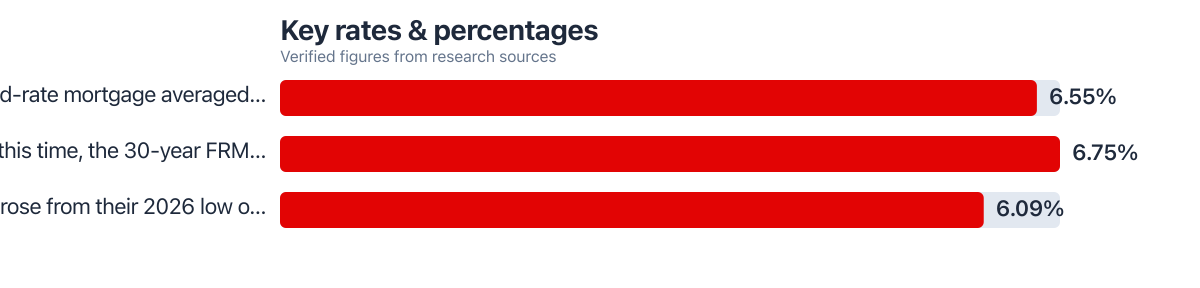
This roundup ranks the six most common lock-vs-wait scenarios facing mortgage borrowers in July 2026, from the standard 30-day purchase closing to the new-construction buyer stuck with a moving closing date. The lock vs wait decision has become more complicated this year because rates have been choppier than most forecasters expected: the 30-year fixed averaged 6.55% as of July 16, 2026, according to Freddie Mac’s weekly survey, barely below the 6.75% reading from the same week a year earlier. That is not the kind of relief that makes waiting an obvious win.
Rate trajectory risk broke more ties in this analysis than any other factor. Buyers who assumed rates would keep drifting down through 2026 are running into a stubborn floor near 6.3%, and the cost of guessing wrong outweighs the potential upside for anyone closing inside 45 days.
| Scenario / Reader Profile | Best Pick | Key Metric | Budget Tier |
|---|---|---|---|
| Closing in 30 days, standard purchase | Lock now at prevailing rate | 6.55% national average | Mid |
| Closing in 60-90 days, flexible timeline | Float-down lock | Typically 0.375%-0.5% fee for the option | Mid |
| New construction, uncertain closing date | Extended lock with builder tie-in | Lock periods of 180-360 days | Premium |
| Refinance, no urgency | Wait and monitor weekly | Need 0.75+ point drop to justify costs | Budget |
| High credit score (760+), rate-sensitive budget | Lock plus buy points | Each point typically cuts rate ~0.25% | Premium |
| Marginal DTI, tight qualification | Lock immediately, skip the gamble | Every 0.25% shift changes qualifying payment | Budget |
Real-World Example: Standard Purchase Locking Today
Lock now at the prevailing 6.55% rate, best for a standard 30-day purchase closing. according to Freddie Mac Anyone closing within a month should lock without waiting for a hypothetical drop that current forecasts do not support with any confidence.
The math is straightforward. On a $400,000 loan at 6.55%, the 30-year fixed payment runs around $2,548 in principal and interest, based on the Freddie Mac PMMS rate as the baseline. Drop the rate by 0.25 points to 6.30% and the payment falls to roughly $2,478, a difference of about $70 a month, or $840 a year. That is real money, but it is not enough to justify betting against a market where Bankrate’s July 2026 lender poll found only 22% of experts expecting rates to fall versus 33% expecting them to climb further.
Rates already bounced off a 2026 low of 6.09% in June before climbing back above 6.5%, according to Bankrate’s analysis. That round trip happened in about three weeks. A borrower who waited through that window to save $70 a month could just as easily have locked in at a higher rate instead. Recent market reporting reinforces the point: rates rose again in mid-July amid geopolitical tensions, and one report put the increase at the highest level in almost a year.
Pros: Removes rate risk entirely, protects your qualifying payment, and matches a closing timeline where waiting adds no real optionality. Cons: If rates do fall meaningfully before closing, you leave savings on the table unless your lender offers a float-down feature.
Before locking, ask your loan officer for the exact float-down fee and the window in which it applies. Generally, a float-down only pays for itself if rates fall by at least 0.375 to 0.5 percentage points during your lock period; anything smaller and you are paying for insurance you will not use.
Real-World Example: The 60-90 Day Buyer
Float-down lock, best for buyers with 60 to 90 days until closing. This group faces genuine uncertainty, since two Fed-adjacent events, the July 15 CPI release and the July 28-29 FOMC meeting, land squarely inside their lock window and could move rates either direction.
A float-down typically costs a fraction of a point upfront but lets you claim a lower rate if the market drops before closing. Given that the Federal Funds Effective Rate has held at 3.63% since May 2026 with no cut in June, the Fed’s next move is genuinely uncertain, and that uncertainty is exactly what a float-down is built to hedge.
Real-World Example: New Construction With a Moving Closing Date
Extended lock tied to the builder’s schedule, best for new-construction buyers facing 6-12 month closings. The standard 30 or 45-day lock does not work here, and builders often push closing dates without much warning.
Extended locks running 180 to 360 days exist specifically for this situation, though they typically cost more upfront, often 0.5 to 1 point, than a standard lock. Many new-construction buyers assume they can wait until closer to closing to lock, but as covered in why repeat buyers lock rates too late on new construction homes, that habit backfires when rates move against them during the build period.
The tradeoff is real: paying for a longer lock means committing capital to rate protection months before you need the loan. If the builder’s timeline slips further, some lenders allow a paid extension rather than forcing a full relock, but that extension fee stacks on top of what you already paid.
Buyers in this category should also compare how their lender treats income documentation and credit pulls over a long lock period, since a soft pull early on does not guarantee the same rate later. It is worth understanding how digital lenders calculate maximum loan offers without a hard credit pull if your build timeline stretches past the initial lock window.
Pros: Protects against rate increases over a long build period and avoids the scramble of relocking under pressure near closing. Cons: Upfront cost is higher, often 0.5-1 point, and you are locked out of any rate decline unless you also pay for a float-down rider.
Real-World Example: The Patient Refinancer
Wait and monitor weekly, best for refinance borrowers with no closing deadline. Unlike a purchase, a refinance carries no risk of losing a house if rates move the wrong way, so the calculus shifts toward patience.
Most refinance math only works if the new rate beats the old one by at least 0.75 percentage points, once closing costs are factored in. With the Mortgage Bankers Association projecting total origination volume to reach 5.8 million loans in 2026, refinance activity remains a meaningful share of that pipeline, but only for borrowers who are disciplined about the breakeven threshold.
This is the one scenario where waiting genuinely costs little. A refinance applicant can watch weekly Freddie Mac releases, track the FRED 30-Year Fixed Rate Mortgage Average series, and simply reapply when the math clears. There’s no lock-extension fee ticking against you if you have not started the lock clock yet.
The one caveat: if your current loan is an adjustable-rate product resetting soon, waiting too long converts patience into forced action. Borrowers should study which costs less when rates fall, a fixed rate or a step-rate loan, before assuming an open-ended wait is free.
Pros: No lock-extension costs while you wait, full flexibility to reapply whenever the math clears, and no risk of losing a home purchase. Cons: Rates could rise further while you wait, and each new application may trigger a fresh hard credit pull.
Real-World Example: The High-Credit Buyer Weighing Points
Lock plus buy points, best for borrowers with credit scores above 760 who plan to stay in the home long-term. This group has the most room to actively lower their rate rather than just hoping the market does it for them.
Buying points is essentially prepaying interest: each point, roughly 1% of the loan amount, typically shaves about 0.25 percentage points off the rate. On a $450,000 loan, one point costs $4,500 and might drop the rate from 6.55% to roughly 6.30%, saving around $79 a month. Recouping that $4,500 in monthly savings takes about 57 months, just under five years, so this strategy only pays off for buyers who expect to hold the loan that long.
Credit score matters more than most buyers realize here, since the discount from points compounds on top of already favorable pricing tiers. Anyone unsure how their score translates to actual rate savings should review what each 20-point credit score jump actually saves you before deciding how many points to buy.
Locking the base rate first and then layering points on top protects against the scenario where rates rise before you finalize the buydown decision. Waiting to decide on points while also floating the base rate doubles your exposure to market movement, which is a mistake this borrower profile can avoid entirely.
Pros: Meaningful long-term savings for buyers who stay put, and full control over the rate outcome rather than depending on market timing. Cons: Requires significant cash at closing, and the breakeven period (often 4-5 years) makes this a poor fit for anyone likely to move or refinance sooner.
Real-World Example: The Borrower With a Marginal DTI
Lock immediately, best for buyers whose debt-to-income ratio sits close to the qualifying limit. This is the group with the least room to gamble, because even a small rate increase can push a marginal DTI over the edge and cost them the loan entirely.
A 0.25 percentage point rate increase on a $400,000 loan raises the qualifying payment by roughly $60 to $65 a month, which sounds minor until you realize it can shift a borrower’s DTI by a percentage point or more, depending on income. Borrowers in this position should understand what borrowers get wrong about debt-to-income ratio before assuming they have any cushion to wait out a possible rate drop.
Pros: Eliminates the risk of losing qualification due to a rate increase, and locks in a known, workable payment. Cons: Forecloses any upside if rates fall, and these borrowers often have the least negotiating leverage on lender fees.
Which Buyers Should Consider a Float-Down?
Buyers with 60 or more days until closing should look at float-downs seriously. A standard lock locks in your rate. A float-down gives you a chance to lower it later if the market drops. But it comes with a cost.
The fee is usually between 0.375% and 0.5% of the loan. That’s $1,687.50 to $2,250 on a $450,000 loan. This only makes sense if rates drop by at least that much during your lock window. That’s a big swing. Most forecasters don’t expect that in 2026.
Still, if you’re sitting on a longer timeline and don’t want to gamble on rates rising, a float-down balances risk and reward. It’s not free. But it’s not a full lock, either.
When Is Waiting a Real Option?
Only if you have no closing deadline. Refinancing is the one case where waiting has low cost. You’re not losing a home. You’re just adjusting your loan.
But even then, timing matters. A drop of less than 0.75 points usually doesn’t cover closing costs. Most refinancers need at least that much to break even.
And if your current loan resets soon, waiting can become risky. The longer you wait, the more likely you are to face a higher rate when you finally apply.
How Do Market Events Affect Your Lock?
The July 15 CPI report and the July 28–29 FOMC meeting are key. Both sit inside standard 30- to 45-day lock windows.
Historically, these events have caused single-day swings of 10 to 20 basis points. Inflation data that surprises, up or down, can move rates fast.
The Fed hasn’t cut rates since May 2026. The federal funds rate is still at 3.63%. That’s a signal: no urgent need to lower rates now.
What If Rates Drop Later This Year?
Even if they do, home prices may not. IYR is near 105.70 in late July. That suggests no softening.
So a lower rate might not mean lower payments. A higher purchase price could offset any savings.
That’s why waiting for a rate drop can backfire. You might get a better rate. But you pay more for the house.
How to Compare Lenders Without Getting Tricked
Look beyond the headline rate. APR matters more. It includes origination fees, points, and other costs.
Ask each lender: What’s your standard lock period? How much for an extension? Is a float-down available? How much?
Some charge 0.125% per 15 days. Others charge more. The difference adds up.
FAQs: Straight Answers
Should I lock my mortgage rate now or wait in July 2026?
For most buyers closing within 30 to 45 days, locking now is the safer choice. Rates sit at 6.55% as of mid-July 2026 per Freddie Mac, and forecaster consensus leans toward rates holding steady or rising rather than falling meaningfully before most closings.
How much could I save if mortgage rates drop 0.5% before closing?
On a $400,000 loan, a 0.5 percentage point drop saves roughly $140 to $150 a month, based on standard amortization math off the current 6.55% baseline. Most current forecasts suggest any decline in 2026 will be smaller and slower than that, making this outcome unlikely for a typical lock window.
What is a float-down lock and is it worth the fee?
A float-down lets you claim a lower rate if the market drops during your lock period, typically for a fee of 0.375% to 0.5% of the loan amount. It generally pays off only if rates fall by at least 0.375 to 0.5 percentage points, so it makes the most sense for buyers with 60 or more days until closing.
Will mortgage rates drop after the July 2026 Fed meeting?
The Federal Funds Effective Rate held at 3.63% in both May and June 2026 with no change, according to FRED, which does not signal an imminent cut. Mortgage rates could still move on CPI or FOMC-related volatility, but a sustained drop tied directly to the July meeting is not the consensus expectation.
How long can I lock a mortgage rate for new construction?
Extended locks for new construction typically run 180 to 360 days to match builder timelines, usually at a higher upfront cost of 0.5 to 1 point compared to a standard 30 or 45-day lock. Locking too late in a build cycle is a common and costly mistake for repeat buyers.
Is it better to wait for lower rates or buy points to lower my rate now?
Buying points works best for buyers with strong credit who plan to stay in the home 5 or more years, since one point (about 1% of the loan amount) typically cuts the rate by roughly 0.25 percentage points and takes around 4 to 5 years to break even. Waiting for a market-driven drop is far less predictable, given that most 2026 forecasts show limited room for rates to fall.
Does a higher DTI ratio make locking more urgent?
Yes. A 0.25 percentage point rate increase can raise a qualifying payment enough to push a marginal debt-to-income ratio over a lender’s limit, so borrowers near that threshold should generally lock immediately rather than risk a rate increase disqualifying them.
Related reading: Should You Borrow for a Career Change or Save First? The 2025 Math That Decides.
Sources
- Freddie Mac, Primary Mortgage Market Survey (PMMS)
- Bankrate, Mortgage Rates Analysis, June 24, 2026
- Mortgage Bankers Association, 2026 Origination Forecast
- FRED, 30-Year Fixed Rate Mortgage Average in the United States
- FRED, 15-Year Fixed Rate Mortgage Average in the United States
- FRED, Federal Funds Effective Rate
- U.S. Bureau of Labor Statistics, Current Population Survey / Unemployment Rate