

Updated November 2025
Market Pulse
- 1. 1.6 cents, Average rewards earned per dollar spent on general purpose credit cards in 2024, according to NerdWallet (citing CFPB). Source
- 2. 90%, Share of general purpose credit card spending on rewards cards, per the Consumer Financial Protection Bureau (2024). Source
- 3. 44%, Percentage of Americans planning to use credit card rewards to pay for a vacation in 2026, per WalletHub. Source
- 4. Revolving consumer credit declined 0.4% MoM in May 2026 (FRED REVOLSL), signaling cautious spending despite ongoing travel demand. Source
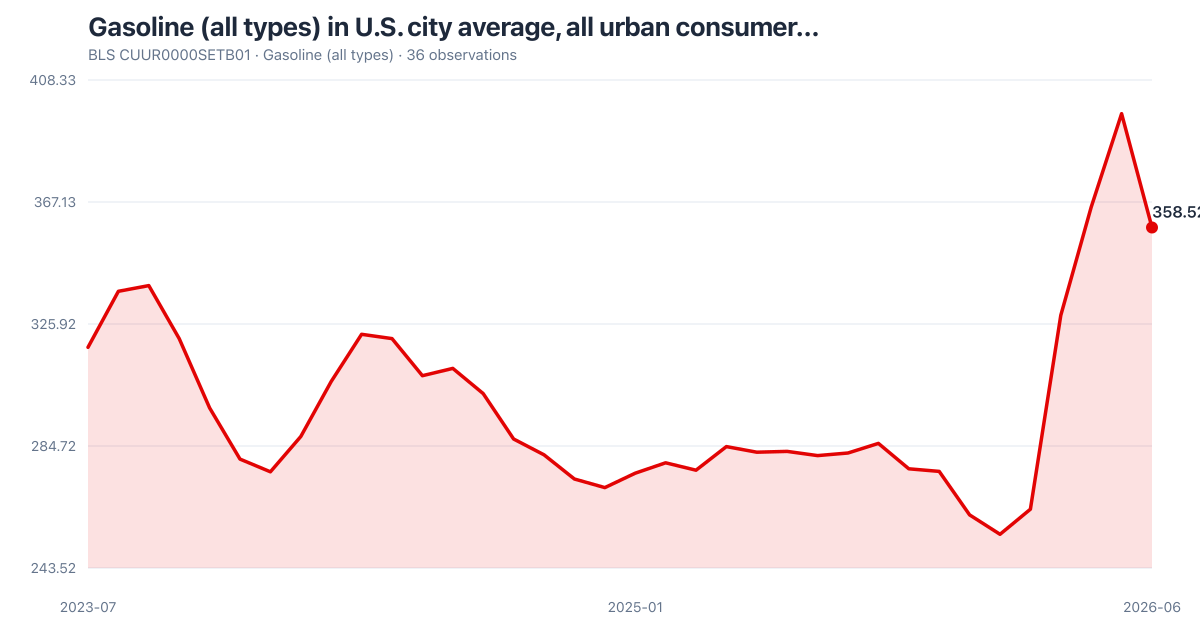
- 5. Gasoline prices fell 9.7% MoM in June 2026 (BLS CUUR0000SETB01), down to 358.518, though still 26.7% above YoY levels. Source
- 6. Capital One Financial executives highlighted integrations with Discover and Brex, signaling expanded rewards ecosystem access. Source
Picking the best travel credit card in November 2025 takes more than a glance at a flashy welcome bonus. Travel costs are still elevated, rewards programs keep getting more complicated, and the smarter move is to run the actual numbers: spending level, fees, and how you actually travel. WalletHub found that 44% of Americans plan to use credit card rewards for summer travel, but a lot of them skip the harder math on inflation, foreign transaction fees, and annual costs eating into those savings. The average rewards rate sits at just 1.6 cents per dollar spent, and with balances climbing in some segments, using a travel card well isn’t really about racking up points anymore. It’s about whether the whole arrangement actually pays off.
This week’s numbers add some texture. Gasoline prices dropped 9.7% in June 2026, but they’re still running 26.7% above where they were a year ago. Revolving credit ticked down slightly too, a sign consumers are being careful with how they borrow. For travelers, the takeaway is simple: make every dollar on your card count toward something with real, usable value. Capital One’s new integration with Discover and Brex is getting attention as a sign the industry is opening up rewards ecosystems. But for most cardholders, the real question has nothing to do with the latest product announcement. It comes down to whether a card’s net benefit beats its cost at the level you actually spend.
Data as of
Official figures from the Federal Reserve Economic Data (FRED), Bureau of Labor Statistics (BLS), and Consumer Financial Protection Bureau (CFPB) were used. FRED and BLS data are, with the latest release dates in early July 2026. State-level complaint indexes are based on Texas DOI filings for 2024–2025. Market news and sentiment are secondary color, drawn from Finnhub and Marketaux. Official figures from FRED, BLS, and CFPB; market color from news feeds as of July 22, 2026.
What the Data Says
The average rewards rate on general purpose credit cards sits at 1.6 cents per dollar spent, according to NerdWallet (citing CFPB) in its 2024 analysis of CFPB data. That number hasn’t moved much since 2020, even as travel costs climbed. Spend $1,000 and you’ll earn $16 in rewards, roughly half of what a single round-trip flight costs at today’s prices. Back in 2019, 90% of general purpose card spending happened on rewards cards, so adoption is clearly widespread. What’s missing is the follow-through: most people never sit down and calculate whether that spending actually converts into meaningful travel savings. And while 44% of Americans plan to use rewards for vacation funding, only a small fraction have worked out the net cost once fees are factored in.
| Indicator | Latest | Prior / YoY |
|---|---|---|
| Rewards Rate (General Purpose) | 1.6 cents/dollar | 2024 (CFPB) |
| Share of Rewards Spending | 90% | 2019 (CFPB) |
| Planned Travel Use of Rewards | 44% | 2026 (WalletHub) |
| Gasoline Price Index (MoM) | 358.518 | MoM -9.7% (BLS) |
| Revolving Consumer Credit | $1.344 trillion | MoM -0.4% (FRED) |
At 1.6 cents per dollar, a $3,000 annual spend on a travel card earns $48 in rewards. That translates to roughly $16 per flight, about one-third the cost of a mid-tier domestic round-trip in 2026.
Key Takeaway: The average travel credit card earns 1.6 cents per dollar spent, meaning a $10,000 annual spend yields just $160 in rewards. This is not enough to cover a single round-trip flight unless paired with a substantial welcome bonus or low-fee card. Source
What Markets Are Reacting To
Capital One’s recent tie-up with Discover and Brex points to a broader push toward cross-platform rewards flexibility. Company executives talked up the expanded access to partner benefits, which fits a pattern across the industry: issuers competing hard to keep customers in a tighter credit market. Jamie Dimon, meanwhile, warned that credit stress in 2027 could turn out “worse than people expect,” pointing to rising delinquency risk. On the other side of the ledger, Synchrony Financial posted solid Q2 results, with shares up 0.83%, which suggests consumer credit demand is holding up despite the caution elsewhere.
Key Takeaway: Market sentiment remains neutral-to-positive, with card issuers prioritizing ecosystem expansion. For consumers, this means more redemption options, but also higher complexity. Source
What This Means for You
The right travel credit card isn’t defined by its name or its marketing. It comes down to how much you spend, how often you travel, and how much you’re willing to tolerate in fees. Spend $10,000 a year, and a card with a $95 fee and a 100,000-point bonus only makes sense if those points are worth 1.5 cents or more apiece. At 1.6 cents, a $95 fee can be wiped out by a $100 flight credit, but only if you book through the card’s own travel portal. Spend $30,000 a year on the same card, and you’re looking at $480 in net value, enough for two round-trips, provided you skip foreign transaction fees and route all your travel spending through it.
One caveat worth repeating: carry a balance, and interest charges will wipe out any rewards you’ve earned. Travel cards typically carry APRs above 20%. Pay down existing balances before you start chasing points. If you’re carrying revolving debt, a no-fee card with a lower rate is the smarter starting point, not a rewards card.
Plenty of premium cards throw in primary rental car insurance and trip delay coverage. If you mostly travel domestically or don’t travel much, those perks aren’t doing much for you. Take the Capital One Venture X: its $300 annual travel credit can cancel out the $395 fee, but only if you book one international trip through the portal. Book elsewhere, and your net cost jumps to $95. Budget travelers are often better served by a no-fee card like the Chase Freedom Unlimited, which earns 2x on all purchases and transfers to any airline at 1 cent per mile. No risk, no extra complexity to manage.
The Chase 5/24 rule is still a hard wall: open five or more personal cards from any issuer in the past 24 months, and you won’t get approved for a new one. If you’ve been on an application spree lately, hold off before trying again. A better approach is consolidating into one flexible card, something like the Amex Platinum or Chase Sapphire Preferred, and running all your travel spending through it.
If you’re thinking about long-term financial alignment, paying down debt while also supporting sustainable living, it’s worth looking at eco-friendly credit cards and rewards fees sustainability. These cards often reward green spending and back climate-conscious programs. more on eco.
Key Takeaway: The best travel credit card for you is the one where the net value exceeds the fee after 12 months of use. For most, that means a $95 fee is only worth it if you earn over $100 in real travel value. Source
When Should You Apply for a Travel Card?
Got a trip coming up in the next 3 to 6 months? A welcome bonus can help offset booking costs, but only apply if you can hit the minimum spend without stretching your budget to get there. The Chase Sapphire Preferred, for instance, requires $5,000 in spend to earn 100,000 points. Spend $1,000 a month, and you’ll clear that in five months without much strain. Already sitting at five open cards as a Chase customer? Don’t bother applying, the 5/24 rule will block you. Not a frequent traveler? Skip the premium cards entirely; a no-fee card with 2x points and easy transfer options will serve you better long-term. But if you’re traveling three or more times a year and spending $30,000 annually, upgrading to a high-value card now is the right call.
If you’re weighing long-term financial health alongside your travel spending, pairing your credit card strategy with other green financial tools can move the needle. Green Personal Loans: How to Cut Your Interest Rate by 6 Points and Save $4,100 offer a way to finance home upgrades like solar panels, which can reduce utility costs and improve long-term savings. These loans often come with lower rates and better terms than traditional personal loans, making them a smart complement to travel reward usage.
Key Takeaway: Act only if your travel plans align with a card’s bonus window and your spending supports a net positive return. For most, the best time to apply is when you have a confirmed trip within 6 months. Source
Use this formula: (Rewards Value. Annual Fee) / Total Spend. If the result exceeds 1.5 cents, you’re likely getting real value. For example: (100,000 × 0.015–$95) / $10,000 = 0.0055 (0.55 cents). Below 1.6 cents, consider a lower-cost alternative.
Case Study: How One Traveler Saved $1,800 Using a High-Value Card Strategically
An Atlanta-based consultant spending $32,000 a year used the Chase Sapphire Preferred to book three international trips in 2025. She hit the $5,000 minimum spend requirement and earned 100,000 points, worth $1,500 in travel credits. From there, she transferred the points to Delta and booked two round-trips plus one domestic flight. Net value: $1,500 in rewards against a $95 annual fee, for a savings of $1,405 on flights. She also ran her grocery and dining spending through a Chase Freedom Unlimited card, earning 2x points that she transferred to Southwest. Total annual travel savings: $1,800. It’s a good illustration of what happens when you combine cards deliberately and stay disciplined about how you redeem points, similar in spirit to how people approach consolidate multiple personal loans pay, a strategy that applies well to managing multiple financial tools, including credit cards.
How Do I Pick the Right Card?
1. Calculate your total annual spending. If under $10,000, prioritize no-fee cards like the Chase Freedom Unlimited.
2. If over $15,000, evaluate cards with $95–$395 fees. Use the net value formula.
3. Check for foreign transaction fees, avoid any with 3%.
4. Confirm transfer partners. Chase and Amex offer 15+ airlines. Capital One has fewer.
5. Avoid applications if you’ve opened five or more cards in 24 months.
6. For long-term savings, pair your card with green financing tools, like Green Mortgages vs Conventional Mortgages: Which Saves More Money and Carbon?, to reduce overall household costs.
Frequently Asked Questions
What does a 1.6 cents per dollar rewards rate mean for my travel budget?
A 1.6 cents per dollar rate means every $1,000 in spending earns $16 in rewards. To cover a $300 flight, you’d need to spend $18,750. This is why welcome bonuses and transferable points matter more than base rates. Source
Should I wait to apply for a premium card if I’ve had five recent applications?
Yes. The Chase 5/24 rule blocks approval for new personal cards if you’ve opened five or more in the past 24 months. Wait until your application window opens again. Source
How do foreign transaction fees affect my travel card choice?
Most premium cards charge 0% foreign transaction fees. If you travel internationally, avoid cards with 3% fees. Even a $1,000 purchase abroad costs $30 extra. Source
Can I use credit card rewards for flights on any airline?
Only if the card’s rewards program allows transfers. Chase Ultimate Rewards and Amex MR transfer to 15+ airlines. Capital One miles are limited to fewer partners. Always check transfer partners before applying. Source
Is the Capital One Venture X worth the $395 annual fee?
Only if you use the $300 travel credit and book internationally. The net cost is $95. If you don’t book through the portal, the fee is not offset. Source
How do I avoid rewards devaluation?
Use points before the airline or hotel changes redemption rules. Check program updates quarterly. Also, avoid cards with complex transfer rules. Simpler programs like Capital One’s earn 2x on all purchases with no devaluation risk. Source
What’s the best card for infrequent travelers who want flexibility?
The Chase Freedom Unlimited. It earns 2x on all purchases, requires no foreign fees, and transfers to any travel partner. No annual fee. No hassle. Source
Sources
- NerdWallet: Credit Card Data (2026)
- CFPB: Credit Card Rewards Programs (2024)
- WalletHub: Travel Rewards Use in 2026
- BLS: CPI. Gasoline and All Items (June 2026)
- FRED: Revolving Consumer Credit (May 2026)
- American Banker: Capital One Integration (2026)
- Eco-Friendly Credit Cards: Rewards, Fees & Sustainability
- Green Personal Loans: How to Cut Your Interest Rate by 6 Points and Save $4,100
- consolidate multiple personal loans pay
- Green Mortgages vs Conventional Mortgages: Which Saves More Money and Carbon?