
The Verdict
Student loan refinancing is usually worth it if you can lock a fixed rate at least 0.75 points below your current blended rate and you have no realistic path to Public Service Loan Forgiveness or income-driven repayment. It is not worth it if you hold federal loans and still need those safety nets.
Updated November 2025
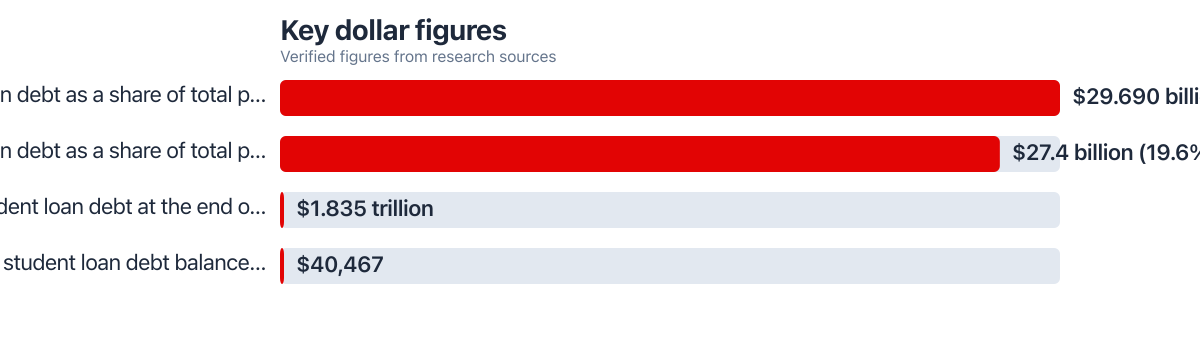
The decision hinges on one trade: a lower interest rate now versus permanent access to federal protections later. According to the Education Data Initiative’s 2025 report, refinanced private debt made up $29.690 billion, or 17.7%, of total private student loan debt in the third quarter of 2025, down from $27.4 billion, or 19.6%, in the fourth quarter of 2024. That shift suggests fewer borrowers are refinancing right now, likely because interest rates have climbed and federal repayment options have gained prominence. Student loan refinancing replaces one or more existing loans, federal or private, with a single new private loan, ideally at a lower rate or better term.
Mortgage rates are also moving in ways that shape household borrowing decisions broadly this year. 30-year mortgage rates recently hit their highest level in nearly a year, which tells you rate environments are tightening across consumer credit, not just in housing. That backdrop makes the refinancing math tighter than it was two years ago, so getting the comparison right matters more than it used to.
| Reasons to Refinance | Detail | Numbers That Matter |
|---|---|---|
| You qualify for a top-tier rate | Borrowers with 700+ FICO Score and stable income can land fixed rates near 3.64-3.99% APR in current 2026 comparisons from lenders like SoFi, Earnest, and Chase | Saves thousands over a 10-year term |
| No PSLF or IDR need | You’re not chasing forgiveness and don’t need income-driven payment caps | Removes the main reason to keep federal loans |
| You want one payment | Consolidating several servicers into a single private loan simplifies tracking | One due date, one balance |
| Zero-fee platforms | Most refinance lenders charge no origination or prepayment fees | Rate and term become the only real differentiators |
| Stable, documented income | W-2 income or two years of solid self-employment history strengthens approval odds | Meets the roughly $5,000-$10,000 minimum balance most lenders set |
| Reasons Not to Refinance | ||
| You hold federal loans | Refinancing federal debt into private debt permanently strips IDR eligibility and forgiveness programs | An irreversible decision once completed |
| Income is unstable | Self-employed or commission-based borrowers with inconsistent cash flow lose federal safety nets with no substitute | Private lenders offer thinner hardship options |
| Credit under 650 | Most platforms set 650 as a soft floor; below that, approval odds and rates both suffer | You’ll likely get quoted near or above your current rate |
| Pursuing PSLF | Ten years of qualifying payments toward forgiveness is void the moment you refinance out of federal loans | A single refinance ends eligibility instantly |
| Recent hard inquiries | Multiple recent credit checks can push your quoted rate up before you even compare offers | Wait 3-6 months if you’ve shopped for other credit |
Key Takeaways
- Your credit score sits at 650 or higher, ideally 700+ for the lowest advertised rates, based on FICO Score benchmarks from Experian and Equifax
- Your new fixed rate quote is at least 0.75 points below your current weighted average rate
- You have no plan to pursue PSLF or need income-driven repayment in the next five years
- Your loan balance is at least $5,000, the common minimum across major refinance platforms like SoFi, Earnest, and Credible
- You’ve held steady income for at least 12-24 months, whether W-2 or self-employed, with DTI under 40% typically favored
- You’ve gotten prequalified rate checks (soft pulls) from at least three lenders before applying
- You understand cosigner release terms if someone is cosigning your new loan
Is Refinancing Your Student Loans the Right Move Right Now?
It depends almost entirely on whether your loans are federal or private, and whether you’ll need federal safety nets later. Federal borrowers give up income-driven repayment plans, PSLF eligibility, and future federal forgiveness programs the moment they refinance into a private loan; that trade is permanent and cannot be undone by switching lenders again. The Education Data Initiative’s 2025 data shows 42.6 million borrowers still hold federal loan debt, representing $1.835 trillion in total U.S. student loan debt. Refinancing can make sense only if you’re certain you won’t need those protections.
For private loan holders, the calculus is simpler: you’re comparing your current rate against a new one, full stop, with no federal benefits at stake. This is where refinancing tends to make the most sense, especially if your credit has improved substantially since you first borrowed. As Andrew Pentis, Bankrate principal writer and certified student loan counselor, notes: “Student loan refinancing can be a good option if you’re pursuing an aggressive approach to repayment, to pay as little interest as possible and to zero your balance ahead of schedule. This fast track to repayment can give you the feeling that you’re in control and on pace to achieve peace of mind.”
That “aggressive repayment” framing matters because refinancing works best for people with a plan, not people just chasing a lower number on paper. If your income is inconsistent, refinancing removes a cushion you may need later. Borrowers with federal Parent PLUS loans face a related decision, and the logic overlaps with broader debt strategy questions covered in the consolidate multiple personal loans guide, where the math on combining versus separating debts follows a similar break-even logic.
What Eligibility Do Most Platforms Actually Require in 2025?
Most refinance lenders in late 2025 set a floor around a 650 FICO Score, though the best rates go to borrowers at 700 or above with two or more years of steady income. Loan minimums typically start between $5,000 and $10,000, and platforms generally want to see a bachelor’s degree, though several now accept associate degrees or in-progress enrollment with documented graduation timelines. The Education Data Initiative reports that $40,467 is the average federal student loan balance per borrower, making $5,000 a reasonable entry threshold for refinancing.
Cosigner options exist at nearly every major lender, and cosigner release, letting the cosigner off the loan after a set number of on-time payments, is one of the most overlooked features. Release windows range widely, from 12 to 36 consecutive on-time payments depending on the lender. SoFi, for example, allows release after 36 months, while Earnest requires 24. Read this clause carefully rather than assuming it matches what a friend got elsewhere.
International students on OPT or H-1B status face a narrower field. A handful of platforms accept non-citizen borrowers with a qualifying visa and a U.S.-based cosigner, but many mainstream lenders, including Chase and Discover, still require citizenship or permanent residency outright. If you’re on a visa, budget extra time to find one of the smaller number of lenders that will even run your application, and expect to need a cosigner regardless of your income level. Borrowers with recent credit inquiries, say from shopping for a car loan or opening a new credit card in the last few months, should also expect a modest rate bump; most platforms recommend waiting three to six months after other credit activity before applying. The Consumer Financial Protection Bureau (CFPB) warns that multiple hard inquiries can temporarily lower your credit score, especially if they’re recent.
How to Compare Rates, Fees, and Repayment Terms Without Getting Overwhelmed
Compare the annual percentage rate (APR), not the headline rate, and always check whether it’s fixed or variable before anything else. Top fixed rates for well-qualified borrowers currently start around 3.64% to 3.99% APR across several 2026 lender comparisons from SoFi, Earnest, Credible, and Discover. Variable rates can start lower but carry reset risk tied to benchmarks like SOFR (Secured Overnight Financing Rate), which the Federal Reserve Economic Data (FRED) shows has been trending upward in consumer credit markets. Auto loan rates, for example, rose from 7.37% to 7.47% between February and May 2026, signaling tightening credit conditions.
Variable-rate loans reset periodically based on an index plus a margin, and with the Federal Reserve’s rate path uncertain through 2026, locking a fixed rate removes a real source of future payment shock. If you’re risk-averse or plan to hold the loan more than five years, a fixed rate is the safer default, even if the initial variable quote looks a few tenths of a point cheaper.
Run the arithmetic before you decide. Say you have $40,467, the average federal balance according to the Education Data Initiative’s 2025 figures, at a current blended rate of 6.5% on a 10-year term; your payment is roughly $459 a month and total interest over the life of the loan runs about $14,635. Refinance that same balance to a fixed 5.0% rate over the same 10-year term, and the payment drops to about $429 a month, with total interest around $10,999. That’s a monthly savings of about $30 and a lifetime interest savings near $3,636, which clears the bar for most people’s definition of “worth it,” assuming you don’t need federal protections on that balance. Also confirm there’s no origination or prepayment fee; most refinance platforms don’t charge one, which means the rate and term genuinely are the only levers that matter once you clear eligibility.
Who Should and Who Should Not
Good candidates
Refinancing tends to reward borrowers who’ve already stabilized their financial picture.
- A borrower with private loans only, a 720+ FICO Score, and a rate quote at least a full point below their current one
- A dual-income household that has held steady employment for two-plus years and wants to consolidate five separate loan servicers into one payment
- Someone with a cosigner on their original loan who now qualifies solo and wants that person released from the obligation
- A high-balance borrower, say $150,000 or more, where even a small rate cut produces outsized dollar savings over the loan term
Who should skip it
For others, the federal protections outweigh any rate savings on offer.
- Anyone actively working toward Public Service Loan Forgiveness, since refinancing federal loans ends that eligibility permanently
- Borrowers with unpredictable income, including many self-employed workers, who may need income-driven repayment as a safety valve later
- Recent graduates still building credit history, who likely won’t qualify for the lowest advertised rates yet
- Anyone who applied for other credit in the past few months and hasn’t let their score recover from the inquiry

Marketplace Platforms vs. Direct Lenders: Which Fits Your Needs?
Marketplace platforms like Credible or Splash Financial let you compare prequalified offers from several lenders in one place, while going direct to a lender like SoFi or Earnest can surface member perks a marketplace won’t show you. Marketplaces save time because you fill out one form and see multiple soft-pull quotes side by side; direct lenders sometimes offer relationship discounts, career coaching, or rate discounts for existing customers that don’t show up in aggregator results.
The trade-off is service depth versus shopping speed. A marketplace is efficient for a first pass, but once you’ve narrowed to two or three finalists, it’s worth checking each lender’s own site directly for perks like unemployment protection, autopay discounts (commonly 0.25 points, though some lenders like Chase revoke it if you miss even one payment), or biannual rate check tools. This is similar to the trade-off borrowers weigh in the personal loan vs peer lending comparison, where the fastest-looking option isn’t always the one with the best long-run terms.
Read the fine print on autopay discount triggers and variable rate caps before signing anything. Some lenders cap variable rates at a ceiling well above the fixed-rate alternative, which matters if the rate environment keeps drifting upward the way it has recently. Borrowers thinking about how rate direction affects fixed versus variable choices more broadly may find useful parallels in the fixed vs variable rate personal loans guide.
Frequently Asked Questions
Is it worth refinancing federal student loans in 2025?
Rarely, unless you’re certain you won’t need income-driven repayment or forgiveness programs. The permanent loss of those federal protections usually outweighs a modest rate reduction, especially given uncertain job markets and repayment plan changes still working through the system.
What credit score do I need to refinance student loans?
Most platforms set a floor around 650 FICO Score, but 700 or higher gets you the advertised low rates. Below 650, expect either a rejection or a rate that barely beats what you’re already paying. FICO Scores from Experian, Equifax, and TransUnion are commonly used in underwriting.
Can international students on OPT or H-1B refinance student loans?
A limited number of lenders accept visa holders, usually with a U.S. citizen or permanent resident cosigner required. Chase, SoFi, and Credible are among those that occasionally accommodate non-citizens under strict conditions. Coverage is far from universal, so expect to search harder and possibly pay a slightly higher rate than a citizen borrower would.
How much can I actually save by refinancing $40,000 in student loans?
On a $40,467 balance moving from 6.5% to 5.0% over 10 years, you’d save roughly $30 a month and about $3,636 in total interest. Your actual savings depend on your starting rate, new rate, and remaining term, so run the numbers with your specific balance before deciding. The Education Data Initiative reports this average balance is representative of current federal borrowers.
Sources
- Education Data Initiative, Student Loan Debt Statistics (2025)
- Bankrate, How to Refinance Student Loans
- Federal Reserve Economic Data (FRED), Finance Rate on Consumer Installment Loans
- ZeroHedge, 30-Year Fixed-Rate Mortgage Reaches Highest Level in Almost a Year
- Consumer Financial Protection Bureau, Student Loans Resource Center
- Experian, Credit Score Information
- Equifax, Credit Reporting
- TransUnion, Credit Information
- SoFi, Student Loan Refinancing
- Chase, Student Loan Refinancing
- Discover, Student Loan Refinancing
- Credible, Loan Marketplace
- Earnest, Student Loan Refinancing