
Fact-checked by the CapitalLendingNews editorial team
The Verdict
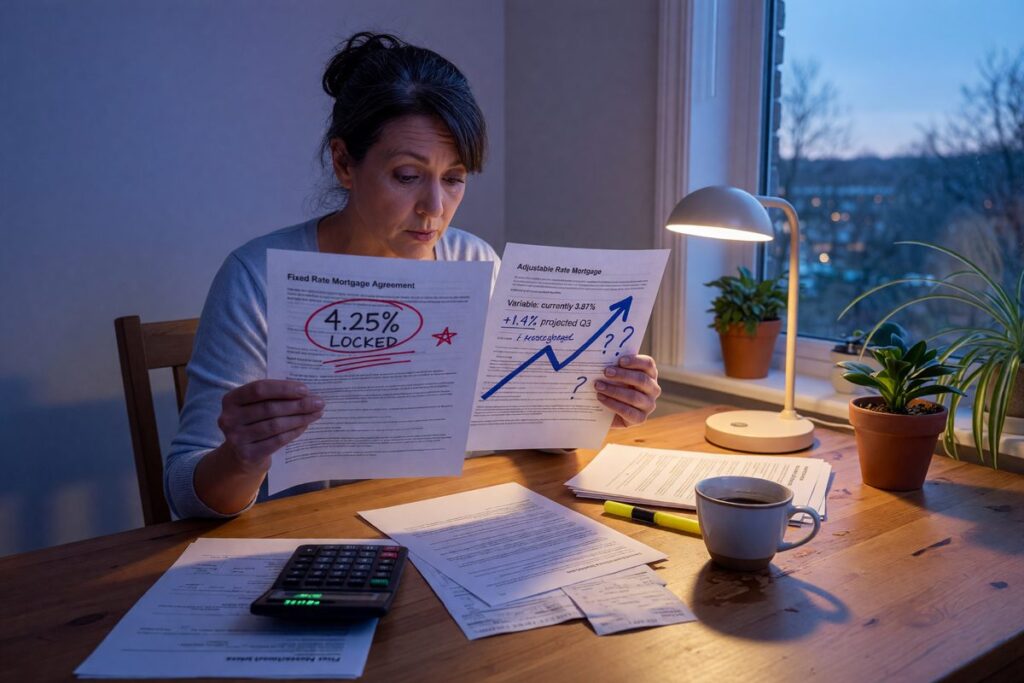
A fixed-rate personal loan is the safer choice for most borrowers, but locking in can cost you more if rates fall and your loan term is 3 years or shorter. Variable personal loans, when you can even find them, make sense only if you have high liquidity, strong credit, and a genuine plan to repay early. If your timeline stretches beyond 5 years, fixed wins almost every time.
The fixed vs variable personal loan debate sounds cleaner than it is. Most personal loans are fixed by default, lenders prefer the certainty, so the real question is whether you should seek out a variable option or accept the fixed rate you’re offered. The single factor that swings it most is your repayment timeline, not your credit score. According to Bankrate’s June 2026 rate tracker, the average personal loan rate sits at 12.28%, with excellent-credit borrowers accessing rates as low as 6.20%, which creates real room for a variable product to start meaningfully cheaper.
This matters right now because the rate environment is still elevated compared to pre-2022 norms, and any stabilization or easing from the Federal Reserve would benefit variable borrowers who haven’t locked in. If you lock in today and rates fall within your loan’s life, you’re paying for predictability you may not need.
| Factor | Reasons to Choose Fixed | Reasons to Choose Variable |
|---|---|---|
| Payment Stability | Identical payment every month; easy to budget around | Payment can change with index rate, harder to plan |
| Starting Rate | Rate is set at closing; no surprise increases | Typically starts 1–3 percentage points lower than fixed equivalent |
| Total Interest Risk | Known from day one; no upside or downside from rate moves | If rates drop, you pay less; if they rise, you pay more |
| Loan Term Fit | Better for 5–7 year loans where rate swings compound | Better for 2–3 year terms where exposure window is short |
| Prepayment Flexibility | Some lenders charge prepayment penalties on fixed loans | Variable loans more often allow early payoff without penalty |
| Product Availability | Offered by nearly every personal loan lender | Rare for unsecured personal loans; more common in HELOCs and lines of credit |
Key Takeaways
- Your loan term is 3 years or shorter, giving variable rates less time to move against you
- The variable starting rate is at least 1.5 percentage points below the best fixed offer you’ve received
- Your monthly budget can absorb a payment increase of at least 15% without financial strain
- You have no prepayment penalty on your variable option and a concrete plan to repay early
- Your credit score is 720 or above, qualifying you for the lowest variable tiers where the starting discount is largest
- You’re borrowing in an environment where the Federal Reserve has signaled rate pauses or cuts within 12–18 months
- You are not consolidating high-interest debt where payment unpredictability would undermine the repayment strategy
What Fixed and Variable Rates Actually Mean for Personal Loans
Fixed means your interest rate is locked at origination and never changes for the life of the loan. Variable means your rate is tied to a benchmark, most commonly the U.S. Prime Rate or the Secured Overnight Financing Rate (SOFR), and adjusts periodically based on where that index moves.
The distinction matters far more for products like home equity lines of credit than for standard personal loans. The vast majority of unsecured personal loans in 2026 are fixed-rate. Lenders structure them this way because fixed payments reduce default risk; they know what cash flow to expect. Variable personal loans do exist, some online lenders like SoFi and credit unions offer them, but they’re uncommon, and borrowers often have to ask directly rather than seeing them listed upfront. If a lender isn’t advertising a variable option, it probably doesn’t have one.
Historically, fixed personal loan rates have run higher over the full loan life than variable alternatives, a point Investopedia has noted in its rate comparisons. That cost difference exists because the fixed rate carries a built-in premium, you’re paying the lender for the certainty it’s providing you.
The Current Rate Landscape: What Fixed Borrowers Are Actually Locking In
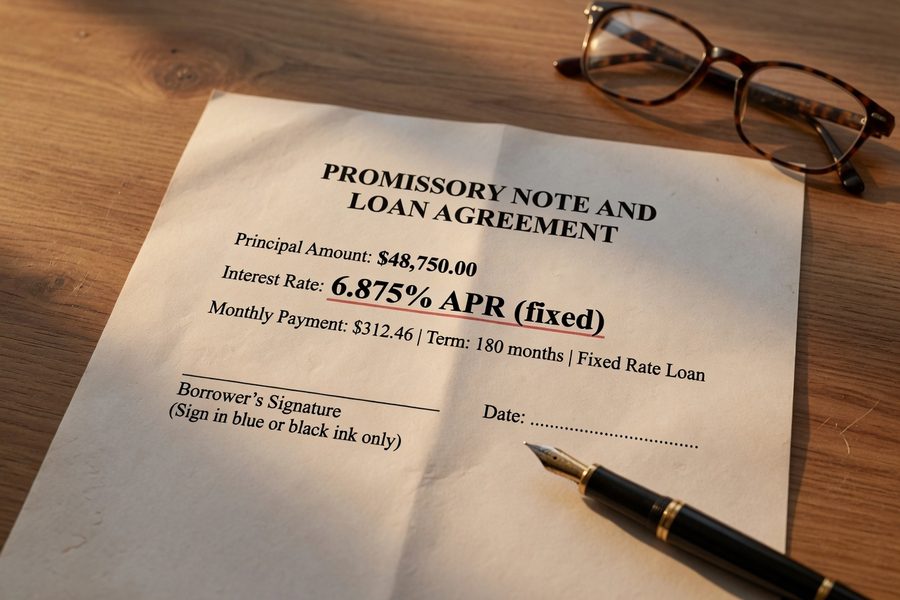
Average personal loan rates span a wide range by credit tier. Bankrate’s current rate tracker shows an average of 12.28%, but that figure flattens meaningful variation. Borrowers with excellent credit (720 and above, as defined by Experian’s FICO Score ranges) are accessing rates starting around 6.20%, while subprime borrowers face rates above 19%. Understanding exactly where your credit score sits within lender pricing tiers is the first step to knowing whether a fixed or variable quote is competitive.
Variable personal loan products, where offered, typically start 1 to 3 percentage points below the equivalent fixed rate. On a $15,000 loan at a 10.28% variable versus a 12.28% fixed APR over three years, that gap translates to roughly $480 in total interest savings, assuming the variable rate holds flat. If the Prime Rate drops by even 50 basis points in year two, the savings grow. If it rises by 100 basis points, the gap narrows or reverses.
The Federal Reserve’s rate trajectory since 2022 pushed personal loan averages well above their pre-pandemic baseline. Any sustained pause or cut cycle, which analysts were pricing into expectations through mid-2026, would benefit variable borrowers more than fixed ones. That’s the core tension in this decision right now.
When Locking In a Fixed Rate Actually Costs You More
Short loan terms and rate-drop environments are where fixed borrowers lose ground. A two- or three-year loan doesn’t give rates much time to move against you, so a lower starting variable rate often wins on total interest even if the index ticks up modestly. The math shifts once you extend to five or seven years, because the exposure window grows and a 200-basis-point rate increase over that period is historically plausible.
Prepayment is the underappreciated factor here. Some fixed-rate personal loans carry prepayment penalties, typically 1% to 5% of the remaining balance, that punish borrowers who want to pay off early if rates fall or their cash flow improves. Variable loans, particularly those from online lenders and credit unions, are more likely to allow early payoff without penalty. If you’re the type of borrower who aggressively pays down debt, a fixed loan with a prepayment penalty can eliminate the one advantage fixed was supposed to offer: total cost control. The CFPB’s guidance on prepayment penalties is worth reading before you sign anything. The interaction between loan term length and total interest cost is often what separates a good deal from an expensive one.
Variable personal loans also align better with aggressive payoff strategies like debt avalanche or snowball methods, where the goal is to eliminate the balance faster than the schedule requires. Fixed loans with penalties undercut that plan entirely.
Break-Even Math: A Concrete Look at Total Interest
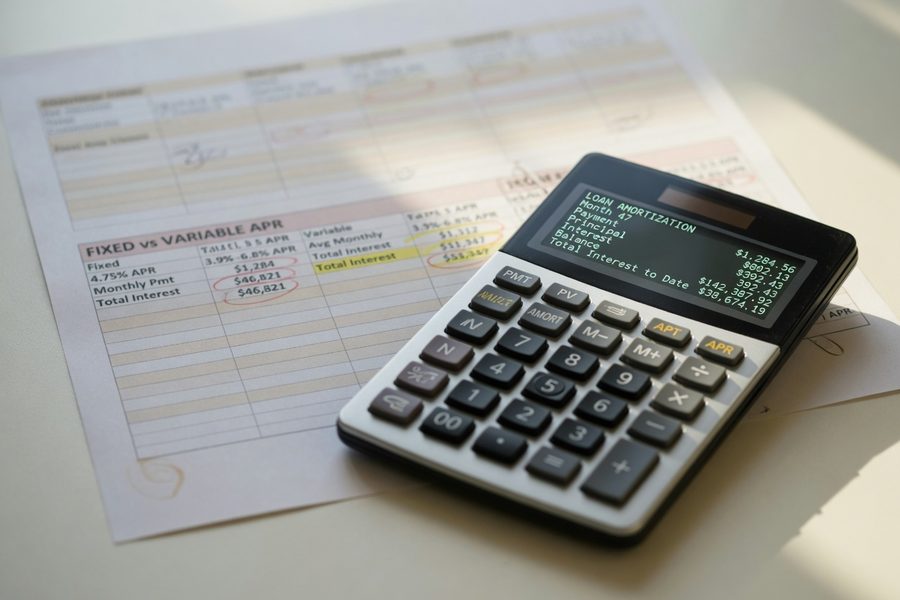
Numbers make this real. Consider a $20,000 personal loan over a 3-year term. At a fixed APR of 12.28% (the June 2026 average per Bankrate), total interest paid comes to roughly $3,916. At a variable rate starting 2 percentage points lower, 10.28%, total interest at a flat rate would be approximately $3,222, a difference of about $694. The variable borrower needs the rate to stay below roughly 13.5% over the entire term to still come out ahead. Whether that’s a safe assumption depends entirely on your read of the rate environment.
Extend the same loan to 5 years and the calculus changes. Total interest on the fixed 12.28% loan rises to about $6,740. At 10.28% variable (flat), it’s roughly $5,567. But a variable loan that rises to 13.28% in year three and stays there would cost more than the fixed option. The longer the term, the more a variable borrower is betting on rate stability or decline. That’s not irrational; it just needs to be a conscious decision, not a default one.
One honest caveat: variable personal loan products are genuinely hard to find from major banks like Chase or Wells Fargo, which means your comparison set may be limited to credit unions and fintech platforms. Fewer competing offers can erode the very savings the variable structure is supposed to deliver.
For borrowers consolidating high-interest credit card debt, the dynamics are slightly different. The priority is often locking in any rate lower than the card rates being replaced, and payment predictability supports the repayment discipline that makes consolidation actually work. If you’re weighing whether refinancing or restructuring debt actually saves money, the loan structure matters as much as the rate itself. The FDIC’s consumer credit resources offer a useful framework for thinking through debt consolidation decisions before committing to any structure.
Who Should and Who Should Not
Good candidates for variable personal loans
Variable rates work for borrowers who have real financial flexibility and short repayment horizons.
- Borrowers with a FICO Score of 720 or above who qualify for the steepest variable rate discounts, at least 1.5 points below fixed
- Anyone taking a 2- to 3-year loan with a confirmed plan to pay it off early, eliminating most of the rate-movement risk
- Self-employed borrowers with strong but variable cash flow who can make larger payments when income is high, see how documenting income properly changes the rates you’re offered
- Borrowers who are not consolidating revolving debt and don’t need the psychological anchor of a fixed payment to stay on track
Who should skip variable and take fixed
Most borrowers are better served by fixed rates, particularly when the loan term is long or the budget is tight.
- Anyone borrowing for 5 or more years, where the exposure window makes rate increases a genuine financial risk
- Borrowers with less than 3 months of liquid savings, payment shock on a variable loan has nowhere to go in a lean month
- Anyone consolidating multiple debts where payment predictability is what makes the strategy viable, lenders like LightStream and Discover offer fixed consolidation loans with straightforward terms
- Borrowers who’ve already built a sinking fund as a buffer but where the fund is earmarked for another purpose and can’t absorb a payment increase
- Subprime borrowers, generally those below a 620 FICO Score per Experian’s scoring tiers, who likely won’t qualify for a variable product with a meaningful rate discount anyway
Frequently Asked Questions
Is a fixed or variable personal loan better right now in 2026?
For most borrowers, fixed is still safer, but not automatically cheaper. If you have strong credit, a short repayment term of 3 years or under, and can find a variable loan starting at least 1.5 points below the best fixed offer, variable can save several hundred dollars in total interest. If your term is 5 years or longer, lock in the fixed rate.
Do most personal loan lenders even offer variable rates?
No. The majority of unsecured personal loan lenders offer only fixed rates. Variable personal loans are more commonly found at credit unions or through fintech platforms like SoFi, and borrowers usually need to ask for them explicitly. HELOCs and personal lines of credit are far more commonly variable than term personal loans. The CFPB’s explainer on fixed vs. adjustable rates covers the structural logic well, even though it focuses on mortgages.
Can a fixed personal loan cost more than a variable one over the full term?
Yes, and it happens regularly when variable rates stay flat or fall during the loan period. Fixed loans carry a built-in rate premium because the lender is absorbing the interest rate risk that would otherwise fall on you. That premium is worth paying for long terms and tight budgets; for short, aggressive payoff plans, it often is not.
What should I ask a lender before choosing between fixed and variable?
Ask three things: what index the variable rate is tied to (Prime Rate or SOFR) and how often it adjusts; whether there is a rate cap limiting how high it can go; and whether there is a prepayment penalty on the fixed option. Those three answers tell you the actual risk profile of both choices, not just the starting rate. Your debt-to-income ratio (DTI) will also affect which products you qualify for, so it’s worth calculating that before you apply.
Sources
- Bankrate, Personal Loan Interest Rates (June 2026)
- Investopedia, Personal Loan Rates and Rate Comparisons
- Consumer Financial Protection Bureau, Fixed vs. Adjustable Rate Explainer
- Consumer Financial Protection Bureau, What Is a Prepayment Penalty?
- Federal Reserve, Selected Interest Rates (H.15 Statistical Release)
- Federal Reserve, Monetary Policy Overview
- Federal Reserve Bank of New York, Secured Overnight Financing Rate (SOFR)
- Experian, What Is a Good Credit Score? FICO Score Ranges Explained
- FDIC, Money Smart Consumer Credit Resources
- NerdWallet, Best Personal Loans and Current Rate Data
- Consumer Financial Protection Bureau, Personal Loans Consumer Guide
- Federal Reserve, Research on Consumer Credit and Interest Rate Sensitivity
- The Wall Street Journal, U.S. Prime Rate Historical Data
- Credit Karma, Fixed vs. Variable Rate Loans Explained