
Fact-checked by the CapitalLendingNews editorial team
Quick Answer
The best online lenders for bad credit borrowers in 2025 include Upstart, LendingPoint, and Avant, which accept credit scores as low as 580. APRs typically range from 9.99% to 35.99% depending on the lender and borrower profile. Comparing at least three offers before accepting any loan can save hundreds of dollars in interest.
Borrowers with credit scores below 670 now have more options than at any point in the past decade. Fintech and specialty finance companies have built underwriting models that look beyond the traditional FICO score, pulling in income stability, employment history, and bank account cash flow to make approval decisions. According to CFPB consumer credit trend data, personal loan originations from nonbank lenders have risen sharply over the past three years, with fintech platforms now representing a significant share of subprime personal loan volume.
Knowing which lenders will actually approve you, and at what cost, can mean the difference between solving a financial problem and deepening one. This guide ranks the top choices for bad credit borrowers, explains what each lender requires, and gives you the data to choose wisely.
Key Takeaways
- The average APR on a personal loan for borrowers with bad credit is 21.57%, well above the 12.43% average for good-credit borrowers, according to Bankrate’s 2025 personal loan rate data.
- Upstart’s AI-driven underwriting model approved 27% more applicants than traditional credit-score-based models in a study cited by Federal Reserve economists, making it a top option for thin-file borrowers.
- Avant requires a minimum credit score of 580 and offers loan amounts from $2,000 to $35,000, according to Avant’s official loan disclosure page.
- A soft credit inquiry during prequalification does not affect your FICO score, as confirmed by myFICO’s credit inquiry guidance, so prequalifying with multiple lenders carries zero score risk.
- Secured personal loans for bad credit borrowers can carry APRs as low as 7.49% at credit unions, compared to 28–36% at many online subprime lenders, per NCUA financial literacy resources.
In This Guide
- What Counts as Bad Credit for Online Lenders?
- Which Online Lenders for Bad Credit Are the Best in 2025?
- How Do Interest Rates Work for Bad Credit Online Loans?
- What Factors Affect Your Approval Odds with Online Lenders?
- What Are the Biggest Risks of Using Online Lenders for Bad Credit?
- How Do You Apply for a Bad Credit Online Loan the Right Way?
- Frequently Asked Questions
What Counts as Bad Credit for Online Lenders?
Bad credit is generally defined as a FICO score below 580, though most online lenders treat any score under 670 as subprime. The distinction matters because lenders in the 580–669 range (classified as “fair” credit by Experian’s credit score range guide) still qualify for many products, just at higher rates.
Credit Score Tiers Explained
The three major credit bureaus, Equifax, Experian, and TransUnion, each generate credit reports, but most lenders rely on a FICO score derived from that data. Scores range from 300 to 850. A score below 580 signals significant delinquency history or very thin credit files.
Platforms like Upstart and OppFi increasingly use alternative data, income stability, employment history, and bank account cash flow, to serve borrowers that traditional banks reject. That expanded criteria is why some applicants who have been turned away elsewhere still get approved.
Roughly 1 in 5 Americans has a credit score below 600, according to Urban Institute credit research. That is approximately 53 million people who face barriers to mainstream lending, making bad credit personal loan products one of the largest segments in consumer finance.
Which Online Lenders for Bad Credit Are the Best in 2025?
The top choices bad credit borrowers should consider in 2025 are Upstart, Avant, LendingPoint, OneMain Financial, and OppFi, each serving distinct borrower profiles with different minimum scores, loan sizes, and rate structures. The table below compares key figures side by side.
| Lender | Min. Credit Score | APR Range | Loan Amounts | Origination Fee |
|---|---|---|---|---|
| Upstart | 580 | 9.99% – 35.99% | $1,000 – $50,000 | 0% – 12% |
| Avant | 580 | 9.95% – 35.99% | $2,000 – $35,000 | Up to 4.75% |
| LendingPoint | 600 | 7.99% – 35.99% | $2,000 – $36,500 | 0% – 10% |
| OneMain Financial | None stated | 18.00% – 35.99% | $1,500 – $20,000 | 1% – 10% |
| OppFi | None (bank partner model) | 59.00% – 160.00% | $500 – $4,000 | None |
Upstart: Best for Thin-File Borrowers
Upstart is the top choice for borrowers with limited credit history because it uses over 1,600 data variables, including education and employment, rather than relying primarily on credit scores. The platform funded more than $2 billion in personal loans in a recent fiscal year, as noted in its investor disclosures. For more context on how this model works, see how digital lending platforms are replacing traditional bank loans.
There is a real tradeoff here, though. Upstart’s origination fee can reach 12% of the loan amount, the highest of any lender on this list. On a $10,000 loan, that is $1,200 deducted before you receive a dollar. Borrowers with scores near the 580 minimum often land at the high end of that fee range, which can offset the benefit of a competitive interest rate. If your income is strong and your credit score is the main drag on your profile, Upstart’s model tends to reward you. If both are weak, the fee structure may make another lender a better fit.
OneMain Financial: Best for Very Low Scores
OneMain Financial does not publish a minimum credit score requirement, making it one of the few national lenders that will consider applicants with scores below 550. It does, however, charge higher starting APRs, no less than 18.00%. OneMain also offers secured loan options, which can meaningfully reduce your rate.

How Do Interest Rates Work for Bad Credit Online Loans?
Bad credit lenders set rates based on risk-based pricing, meaning your specific credit profile, income, and debt-to-income ratio determine the APR you receive, not just your credit tier. The Federal Reserve’s interest rate environment also plays a role; higher benchmark rates push personal loan APRs up across all credit tiers. You can learn more about this dynamic in our explainer on what a Federal Reserve rate cut means for your debt.
APR vs. Interest Rate: What Bad Credit Borrowers Must Understand
The Annual Percentage Rate (APR) is the total cost of borrowing expressed annually, it includes the interest rate plus all fees. Origination fees on bad credit loans commonly range from 1% to 12% of the loan amount, which means a $5,000 loan could cost you up to $600 upfront before you make a single payment.
The average personal loan APR for borrowers with a credit score between 300 and 579 is 28.50%, compared to 13.50% for borrowers with scores between 720 and 850, according to Bankrate’s 2025 personal loan rate tracker. On a $10,000 loan over 36 months, that difference costs approximately $4,600 in additional interest.
What Factors Affect Your Approval Odds with Online Lenders?
Approval odds with subprime online lenders depend on five primary factors: credit score, debt-to-income ratio (DTI), income stability, loan purpose, and the presence of a co-signer or collateral. Lenders weight these differently, but income verification is nearly universal.
Debt-to-Income Ratio Is Often Decisive
Most online lenders cap approval at a DTI of 45%, meaning your monthly debt payments should not exceed 45% of your gross monthly income. Some lenders, like Avant, are more flexible but compensate with higher rates. Calculating your DTI before applying is essential, divide total monthly debt payments by gross monthly income.
According to Bankrate’s 2025 personal loan rate data, borrowers with low credit scores who demonstrate stable income and low debt-to-income ratios are far more likely to receive competitive loan offers than those with slightly higher scores but heavy existing debt. The income signal has become as important as the credit score in modern underwriting.
The Role of a Co-Signer
Adding a creditworthy co-signer, someone with a score above 700, can lower your APR by 5 to 10 percentage points on some platforms. Not all online lenders allow co-signers; Upstart and LendingClub do, while Avant does not. The co-signer assumes full legal liability if you default, so this arrangement requires serious trust.
Use prequalification tools on at least three lender websites before formally applying. Prequalification uses a soft credit pull that has zero impact on your credit score, but it shows you real rate estimates based on your actual profile. Comparing offers takes 15 minutes and could save you hundreds of dollars over the loan term.
What Are the Biggest Risks of Using Online Lenders for Bad Credit?
The primary risk is accepting a loan with an APR so high that it worsens your financial position rather than improving it. A loan at 35.99% APR on $5,000 over 24 months costs over $2,000 in interest alone. Predatory lenders and outright loan scams also proliferate in the subprime space.
These products are also not a good fit for borrowers whose income is unstable or whose DTI is already at the edge of what they can manage. Taking on a high-rate loan when cash flow is tight can trigger a missed payment, which damages your credit further and triggers late fees, exactly the cycle that makes subprime lending dangerous for some borrowers. If you are not confident you can cover a fixed monthly payment for the full loan term, a personal loan may not be the right tool regardless of whether you can get approved.
Predatory Lending Red Flags
Legitimate online lenders are registered with state regulators and often listed with the Consumer Financial Protection Bureau (CFPB). Red flags include upfront fee demands before loan disbursement, guaranteed approval claims regardless of credit, and lenders who pressure you to decide immediately. The CFPB’s personal loan consumer tool allows you to check lender legitimacy and file complaints.
Buy Now, Pay Later as an Alternative
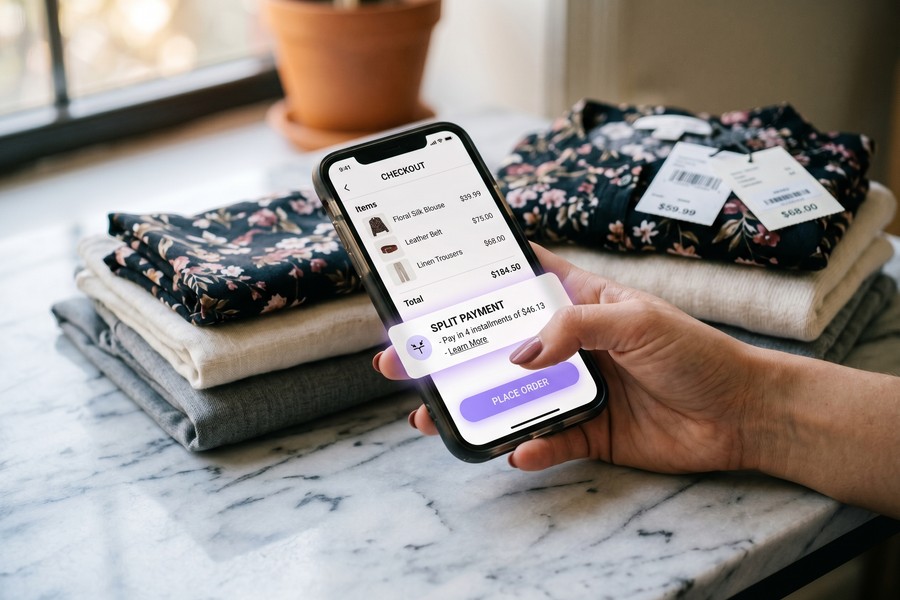
For smaller purchases, Buy Now, Pay Later (BNPL) platforms may carry lower immediate costs than a bad credit personal loan, though they carry their own risks. Our detailed breakdown of what Buy Now Pay Later is and how it really works explains when it makes sense as an alternative to traditional lending.
How Do You Apply for a Bad Credit Online Loan the Right Way?
Applying correctly means prequalifying first, comparing total loan costs (not just monthly payments), and reading the fine print on prepayment penalties and late fees. The process typically takes one to three business days from application to funding.
Step-by-Step Application Checklist
- Pull your free credit report from AnnualCreditReport.com and dispute any errors before applying.
- Calculate your DTI so you know what loan size is realistic.
- Prequalify with at least three lenders to generate competing offers.
- Compare APRs, not monthly payments, to determine true cost.
- Verify the lender’s state license and CFPB complaint history.
- Submit a formal application only after selecting the best offer.
Tools That Can Help
Fintech apps that aggregate loan offers and monitor your credit score can simplify the comparison process significantly. Our roundup of the best fintech apps for managing loans and credit highlights tools that work well for borrowers in the subprime range. If you are focused on rebuilding financial health broadly, understanding why your savings account interest rate may be lower than expected can help you build a stronger overall financial foundation while managing debt.
According to Bankrate’s 2025 personal loan rate data, borrowers who compare three or more offers save an average of $1,600 over the life of a personal loan compared to those who take the first approval they receive. That gap is large enough to justify the extra time.
AI-driven underwriting is changing how bad credit applicants get evaluated. Platforms using machine learning models approve applications in as little as 8 minutes and disburse funds within one business day in many cases. For a deeper look at this shift, read our analysis of how AI is changing the way people borrow money online.
Related reading: AIO Roundup: Top 7 Digital Lending Platforms for Self.
Frequently Asked Questions
What is the easiest online lender to get approved with for bad credit?
OneMain Financial and OppFi are generally the most accessible options, as neither publishes a strict minimum credit score. Both approve applicants with scores well below 580, though OppFi’s APRs can reach 160%, making it suitable only for short-term emergencies when no other options exist.
Can I get an online loan with a 500 credit score?
Yes, but options are limited. OneMain Financial and OppFi will consider scores in the 500–550 range. At that score level, expect APRs near the upper end of the range, typically 30% to 36% for reputable lenders. Avoid any lender advertising guaranteed approval, as that is a common predatory lending tactic.
Does applying for a bad credit online loan hurt your credit score?
Prequalification does not hurt your score, it uses a soft inquiry. A formal application triggers a hard inquiry, which can lower your score by 5 to 10 points temporarily, according to myFICO’s inquiry guidance. Multiple hard inquiries within a 14 to 45-day window are often treated as a single inquiry by scoring models, so rate-shopping in a short timeframe minimizes the impact.
What is the maximum loan amount I can get with bad credit?
Most subprime online lenders cap loans at $20,000 to $35,000 for scores in the 580–620 range. Upstart offers up to $50,000, but applicants with scores below 600 rarely qualify for amounts above $15,000 without strong compensating factors like high income or low DTI.
Are there no-credit-check online loans that are legitimate?
Legitimate no-credit-check loans do exist, typically through credit unions offering Payday Alternative Loans (PALs), which cap APRs at 28% as regulated by the National Credit Union Administration (NCUA). Most online “no-credit-check” lenders outside the credit union system charge triple-digit APRs and should be approached with extreme caution.
How can I improve my chances of getting a lower rate with bad credit?
The most effective strategies are adding a creditworthy co-signer, offering collateral for a secured loan, and reducing your DTI before applying. Even paying down one existing credit card to below 30% utilization can raise your score by 20–30 points within a single billing cycle, potentially qualifying you for a lower rate tier.
How long does it take to receive funds from an online bad credit lender?
Most reputable online lenders fund approved loans within one to three business days. Avant and LendingPoint both advertise next-business-day funding for loans approved before a daily cutoff time. OppFi and OneMain Financial typically fund within one to two business days after all verification steps are complete.
Is a secured or unsecured loan better for bad credit borrowers?
Secured loans, backed by collateral such as a vehicle or savings account, typically carry lower APRs than unsecured ones. For bad credit borrowers, that difference can be substantial: secured loans at credit unions may carry APRs as low as 7.49%, compared to 28–36% at many online unsecured lenders, per NCUA financial literacy resources. The tradeoff is real: if you default, the lender can seize the collateral. Only use a secured loan if you are confident in your repayment ability.
What should I do if I am denied by an online bad credit lender?
Request the adverse action notice, which lenders are required by law to provide. It will name the specific reasons for denial, commonly high DTI, insufficient income, or derogatory marks. Address those factors directly: pay down existing balances, increase income documentation, or wait until a derogatory item ages. Reapplying too soon without changing anything rarely produces a different result.
Can taking out a bad credit loan actually help my credit score?
Yes, if managed carefully. A personal loan adds an installment account to your credit mix and builds a payment history, both of which factor into your FICO score. Making every payment on time is the critical requirement. Missing even one payment at this credit tier can cause a larger score drop than the loan helped you gain, so only borrow what you are certain you can repay on the stated schedule.