

Fact-checked by the CapitalLendingNews editorial team
You just got hit with an unexpected $800 car repair bill. Your paycheck is nine days away. You open your wallet and stare at your credit card, the one with a $5,000 limit and a 27% APR. The cash advance option feels like a lifeline, but something about those fees makes you hesitate. That hesitation is worth honoring. Understanding the real-world calculus behind digital loan vs cash advance decisions could save you hundreds of dollars on a single borrowing event.
Credit card cash advances are among the most expensive forms of short-term credit available to American consumers. According to the Consumer Financial Protection Bureau’s credit card market report, the average cash advance APR sits between 25% and 30%, with no grace period, interest starts accruing the moment you withdraw. Add a cash advance fee of 3% to 5% of the amount borrowed, and a $1,000 advance can cost $50 in fees alone before a single day of interest accumulates. Meanwhile, digital personal loan platforms have matured dramatically, offering funded loans in as little as 24 hours at rates that can be less than half of what a cash advance charges.
This guide cuts through the noise and delivers a precise, data-backed framework for when each option actually makes sense. You will learn the exact cost thresholds, credit score scenarios, repayment timelines, and situational factors that determine which product wins. By the end, you will know with confidence whether to tap that cash advance button, or open a new browser tab and apply for a digital loan instead.
Key Takeaways
- The average credit card cash advance APR is 25%–30%, with a 3%–5% upfront fee and zero grace period, making it one of the costliest short-term borrowing options available.
- Digital personal loans from fintech lenders can fund in as little as 24–48 hours, with APRs starting near 7% for borrowers with credit scores above 720.
- For a $1,000 borrowing need held for 30 days, a cash advance can cost $75–$100 in total fees and interest. A digital loan for the same amount may cost $15–$30.
- Cash advances make mathematical sense only when repayment occurs within 7–10 days and the borrowed amount is under $300, limiting the interest accumulation window.
- Borrowers with credit scores below 580 may face digital loan APRs of 28%–36%, which can erase the cost advantage, making product comparison essential before applying.
- Digital loans report to credit bureaus in most cases, potentially improving your score over time; cash advances do not improve your credit profile and may indirectly signal financial stress to lenders.
In This Guide
- How Each Product Actually Works
- The True Cost Comparison: Running the Numbers
- Speed and Access: Which Is Actually Faster?
- Credit Score Impact: A Tale of Two Products
- When the Digital Loan Clearly Wins
- When a Cash Advance Actually Makes Sense
- Digital Loan vs Cash Advance by Borrowing Scenario
- Red Flags and Predatory Traps to Avoid
- The Application Process Compared
How Each Product Actually Works
Before comparing costs, you need to understand the mechanical differences between these two products. They are not variations of the same thing, they are different debt instruments with different fee structures, repayment dynamics, and credit implications.
The Mechanics of a Credit Card Cash Advance
A credit card cash advance allows you to withdraw physical cash, or transfer funds to a bank account, against your existing credit limit. Unlike a regular purchase, there is no interest-free grace period. The clock starts ticking at the moment of the transaction.
Most issuers charge a cash advance fee of either a flat minimum (often $10) or a percentage of the amount, whichever is higher. On top of that, a separate, higher APR applies to the advance balance. Payments you make typically get applied to your lowest-APR balance first, meaning the high-rate advance sits accumulating interest while you pay down other charges.
Cash advances also have their own sub-limit within your total credit line. Your card might have a $5,000 credit limit but only a $1,000 or $1,500 cash advance limit. That ceiling can strand you in the middle of a cash emergency.
The Mechanics of a Digital Personal Loan
A digital personal loan is an installment loan originated and funded entirely online. You apply through a fintech platform or online bank, receive an approval decision, sometimes in minutes, and funds are deposited directly to your bank account, often within one business day.
These loans carry a fixed APR that includes origination fees in most cases, a fixed repayment term (typically 12 to 60 months), and a set monthly payment. There are no surprise fees baked into each transaction. You borrow a lump sum and repay it on a predictable schedule.
Leading platforms like those reviewed by NerdWallet include lenders such as LightStream, SoFi, and Upgrade, which offer APRs ranging from roughly 7% to 36% depending on creditworthiness. The spread is wide, which is exactly why knowing your credit profile before deciding matters so much.
Many digital lenders now use bank transaction data and income verification rather than relying solely on credit scores. This alternative underwriting can open the door for borrowers who would otherwise be denied, even with a credit score in the 580–650 range.
The True Cost Comparison: Running the Numbers
Abstract comparisons of APR figures miss the point for most borrowers. What actually matters is the total dollar cost for a specific amount, held for a specific number of days. Let’s run those numbers with precision.
Cost of a $1,000 Cash Advance Over 30 Days
Assume a 28% APR and a 5% cash advance fee. The upfront fee is $50. The daily periodic rate is approximately 0.0767%. Over 30 days on a $1,050 balance (fee rolled in), you accrue roughly $24.17 in interest. Total cost: approximately $74.17 to borrow $1,000 for one month.
But that assumes you pay it off entirely at the 30-day mark. Most consumers don’t. Carry the balance for 60 days and total interest climbs to $49, you’ve now paid nearly $100 to borrow $1,000 for two months.
Cost of a $1,000 Digital Loan Over 12 Months
A digital personal loan at 18% APR with a 2% origination fee gives you an origination cost of $20 and monthly payments of approximately $91.68. Total paid over 12 months: about $1,100. But you didn’t need the full 12 months, you needed 30 days.
Here’s the critical nuance: if the loan allows early repayment without a prepayment penalty, and most modern digital lenders do, you can pay it off in 30 days and owe just $14.80 in interest plus the $20 origination fee. Total cost: roughly $34.80 versus $74.17 for the cash advance.
| Scenario | Total Cost (30 Days) | Total Cost (60 Days) | Effective APR |
|---|---|---|---|
| Cash Advance (28% APR + 5% fee) | $74.17 | $99.00 | 89%+ |
| Digital Loan, Good Credit (12% APR + 1% fee) | $20.00 | $30.00 | ~24% |
| Digital Loan, Fair Credit (24% APR + 3% fee) | $50.00 | $70.00 | ~60% |
| Digital Loan, Poor Credit (36% APR + 5% fee) | $80.00 | $110.00 | ~96% |
Notice the crossover point. Borrowers with poor credit (score below 580) getting a 36% APR digital loan will actually pay more than a cash advance for short-term borrowing. That’s the narrow window this article is about. For everyone else with a score above approximately 620, the digital loan wins, often by a factor of two or more.
According to the Federal Reserve’s consumer credit data, Americans paid an estimated $4.4 billion in credit card cash advance fees and associated interest in a single recent year, with the average advance holder carrying the balance for over 45 days.
Origination Fees: The Hidden Lever
Origination fees on digital loans vary widely. Some lenders charge 0% (LightStream, for example, charges no fees at all for qualified borrowers). Others charge up to 8% on subprime loans. Always calculate the total cost, not just the APR, before committing.
A useful rule: if the origination fee plus one month of interest on a digital loan exceeds the cash advance fee plus one month of cash advance interest, the cash advance is cheaper for very short-term needs. Run this math every single time. There is no universal answer that applies to every borrower.
One more limitation worth naming: digital loans are not a good fit for borrowers who struggle with installment debt discipline. The structured monthly payment that makes these loans predictable also means a missed payment gets reported to credit bureaus, a consequence that a cash advance, for all its cost problems, does not carry in the same direct way. Borrowers in genuinely unstable income situations should weigh that risk before choosing a product that ties them to a fixed repayment schedule.
Speed and Access: Which Is Actually Faster?
One of the most persistent myths about credit card cash advances is that they are the fastest option in an emergency. That was true ten years ago. It is increasingly false today.
Cash Advance Speed Reality
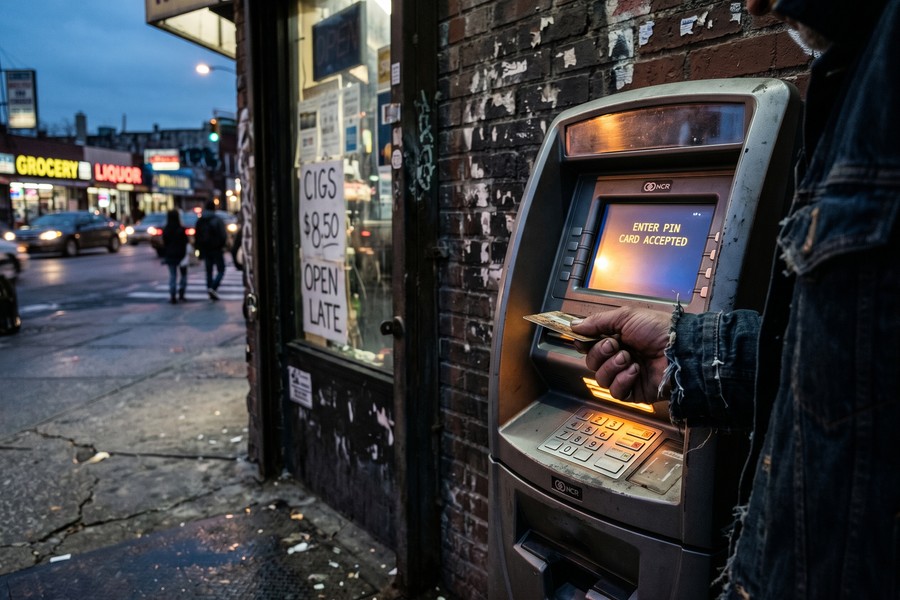
Getting cash via an ATM is instant, but you’re limited to your daily ATM withdrawal limit, which many banks cap at $300 to $500. A direct deposit cash advance to your bank account through your card issuer’s app can take 1–3 business days. The “instant” advantage disappears for transfers above a few hundred dollars.
Digital Loan Speed in 2025
Several fintech lenders now offer same-day or next-day funding. Platforms like Upstart, Avant, and LendingPoint routinely advertise 24-hour funding for approved applicants. The application itself takes 5–10 minutes on a smartphone. Credit decisions are often instant or near-instant, powered by AI underwriting models.
Apply before noon on a business day and receive approval, and there is a reasonable probability of funds in your account by the next morning. That timeline is competitive with, and sometimes faster than, a cash advance processed through an issuer’s website. For more on how AI is reshaping these decisions, our coverage of AI-powered underwriting changes for loan applicants in 2026 goes deeper into the mechanics.
Before an emergency hits, pre-qualify with two or three digital lenders using their soft-pull check tools. Pre-qualification takes two minutes, does not affect your credit score, and gives you a realistic rate estimate you can act on immediately when cash is needed.
Access Without a Bank Account
Cash advances have one genuine speed advantage: if you need physical cash at an ATM right now, no digital lender can match that. For unbanked or underbanked individuals, or for situations requiring immediate cash transactions, the credit card cash advance remains the most accessible instant-cash tool, assuming you have a card with an available cash advance limit.
Credit Score Impact: A Tale of Two Products
The credit score implications of these two products diverge significantly, and the long-term effect is often more financially important than the short-term borrowing cost.
How Cash Advances Affect Your Score
Taking a cash advance does not directly hurt your credit score. The transaction itself is not reported as a separate negative event. However, it raises your credit utilization ratio, the percentage of your available revolving credit you’re using. Credit utilization accounts for approximately 30% of your FICO score.
A $1,000 cash advance on a card with a $3,000 limit pushes utilization from 0% to 33% on that card alone. Carry other balances on top of that, and total utilization could spike well above the 30% threshold that begins to negatively affect scores. According to myFICO’s credit education guidelines, keeping utilization below 10% is optimal for score maximization.
How Digital Loans Affect Your Score
A digital personal loan triggers a hard inquiry at application, typically reducing your score by 5 to 10 points temporarily. The loan itself adds a new installment account to your credit mix, which can be a positive factor if you currently only have revolving credit.
More importantly, consistent on-time payments on a digital loan build positive payment history, the single largest factor in your FICO score at 35%. Over 12 months of on-time payments, many borrowers see a net score improvement even after accounting for the initial hard inquiry. Digital lending platforms that report to credit bureaus offer a real path to credit building. You can explore which platforms do this most reliably in our guide to digital lending platforms that report to credit bureaus.
A 2023 study by TransUnion found that consumers who took out a personal installment loan and maintained on-time payments saw an average credit score increase of 21 points over 12 months, even when starting with below-average credit.
The Indirect Signal Problem
Some lenders and underwriting algorithms flag frequent cash advance usage as a behavioral risk signal. Even if the cash advance doesn’t directly harm your score, the pattern may appear in bank transaction data reviewed by fintech underwriters during future loan applications. As open banking becomes more prevalent in lending decisions, your transaction history tells a story, and cash advances are not a flattering chapter.
When the Digital Loan Clearly Wins
The digital loan dominates in a surprisingly wide range of scenarios. Understanding these conditions helps you act quickly and confidently when an expense arises.
Larger Amounts Over Longer Timeframes
Any borrowing need above $500 that you cannot repay within 10 days strongly favors a digital loan. The math is decisive. At $2,000 borrowed over 45 days, a cash advance at 28% APR plus a 5% fee costs roughly $224 total. A digital loan at 18% APR with a 2% origination fee costs approximately $89 for the same window. The savings exceed $130 on a single transaction.
For amounts above $3,000, cash advances often hit their sub-limit ceiling anyway. Most cards cap cash advances at 20%–30% of the total credit limit, meaning a $5,000 card may only allow $1,000–$1,500 in advances. A digital loan has no such ceiling relative to your approval amount.
When You Have a Credit Score Above 660
Borrowers with scores above 660 will typically qualify for digital loan APRs in the 14%–22% range, well below even the most favorable cash advance rate. The cost advantage is clear and substantial. Borrowers above 720 may qualify for rates as low as 7%–12%, making the digital loan a dramatically cheaper product.
According to Matt Schulz, Chief Credit Analyst at LendingTree, consumers consistently underestimate the true cost of cash advances because they focus on the APR and ignore the upfront fee. That fee is paid regardless of how quickly you repay, making it effectively an infinite-rate charge on very short-term borrows. For any consumer with a prime or near-prime credit score who needs funds for more than two weeks, the rate differential between a digital loan and a cash advance is simply too large to overlook.
When Credit Building Matters
Actively working to improve your credit profile? The digital loan’s installment structure is a tool, not just a cost. Every on-time payment is a positive data point. Cash advances offer no such benefit. Pairing a digital loan strategy with the insights from our debt avalanche vs debt snowball comparison can amplify your progress if you’re also managing existing debt.
When a Cash Advance Actually Makes Sense
There is a genuine, narrow window where the cash advance is the rational choice. Identifying that window requires honesty about your situation, not rationalization.
Small Amounts, Very Short Repayment Windows
Need $200 and will repay it in full within 5–7 days? The math can favor a cash advance. At 28% APR and a 3% fee, borrowing $200 for 7 days costs $6 in fees and $1.07 in interest, total: $7.07. A digital loan with even a 1% origination fee costs $2 at minimum, but most lenders have minimum loan amounts of $500 to $1,000, making a $200 digital loan simply unavailable.
The cash advance fills the sub-$500, ultra-short-term gap that digital lenders don’t serve. That is its genuine use case.
When You Can’t Wait for Loan Processing
Physical cash emergencies, a landlord who requires cash payment, an urgent need at a location that doesn’t accept cards, still exist. If you need $300 in cash within the next 30 minutes, an ATM cash advance is the only electronic option that matches that timeline. Acknowledge that reality without romanticizing it.
| Condition | Cash Advance Favored? | Digital Loan Favored? |
|---|---|---|
| Amount needed: under $500 | Possibly | Often unavailable below $500 |
| Amount needed: $500–$5,000 | No | Yes, clearly |
| Repayment within 7 days | Possibly | Origination fee may offset savings |
| Repayment over 14+ days | No | Yes, decisively |
| Credit score above 660 | No | Yes |
| Credit score below 580 | Comparable cost | Rate may equal cash advance |
| Need physical cash immediately | Yes | No |
| Want to build credit | No | Yes |
When Your Digital Loan Application Would Be Denied
Credit score below 560 with recent derogatory marks? Digital lenders may decline your application entirely. A cash advance on an existing card requires no new approval, the credit was already extended. In a pinch, access beats cost for some borrowers.
Never use a cash advance to float a balance you plan to carry for more than 30 days. The combination of upfront fees plus compounding interest with no grace period can make the effective APR on a 60-day advance exceed 80%. At that cost, even a high-rate digital loan is cheaper.
Digital Loan vs Cash Advance by Borrowing Scenario
Abstract frameworks are useful. Concrete scenarios are more useful. Here are the most common emergency situations mapped against the optimal product choice.
Medical Bill: $1,500 Due Within 30 Days
This is exactly the scenario where the digital loan vs cash advance decision matters most. A $1,500 medical expense carried on a cash advance for 30 days costs approximately $112 in total (5% fee plus interest). A digital loan at 19% APR with 2% origination costs about $67 for the same period, assuming no prepayment penalty. Savings: $45 on a single month.
Many medical providers offer 0% payment plans for 3–6 months. Always ask. If a payment plan isn’t available, the digital loan wins this scenario decisively for any borrower with a 640+ score.
Car Repair: $800 Needed to Get Back to Work
This classic emergency has a sharp time component, you need your car to earn income. Speed matters. A digital loan applied for on a weekday morning can fund by the following morning. For this scenario, the digital loan is often just as fast as a cash advance and significantly cheaper for anything beyond a 10-day repayment window.
Covering Rent Gap: $600 Short This Month
For a rent shortfall you’ll cover from next month’s paycheck (roughly 20–25 days away), a digital loan at 15%–20% APR beats a cash advance. Note: if you’re regularly using either product to cover recurring expenses, that’s a budgeting problem a loan won’t solve. Our guide on how to build an emergency fund when you live paycheck to paycheck addresses the underlying pattern.
| Emergency Scenario | Amount | Better Product | Estimated Savings |
|---|---|---|---|
| Medical bill (30 days) | $1,500 | Digital Loan | ~$45 |
| Car repair (15 days) | $800 | Digital Loan | ~$28 |
| Rent gap (22 days) | $600 | Digital Loan | ~$22 |
| Utility shutoff (5 days) | $150 | Cash Advance | N/A (min. loan unavailable) |
| Home repair (45 days) | $3,000 | Digital Loan | ~$180+ |
The CFPB reports that 27% of credit card holders have taken a cash advance in the past 12 months. Of those, approximately 60% carried the advance balance for more than 30 days, the point at which a digital loan would have been materially cheaper in most cases.
Red Flags and Predatory Traps to Avoid
Both product categories have predatory variants. Knowing the warning signs protects you from paying dramatically more than necessary under the guise of either product.
Predatory Digital Loan Red Flags
Legitimate digital lenders do not charge application fees, do not guarantee approval without reviewing your information, and do not request upfront payment before funding. Any platform asking for payment before disbursing funds is a scam, full stop.
Watch for extremely high origination fees (above 8%), prepayment penalties that eliminate the cost advantage of early repayment, and balloon payment structures that aren’t clearly disclosed. Always read the loan agreement’s APR disclosure, not just the advertised rate. The APR is the legally required number that includes all fees, it’s the only apples-to-apples comparison metric.
For borrowers who are also freelancers or have variable income, the risk of overleveraging is real. Our analysis of how a freelancer with irregular income should handle a high-interest loan provides a safety framework worth reviewing.
Cash Advance Traps from Issuers
Some issuers bury their cash advance APR in fine print, separate from the purchase APR prominently displayed. Always locate the specific cash advance APR, not the purchase APR, on your statement or cardholder agreement. They are different numbers, and the cash advance rate is always higher.
Be wary of convenience checks mailed by issuers. These function as cash advances but don’t always feel like one. They carry the same high APR and no grace period, and the fees may be structured differently from ATM advances.
If a digital lender advertises APRs starting at 5.99% but your actual offer comes back at 34.99%, that lender is engaging in bait-and-switch marketing. Always use soft-pull pre-qualification to see your actual rate before committing, especially if you have fair or poor credit.
Consumers consistently underestimate the true cost of cash advances because they focus on the APR and ignore the upfront fee. That fee is paid regardless of how quickly you repay. On very short-term borrows, the upfront fee alone can represent an outsized cost relative to the amount borrowed, a dynamic that issuers do not typically highlight in their marketing materials.
The Application Process Compared
The practical experience of accessing each product differs substantially, and for many borrowers, the friction involved shapes the decision as much as the cost does.
Applying for a Cash Advance
There is no application for a cash advance. You either have the credit line or you don’t. Access is immediate if you have a card with an available cash advance limit. The process: insert card at ATM, select “cash advance,” enter PIN, receive cash. Or log into your card issuer’s app and initiate a transfer.
No credit check. No income verification. No documentation. That zero-friction access is genuinely valuable in emergencies, but it also removes the natural pause that application friction provides. Some borrowers make better decisions when a process forces a 24-hour consideration window.
Applying for a Digital Loan
The digital loan application requires roughly 5–10 minutes. You’ll provide your Social Security number, income information, employment status, and bank account details. Most platforms conduct a soft inquiry for pre-qualification, then a hard inquiry upon formal application.
Some lenders are now using open banking connections to verify income and account history in real time, accelerating both the underwriting decision and the funding timeline. Understanding how this works can improve your approval odds, our deep dive on how open banking reshapes digital lender credit assessment explains the mechanics in detail.
| Process Factor | Cash Advance | Digital Loan |
|---|---|---|
| Application required | No | Yes (5–10 min) |
| Credit check | None | Soft pull + hard pull |
| Income verification | None | Yes (docs or open banking) |
| Time to funds | Instant (ATM) or 1–3 days (transfer) | Same-day to 2 business days |
| Documentation needed | None | ID, income proof, bank account |
| Maximum available | Cash advance sub-limit (often $500–$2,000) | Up to $50,000+ depending on lender |
Some fintech lenders now offer loan decisions in under 60 seconds using machine learning models that evaluate hundreds of variables beyond credit score, including income patterns, spending behavior, and employment tenure data provided through secure bank connections.
According to Lauren Saunders, Associate Director of the National Consumer Law Center, the real competition isn’t between cash advances and digital loans as abstract products. It’s between the version of each product that a specific borrower actually qualifies for on a specific day. The gap between advertised rates and actual rates can swing the math dramatically, which is why pre-qualification before an emergency, not during one, is the most important step most borrowers skip.

Real-World Example: Marcus and the $1,200 HVAC Repair
Marcus, a 34-year-old warehouse supervisor in Ohio, woke up in July to find his central air conditioning unit had failed. The repair estimate: $1,200. His credit card had a $4,000 limit with a $1,200 cash advance sub-limit, exactly enough. His card’s cash advance APR was 29.99%, with a 5% fee. His credit score was 687. He was nine days from payday but knew the repair would take 3–4 weeks to pay off completely given other bills.
Marcus initially reached for the cash advance, then paused to check his options. He opened two fintech lender apps, one he’d pre-qualified with months earlier. Within eight minutes, he had a formal offer: $1,200 at 17.9% APR with a 2% origination fee, funded the next business day. He applied at 9:30 a.m. on a Tuesday. Funds were in his account by Wednesday at 10 a.m. He paid the repair company directly via ACH the same day.
Over the 38 days it took Marcus to repay the loan, he paid $24 in origination fees and $21.40 in interest. Total cost: $45.40. Had he used the cash advance, the upfront fee alone would have been $60, before a single day of interest. His total cash advance cost over 38 days would have been approximately $97.50. Marcus saved $52.10 on a single transaction by spending 10 extra minutes before deciding. He also added an on-time installment payment to his credit report, a side benefit that pushed his score 8 points higher at the 6-month mark.
His key insight afterward: “I almost just hit the cash advance button because it felt easier. The 10-minute application felt like a hassle in the moment, but saving $52 is worth a lot more than 10 minutes of my time.” Marcus now keeps two digital lender pre-qualifications active, refreshing them every 90 days so he always knows his rate before an emergency forces the decision.

Your Action Plan
-
Know your cash advance APR and fee before you need it
Log into your credit card account today and locate your cash advance APR, not your purchase APR. Write it down. Note your cash advance sub-limit and the fee structure (flat fee vs. percentage). This 5-minute exercise prevents panic-driven decisions when an emergency hits.
-
Pre-qualify with at least two digital lenders using soft-pull tools
Visit two to three reputable digital lending platforms, LightStream, Upstart, Upgrade, or LendingPoint are solid starting points, and complete their pre-qualification process. This takes under 10 minutes total and doesn’t affect your credit score. Save your results. Pre-qualification offers are typically valid for 30 days and give you a real rate to compare against your cash advance cost.
-
Calculate the exact dollar cost for your specific situation
When an expense arises, plug in the actual numbers: amount needed, realistic repayment timeline, your actual cash advance fee, and your pre-qualified digital loan APR plus origination fee. Use the formula: total cost = (origination fee) + (daily rate × days held × principal). The comparison takes five minutes and eliminates guesswork.
-
Identify whether your borrowing need falls inside or outside the cash advance window
If the amount is under $400 and you can repay within 7 days, the cash advance may win, especially if digital lenders don’t offer loans below $500. For everything else, apply for the digital loan. The $500, 10-day threshold is your mental checkpoint.
-
Check for prepayment penalties on any digital loan before signing
The digital loan’s cost advantage over a cash advance often depends on your ability to repay early. If the lender charges a prepayment penalty, typically a percentage of remaining principal, that fee can eliminate or reverse the savings. Read the loan agreement’s prepayment section before accepting any offer.
-
Monitor your credit utilization if you do use a cash advance
A cash advance raises your revolving utilization ratio. Check your utilization percentage after the advance and aim to pay down the balance as aggressively as possible. Keeping utilization below 30%, and ideally below 10%, protects your credit score and future borrowing costs. If you have concerns about how rising rates affect ongoing card balances, our analysis of how rising interest rates affect your credit card balance is a useful read.
-
Evaluate whether the emergency signals a recurring cash flow problem
If this is the second or third time in a year you’ve needed emergency borrowing, the loan isn’t the problem, the emergency fund gap is. Even $500 in a dedicated high-yield savings account eliminates the need for the most common small-dollar advance scenarios. Start with whatever amount you can. Consistency matters more than size at the beginning.
-
After repayment, review your credit report for accuracy
If you used a digital loan, verify that the account and payment history appear correctly on your credit report within 60 days of your first payment. Errors in credit reporting are more common than most borrowers realize. Dispute any inaccuracies promptly through the bureau’s formal dispute process. This step protects the credit-building benefit you earned through on-time payments.
Frequently Asked Questions
Is a digital loan always cheaper than a cash advance?
No. For borrowers with credit scores below 580, digital loan APRs can reach 36%, comparable to or exceeding cash advance rates once origination fees are factored in. The digital loan wins decisively for borrowers with scores above 620 and for borrowing periods longer than 10 days. For very short-term, small-dollar needs under $400, the comparison is closer and sometimes favors the cash advance.
How long does it actually take to get a digital loan funded?
Most major fintech lenders fund within 24–48 hours of approval for qualified applicants who apply on business days. Some offer same-day funding via expedited ACH transfer. Applications submitted after noon on Friday may not fund until Monday morning. In genuine same-day cash emergencies, an ATM cash advance remains faster, but the speed gap has narrowed considerably since 2020.
Will applying for a digital loan hurt my credit score?
The formal application triggers a hard inquiry, which typically reduces your score by 5–10 points temporarily. Pre-qualification uses a soft pull and has no effect on your score. If you are rate-shopping among multiple lenders, multiple hard inquiries within a 14–45 day window are typically treated as a single inquiry by FICO scoring models, minimizing the cumulative impact.
Can I get a digital loan with bad credit?
Yes, though at higher rates. Lenders like Upstart, Avant, and OppFi specialize in fair-to-poor credit borrowers. Some use alternative underwriting data, including bank transaction history and employment patterns, that can qualify borrowers who would be declined by traditional credit score models alone. APRs for poor-credit borrowers can reach 35.99%, which narrows the advantage over a cash advance significantly. Always compare the full-cost calculation before proceeding. Our guide on how fintech lenders use bank transaction data for loan approvals explains how these alternative models work.
What happens if I can’t repay a digital loan on time?
A missed digital loan payment is reported to the credit bureaus, creating a negative mark that can lower your score significantly and remain on your report for up to seven years. A cash advance, by contrast, simply accrues interest with no separate bureau consequence for non-payment on that specific transaction. Contact your lender proactively if you anticipate difficulty. Many fintech lenders offer hardship programs or payment deferrals that aren’t prominently advertised on their websites.
Who is a digital personal loan NOT a good fit for?
Borrowers with genuinely unstable income, irregular freelance work, recent job loss, or seasonal employment with gaps, face real risk with installment loan obligations. A fixed monthly payment that made sense when you applied can become unmanageable after a lean month. Missed payments hit your credit report hard, and unlike a credit card balance you can pay down partially, a loan has a set due date. If your income is unpredictable right now, a smaller cash advance you can repay on your next paycheck may carry less risk than a 12-month loan commitment, even if the cash advance costs more in raw interest terms.
Is a digital loan the same as a payday loan?
No. Payday loans are typically very short-term products (2 weeks) with APRs that frequently exceed 300%–400% when annualized. Digital personal loans from reputable fintech lenders are installment products with multi-month repayment terms and maximum APRs of 35.99% in most states. They are different products entirely, and the confusion between them causes some consumers to avoid digital loans unnecessarily. Always verify you’re dealing with a licensed, NMLS-registered lender.
Does using a cash advance affect my ability to get a digital loan later?
Indirectly, yes. A cash advance raises your credit utilization ratio, which can lower your credit score and potentially affect the rate you’re offered on a digital loan. Fintech lenders using open banking data may also note frequent cash advance transactions as a behavioral risk signal, even if your credit score hasn’t changed. Reducing cash advance usage before applying for a larger digital loan is a sound strategy.
What minimum credit score do I need for a competitive digital loan rate?
To access APRs below 15%, the range where digital loans are definitively cheaper than cash advances in virtually all scenarios, most lenders require a score of 700 or above. Scores between 660 and 699 typically yield APRs of 15%–24%, still competitive against cash advances for most use cases. Scores between 620 and 659 may see 22%–30% APRs, where the comparison becomes scenario-dependent.
Are there digital loans with no origination fee?
Yes. LightStream (a division of Truist Bank) charges no origination fees, late fees, or prepayment penalties. SoFi also offers no-fee personal loans for qualified borrowers. These no-fee products significantly shift the digital loan vs cash advance calculation in favor of the digital loan, even for shorter repayment windows. Availability depends on credit profile and loan purpose.
Should I use a digital loan to pay off existing cash advance debt?
This can make financial sense if the digital loan rate is substantially lower than your cash advance APR, and if you have the discipline not to re-use the cash advance credit once it’s paid off. The key risk is revolving the debt rather than eliminating it. Take a digital loan to pay off a cash advance, then take another cash advance within 6 months, and you’ve doubled your debt instead of managing it. This is one of the common mistakes people make when paying off credit card debt.
Can I use a digital loan for any purpose, or are there restrictions?
Most personal loan lenders impose few restrictions on use, medical bills, home repairs, and car expenses are all eligible purposes. The main exception is that most lenders prohibit using personal loan funds for post-secondary education (where student loans are the regulated product) or for business investment. A handful of lenders, including LightStream, offer purpose-specific loans with lower rates for certain uses like home improvement, so stating your actual purpose during the application can sometimes get you a better rate than a generic personal loan.