

Fact-checked by the CapitalLendingNews editorial team
Quick Answer
Open banking fintech lending platforms can offer personal loan APRs as low as 7.99% when lenders access your real-time bank data, compared to traditional averages above 21%. To get better terms, you’ll need to connect a verified bank account, consent to data sharing, and compare at least three lenders. Most applicants receive a decision within 24 hours.
If you’re trying to figure out how open banking fintech lending actually works, and whether it can save you real money versus a standard loan app, the answer is yes, but only if you understand which system uses your data more effectively. Platforms using open banking frameworks regulated by the CFPB are underwriting loans based on live cash flow data rather than just a static credit score, and that difference can translate directly into a lower interest rate for qualified borrowers.
The timing matters. The CFPB’s Section 1033 rule, which took effect in late 2024, now requires financial institutions to give consumers portable access to their own financial data. This regulatory shift has accelerated the adoption of open banking across digital lenders, fundamentally changing how risk is assessed and who qualifies for competitive loan terms.
This guide is written for borrowers who are actively shopping for a personal loan and want to know whether connecting their bank account through an open banking API will actually improve their offer, or whether a standalone fintech lending app delivers better terms without the data-sharing requirement. By the end, you’ll know exactly how to use both systems to your advantage.
Key Takeaways
- Open banking-enabled lenders can access 12+ months of real-time transaction data, allowing more precise risk pricing than credit score alone, according to Experian’s open banking overview.
- The average personal loan APR at traditional banks sits above 21% as of mid-2025, while top-tier open banking lenders advertise starting rates as low as 7.99% for qualified applicants, per NerdWallet’s 2025 personal loan data.
- Fintech lending apps processed more than $20 billion in personal loans in 2024, with open banking integrations now powering underwriting at over half of the top 20 digital lenders, according to Finastra’s lending report.
- Borrowers who consent to open banking data sharing receive loan approvals at rates 30% higher than those who rely solely on credit scores, based on Plaid’s open banking lending research.
- The CFPB’s Section 1033 rule mandates that covered institutions provide consumer-permissioned data access, creating a standardized legal framework that protects your data rights during the lending process, per the CFPB’s Personal Financial Data Rights rule.
- Standalone fintech apps without open banking integration typically rely on soft credit pulls and algorithm-based scoring, which can result in rates 3–5 percentage points higher than open banking-enabled competitors for the same borrower profile, per LendingTree’s fintech comparison data.
In This Guide
- What is open banking fintech lending and how is it different from regular loan apps?
- How does connecting my bank account through open banking actually improve my loan terms?
- Should I use an open banking lender or a standalone fintech app for a personal loan?
- How do I apply for a personal loan using open banking to get the lowest possible rate?
- What are the risks of sharing my bank data with a fintech lender?
- Who qualifies for better loan terms through open banking and what if my credit score is low?
- Frequently Asked Questions
Step 1: What Is Open Banking Fintech Lending and How Is It Different from Regular Loan Apps?
Open banking fintech lending is a loan underwriting model where digital lenders access your real-time bank account data, with your explicit consent, through secure APIs rather than relying solely on a credit bureau report. This allows lenders to evaluate your actual income, spending patterns, and recurring obligations rather than a backward-looking credit score snapshot.
How Open Banking Lending Works
When you apply for a loan through an open banking-enabled platform, you authorize the lender to connect to your bank account via a data aggregator such as Plaid, MX, or Finicity (now part of Mastercard). These aggregators act as secure intermediaries, pulling transaction-level data directly from your financial institution.
The lender’s underwriting algorithm analyzes this data to build a real-time picture of your financial health. Income frequency, employer consistency, average account balance, overdraft history, and recurring debt payments all feed into the risk model.
A standard fintech lending app without open banking integration, by contrast, typically runs a soft credit inquiry through TransUnion, Equifax, or Experian, uses a proprietary scoring model, and approves or declines based on that static profile. This is faster but less precise, and less favorable for borrowers whose credit history doesn’t reflect their current financial strength. Our earlier coverage on how fintech lenders use bank transaction data to approve loans explains this dynamic in detail.
What to Watch Out For
Not all fintech apps advertising “open banking” features are created equal. Some use the term loosely to describe basic bank account verification, not full transaction-level data analysis. Always confirm whether the lender is performing cash flow underwriting or simply verifying your routing number for repayment purposes.
The CFPB’s Personal Financial Data Rights rule (Section 1033), finalized in October 2024, gives U.S. consumers the legal right to share their financial data with third parties, including lenders, through standardized API connections. This is the regulatory backbone that makes open banking lending legally enforceable and consumer-protected.
Step 2: How Does Connecting My Bank Account Through Open Banking Actually Improve My Loan Terms?
Connecting your bank account through an open banking integration improves your loan terms by giving lenders a more complete and accurate picture of your repayment ability. That reduced perceived risk translates directly into lower interest rates and higher approved loan amounts.
How to Use This to Your Advantage
The most direct benefit is income verification accuracy. If you are self-employed, a freelancer, or have multiple income streams, traditional credit bureau data may dramatically understate your earnings. Open banking data captures every deposit, including gig income from platforms like Uber, DoorDash, or Upwork, that a W-2 or pay stub might not fully represent. Borrowers with irregular income can find this approach especially valuable, as we detail in our guide on how a freelancer with irregular income should handle a high-interest loan.
A second benefit is thin credit file bypass. Borrowers with fewer than three years of credit history, including recent graduates, new immigrants, or people rebuilding after bankruptcy, often face automatic rejections on traditional platforms. Open banking data provides an alternative signal that many lenders now weight heavily. Our guide on how open banking is reshaping digital lenders’ credit assessments covers this in full.
Third, demonstrating low average monthly debt obligations relative to income, visible in your transaction history, can push you into a lower risk tier even if your FICO score is borderline.
Cash flow underwriting gives lenders a real-time debt-to-income picture that credit scores simply cannot provide. A borrower with a 640 FICO score but stable $6,000 monthly deposits and minimal recurring obligations represents a fundamentally different risk than that number suggests, according to Plaid’s open banking lending research.
What to Watch Out For
Open banking data can also work against you if your account history shows frequent overdrafts, irregular income gaps, or large unexplained withdrawals. Lenders may interpret these patterns as financial instability and price your loan higher, or decline it entirely. Before connecting your account, review your last six months of transactions for any patterns that might appear risky to an algorithm.
Borrowers who allow open banking data access are approved for personal loans at rates 30% higher than comparable applicants using only credit score data, according to Plaid’s 2024 open banking lending research. For thin-file borrowers, approval rates increase by as much as 50%.
Step 3: Should I Use an Open Banking Lender or a Standalone Fintech App for a Personal Loan?
Use an open banking-enabled lender if you have strong cash flow, irregular income, or a thin credit file. Use a standalone fintech lending app if you have an established credit history above 700 and want a faster application without data sharing. For most borrowers, open banking fintech lending will produce better rates, but the right choice depends on your specific financial profile.
Side-by-Side Comparison
The table below compares the two models across the factors that matter most when you’re shopping for a personal loan in 2025.
| Factor | Open Banking Fintech Lender | Standalone Fintech App |
|---|---|---|
| Minimum Credit Score | 580–620 (cash flow compensates) | 620–660 (score-dependent) |
| Starting APR (Good Credit) | 7.99%–11.99% | 10.99%–14.99% |
| Starting APR (Fair Credit) | 14.99%–19.99% | 18.99%–24.99% |
| Loan Amount Range | $2,000–$100,000 | $1,000–$50,000 |
| Approval Speed | Same day to 24 hours | Minutes to same day |
| Data Required | Bank account access + ID | SSN + soft credit pull |
| Best For | Irregular income, thin files, refinancing | Strong credit, fast cash, privacy-focused |
| Examples | Upstart, Petal, Kabbage | SoFi, LightStream, Marcus by Goldman Sachs |
| CFPB Section 1033 Compliant | Yes | Partial (account verification only) |
Some platforms, including Upstart and Upgrade, now combine both approaches: a soft credit pull paired with optional open banking data access, giving borrowers the best rate available under either model. This hybrid approach is increasingly common in 2025.
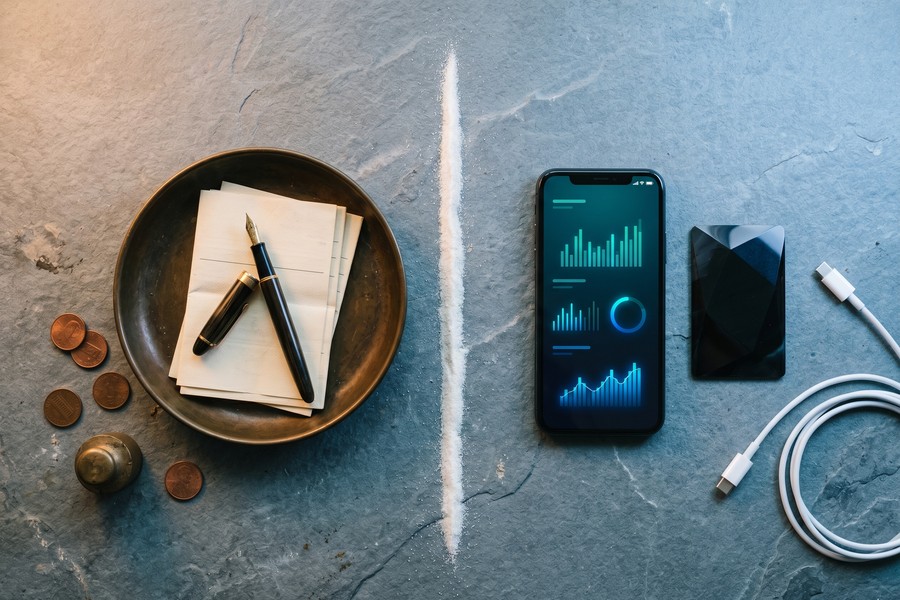
If you are deciding between the two models, apply to one open banking lender and one standalone fintech app simultaneously. Both use soft credit pulls during pre-qualification, so neither application will affect your credit score. Compare the actual rate offers, not the advertised minimums, before committing.
Step 4: How Do I Apply for a Personal Loan Using Open Banking to Get the Lowest Possible Rate?
To get the lowest possible rate through open banking fintech lending, pre-position your bank account data before applying, choose lenders that use cash flow as a primary underwriting variable, and submit applications within the same 14-day window to minimize any credit score impact from hard pulls.
How to Do This
Start by reviewing your last six to twelve months of bank account activity. Log in to your primary checking account and look for the average monthly deposit total, any overdraft incidents, and your average end-of-month balance. These are the three signals that open banking algorithms weight most heavily.
Next, identify lenders that explicitly advertise cash flow underwriting. Lenders including Upstart, Petal, Possible Finance, and OppFi use open banking data as a primary underwriting input. For larger loans above $25,000, platforms like Prosper and Best Egg offer open banking-enhanced applications.
During the application, you will be prompted to connect your bank account via a data aggregator, typically Plaid. The connection takes under two minutes and uses read-only access. You are not giving the lender permission to move money, only to view your transaction history. Understanding how these digital lending platforms work is also important for your credit bureau reporting strategy, since not all fintech lenders report to all three bureaus.
After receiving offers, compare the Annual Percentage Rate (APR), not just the stated interest rate. The APR includes origination fees, which can range from 0% to 12% on fintech platforms and can dramatically change the true cost of borrowing.
What to Watch Out For
Some lenders advertise “open banking” as a marketing term but do not actually use your transaction data to adjust your rate. Ask directly: “Does sharing my bank account data change the rate I am offered?” If the answer is no, you are dealing with basic account verification, not true cash flow underwriting.
Origination fees are the hidden cost that most borrowers overlook when comparing open banking fintech lending offers. A loan with a 9.99% APR and a 5% origination fee can cost more over three years than a loan at 13.99% APR with no origination fee. Always calculate the total cost of the loan, not just the monthly payment.
Step 5: What Are the Risks of Sharing My Bank Data with a Fintech Lender?
The primary risks of sharing bank data with a fintech lender are data security exposure, the potential for overly aggressive algorithmic profiling, and ambiguity about how your data is stored or resold after the loan decision is made. These risks are real but manageable with the right vetting process.
How to Protect Yourself
First, verify that the lender uses a regulated data aggregator. Plaid, MX, and Mastercard Finicity are the three largest aggregators and are subject to FTC oversight and contractual data-use restrictions. Avoid lenders that ask you to submit your online banking username and password directly. That is a significant security red flag.
Second, read the lender’s data retention policy before consenting. Under the CFPB’s Section 1033 rule, you have the right to revoke data access after the loan decision is made. Most compliant lenders now provide a data access dashboard, similar to Google’s privacy settings, where you can see exactly what was accessed and revoke ongoing access.
Third, check whether the lender is a member of the Financial Data Exchange (FDX), the industry standards body that governs API-based data sharing in the U.S. FDX membership signals a commitment to interoperability and consumer data rights. You can learn more about how open banking is structurally changing financial product access in our overview of how open banking is changing the way you access financial products.
What to Watch Out For
Be cautious about lenders who ask for more data than necessary. A lender performing cash flow underwriting for a personal loan needs 12 months of transaction history from your primary checking account. If a lender requests access to investment accounts, savings accounts at other institutions, or credit card accounts, ask why that data is needed for the underwriting decision.
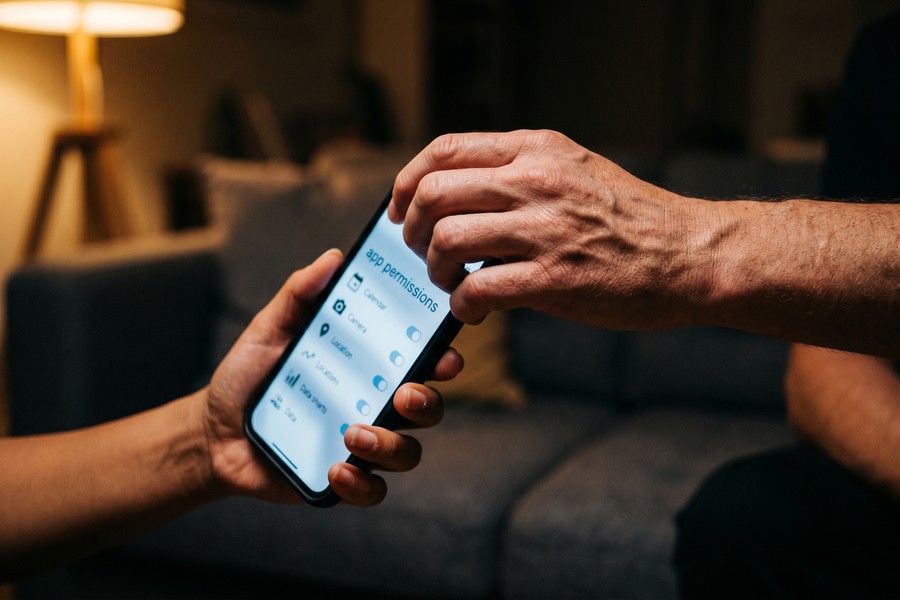
Consumers should treat open banking consent the same way they treat a lease agreement: read what you are signing, understand the duration of access, and revoke it when you no longer need it. The legal protections exist under Section 1033; borrowers simply need to use them, per the CFPB’s Personal Financial Data Rights rule.
Step 6: Who Qualifies for Better Loan Terms Through Open Banking and What If My Credit Score Is Low?
Borrowers who benefit most from open banking fintech lending fall into three groups: people with thin credit files, self-employed individuals with variable income, and borrowers with fair credit scores (580–659) who have strong bank account cash flow. If your credit score is low but your income is stable and your bank account shows consistent deposits, open banking can produce loan terms that a credit score alone would deny you.
How to Do This
If your FICO score is below 620, focus exclusively on lenders that advertise cash flow-based underwriting as their primary model. Upstart publicly states it considers over 1,000 data variables beyond credit score, including education, employment history, and bank account data. OppFi and Possible Finance serve borrowers as low as 580 using open banking as the primary underwriting input.
For self-employed applicants, the key is demonstrating consistent net deposits over at least six months. Lenders will typically average your monthly income across the most recent six to twelve months. Applying after a strong quarter, rather than a slow one, can meaningfully improve your offered rate. Our guide on how self-employed borrowers can overcome the interest rate penalty lenders quietly apply provides a detailed playbook for this situation.
For thin-file borrowers, including recent college graduates carrying student debt, the combination of open banking data and a co-signer or secured credit card history can bridge the underwriting gap entirely. We explore this further in our piece on how college graduates with student debt are using fintech tools to qualify for personal loans.
What to Watch Out For
Even with strong cash flow, open banking lenders will factor in your debt-to-income ratio (DTI). If your monthly bank account deposits are $4,000 but your visible recurring obligations, including rent, utilities, subscriptions, and loan payments, consume $3,200 of that, your DTI is 80%. Most lenders will flag that as too high regardless of credit score. Paying down high-balance credit cards before applying reduces your visible monthly obligations and can move you into a more favorable risk tier.
Before applying for any open banking-enabled personal loan, run a 30-day “clean account” period: avoid overdrafts, reduce discretionary spending, and make sure your recurring deposits are clearly labeled by employer or client name. Underwriting algorithms assign higher credibility scores to deposits with consistent, identifiable sources than to irregular lump-sum transfers.
Related reading: Why Fintech Loan Apps Are Now Accepting Non.
Frequently Asked Questions
Can I get a personal loan through open banking if I have a 580 credit score?
Yes, several lenders specifically designed for thin-file and fair-credit borrowers use open banking as their primary underwriting tool, making a 580 credit score workable if your cash flow is strong. Lenders including OppFi and Upstart approve borrowers with scores below 600 when bank account data shows consistent income and low overdraft frequency. Rates for this profile typically range from 19.99% to 35.99% APR, according to NerdWallet’s bad credit loan data.
Does sharing my bank account with a fintech lender hurt my credit score?
No, connecting your bank account through an open banking API does not affect your credit score. It is not a credit inquiry. The only time your credit score can be affected is when the lender performs a hard credit pull, which typically happens only after you accept a loan offer. Pre-qualification and bank account data access both use soft pulls or no pull at all.
Which is faster, an open banking lender or a regular fintech app?
Standalone fintech apps are marginally faster, often delivering decisions in minutes, while open banking-enabled lenders typically take one to twenty-four hours to analyze cash flow data and return a final rate offer. The extra hours are often worth it: open banking fintech lending decisions are more precise and frequently result in lower rates or higher approved amounts for the same borrower. The speed difference is rarely more than a few hours for non-emergency borrowing.
How do I know if a fintech lender is actually using open banking or just verifying my bank account?
Ask the lender directly whether your bank account transaction history is used to calculate your interest rate or maximum loan amount. A true open banking underwriting process will change your rate offer based on your cash flow data. If the lender uses bank connectivity only to confirm your routing number and set up autopay, it is not performing cash flow underwriting. You can also check whether the platform is a member of the Financial Data Exchange (FDX), which signals genuine API-based data sharing.
What happens to my bank data after the loan is approved or denied?
Under the CFPB’s Personal Financial Data Rights rule, you have the right to revoke data access at any time after the loan decision. Most compliant lenders are required to stop accessing your account data and must delete or anonymize transaction records within a specified retention window, typically 30 to 90 days. You should receive a confirmation of revocation. Always check the lender’s privacy policy for specific data retention timelines before consenting.
Should I use an open banking lender or a peer-to-peer platform for a $15,000 loan?
For a $15,000 personal loan, an open banking fintech lender typically offers faster decisions and more competitive rates than peer-to-peer platforms, which require investors to fund your loan and can add days to the approval timeline. P2P platforms like LendingClub and Prosper still use open banking for underwriting but fund loans through investor pools, which can result in higher origination fees. For a detailed comparison, see our guide on fintech loan apps vs peer-to-peer lending platforms in 2026.
What documents do I need to apply for an open banking personal loan?
Most open banking fintech lending applications require a government-issued photo ID, your Social Security Number, consent to connect your primary checking account via a data aggregator like Plaid, and in some cases proof of employment or a most recent tax return for self-employed applicants. You do not typically need bank statements in PDF form. The open banking connection replaces that step, and the full process usually takes under 15 minutes to complete.
Can open banking help me get a lower rate on a debt consolidation loan?
Yes, and this is one of the strongest use cases for open banking fintech lending. If you carry high-interest credit card debt but have consistent income that your credit score doesn’t fully reflect, cash flow underwriting can qualify you for a consolidation loan at a rate significantly below your current card APRs. The average credit card APR exceeded 21% in mid-2025, according to Federal Reserve consumer credit data, while open banking lenders offer consolidation rates starting at 9.99% for qualified borrowers.
Is open banking safe, and who regulates it in the United States?
Open banking in the U.S. is primarily regulated by the CFPB under Section 1033 of the Dodd-Frank Act, with the finalized Personal Financial Data Rights rule providing consumer protections including the right to revoke data access, restrict data use, and receive confirmation of data deletion. API-based data sharing through regulated aggregators like Plaid, MX, and Mastercard Finicity is significantly more secure than sharing login credentials directly, since only read-only access is granted and no money-movement permissions are involved.