

Fact-checked by the CapitalLendingNews editorial team
Quick Answer
A sinking fund saves for planned future expenses, while an emergency fund covers unexpected financial shocks. To use both without draining your paycheck, start by building a $1,000 starter emergency fund, then open separate high-yield savings accounts for each goal and automate contributions as small as $25–$50 per week. High-yield savings accounts are currently paying up to 4.5% APY, making both strategies more effective than keeping money in a traditional bank account.
Understanding the sinking fund vs emergency fund distinction is one of the most actionable steps you can take toward financial stability. A sinking fund is a dedicated savings bucket for a known upcoming expense, think car registration, holiday gifts, or a home repair. An emergency fund, by contrast, is a financial safety net for life’s unpredictable curveballs, such as a job loss or a sudden medical bill. According to the Federal Reserve’s 2024 Report on the Economic Well-Being of U.S. Households, 37% of Americans could not cover an unexpected $400 expense using cash or its equivalent, a sobering reminder of why both funds matter.
With inflation still pressuring household budgets and the average American carrying $6,329 in credit card debt according to Experian’s 2024 Consumer Debt Study, using a credit card to cover predictable expenses or emergencies only digs the financial hole deeper. Having the right savings structure in place is the difference between absorbing a financial hit and spiraling into high-interest debt.
This guide is written for anyone living on a regular paycheck who wants a clear, step-by-step system for building both a sinking fund and an emergency fund simultaneously, without feeling financially squeezed. By the end, you will know exactly how to set up, fund, and manage both accounts on any budget.
Key Takeaways
- 37% of Americans cannot cover a surprise $400 expense, according to the Federal Reserve’s 2024 Household Survey, making an emergency fund a financial baseline, not a luxury.
- A fully funded emergency fund holds 3–6 months of essential living expenses, or roughly $15,000–$30,000 for a household spending $5,000 per month, per guidance from the Consumer Financial Protection Bureau (CFPB).
- High-yield savings accounts (HYSAs) currently offer up to 4.5% APY, meaning a $10,000 emergency fund earns roughly $450 per year in interest rather than the national average of 0.46% APY at traditional banks, per FDIC data.
- Sinking funds prevent an estimated $1,200–$2,400 per year in unnecessary credit card interest charges by pre-funding predictable expenses instead of charging them, based on average APR data from CFPB credit card trend data.
- Automating savings contributions increases follow-through rates significantly, a behavioral economics principle confirmed by the American Psychological Association showing that automatic behavior removes decision fatigue from the saving process.
- Households that maintain both a sinking fund and an emergency fund are 2x less likely to carry revolving credit card balances, according to National Bureau of Economic Research findings on precautionary savings behavior.
In This Guide
- What is the difference between a sinking fund and an emergency fund?
- How much should I save in my sinking fund vs emergency fund?
- Where should I keep my sinking fund and emergency fund?
- How do I build both a sinking fund and emergency fund at the same time without breaking my budget?
- How do I know if an expense should come from my sinking fund or emergency fund?
- How do I rebuild my sinking fund or emergency fund after I use it?
- Frequently Asked Questions
Step 1: What Is the Difference Between a Sinking Fund and an Emergency Fund?
A sinking fund is money you deliberately set aside over time to pay for a specific, anticipated expense, while an emergency fund is a liquid cash reserve held exclusively for unexpected financial emergencies. The core distinction is predictability: one fund handles the expected, the other handles the unexpected.
Sinking Fund Defined
A sinking fund is a proactive savings tool. You identify a future expense, a car tire replacement, a vacation, annual insurance premiums, or holiday shopping, calculate the cost, and divide it by the number of weeks or months until you need it. If you expect to spend $1,200 on holiday gifts in December and you start saving in June, you contribute $200 per month for six months. No credit card required.
Common sinking fund categories include car maintenance, home repairs, medical co-pays, annual subscriptions, travel, and tax bills for self-employed individuals. Each category can have its own mini-fund, or you can group smaller categories together.
Emergency Fund Defined
An emergency fund is not for planned spending. It is strictly for genuine financial emergencies: sudden job loss, an unexpected medical procedure, a major car breakdown, or an urgent home repair like a burst pipe. The Consumer Financial Protection Bureau (CFPB) defines it as a cash reserve covering three to six months of essential living expenses.
Raiding your emergency fund to pay for a birthday party or a planned vacation is the most common misuse of this account. Those are sinking fund expenses, and using emergency money for them leaves you exposed when a real crisis hits.
What to Watch Out For
Many people make the mistake of treating one savings account as both a sinking fund and an emergency fund. This muddies your financial picture and leads to accidental overspending. Use separate, clearly labeled accounts for each purpose. Most online banks and fintech platforms allow multiple sub-accounts with custom names at no extra cost.
The term “sinking fund” has its roots in 18th-century British government finance, where it described a dedicated fund to pay down national debt. Today, the concept is equally powerful for household budgeting, helping individuals eliminate debt-by-default spending on predictable costs.
Step 2: How Much Should I Save in My Sinking Fund vs Emergency Fund?
Your emergency fund target is 3 to 6 months of essential expenses; your sinking fund targets depend entirely on your specific upcoming costs and timelines. Both figures are personal, but there are reliable formulas to calculate each one quickly.
How to Calculate Your Emergency Fund Target
Add up only your essential monthly expenses: rent or mortgage, utilities, groceries, minimum debt payments, insurance, and transportation. Do not include dining out, subscriptions, or entertainment. Multiply that number by three for a baseline emergency fund, or by six if your income is variable, you are self-employed, or you work in a volatile industry.
For a household with $3,500 in monthly essentials, the target range is $10,500 to $21,000. That number may feel large, but the CFPB recommends starting with a $500 to $1,000 starter emergency fund to build momentum before tackling larger savings goals. If you are also dealing with high-interest debt, our guide on debt avalanche vs debt snowball methods can help you prioritize paying down balances alongside saving.
How to Calculate Your Sinking Fund Targets
List every irregular, predictable expense you know is coming in the next 12 months. Assign a dollar amount and a target date to each. Then divide the amount by the number of months between now and the date. For example:
- Car registration due in 4 months: $320 / 4 = $80/month
- Annual home insurance premium due in 8 months: $1,200 / 8 = $150/month
- Holiday gifts due in 5 months: $800 / 5 = $160/month
Summing these gives you a total monthly sinking fund contribution. Treat every calculated contribution as a non-negotiable bill, just like rent.
What to Watch Out For
Underestimating irregular expenses is the most common budgeting error. According to NBER research on household financial decision-making, consumers systematically underestimate irregular costs by an average of 15–20%. Add a 15% buffer to every sinking fund target to account for this bias.
The average American household spends approximately $3,000 per year on irregular but predictable expenses, car maintenance, medical co-pays, and annual fees, according to the Bureau of Labor Statistics Consumer Expenditure Survey. Without a sinking fund, that $3,000 often lands on a credit card charging 20%+ APR.
Step 3: Where Should I Keep My Sinking Fund and Emergency Fund?
Both your sinking fund and emergency fund belong in a liquid, interest-earning account, but they should be kept in separate accounts to prevent accidental commingling. The best options are high-yield savings accounts (HYSAs) and money market accounts (MMAs), both of which are offering meaningfully higher rates than traditional bank savings.
Best Account Types for Each Fund
High-yield savings accounts at online banks like Ally Bank, Marcus by Goldman Sachs, SoFi, and Discover Online Savings are currently paying between 4.00% and 4.50% APY, compared to the national average of just 0.46% APY at traditional brick-and-mortar banks, per FDIC published rate data. Our detailed breakdown of CD rates vs high-yield savings can help you decide if a certificate of deposit makes sense for longer-term sinking fund goals.
For your emergency fund, prioritize accessibility over yield. The money must be available within 1–2 business days without penalties. Certificates of deposit are generally not appropriate for emergency funds because early withdrawal penalties can eat into your principal. A HYSA or MMA at an FDIC-insured institution is the standard recommendation from financial planners.
Organizing Multiple Sinking Fund Categories
Several fintech platforms, including Ally Bank’s Savings Buckets, Capital One’s Savings Goals feature, and SoFi Vaults, allow you to create labeled sub-accounts or virtual envelopes within a single savings account. This means you can have a “Car Maintenance” bucket, a “Holiday Fund” bucket, and a “Home Repair” bucket all earning the same high APY without opening multiple bank accounts.
What to Watch Out For
Keeping either fund in a checking account is a mistake. The psychological proximity to spendable money makes it far too easy to borrow from your savings. Physical and digital separation, even at the same bank, significantly reduces the temptation to dip into these funds for non-qualifying expenses.
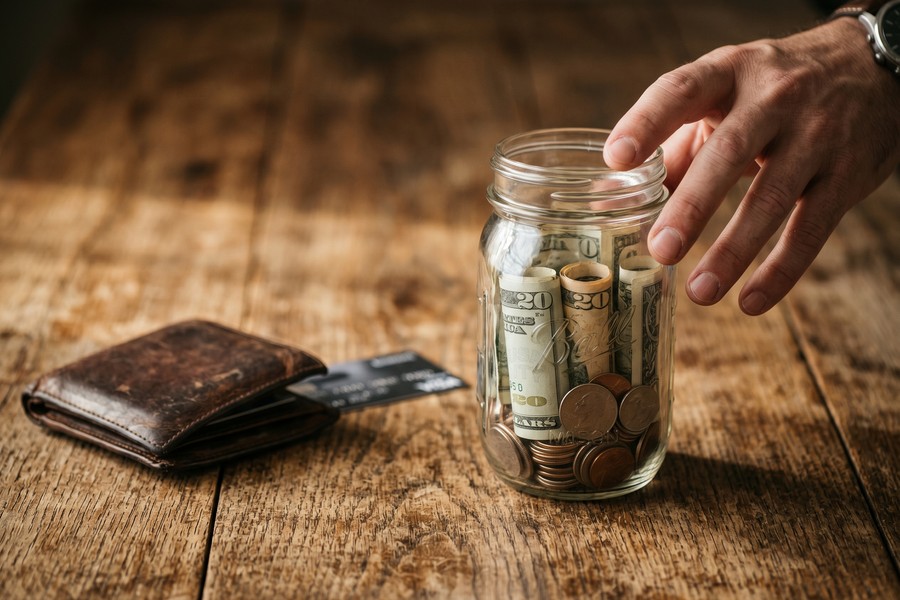
Open your emergency fund and sinking fund accounts at a different bank than your primary checking account. The extra step of logging into a separate institution creates a deliberate friction that discourages impulsive withdrawals. This behavioral “speed bump” is recommended by certified financial planners as one of the simplest ways to protect your savings.
Below is a side-by-side comparison of the most popular account types for holding both funds, including current rates and key features.
| Account Type | Current APY | Best For | Withdrawal Speed | Penalty for Early Access |
|---|---|---|---|---|
| High-Yield Savings (HYSA) | 4.00%–4.50% | Emergency fund + sinking funds | 1–2 business days | None |
| Money Market Account (MMA) | 3.80%–4.30% | Emergency fund | Same day to 1 business day | None (check-writing available) |
| 12-Month CD | 4.50%–5.00% | Long-horizon sinking funds only | At maturity only | 90–180 days of interest |
| Traditional Savings | 0.46% (national avg) | Not recommended for either fund | Immediate | None |
| Checking Account | 0.00%–0.10% | Not appropriate | Immediate | None |
Step 4: How Do I Build Both a Sinking Fund and Emergency Fund at the Same Time Without Breaking My Budget?
You can fund both accounts simultaneously by using a split-contribution system, directing a portion of each paycheck to your emergency fund and a separate portion to your sinking fund accounts on the same day you are paid. The key is automation, prioritization, and starting with amounts that do not disrupt your cash flow.
How to Do This
Follow this four-step split-contribution setup:
- Establish a baseline budget. Identify how much discretionary income you have after essential expenses. Even $50 per paycheck is a meaningful starting point.
- Prioritize a $1,000 starter emergency fund first. Before funding any sinking fund, reach a $1,000 cushion. At $50 per paycheck on a biweekly schedule, this takes approximately 20 weeks or 10 months. At $100 per paycheck, you reach it in 10 weeks.
- Split contributions once the starter fund is in place. Allocate roughly 60% of your savings budget to the emergency fund and 40% to sinking funds until your emergency fund reaches its full target. Adjust once you hit your emergency fund goal and can redirect the full amount to sinking funds.
- Automate everything. Set up automatic transfers from your checking account on payday, before you have a chance to spend the money elsewhere. This “pay yourself first” method, popularized by personal finance author David Bach in his book The Automatic Millionaire, has been validated by decades of behavioral finance research.
Automation is not just a convenience. According to the American Psychological Association’s research on habit formation and automaticity, removing conscious decision-making from a repeated behavior is what makes it consistent over time. Saving automatically means saving reliably, regardless of willpower on any given payday.
For those living paycheck to paycheck, the process requires extra discipline. Our resource on how to build an emergency fund when you live paycheck to paycheck offers specific strategies for finding savings room in a tight budget, including the zero-based budgeting method and cash-stuffing alternatives.
What to Watch Out For
Do not try to fund everything at maximum speed. Over-aggressive savings targets lead to a cash shortage in your checking account, which triggers overdraft fees or forces you to pull from the very funds you just deposited. Start with a savings rate you can sustain for at least 90 days without adjustment. Momentum and habit formation matter more than speed in the first three months.
Avoid pausing emergency fund contributions entirely while building sinking funds. Even a small, consistent emergency fund contribution of $25 per paycheck keeps the habit alive and ensures your safety net grows, even slowly. Stopping contributions entirely often leads to abandoning the goal altogether.
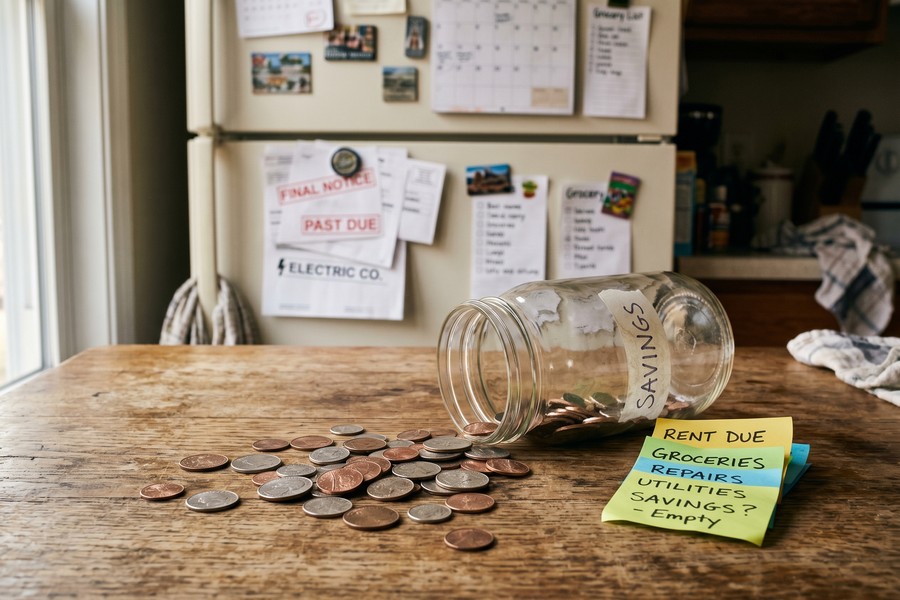
Step 5: How Do I Know If an Expense Should Come From My Sinking Fund or Emergency Fund?
An expense belongs to your sinking fund if it was predictable or foreseeable; it belongs to your emergency fund if it was genuinely unexpected, urgent, and necessary to protect your health, safety, or income. Drawing this line clearly prevents emergency fund depletion and keeps your financial plan intact.
The Predictability Test
Ask yourself: “Did I know at some point this expense would happen, even if I did not know the exact timing?” If the answer is yes, it is a sinking fund expense. Cars need tires. Homes need maintenance. Appliances break eventually. None of these are surprises in the broad sense, they are probabilistic certainties you can plan for.
True emergency fund events include: job loss or sudden income reduction, an unexpected hospitalization, a natural disaster that damages your home or car, or an urgent legal matter. These are low-frequency, high-impact events that could not reasonably have been scheduled and budgeted for in advance.
A Practical Decision Framework
Use this three-question test before making a withdrawal:
- Was this expense unexpected? (If no, it is a sinking fund item.)
- Is it urgent, will delaying it cause harm to my health, safety, or ability to earn income? (If no, it is not an emergency.)
- Is it necessary, not just convenient or desirable? (If no, consider deferring it.)
If all three answers are yes, the expense qualifies for your emergency fund. If any answer is no, find another funding source: either an appropriate sinking fund category or your regular monthly budget.
What to Watch Out For
Lifestyle creep disguised as emergencies is a significant risk. A flight upgrade, a spontaneous weekend getaway, or a sudden desire to redecorate your apartment are not financial emergencies. Tapping your emergency fund for discretionary spending is one of the common financial mistakes that keeps people stuck in a cycle of rebuilding savings they never fully maintain. If you find yourself frequently treating the emergency fund as a general slush fund, that is a signal your sinking fund categories are incomplete.
Add a “miscellaneous sinking fund” category worth $50–$100 per month to catch the irregular, semi-predictable expenses that do not fit neatly into any single category. This buffer absorbs small surprises, a co-pay you forgot, a minor car repair, an unexpected school supply purchase, without touching your emergency fund.
Step 6: How Do I Rebuild My Sinking Fund or Emergency Fund After I Use It?
After using either fund, your immediate priority is to restore the account to its target balance as quickly as your budget allows, treating the replenishment as a mandatory monthly bill until fully restored. The method differs slightly depending on which fund you tapped.
Rebuilding Your Emergency Fund
After a major withdrawal from your emergency fund, temporarily redirect all discretionary savings toward restoring it. This may mean pausing sinking fund contributions for one to three months. Calculate the deficit, how much you withdrew, and divide it by the number of months in your target replenishment window.
For example, if you withdrew $3,000 and want to restore the fund within six months, you need to contribute an additional $500 per month beyond your normal budget. Consider temporary income boosts: selling unused items, picking up freelance work, or temporarily cutting a discretionary subscription. If you are self-employed and facing income volatility, the strategies in our guide on how a freelancer with irregular income should handle financial shortfalls may provide additional options.
Rebuilding a Sinking Fund
Sinking fund replenishment is simpler because the expense was planned. If you used your car maintenance sinking fund to pay for an $800 brake repair, you simply restart contributions from zero. Divide the target amount by your remaining months before the next likely car maintenance need, often 12 months, and adjust your monthly contribution accordingly.
If your sinking fund was depleted because you underestimated the cost, recalibrate the target using your actual spending history rather than your original estimate. Add that 15% buffer mentioned in Step 2 going forward.
What to Watch Out For
The biggest mistake after using either fund is failing to immediately restart contributions. Life feels financially easier the moment the emergency passes, and there is a natural temptation to spend rather than rebuild. Set a calendar reminder the day after making a large withdrawal to update your automatic transfer amounts to reflect the replenishment plan.
Research by the Global Financial Literacy Excellence Center (GFLEC) found that households with dedicated emergency savings are 46% less likely to miss a bill payment following an income disruption compared to households without any liquid reserves. Having even a small emergency cushion dramatically changes financial outcomes during economic shocks. Treating your savings restoration the same way you treat a loan repayment, as a non-negotiable obligation, is what separates households that recover quickly from those that stay financially fragile for years afterward.
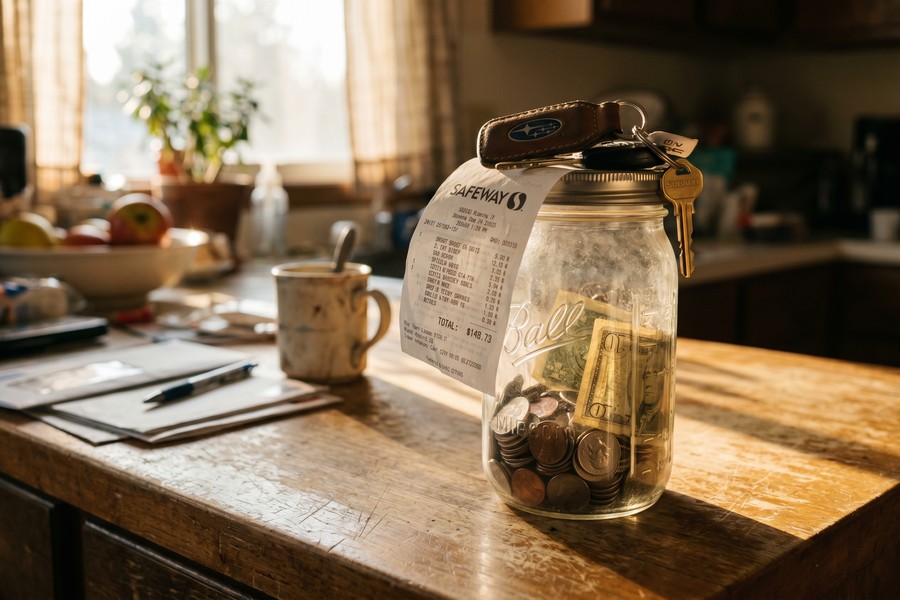
When a major unexpected expense forces you to consider borrowing, understanding how different loan products compare before taking on debt is worth the time. Our comparison of fintech loan apps vs peer-to-peer lending platforms can help you assess borrowing options if your emergency fund falls short.
Frequently Asked Questions
Should I build my emergency fund or sinking fund first?
Build your emergency fund first, specifically a $500 to $1,000 starter emergency fund, before funding any sinking fund categories. Once that baseline is in place, split contributions between the two goals simultaneously. The emergency fund takes priority because it protects against high-interest debt; without it, a single unexpected expense can unravel your entire financial plan.
Can I use one savings account for both my sinking fund and emergency fund?
Technically yes, but it is strongly discouraged. Keeping both funds in a single account makes it nearly impossible to track your true emergency reserve versus your planned spending money. Most financial planners recommend separate, labeled accounts, ideally at separate institutions, to prevent accidental spending of emergency reserves. Platforms like Ally Bank and SoFi offer free sub-account features that solve this problem without opening multiple bank accounts.
How many sinking funds should I have?
Most households benefit from three to seven sinking fund categories, covering their largest irregular expenses. Start with the four highest-cost predictable categories, typically car maintenance, home repair, medical costs, and holiday/gift spending, then add more as your budget permits. More than ten categories can become difficult to manage and may signal over-complexity in your budgeting system.
What if I can only save $50 per month, should I split it between both funds?
At $50 per month, direct the full amount to your emergency fund until you reach $1,000, which will take approximately 20 months. Only then should you split contributions. Speed of the emergency fund build matters more than starting sinking funds early, because a single unplanned expense before your emergency fund is established will likely result in credit card debt that costs far more than $50 per month to carry.
Is a sinking fund the same as a savings account?
A sinking fund is a purpose, not an account type. It is a savings strategy in which you earmark money for a specific, upcoming expense. You hold a sinking fund inside a savings account, ideally a high-yield savings account earning 4.00%+ APY. The account is the vehicle; the sinking fund is the intention and target amount assigned to that money.
Should I keep my emergency fund in a Roth IRA as a dual-purpose account?
Using a Roth IRA as an emergency fund is a strategy some advisors suggest because Roth IRA contributions (not earnings) can be withdrawn penalty-free at any time. However, this approach is generally not recommended as a primary strategy because withdrawals reduce your tax-advantaged retirement compounding permanently. A dedicated HYSA is a cleaner, more accessible solution for emergency savings. For a deeper comparison of retirement savings options, see our guide on Roth IRA vs Traditional IRA.
What expenses should never come from an emergency fund?
Planned vacations, holiday gifts, vehicle registration, annual insurance premiums, elective medical procedures, home upgrades, and clothing are not emergency expenses, they are predictable costs that belong in a sinking fund. Using an emergency fund for these events leaves you exposed to genuine crises and defeats the purpose of maintaining the account. If you find yourself regularly withdrawing from your emergency fund for these items, expand your sinking fund categories.
How do I handle the sinking fund vs emergency fund decision when I have high-interest credit card debt?
Build a $1,000 starter emergency fund first, then aggressively pay down high-interest debt before funding a full three-to-six-month emergency fund. While carrying credit card debt at 20%+ APR, paying down balances delivers a guaranteed return equal to the interest rate saved, typically higher than any savings account yield. Once high-interest debt is cleared, rapidly build your full emergency fund and sinking funds. Our breakdown of the debt avalanche vs debt snowball methods can guide you through debt payoff sequencing.
Does the sinking fund vs emergency fund approach work for irregular income earners?
Yes, but the mechanics differ. Freelancers and gig workers should aim for a larger emergency fund, six to twelve months of expenses rather than the standard three to six, because income volatility makes job-loss emergencies more frequent and longer-lasting. For sinking funds, contribute a fixed percentage of each paycheck (such as 5%) rather than a fixed dollar amount, so contributions naturally scale with high-income months and contract during slow periods.
How do high-yield savings account rates affect my sinking fund and emergency fund strategy?
Higher HYSA rates amplify the benefit of both funds by turning idle savings into productive assets. At 4.5% APY, a $10,000 emergency fund earns approximately $450 per year in interest, effectively subsidizing a portion of your monthly savings contribution. In a rising-rate environment, comparing current rates across platforms every six months is worthwhile, and moving funds if your current institution falls significantly below the top-tier rate makes financial sense. Our analysis of CD rates vs Treasury rates during Fed pauses provides additional context for optimizing yields on savings held in either fund.
Sources
- Experian, 2024 Consumer Debt Study
- FDIC, 2024 National Deposit Rates Statistical Guide
- Bureau of Labor Statistics, Consumer Expenditure Survey
- National Bureau of Economic Research, Precautionary Savings Behavior and Household Financial Decision-Making (Working Paper 27055)
- Global Financial Literacy Excellence Center (GFLEC), Research on Emergency Savings and Financial Resilience
- American Psychological Association, Habit Formation and Automaticity in Financial Behavior
- Federal Reserve, Selected Interest Rates (H.15 Statistical Release)