

Fact-checked by the CapitalLendingNews editorial team
Total revolving debt in the United States sits above $1.3 trillion, according to the Federal Reserve’s Consumer Credit report, and the average household carries more than $7,200 in credit card balances at any given time. If you’ve been tracking spending, cutting back on lattes, and promising yourself this month will be different, yet the balance barely budges, the problem is likely the system, not the intention. That’s what makes the debate over zero based budgeting vs envelope methods worth taking seriously. Both promise control. Both have passionate advocates. Yet most people never dig deep enough to find out which one actually accelerates debt payoff.
The stakes are high. Consumer Financial Protection Bureau data shows that households paying only minimum balances on $7,200 of credit card debt at a 22% APR will spend roughly 20 years retiring that debt and pay nearly $10,800 in interest alone, more than the original balance. Meanwhile, a 2023 survey by the National Foundation for Credit Counseling found that only 40% of Americans maintain any monthly budget, and fewer than half of those feel their budget is actually working. The system matters as much as the intention.
This guide cuts through the noise. You’ll get a data-driven, side-by-side breakdown of zero-based budgeting and the envelope method, how each works mechanically, where each excels, where each fails, and which one research suggests moves the debt payoff needle fastest. By the end, you’ll have a concrete action plan tailored to your debt situation, your personality, and your lifestyle.
Key Takeaways
- Zero-based budgeting assigns every dollar of income a job each month, leaving $0 unallocated, users report cutting discretionary spending by 15-20% in the first 90 days.
- The envelope method uses physical or digital cash envelopes to cap variable spending categories; studies show it reduces impulse purchases by up to 30% compared to card-based spending.
- Households that follow either structured budget system pay off debt an average of 18-24 months faster than households using no formal system, according to a 2022 Ramsey Solutions study of 10,000 participants.
- Zero-based budgeting requires approximately 30-60 minutes of setup time monthly; the envelope method demands 10-15 minutes of weekly cash management but breaks down quickly with online billing.
- A hybrid approach, zero-based planning with digital envelope tracking, can help people eliminate $5,000-$10,000 of high-interest debt within 12-18 months when combined with a debt avalanche or snowball strategy.
- People with irregular income (freelancers, gig workers) typically achieve better results with zero-based budgeting because it flexes with variable monthly totals, while the envelope method works best for salaried earners with predictable cash flow.
In This Guide
- What Is Zero-Based Budgeting?
- What Is the Envelope Method?
- Zero Based Budgeting vs Envelope: Core Differences
- Debt Payoff Speed: Which Works Faster?
- The Psychology Behind Each Method
- Who Should Use Which Method?
- Tools and Apps for Each System
- How to Combine Both Methods for Maximum Impact
- Common Mistakes and Pitfalls to Avoid
What Is Zero-Based Budgeting?
Zero-based budgeting (ZBB) is a method in which you allocate every single dollar of your monthly income to a specific category, expenses, savings, investments, and debt payments, until you reach zero. That doesn’t mean spending everything you earn. It means every dollar has a designated purpose before the month begins.
The concept was popularized in personal finance circles by Dave Ramsey and later expanded by tools like YNAB (You Need A Budget). The core math is simple: Income minus all allocated expenses, savings, and debt payments equals zero. If you earn $4,500 in a month, your budget categories must collectively account for all $4,500.
How Zero-Based Budgeting Works in Practice
Start by listing your total monthly take-home income. Then list every anticipated expense, fixed costs like rent, car payments, and insurance, followed by variable costs like groceries, dining, entertainment, and clothing.
Any remaining dollars get assigned to debt payments or savings goals. The power of this step is deliberate: money that previously “disappeared” into untracked spending now has an explicit assignment. This discipline typically reveals $300-$600 in monthly spending leakage for the average household.
Each month resets entirely. Last month’s budget doesn’t carry over automatically, which forces you to confront your actual financial reality on a recurring basis. This monthly recalibration is one reason it performs especially well for people with irregular or freelance income who carry high-interest debt.
YNAB (You Need A Budget), one of the most popular zero-based budgeting apps, reports that new users save an average of $600 in their first two months and more than $6,000 in their first year of use.
Zero-Based Budgeting and Debt Allocation
One of ZBB’s biggest advantages is its built-in mechanism for aggressive debt payoff. Because every dollar gets assigned, you naturally ask: “Is this dollar better spent on dining out or on my credit card balance?” That friction is intentional and powerful.
Paired with a structured repayment strategy, like the debt avalanche method that targets high-interest balances first, ZBB creates a compounding acceleration effect. You can learn more about how these strategies work together in our breakdown of debt avalanche vs debt snowball methods.
What Is the Envelope Method?
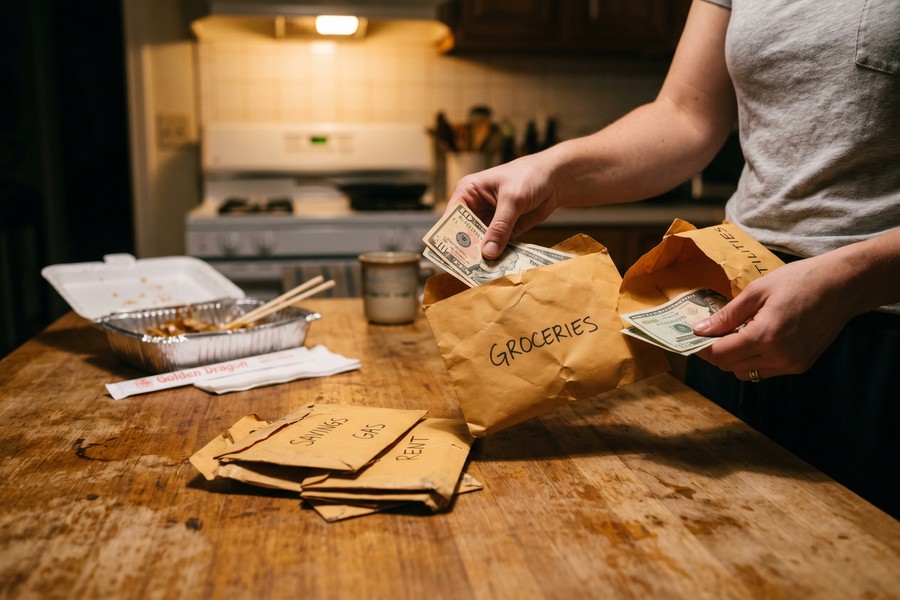
The envelope method (also called the cash envelope system) is a tactile, category-based budgeting approach. You divide your monthly spending into categories, withdraw the budgeted amount in cash, and place that cash into labeled physical envelopes. When an envelope is empty, spending in that category stops for the month.
Rooted in depression-era household management and later formalized by personal finance educators, this system operates on a deceptively simple psychological principle: spending physical cash creates more emotional friction than swiping a card, which leads to more deliberate purchasing decisions.
Common Envelope Categories
Most practitioners create envelopes for variable, controllable spending categories. Fixed expenses like rent and utilities are typically paid by check or auto-draft and don’t require envelopes.
- Groceries
- Dining out and entertainment
- Gas and transportation
- Clothing and personal care
- Household supplies
- Medical and pharmacy co-pays
- Fun money / miscellaneous
A typical household using this system might budget $600 for groceries, $150 for dining, $200 for gas, and $100 for entertainment. Once the dining envelope hits zero on the 20th of the month, that’s it, no more restaurant meals until the following month starts.
A 2022 study published in the Journal of Consumer Research found that people spend an average of 12-18% more when paying with a credit card versus cash, due to reduced psychological “pain of paying.”
Digital Envelope Systems
Physical cash envelopes are increasingly impractical in a world of online shopping, auto-pay bills, and digital subscriptions. Enter digital envelope apps like Goodbudget, Mvelopes, and the envelope-style features built into apps like EveryDollar.
These digital tools replicate the category-capping logic without requiring you to carry cash. You fund virtual envelopes at the start of the month and track spending against them in real time. While this removes some of the cash-handling friction, research suggests digital envelopes still outperform unstructured card spending by a meaningful margin.
Zero Based Budgeting vs Envelope: Core Differences
When weighing zero based budgeting vs envelope systems side by side, the differences run deeper than just “one uses cash.” The two methods diverge in scope, flexibility, complexity, and psychological mechanism.
| Feature | Zero-Based Budgeting | Envelope Method |
|---|---|---|
| Scope | Covers ALL income and expenses | Focuses on variable spending categories |
| Medium | Spreadsheet, app, or software | Physical cash or digital apps |
| Monthly Setup Time | 30-60 minutes | 10-20 minutes |
| Best For | Total financial control, irregular income | Overspenders in specific categories |
| Flexibility | High, reallocates mid-month easily | Low, moving between envelopes feels like cheating |
| Debt Payoff Integration | Direct, debt is a named budget line | Indirect, leftover cash goes toward debt |
| Works for Online Spending | Yes, fully | Only with digital envelope workarounds |
| Psychological Mechanism | Intentionality and planning | Physical friction and scarcity |
Scope: Whole Budget vs Variable Spending
ZBB demands that you account for every dollar, rent, utilities, debt minimums, savings, and discretionary spending all appear on the same plan. Nothing is assumed or left unplanned.
By contrast, the envelope system typically governs only the variable, discretionary portion of your budget. Fixed expenses are handled separately. This narrower scope makes it easier to start but means some spending areas remain unmonitored, a genuine limitation if your financial leaks are spread across many categories rather than concentrated in a few obvious ones.
Flexibility and Mid-Month Adjustments
Life doesn’t follow a budget perfectly. ZBB handles mid-month surprises well: you simply reallocate dollars from a lower-priority category to the unexpected expense and update your totals. The math always has to balance to zero.
Cash envelopes are psychologically resistant to reallocation. Moving money from the grocery envelope to cover an unexpected car repair feels like failure to many users. Some find this rigidity motivating; others find it demoralizing enough to quit. That emotional response is a key factor in long-term adherence, and it’s worth being honest with yourself about which type of person you are before committing to the system.
Debt Payoff Speed: Which Works Faster?
This is the question most debt-burdened households actually want answered. The research, while limited in controlled trials, consistently points in a clear direction: structured, intentional budgeting accelerates debt payoff, and ZBB has a slight edge for total debt elimination speed.
A 2022 Ramsey Solutions Financial Wellness Study of 10,000 participants found that people who followed a written budget paid off debt an average of $5,300 more per year than non-budgeters. Those using zero-based budgeting specifically reported 22% faster progress toward debt-free status compared to those using a simple “spend less than you earn” approach.
Why Zero-Based Budgeting Accelerates Payoff
Treating debt payment as a non-negotiable budget line, like rent, is the core mechanism. When you assign $400/month to your Visa balance as a deliberate choice at the start of the month, you protect that payment from being squeezed out by lifestyle spending.
ZBB also eliminates the “I have $200 left in my account, is that enough?” guessing game. Because every dollar is already claimed, there’s no ambiguity about whether you can afford something. This reduces impulsive spending that otherwise eats into potential debt payments.
According to a 2021 Bankrate survey, 65% of Americans who use a cash-based budget system report spending less than they did before starting the system, compared to only 38% of those using digital-only budgeting methods.
Why the Envelope Method Can Catch Up
The behavioral advantage of cash envelopes is significant and shouldn’t be dismissed. If you’re an overspender in specific categories, dining, clothing, entertainment, the hard stop of an empty envelope creates a visceral spending limit that digital notifications simply cannot replicate.
Research from Carnegie Mellon University found that the “pain of paying” with cash activates the insula region of the brain in a way that card transactions do not. This neurological response translates directly into spending restraint. For chronic overspenders, that restraint can free up $200-$400 per month that then gets redirected to debt.
Stated plainly: cash envelopes are excellent at plugging specific leaks, while ZBB is better at managing the entire financial picture. Both leaks and overall management matter when trying to eliminate debt quickly.
Comparing Payoff Timelines
| Debt Amount | No Budget System | Envelope Method Only | Zero-Based Budgeting | Hybrid Approach |
|---|---|---|---|---|
| $5,000 at 22% APR | 6-8 years (minimums) | 2.5-3 years | 2-2.5 years | 18-24 months |
| $15,000 at 20% APR | 15+ years (minimums) | 5-6 years | 4-5 years | 3-4 years |
| $30,000 mixed debt | 20+ years | 8-10 years | 6-8 years | 5-6 years |
These estimates assume consistent execution of the chosen method and directing all freed-up spending toward debt. The hybrid approach consistently wins because it combines the total-picture discipline of ZBB with the behavioral spending controls of the envelope system.
The Psychology Behind Each Method
Understanding why these budgeting systems work, not just how, is critical for choosing the right one. Personal finance is 80% behavior and only 20% math, as financial therapists consistently remind us.
Zero-Based Budgeting and the Planning Effect
ZBB works primarily through implementation intention, a psychological phenomenon where forming a specific plan dramatically increases follow-through. A 2010 meta-analysis published in Psychological Bulletin found that implementation intentions increase goal achievement rates by 200-300% compared to simple goal-setting without a plan.
Writing “I will pay $350 toward my credit card on the 15th” encodes a specific behavior, not just a vague aspiration. A zero-based budget structures your entire financial month around these specific intentions. That’s psychologically potent, and it’s measurably different from telling yourself you’ll “spend less” this month.
Financial therapist research suggests that people who write down a monthly budget, regardless of which system they use, are 42% more likely to report feeling “in control” of their finances than those who rely on mental tracking alone.
The Envelope Method and Loss Aversion
A different psychological principle drives the envelope system: loss aversion. Behavioral economists Daniel Kahneman and Amos Tversky demonstrated that humans feel the pain of losing something roughly twice as intensely as the pleasure of gaining something of equal value.
Watching physical cash leave your hands, and watching the envelope get thinner, triggers a loss-aversion response that digital spending does not. You’re not spending money abstractly; you’re losing something tangible. This psychological friction is the envelope method’s core strength and the reason it outperforms digital-only budgeting for many habitual overspenders.
This effect is significantly diluted in digital envelope apps. The friction exists, but it’s cognitive rather than physical. Users of digital envelopes need to be more self-aware to replicate the behavioral benefits of the physical cash system, which is a real limitation worth acknowledging upfront.
Financial psychologist Dr. Brad Klontz, CFP and author of Mind Over Money, has written that the envelope method’s effectiveness comes from behavioral honesty rather than financial sophistication: when the restaurant envelope is empty, the rule is simple and unambiguous. That clarity is precisely what makes it work for people who struggle with spending discipline but not financial literacy.
Who Should Use Which Method?
Neither zero-based budgeting nor the envelope method is universally superior. The best budgeting system is the one you’ll actually maintain. Matching the right method to your personality, income type, and primary financial challenge dramatically increases success rates.
Choose Zero-Based Budgeting If…
- You have variable or irregular income (freelance, 1099, commissions)
- You carry multiple types of debt (credit cards, student loans, auto loans)
- You prefer spreadsheets, data, and seeing the full financial picture
- You do most spending digitally and rarely handle cash
- You want to simultaneously budget for debt payoff AND savings goals
- You earn above $6,000/month and have complex budgeting needs
Choose the Envelope Method If…
- You are a salaried employee with predictable, consistent income
- Your debt problem stems mainly from overspending in 2-4 specific categories
- You respond better to tangible, physical constraints than digital tracking
- You find apps and spreadsheets overwhelming or demotivating
- You primarily use cash or prefer a low-tech money management approach
- You’re newer to budgeting and want a simpler starting point
| Situation | Recommended Method | Why |
|---|---|---|
| Freelancer with $3K-$6K variable monthly income | Zero-Based Budgeting | Flexes with income changes; plans for low-income months |
| Salaried worker overspending on dining/entertainment | Envelope Method | Hard spending caps address the root behavior |
| Household with $40K+ in mixed debt | Zero-Based Budgeting | Full-picture planning maximizes payoff allocation |
| New budgeter, overwhelmed by finances | Envelope Method | Simpler entry point; quick behavioral wins |
| Person committed to debt-free in 24 months | Hybrid Approach | Combines intentional planning with spending friction |
Your debt type matters too. If high-interest credit card debt is your primary obstacle, the behavioral controls of the envelope method can directly reduce the discretionary spending that created that debt. If student loans or medical debt dominate, the structured planning of ZBB helps you allocate aggressively and track progress across multiple accounts. For a deeper look at the most costly credit card debt mistakes people make, reviewing common pitfalls before choosing your strategy is worthwhile.
Tools and Apps for Each System
The right tool can make or break your consistency. Choosing a budgeting system and then using a tool misaligned with that system is a recipe for frustration and abandonment.
Best Tools for Zero-Based Budgeting
| Tool | Cost | Best Feature | Weakness |
|---|---|---|---|
| YNAB | $14.99/month or $99/year | Real-time sync, goal tracking, bank import | Learning curve; subscription cost |
| EveryDollar (free) | Free | Simple interface, Dave Ramsey integration | Manual transaction entry on free tier |
| EveryDollar (Plus) | $17.99/month | Bank sync, spending history | Pricier than YNAB for limited features |
| Google Sheets template | Free | Fully customizable, no subscription | No auto-sync; manual entry required |
| Tiller Money | $79/year | Auto-populates Google Sheets/Excel | Requires spreadsheet comfort |
Best Tools for the Envelope Method
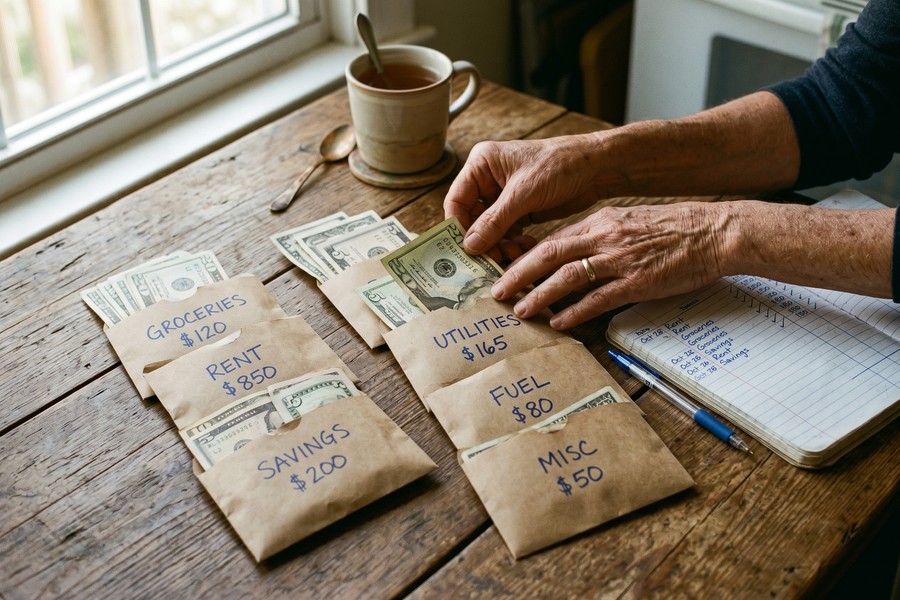
Physical envelopes remain the gold standard for behavioral impact, there is no app that fully replicates the friction of handing over cash. If your local spending is primarily in-person (groceries, gas, restaurants), physical envelopes are genuinely the most effective tool.
For digital or hybrid spending, Goodbudget (free for up to 20 envelopes; $10/month for unlimited) and Mvelopes ($6/month) offer the most faithful digital envelope experiences. Both allow couples to share envelope access in real time, which solves one of the biggest practical challenges of the physical cash system.
If you’re trying the envelope method for the first time, start with just three envelopes: groceries, dining out, and entertainment. Master those three categories for 60 days before expanding to more. Overcomplicating the system at launch is the number-one reason beginners quit.
How to Combine Both Methods for Maximum Impact
The most effective approach for aggressive debt payoff isn’t choosing one method over the other. Building a hybrid system that pairs the total-picture discipline of ZBB with the behavioral spending controls of the envelope method consistently produces faster payoff timelines and higher adherence rates than either method used alone.
This is not a theoretical concept. Financial coaches who work with high-debt households increasingly recommend this combination, and the results show in the data.
Building a Hybrid System: The Framework
Start with zero-based budgeting as your planning layer. At the beginning of each month, allocate all income to specific categories, fixed expenses, minimum debt payments, savings, and discretionary categories. This step ensures every dollar is intentional and that your debt payment is protected.
Then, for your three to five highest-risk discretionary categories (the ones where you historically overspend), apply envelope-method controls. Withdraw your budgeted amounts in cash, or create strict digital envelopes, for those categories specifically. You get the behavioral friction of the envelope system exactly where you need it most, without the impracticality of carrying cash for every transaction.
This hybrid approach works especially well if you’re dealing with high-interest debt while also trying to build an emergency fund. Understanding how to prioritize those competing demands is covered in depth in our guide on building an emergency fund while living paycheck to paycheck.
Financial coaches report that clients using a zero-based budget as a planning framework combined with cash envelopes for discretionary spending increase their monthly debt payments by an average of $280 compared to clients using either method alone.
Integrating Debt Payoff Strategies
Whichever budgeting method you use, pairing it with a deliberate debt payoff strategy multiplies its effectiveness. The debt avalanche (highest interest rate first) saves the most money mathematically, on $15,000 of mixed debt at 18-22% APR, the avalanche method can save $2,000-$4,000 in interest compared to random repayment. The debt snowball (smallest balance first) generates faster psychological wins that improve adherence.
Your budget is the engine. The payoff strategy is the steering wheel. You need both. Whether you’re dealing with credit cards, personal loans, or other consumer debt, understanding how interest rate compounding quietly inflates what you owe sharpens your motivation to pay aggressively.
Common Mistakes and Pitfalls to Avoid
Even the best budgeting method fails if executed poorly. These are the most common mistakes that derail both zero-based budgeting and envelope method practitioners, especially in the critical first 90 days.
Zero-Based Budgeting Mistakes
The biggest ZBB mistake is failing to budget for irregular expenses. Annual car registration, semi-annual insurance premiums, holiday gifts, and back-to-school costs don’t appear every month, but they will appear eventually. Divide those annual costs by 12 and budget that monthly amount into a dedicated savings category. Failing to do this creates budget-busting “surprises” that cause people to abandon the system entirely.
A close second: budgeting too perfectly. Many first-time ZBB users allocate every dollar to necessities and debt, leaving no “fun money.” A budget with zero discretionary spending is unsustainable. Even $50-$100/month for guilt-free spending dramatically improves long-term adherence without meaningfully slowing debt payoff.
Failing to include irregular and annual expenses in your zero-based budget is the leading cause of first-year abandonment. Car maintenance alone averages $1,200/year, that’s $100/month that needs a home in your budget before the bill arrives.
Envelope Method Mistakes
Raiding envelopes is the most common cash-system error. When the dining envelope runs out on the 18th, borrowing $40 from the grocery envelope to cover a restaurant visit doesn’t just deplete the grocery fund, it signals to your brain that the rules are negotiable. That mental precedent spreads quickly and unravels the entire system.
Not accounting for online and card-based spending is equally damaging. Most people pay their Netflix, Amazon, and utility bills digitally. If these payments aren’t explicitly factored into the envelope system (either excluded to separate auto-pay or tracked via a digital envelope), they become invisible spending that undermines the system’s transparency.
Using a debit card even once when your physical envelope runs out effectively breaks the psychological contract of the envelope method. Research shows that once people “break the seal” on digital spending during a cash month, 62% abandon the cash system within 30 days.
Mistakes Common to Both Methods
Budgeting in isolation, without your partner’s input or buy-in, is a near-universal predictor of failure for two-income or shared-expense households. Both partners must participate in creating and committing to the budget. A weekly 15-minute “money date” to review spending against the budget dramatically improves joint adherence.
Finally, treating the first month’s budget as the permanent budget is a mistake with both systems. Month one is a learning exercise. Most people underestimate grocery costs by 15-20% and overestimate entertainment needs. Give yourself three months before judging whether the system works.

“Budgeting systems don’t fail because of math. They fail because of emotion, communication breakdowns, and unrealistic expectations in the first 30 days. The households that succeed are the ones that treat their first budget as a draft — not a contract.”
Real-World Example: From $22,000 in Credit Card Debt to Debt-Free in 26 Months
Marcus and Dena, a couple in their early 30s living in Phoenix, Arizona, had accumulated $22,400 in credit card debt across four cards, with interest rates ranging from 19.99% to 26.99%. Their combined take-home income was $7,100/month, but they had nothing to show for it. They’d tried budgeting apps twice before and abandoned both within six weeks. In early 2022, they committed to a hybrid budgeting approach combining zero-based budgeting with targeted cash envelopes.
Month one of their zero-based budget revealed something startling: $1,840/month was flowing into “miscellaneous” digital spending, primarily dining ($620), entertainment subscriptions ($180), clothing ($340), and untracked incidentals ($700). Their minimum payments on the four cards totaled $440/month. By restructuring their ZBB, they allocated $1,200/month to debt payments, nearly triple their minimums, and created physical cash envelopes for dining ($250), clothing ($150), and entertainment ($100). The remaining categories stayed digital, governed by their zero-based budget categories.
The results in the first 90 days were immediate. Their dining spending dropped from $620 to $247, close to the $250 envelope target. Clothing fell from $340 to $153. Combined monthly savings from behavioral changes: approximately $560 beyond their minimum payments. Within 26 months, following the debt avalanche strategy (targeting the 26.99% card first), they had paid off all $22,400. Total interest paid: approximately $4,100, compared to the $28,000+ in interest they would have paid making only minimums over 12+ years.
Their critical insight: neither the zero-based budget alone nor the envelopes alone would have worked as effectively. The ZBB kept them from deceiving themselves about where money was going overall. The envelopes stopped the specific behavioral overspending that had created the debt in the first place. The hybrid model addressed both the strategy and the behavior, which is why it worked when other approaches hadn’t.
Your Action Plan
-
Calculate Your Real Monthly Take-Home Income
Before choosing a budgeting system, know your starting number. For salaried workers, this is straightforward. For freelancers or gig workers, use your lowest monthly income from the past six months as your baseline, budgeting to your floor protects you in low-income months and creates a surplus in higher months. This conservative approach is especially important if you’re carrying variable-rate debt that could increase as rates shift.
-
Audit the Last 60 Days of Spending
Download your bank and credit card statements for the past two months. Categorize every transaction, even the embarrassing ones. Look specifically for three things: categories where you’re consistently spending 20%+ more than you thought, subscriptions you forgot about, and any category with more than $200/month in spending that isn’t a fixed bill. These three areas will tell you which budgeting method you need most.
-
Choose Your Primary Method Based on Your Audit Findings
If your audit shows overspending concentrated in two to four specific discretionary categories, start with the envelope method targeting those categories. If your audit shows spending leakage across the board, or you have irregular income, start with zero-based budgeting using YNAB, EveryDollar, or a free Google Sheets template. If you find both, use the hybrid approach described in this guide.
-
Assign Every Dollar Before the Month Begins
Whether you’re using ZBB or envelopes, complete your budget before Day 1 of the month, not during the month. Set a recurring 45-minute calendar appointment on the last weekend of every month to plan the upcoming month’s budget. Pre-planning removes the in-the-moment decision-making that leads to overspending. It also protects your debt payment allocation before lifestyle expenses consume available funds.
-
Designate a Debt Payment Line Item, Non-Negotiable
In your budget, your targeted debt payment is not discretionary, it is a fixed expense, exactly like rent. Determine how much you can allocate to debt beyond your minimum payments after all essential expenses are covered. Even an extra $50-$100/month above minimums can shave years off your payoff timeline at high interest rates. Review our comparison of debt avalanche vs snowball methods to determine the optimal payment sequence for your specific balances.
-
Implement Cash Envelopes for Your Top Two Problem Categories
Even if you’re primarily using zero-based budgeting, create physical cash envelopes for whichever two categories showed the most dramatic overspending in your audit. Withdraw that budgeted cash at the start of the month. When the envelope is empty, those purchases stop. Run this system for 90 days before evaluating whether to expand or digitize it.
-
Schedule a Weekly 15-Minute Budget Check-In
Pick a consistent day, Sunday evenings work well for most households, to review actual spending against your budget. This isn’t a deep dive; it’s a quick scan to ensure you’re on track and to catch problems while there’s still time to adjust mid-month. Couples should do this together. Weekly check-ins are statistically the single most reliable predictor of budget adherence beyond the first 30 days.
-
Measure and Celebrate Milestones at 30, 90, and 180 Days
Debt payoff is a long game. Motivation erodes without visible progress markers. At 30 days, note how much you paid toward debt above your previous minimums. At 90 days, calculate your total debt reduction and compare to your pre-budget baseline. At 180 days, project your payoff date based on your actual monthly payment rate. These concrete milestones make the abstract goal of “debt-free” feel achievable, and keep you in the system long enough to see the exponential payoff acceleration that kicks in as balances drop.
Frequently Asked Questions
Is zero-based budgeting or the envelope method better for paying off debt faster?
For most people carrying multiple types of debt, zero-based budgeting produces slightly faster payoff results because it integrates debt payment as a named budget line and covers the entire financial picture. That said, the envelope method can be equally effective, or more effective, for people whose debt problem stems from overspending in specific categories like dining and entertainment. Any structured system outperforms no system by a wide margin. For maximum speed, the hybrid approach (ZBB planning layer plus envelope controls for problem categories) delivers the best results.
Can I use both zero-based budgeting and the envelope method at the same time?
Yes, and many financial coaches actively recommend it. Use zero-based budgeting as your monthly planning framework to ensure all income is allocated, debt is prioritized, and savings goals are tracked. Then apply cash envelopes to the two or three discretionary categories where you most reliably overspend. This hybrid system gives you macro visibility (ZBB) and micro behavioral controls (envelopes) at the same time.
Does the envelope method still work in a world of digital payments?
Physical cash envelopes are most effective for in-person, variable spending, groceries, gas, dining, and entertainment. They become impractical for online subscriptions, bill auto-pay, and e-commerce purchases. Digital envelope apps like Goodbudget and Mvelopes replicate the category-capping logic digitally, though research suggests they produce somewhat less behavioral friction than physical cash. A practical workaround: use physical cash for your two highest-risk categories and track all digital spending in a zero-based budget app.
How long does it take to see results with zero-based budgeting?
Most practitioners see measurable changes within 30-60 days, primarily reduced discretionary spending and increased debt payments. Significant debt reduction (10-15% of total balance) typically becomes visible within 90-120 days for people applying the freed-up cash aggressively. Month one is almost always a learning period; the budget becomes more accurate and effective by months two and three as you calibrate category amounts to reality.
What if I have irregular income, can I still use the envelope method?
The envelope method works best with predictable, consistent income. If your income varies significantly month-to-month, zero-based budgeting is the stronger choice because you re-plan each month based on actual income. If you’re committed to using cash envelopes with irregular income, fund them based on your lowest recent monthly income and treat any overage as a bonus that goes directly to debt. This conservative approach prevents you from overfunding envelopes in high-income months and coming up short in low ones.
How do I handle unexpected expenses with a zero-based budget?
Unexpected expenses are managed two ways within a zero-based budget. First, build a recurring “buffer” or “miscellaneous” category each month, even $75-$150 handles most small surprises. Second, create a separate sinking fund category for larger irregular expenses: car maintenance ($100/month), medical co-pays ($50/month), and annual bills ($80/month covers most). When a surprise expense exceeds your buffer, you reallocate dollars from a lower-priority category. That reallocation is deliberate and acknowledged, not unconscious, which is the key distinction from overspending.
Will budgeting with either method hurt my credit score?
Neither method directly affects your credit score. The indirect effects are strongly positive, however. Making larger debt payments lowers your credit utilization ratio, one of the most heavily weighted factors in your FICO score, accounting for approximately 30% of the total. Reducing a $7,000 balance to $3,500 on a card with a $10,000 limit drops your utilization from 70% to 35%, which can improve your score by 40-80 points over 6-12 months. Better credit scores, in turn, can qualify you for lower-interest refinancing options that further accelerate payoff.
How much time does zero-based budgeting actually take each month?
Initial setup takes most people 60-90 minutes in month one, primarily because of the learning curve and the need to audit past spending. From month two onward, the monthly planning session typically takes 30-45 minutes. Weekly check-ins add another 10-15 minutes per week. The total time investment runs roughly two to three hours per month, a manageable commitment given that the average household wastes $300-$600/month in untracked spending that the budget recaptures.
Are there apps that combine zero-based budgeting and envelope features?
Yes. YNAB is the closest to a true hybrid, it uses zero-based budgeting logic (assigning every dollar) while displaying spending in category-based buckets that visually function like digital envelopes. You can see exactly how much remains in each “envelope” at any time. EveryDollar also uses a category-based zero-sum format. For those who want physical envelope discipline with digital tracking, the most common approach is using YNAB for the ZBB framework while physically withdrawing cash for two or three specific problem categories.
Should I stop using credit cards entirely when using these budgeting methods?
It depends on your spending habits and the method you choose. For the envelope method to work as intended, significantly reducing or eliminating credit card use for variable spending categories is nearly essential, you cannot create cash envelope friction while simultaneously using a card as a backup. For zero-based budgeting, credit cards can remain in use as long as you track spending in real time and treat credit card transactions as if they immediately reduce your budget category balance. Credit card rewards and convenience should never justify spending beyond your budget allocation.
What is the biggest reason people quit budgeting systems in the first 90 days?
Unrealistic first-month budgets are the most common culprit. Most new budgeters underestimate grocery and household costs by 15-20% and set discretionary allowances so tight that one unexpected dinner out feels like total failure. Building in a small “miscellaneous” buffer and giving yourself permission to revise the budget after month one dramatically improves the odds of sticking with the system. A budget that’s 80% accurate and maintained is far more valuable than a perfect budget that’s abandoned after three weeks.
How do the two methods compare for couples or households with two incomes?
Both methods require joint buy-in to succeed in a two-income household, but zero-based budgeting tends to work better for couples because it gives both partners a shared view of the complete financial picture. Disagreements about spending are easier to resolve when there’s a single document showing all income, all obligations, and all choices. Cash envelopes can create conflict when one partner depletes a shared envelope and the other doesn’t know until the money is gone. Weekly budget check-ins, 15 minutes, same day each week, are the single most reliable habit for keeping both partners aligned regardless of which method you choose.