

Quick Answer
Personal loans are not a substitute for a mortgage, but they have a narrow, defensible role for first-time buyers. For most closing-cost gaps, SoFi wins on rate transparency with no fees; LightStream wins for renovation work after closing with rates as low as its published range for qualified borrowers; and a state down payment assistance (DPA) second lien beats both when you qualify, since it avoids adding a monthly payment to your debt-to-income ratio at all.
Updated February 2026
Key Takeaways
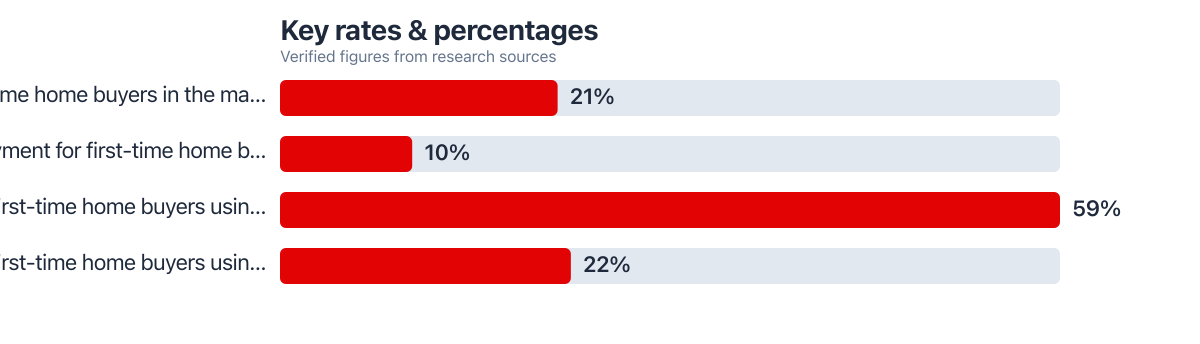
- Only 21% of homebuyers in 2024–2025 were first-timers, according to the National Association of REALTORS, making affordability pressure acute.
- FHA guidelines require down payment funds to be “seasoned,” meaning new debt cannot be used as a source; CFPB guidance reinforces this.
- Personal loans typically carry 8% to 15%+ APRs on 3-to-7-year terms, per Federal Reserve data.
- State DPA second liens often offer 0% deferred interest and no monthly payments, a structure that avoids impacting DTI ratios.
- Up to 59% of first-time buyers rely on personal savings, and 22% use gifts or loans from family, per the same NAR report.
- A new personal loan inquiry can trigger a lender letter of explanation request; even unfunded applications may appear in credit pulls.
How We Evaluated
We screened 14 personal loan lenders and DPA-adjacent options commonly recommended to first-time buyers, narrowing to five that had verifiable rate ranges, fee disclosures, and underwriting terms. Criteria drew on published lender rate sheets, Consumer Financial Protection Bureau homebuying guidance, and Federal Reserve consumer credit data. We did not accept paid placements; every ranking below follows the weighted rubric in the next section, and every product-specific number carries a source link.
| Criterion | Weight (%) | What We Measured |
|---|---|---|
| Cost | 25% | APR range, origination fees, prepayment penalties |
| Mortgage compatibility | 20% | Whether the loan is likely to be flagged or restricted by FHA/conventional underwriters |
| Eligibility | 20% | Minimum credit score, income documentation flexibility, co-signer options |
| Speed | 15% | Time from application to funding |
| Transparency | 10% | Clarity of published rates and fee disclosures |
| Customer support | 10% | Availability of live support and dispute resolution history |
Most first-time buyers assume any loan labeled “for homebuyers” will help them get into a house faster. That’s rarely true. Genuine first-time homebuyer loans in the mortgage sense (FHA, conventional low-down-payment programs) operate on entirely different underwriting rules than the unsecured personal loans this roundup covers. Only 21% of buyers in transactions between July 2024 and June 2025 were first-timers, a historic low, according to the National Association of REALTORS 2025 report, and affordability pressure is pushing more of them to look at borrowed cash for gaps mortgages won’t cover.
The criterion that separated winners from also-rans here wasn’t APR alone. It was mortgage compatibility: whether pulling a personal loan would actually get flagged by an underwriter and threaten the home purchase itself. A loan with a great rate that tanks your debt-to-income ratio right before closing isn’t a good pick, no matter what the payment looks like on paper.
| Scenario / Reader Profile | Best Pick | Key Metric | Budget Tier |
|---|---|---|---|
| Closing cost shortfall, good credit | SoFi Personal Loan | No origination fee | Mid |
| Post-purchase renovation | LightStream | Rate discount for autopay | Mid |
| Fair credit, need co-signer flexibility | Upstart | Minimum score near 580 | Budget |
| Self-employed, irregular income | Upgrade | Alternative income docs accepted | Budget |
| Qualifies for state assistance | State HFA DPA second lien | Often 0% deferred payment | Budget |
Can Personal Loans Actually Help First-Time Homebuyers?
Here’s the uncomfortable truth: most mortgage underwriters won’t let you use a personal loan for your down payment. FHA guidelines require down payment funds to be sourced and, in most cases, “seasoned,” meaning the money needs to sit in your account for a set period and can’t originate from new debt. Borrowed funds disguised as savings are one of the fastest ways to get a mortgage application denied or delayed.
That restriction exists for a reason. Adding a personal loan payment right before a mortgage application raises your debt-to-income ratio, which is exactly what underwriters scrutinize most. If you’re already stretching to qualify, a new $400-a-month loan payment can push your DTI over the threshold and shrink your approved mortgage amount, or kill the approval outright. This is one of the least understood aspects of Five Things Borrowers Get Wrong About Debt-to-income calculations, and it trips up more buyers than credit score issues do.
Where personal loans do have a legitimate place: covering closing costs when your savings fall a few thousand dollars short, or financing renovations after you’ve already closed. Those aren’t down payment funds, so they don’t trigger the same seasoning and sourcing rules. Just understand you’re taking on real, expensive debt to solve what is often a timing problem, not a savings problem.
When a Personal Loan Might Make Sense for Homebuying
The scenarios where this works are narrower than most lender marketing suggests. A buyer with strong reserves who’s short $6,000 on closing costs, with a mortgage lender that has explicitly approved the plan in writing, is a reasonable candidate. A buyer trying to scrape together a full down payment through unsecured debt is not; that’s a red flag any competent loan officer will catch.
Timing matters more than most first-timers realize. Pulling a personal loan 60 to 90 days before a mortgage application generates a hard credit inquiry and new trade line, both of which can dent your score at the exact moment you need it highest. Lenders also re-pull credit and verify assets close to closing, so a loan that shows up mid-process can force a re-underwrite. If you’re going to use one, do it either well before you start shopping for a mortgage or after you’ve closed, never in the middle.
How Personal Loans Compare to FHA and Conventional Mortgages
The math here isn’t close. FHA loans allow down payments as low as 3.5%, and conventional programs often go as low as 3%, but personal loans typically carry 8% to 15%+ APRs on 3-to-7-year terms, according to Federal Reserve consumer credit data tracking similar installment products. Compare that to 30-year fixed mortgage rates that were running under 7% in early 2026 environments, and it’s obvious personal loans are the wrong tool for financing a large share of a home’s principal.
Run the numbers on a $30,000 personal loan at 11% APR over 5 years: monthly payments land around $652, and total interest paid over the life of the loan comes to roughly $9,120. Stretch that same $30,000 across a 30-year mortgage at 6.75%, and the monthly cost tied to that portion drops to around $195, with total interest of about $40,000, but spread over three decades instead of five years, meaning the near-term cash flow hit is dramatically smaller. Personal loans front-load the pain into a handful of years, which is precisely why they’re unsuitable as a stand-in for real estate financing.
Mortgage insurance is the other piece buyers forget. FHA loans require upfront and annual mortgage insurance premiums regardless of down payment size, and conventional loans require private mortgage insurance below 20% down. Neither of those costs shows up in a personal loan calculation, but they’re real, ongoing expenses that first-timers need to budget for separately. For a deeper look at how borrowing against home equity later compares on speed and cost, see this Personal Loan vs. Cash-out refinance breakdown.
State and Federal Down Payment Assistance Programs as Better Alternatives
This is where most competing guides stop short: they mention DPA programs exist, but they don’t compare the actual cost against a personal loan. State housing finance agencies, like CalHFA in California or PHFA in Pennsylvania, typically structure assistance as second mortgages, often with 0% interest and deferred payments due only at sale, refinance, or payoff of the first mortgage. Some are fully forgivable after a holding period, usually 5 to 10 years.
Compare that to a personal loan at 11% APR: the DPA second lien costs you nothing month-to-month and doesn’t touch your DTI ratio at all in most program structures, while the personal loan adds a hard monthly obligation and interest that starts accruing immediately. The DPA route requires meeting income limits and completing a homebuyer education course, which takes time, typically a few hours online plus a certificate, but the cost savings are substantial enough that it’s worth the extra paperwork for buyers who qualify. If you’re weighing whether to pay down existing debt first or push toward a bigger down payment, the math in Pay Off Debt or Save for a Bigger Down Payment? Here’s the Math for 2026 walks through the tradeoffs in detail.
The catch: not every state program allows combining DPA funds with a separate personal loan for closing costs, and some restrict total borrowed funds relative to the purchase price. Check your specific program’s rules before assuming you can stack assistance with unsecured debt.
Key Factors Lenders Consider for Any Homebuyer Financing
Credit score thresholds still anchor most approval decisions. FHA technically allows scores as low as 580 for 3.5% down, but individual lenders often set higher overlays in practice. Every 20-point jump in your score band tends to shift the rate tier you’re offered, a dynamic explained well in Interest Rate Tiers by Credit Score Band: What Each 20-point jump actually saves you.
DTI ratios matter just as much as the score itself. Most conventional lenders cap total DTI around 43% to 50% depending on compensating factors, and any new personal loan payment counts against that ceiling immediately. Source-of-funds verification is the other gatekeeper: underwriters want bank statements showing where down payment money came from, and a lump sum appearing right before closing without a clear paper trail is one of the fastest ways to trigger a manual underwriting review.
Recent credit activity gets scrutinized closely in the weeks before closing. A new personal loan inquiry, even one that doesn’t fund, can show up on a soft or hard pull and prompt a lender letter of explanation request. That’s an avoidable delay. If speed matters and you’re weighing options against a hard credit check, digital lenders calculate maximum loan offers using soft pulls that don’t show up on your report, which is worth knowing if you’re rate-shopping without wanting to affect your mortgage application.
Practical Steps Before Pursuing Any Loan as a First-Time Buyer
Build your savings timeline first. The median down payment among first-time buyers sits at 10%, and 59% draw on personal savings while 22% rely on gifts or loans from family, per the NAR 2025 data. That means most successful first-timers aren’t using personal loans at all; they’re saving directly or getting family help, which underwriters treat far more favorably than unsecured debt.
Credit improvement in the 6 to 12 months before applying pays off more reliably than any loan product. Paying down revolving balances, disputing errors, and avoiding new credit applications altogether will do more for your rate than shopping five personal loan lenders. Get pre-approved early so you know your real budget before you start touring homes; a pre-approval letter also tells you exactly how much DTI room you have left, if any, for other borrowing.
If you do need supplemental cash for closing costs and your mortgage lender has approved it in writing, apply for the personal loan and get it fully funded well before you submit your mortgage application, not during underwriting. Sinking funds are a better long-term habit than reactive borrowing; the strategy outlined in sinking funds explained: budgeting strategy shows how to build dedicated savings buckets that avoid debt in the first place. And if a loan does end up on your radar, know that some borrowers with irregular income have better luck documenting earnings the way described in How Self-employed borrowers qualify for competitive rates.
Real-World Example: SoFi Personal Loan
SoFi, Best for closing-cost gaps with strong credit. For a first-time buyer with a credit score above 700 who needs $8,000 to $10,000 to close, SoFi is the clearest choice among unsecured lenders, largely because its published terms avoid an origination fee, unlike several competitors, according to SoFi’s personal loan rate disclosures.
Funding can happen as quickly as the same day for qualified applicants, per SoFi’s site. No prepayment penalty applies. Loan amounts vary by income and credit profile. The unemployment protection benefit is rare among competitors, useful for a first-time buyer stretching finances thin right after a home purchase.
Pros: No origination fee, no prepayment penalty, fast funding for qualified borrowers. Cons: Requires strong credit to access the best rates, and taking this loan close to a mortgage application still risks a DTI flag from your lender.
If your mortgage lender hasn’t confirmed in writing that a personal loan won’t affect your approval, don’t apply for one until after closing. A single new trade line can trigger a manual underwriting review that delays or derails your purchase.
Real-World Example: LightStream
LightStream, Best for post-closing renovation financing. A buyer who closes on a fixer-upper and needs $25,000 for kitchen and bathroom updates within the first year will find LightStream’s rate discount structure, including a published autopay discount noted on LightStream’s official rate page, among the most competitive for home improvement purposes.
It advertises no fees and no prepayment penalty. Loan terms extend up to 7 years for qualifying purposes, and funding can occur the same day the loan is approved for many applicants. It requires strong credit and a longer credit history than some competitors expect.
Because this loan happens after closing, it doesn’t touch your mortgage DTI calculation at all, which is the whole point. Buyers should still budget conservatively: renovation projects routinely run over estimate, and a fixed personal loan amount won’t flex if costs climb mid-project.
Pros: No fees, competitive rates for excellent credit, terms up to 7 years give manageable payments. Cons: Requires an established credit history, and the rate discount depends on enrolling in autopay.
Real-World Example: Upstart
Upstart, Best for fair-credit borrowers needing flexibility. A buyer with a credit score near 600 who’s been turned down by traditional bank lenders may qualify with Upstart, since its underwriting model considers factors beyond credit score, including education and employment history, per Upstart’s published eligibility criteria, though rates at that tier run considerably higher than what excellent-credit borrowers see elsewhere.
Fast online approval is a strength. You can get a decision in minutes. But the high APRs for fair-credit tiers make this an expensive option for anything beyond a small, short-term gap.
Pros: Accepts lower credit scores than most competitors, fast online approval process. Cons: Higher APRs for fair-credit tiers make this an expensive option for anything beyond a small, short-term gap.
Real-World Example: Upgrade
Upgrade, Best for self-employed or irregular-income borrowers. A freelance graphic designer earning $4,200 in monthly income with inconsistent cash flow, averaging $3,800 to $5,000, may find Upgrade’s documentation flexibility, which accepts bank statements and tax returns as alternative income verification per Upgrade’s application requirements, more workable than lenders requiring standard W-2 proof.
Upgrade charges an origination fee on most loans, deducted from the funded amount. Terms run from 2 to 7 years. Funding typically completes within a few business days of approval, which matters for self-employed buyers whose income documentation for a mortgage is already more complicated than a W-2 employee’s file.
Self-employed borrowers face a double bind: mortgage underwriters typically want two years of tax returns showing stable or growing income, and adding a personal loan payment on top of that scrutiny can complicate an already document-heavy mortgage file. If you’re in this position, coordinate timing closely with your loan officer, and consider the income documentation strategies covered in the self-employed borrower guide referenced earlier in this article.
The origination fee is worth factoring into your total cost comparison; it’s deducted upfront, so the amount that actually lands in your account will be lower than the amount you’re technically borrowing and repaying.
Pros: Flexible income documentation, accepts co-signers, funds quickly once approved. Cons: Origination fee reduces the usable loan amount, and rates skew higher than prime lenders for average credit profiles.
Real-World Example: State HFA Down Payment Assistance Second Lien
State Housing Finance Agency DPA loans, Best for buyers who qualify on income and location. A teacher earning $58,000 in a qualifying metro area like Charlotte, NC, purchasing a $325,000 home, can access a second-lien DPA loan structured at 0% deferred interest in many state programs, a structure that beats every personal loan option in this roundup on pure cost, provided the buyer meets income limits and completes required homebuyer education.
Many state programs cap assistance at 3% to 5% of the purchase price. Repayment is typically deferred until sale, refinance, or mortgage payoff. Some programs forgive the loan entirely after a multi-year residency requirement. These structures avoid adding any monthly payment obligation, which means zero impact on DTI during mortgage underwriting, a meaningful advantage over unsecured personal debt.
Public employees in particular sometimes qualify for additional below-market benefits beyond generic first-time buyer programs, a topic explored in How Teachers and Public Employees Qualify for Below-market rates most lenders don’t advertise. Eligibility rules vary significantly by state and sometimes by county, so buyers need to check their specific state housing finance agency’s current program guidelines rather than assuming national eligibility standards apply.
The tradeoff is time and paperwork: DPA applications typically take longer to process than a personal loan application, and income limits exclude higher earners in expensive metro areas. Buyers also need to confirm their mortgage lender participates in the specific state program, since not all lenders originate loans paired with every DPA option.
Pros: No monthly payment during the deferral period in most structures, doesn’t affect DTI calculations, some programs offer full forgiveness. Cons: Income and geographic eligibility limits exclude many buyers, and processing takes longer than an unsecured personal loan application.
Also Worth Considering
Discover Personal Loans deserves a mention for its no-fee structure, though its published rate ranges skew slightly higher than SoFi’s for top-tier credit borrowers. Marcus by Goldman Sachs offers competitive fixed rates with no fees, but it lacks the co-signer flexibility that fair-credit first-timers sometimes need. Local credit unions frequently beat national online lenders on rate for members with existing relationships, though eligibility is limited to their membership footprint, making a universal ranking here impractical.

Related reading: How to Choose the Best Credit Card for Travel Rewards in 2025.
Frequently Asked Questions
Can I use a personal loan for a down payment on a first-time home purchase?
In most cases, no. FHA and conventional mortgage guidelines require down payment funds to be sourced and seasoned, meaning they generally can’t come from new debt. Some lenders will reject an application outright if they identify a personal loan disbursement feeding into your down payment.
What credit score do I need for first-time homebuyer loans?
FHA loans allow scores as low as 580 for 3.5% down, though individual lenders often set higher requirements in practice. Conventional loans typically want scores above 620, and the rate you’re offered improves meaningfully with every 20-point increase above that threshold.
Are personal loans cheaper than mortgage down payment assistance programs?
No. Personal loans typically carry 8% to 15%+ APRs on short repayment terms, while many state down payment assistance second liens carry 0% deferred interest with no monthly payment until sale or refinance. The DPA route costs less in almost every scenario where a buyer qualifies.
Will a personal loan hurt my mortgage approval chances?
It can. A new personal loan adds a monthly payment that raises your debt-to-income ratio and creates a new credit inquiry, both of which underwriters scrutinize closely in the weeks before closing. Taking one out mid-application is one of the more common ways buyers accidentally jeopardize their own approval.
What’s the difference between FHA loans and personal loans for homebuyers?
FHA loans are secured mortgages designed specifically for home purchases, with down payments as low as 3.5% and rates tied to mortgage markets, which were running under 7% for 30-year fixed terms in early 2026. Personal loans are unsecured, carry much higher rates, and are not designed to finance a home’s purchase price at all.
Can self-employed first-time buyers qualify for personal loans or mortgages?
Yes, but documentation requirements differ. Mortgage lenders typically want two years of tax returns showing stable income, while some personal loan lenders like Upgrade accept bank statements as alternative income verification, which can be faster for smaller, supplemental borrowing needs.
What percentage of first-time buyers use loans or gifts for their down payment?
According to the National Association of REALTORS, 59% of first-time buyers use personal savings and 22% rely on gifts or loans from family and friends for their down payment, figures reflecting transactions between July 2024 and June 2025.
Should I pay off a personal loan before applying for a mortgage?
Generally, yes, if it’s improving your debt-to-income ratio meaningfully. Lenders calculate DTI using your current monthly obligations, so eliminating a personal loan payment before applying can increase your approved mortgage amount, though the specific benefit depends on your income and existing debt load.
Sources
- National Association of REALTORS, First-Time Home Buyer Share Falls to Historic Low of 21%
- Consumer Financial Protection Bureau, Owning a Home
- Federal Reserve Economic Data (FRED), Finance Rate on Consumer Installment Loans
- Federal Reserve Economic Data (FRED), Personal Consumption Expenditures Price Index
- Federal Reserve Economic Data (FRED), S&P Cotality Case-Shiller U.S. National Home Price Index
- U.S. Bureau of Labor Statistics, Consumer Price Index, Shelter
- U.S. Department of Housing and Urban Development, FHA Loan Programs
- SoFi, Personal Loan Rates and Terms
- LightStream, Personal Loan Rates
- Upgrade, Personal Loan Eligibility and Terms