

Fact-checked by the CapitalLendingNews editorial team
Key Findings
- For consumers without any credit history, fintech credit builder loans can increase the likelihood of establishing a credit score by 24%, according to a Federal Reserve analysis of credit-builder products.
- Borrowers starting with no existing debt saw average credit score gains of 60 points and added $253 to savings, based on CFPB research cited by the Fed.
- The median origination amount of a credit-building product was $500 in early 2024, with total outstanding balances reaching $845 million, small dollar loans that avoid hard credit checks.
- A typical fintech builder loan from Self costs $46 to $96 in fees and interest over 24 months on a $500 loan that you eventually get back, less than a single late fee on a high‑rate card.
- No hard inquiry is required on many fintech platforms, and the loan reports to all three major bureaus as an installment account, improving credit mix in weeks, not months.
- Once the loan is paid off and the account closes, the positive payment history remains for up to 10 years, but the score boost can fade if you don’t maintain other active credit.
For consumers starting with zero credit, the math around fintech credit builder loans has shifted into clear, data‑backed territory. Where a blank credit file once meant denial or predatory pricing, a small, locked‑savings installment loan opened through a smartphone app can now turn a credit‑invisible applicant into a 660‑score borrower inside of two years. The Federal Reserve’s analysis of the credit‑building product market finds that participants with no existing personal debt who opened such a loan increased their likelihood of having a credit score by 24 percent, and saw average credit score jumps of 60 points relative to otherwise similar consumers who did not open one.
For most borrowers starting from zero, the dollar cost of this pathway is less than the first interest‑rate surcharge they’d absorb on a typical auto loan with a thin file. Fintech platforms like Self, CreditStrong, and Cheers have removed the underwriting friction that kept traditional credit builder loans hidden in credit union lobbies. But what you actually pay, in fees, interest, and opportunity cost, and how long that new score lasts after the loan closes can vary enough to swing the decision from “obvious yes” to “maybe not.” This article walks through the costs, the credit‑reporting mechanics, the tax nuance, and the downstream lending impact so you can decide whether a fintech credit builder loan earns its keep in your own financial timeline.
Methodology
The data and findings in this article are drawn from multiple publicly available sources. We reviewed the CFPB’s research on credit‑builder loans (covering 1,500+ consumers across multiple years) and the Federal Reserve’s 2024 overview of credit‑building products, which aggregates detailed transaction‑level data from the CCP/Equifax database through 2024:Q1. We also examined product‑specific pricing pages from Self, CreditStrong, and several credit unions to capture the effective cost of a typical $500‑to‑$1,000 builder loan. Consumer‑experience context comes from the CFPB’s consumer complaint database (May 31–June 30, 2026), where 224 debt‑or‑credit‑management complaints and 523,659 credit‑reporting‑related complaints were logged, placing builder‑loan complaints in perspective. Any figures beyond these publicly reported datasets are clearly attributed to their institutional source.
How Fintech Credit Builder Loans Actually Report Differently
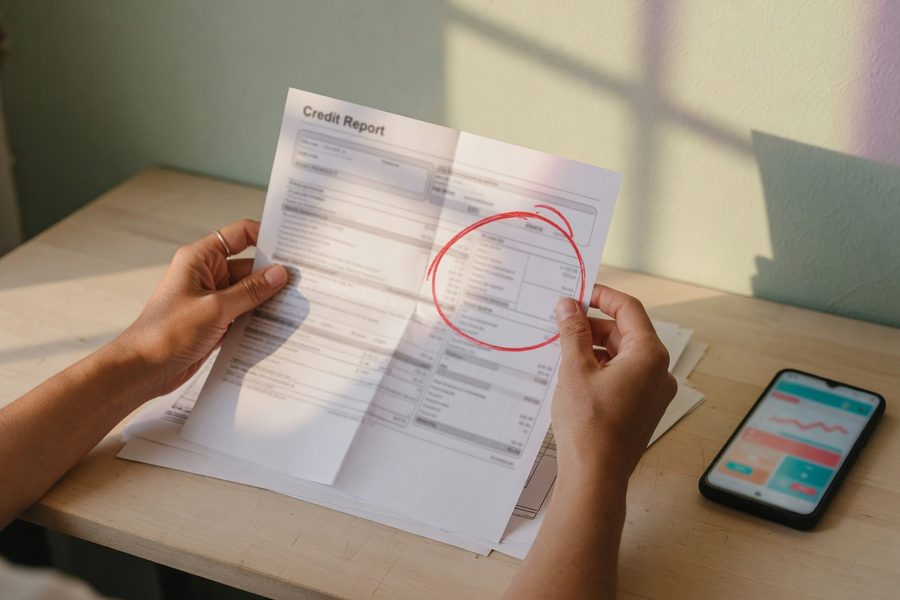
Fintech credit builder loans look like installment loans to the credit bureaus, and that distinction matters for someone starting from zero. Unlike a secured credit card, which shows up as a revolving account, a builder loan from Self or CreditStrong creates an installment tradeline that diversifies your credit mix as soon as it begins reporting. Payment history, 35% of a FICO score, starts populating with each on‑time payment, and the account reports to Equifax, Experian, and TransUnion within weeks, not the months some credit union builder products take.
The mechanical setup is simple: you choose a loan size, typically between $500 and $1,000, but you don’t receive the cash upfront. Instead, the loan proceeds sit in a locked certificate of deposit or savings account, and you make monthly payments, plus interest and a small administrative fee, over 12 to 24 months. Once the term ends, the lock is released and you receive the full principal back, along with any interest earned on the deposit. The lender reports those monthly payments as on‑time installment debt, building a positive payment string from day one.
The crucial reporting nuance is this: because the account is structured as an installment loan, it strengthens the “credit mix” component of your FICO score, something a secured credit card alone can’t do. Reporting is often accelerated as well. Cheers, for instance, markets fast‑track reporting that can reflect the tradeline in less than 30 days, compared to the 45‑to‑60‑day lag common at small credit unions. For a borrower trying to get a score onto the board before an apartment lease application or an auto loan pull, that speed can be the deciding factor.
Payment history accounts for 35% of a FICO score; installment‑loan diversity boosts credit mix, which makes up another 10%.

True Cost of Building Credit From Zero
A typical fintech credit builder loan with Self costs $46 to $96 in total fees and interest on a $500 loan over 24 months, and you get every dollar of that $500 back at the end. The structure works like this: a $9 non‑refundable administrative fee plus an APR between 15% and 16% on the loan balance, which is tiny in absolute dollars because the balances are small. On a $500 loan at 15.92% APR with 24 monthly payments of roughly $25 each, you’ll pay about $37 in interest and the $9 fee, for a total out‑of‑pocket cost of $46. Choose a $1,000 loan and the cost rises to around $96, still less than a single missed‑payment fee on a high‑interest credit card.
The true cost also includes what you can’t do with the money while it’s locked. That $500 sitting in a CD earning negligible interest cannot be used to pay down existing debt, seed an emergency fund, or earn a higher return elsewhere. This is a real constraint worth naming plainly. For someone with zero credit, the alternative is often a secured card that requires a deposit of $200 to $500, which also gets tied up, plus the temptation of revolving balances that can spiral. A 2024 Federal Reserve note on credit‑building products confirmed that the median origination amount was $500, and the total outstanding product balances across all issuers stood at $845 million by early 2024, a signal that this is a small‑dollar market designed to minimize opportunity cost.
Tax nuance matters, too. The interest earned on the locked deposit, often a fraction of a percent, is taxable income in the year it’s credited, even though you can’t access the cash until the loan ends. For most borrowers, the tax bill is negligible. But if you use a larger builder loan and your bank issues a 1099‑INT, it’s a line item you’ll need to file. Fintech apps rarely flag this during sign‑up, yet it’s a real end‑of‑year consideration that none of the top‑ranking articles on this topic currently mention.
| Product | Loan Amount | Total Fees & Interest Paid | Funds Received at End |
|---|---|---|---|
| Self (24‑month plan) | $500 | $46 | $500 |
| Self (24‑month plan) | $1,000 | $96 | $1,000 |
| CreditStrong (12‑month Instal) | $1,000 | ~$80 | $1,000 |
| Typical credit union builder loan | $500 | $30–$60 | $500 |
When you stack the builder loan against a secured credit card, the numbers tell a more nuanced story. A secured card with a $200 deposit and no annual fee costs zero in interest if you pay in full every month, but it doesn’t build the installment‑loan component of your credit mix. Carry a balance even once, and a 28% APR on $200 racks up more than $4.50 a month in interest, eroding the cost advantage quickly. The CFPB’s original study found that builder loans were most effective for participants without existing debt, precisely because those borrowers weren’t managing competing balances.
What the Data Says About Credit Score Improvement
The headline number from the Federal Reserve’s synthesis of CFPB research is straightforward: borrowers without existing debt who opened a credit‑builder loan saw their credit scores climb by 60 points relative to a control group, and their savings balances increased by an average of $253. The mechanism isn’t a mystery. It’s the forced‑savings structure combined with a new, positive tradeline. When you have no credit score at all, even a single installment account with 12 months of on‑time payments can vault you from “unscoreable” to the low‑600s, depending on the scoring model.
The CFPB’s targeting research corroborates this: “a credit builder loan could increase the likelihood of establishing a credit record for consumers without one, and could help improve the credit scores of those with no current outstanding debt.” In their field study, the loan proved “more effective for participants who entered the study without existing debt, both in terms of helping people establish a credit score and in improving their scores.” Equifax’s educational summary of the same research emphasized that “borrowers with no existing debt tend to have the greatest success with credit‑builder loans.”
There’s an important temporal dimension to keep in mind. It typically takes three to six months of reported payments to generate a FICO score if you were previously unscorable, and the full 60‑point improvement becomes statistically visible after about 12 months in the CFPB’s dataset. If you are planning to apply for an FHA mortgage, which requires a minimum 580 credit score for 3.5% down, starting a builder loan 18 months out gives you enough runway to both establish and season the account. How lenders price interest rate tiers by credit score band means that moving from 580 to 640 can shrink a mortgage rate by 0.5 to 0.75 percentage points, saving thousands over the life of the loan.
Participants without existing debt saw a 60‑point credit score increase and $253 in higher savings balances, per Federal Reserve data.
Who Gets the Biggest Boost, and Who Doesn’t
The ideal candidate is someone with no credit score, or a very thin file, and stable, verifiable income who needs an installment tradeline to round out a credit profile dominated by revolving accounts. If you’ve been denied for a traditional unsecured card or a small personal loan, a builder loan can break the chicken‑and‑egg cycle. The CFPB’s targeting research explicitly notes that the product “proved more effective for participants who entered the study without existing debt,” so this is not a tool for rebuilding after a delinquency. It’s a foundation‑layer, full stop.
Gig workers and those with irregular cash flow face a real catch‑22. The loan requires consistent monthly payments for 12 to 24 months. Missing even one can land a 30‑day late on your still‑fragile credit report. This is not a minor caveat. A delinquency at month four of a credit‑building effort can set you back further than if you’d never opened the account. If your income ebbs, you may need to terminate early, which many fintechs allow without negative reporting, but you won’t get the full savings benefit and will have paid fees for an incomplete credit string. For self‑employed borrowers who can paper‑trail their income, understanding how self‑employed borrowers can document income for the best loan rates often opens more immediate credit access than a builder loan alone.
There are borrowers for whom a credit builder loan is the wrong tool entirely. If you carry existing high‑interest debt, the $25 a month locked into a builder loan is money better directed at that balance. The CFPB data is clear that participants with existing debt saw smaller gains, and some saw their scores decline. Price that trade‑off before you sign up.
Fintech vs. Credit Union Builder Loans
Fintech platforms win on application speed: you can open a Self or CreditStrong account from your phone in under 10 minutes with no hard credit inquiry. Reporting to all three bureaus often kicks in within two to four weeks. Credit unions, by contrast, may require membership eligibility, a branch visit, and a hard pull on your credit report, ironic for a product designed for people with no credit file, and can take 45 to 60 days to start reporting. On cost, credit unions still hold an edge, with APRs commonly landing between 6% and 18% versus fintechs’ 15% to 21%, plus lower or no administrative fees.
| Feature | Fintech (Self, CreditStrong, Cheers) | Traditional Credit Union |
|---|---|---|
| Application | Mobile app, no hard credit inquiry | Often requires branch visit, possible hard inquiry |
| APR range | 15%–21% | 6%–18% |
| Admin fee | $9–$15 (Self), varies by plan | Typically $0–$5 |
| Reporting speed | 2‑4 weeks to all three bureaus | 45‑60 days, sometimes only one bureau initially |
| Early termination | Allowed without negative credit reporting; fees may apply | Often rigid; may report as paid‑as‑agreed or closed |
| State availability | Most states; some excluded due to state usury laws | Limited to credit union field of membership |
The friction credit unions impose can inadvertently screen for the most stable borrowers. For the average person with a blank credit report who just wants a working score before applying for an apartment or a car note, though, the fintech path is simply faster. State availability can block some applicants, Self isn’t available in a handful of states with strict lending caps, but the list of eligible states covers the vast majority of the U.S. population and is clearly published on each app’s website. If you need the lowest possible out‑of‑pocket cost and have time to jump through membership hoops, a credit union is tough to beat. For everyone else, fintech builder loans offer a repeatable, known‑quantity on‑ramp.

The Hidden Impact on Mortgage and Auto Loan Applications
When a thin‑file borrower applies for an auto loan or mortgage, the underwriter sees an account history that might start only 12 to 24 months ago, and the closed builder loan will still appear as a paid‑as‑agreed installment tradeline for up to 10 years. That positive history can make the difference between a manual underwrite that flags “insufficient credit experience” and an automated approval at standard pricing. A single paid‑off builder account with no other active credit, however, may not be sufficient for a conventional mortgage: Fannie Mae and Freddie Mac typically look for at least two or three active tradelines with 12‑month histories. A better move is to layer a builder loan with a low‑limit secured card opened around the same time, so when the loan pays off you aren’t left with an empty credit report.
The downstream rate savings are tangible. Research on credit score interest rate tiers shows that moving from a 620–639 FICO band to a 660–679 band can cut a 60‑month new‑auto loan rate by 2 to 3 percentage points, and a 30‑year fixed mortgage rate by 0.5 to 0.75 points. The Federal Reserve’s $253 average savings boost among builder‑loan participants also hints at behavior change: forced savings may build a small cash cushion that reduces the need for high‑cost emergency borrowing later.
Lender perception matters beyond the score itself. Newer digital lenders are beginning to weigh alternative signals alongside traditional credit history. A builder loan that reports as an installment account is a known quantity, but if you apply to a fintech that uses payroll or cash‑flow data, the score is only one input. The alternative signals digital lenders are quietly weighing, things like average bank balance, rent payment history, and income volatility, can complement a thin credit file in ways that a traditional FICO‑only lender won’t acknowledge. For a borrower with a newly built score and a stable job, the right fintech lender may approve them on par with a prime borrower, even if a traditional bank would still classify them as subprime.
What This Means for You
The data makes a clear case: a fintech credit builder loan is a cost‑effective tool for turning a blank credit slate into a score that opens mainstream credit access, provided you match your timeline and use it as part of a broader credit‑building plan. According to American Banker’s reporting on credit‑builder products, what borrowers spend in credit building they will save in thousands of dollars of interest expenses over their financial life. What follows are eight concrete actions to get from zero to a durable credit profile.
- Check your actual credit status first. Pull your free annual credit reports and use a free score service. If you already have a FICO score above 620, a builder loan isn’t your cheapest path, a secured card or a small shared‑secured loan from a credit union may suffice.
- Size the loan to match your budget, not your ambition. A $500 24‑month plan from Self requires roughly $25/month and costs $46 total. Don’t lock up $1,000 if that cash is better held in a high‑yield emergency fund.
- Open a fee‑free secured card at the same time. Pair the installment builder loan with a secured card (like Discover it Secured or Capital One Platinum Secured) so you’re building both credit mix and payment history without incurring high fees. Keep utilization under 10%.
- Set up autopay and buffer the first two payments. The single biggest risk is a missed payment during the fragile early months. Autopay from an account you consistently fund eliminates the human‑error variable.
- Check your credit reports after 90 days. Verify that the builder loan is reporting to all three bureaus and that the payment history is accurate. CFPB complaint data shows that credit‑reporting errors are the dominant complaint category, and catching a misreport early saves months of correction time.
- Plan for the taxable interest. If your locked deposit earns interest, the lender will likely issue a 1099‑INT once the account matures. Set aside a dollar or two for the tax man, it’s tiny, but you don’t want a surprise.
- Time the loan’s end with your next big credit application. Aim to have the loan mature and the savings released at least three months before you apply for a mortgage or auto loan. That way the positive tradeline is recent and the cash is liquid for closing costs or a down payment.
- Keep at least one active credit account after payoff. When the builder loan closes, your credit mix loses an installment account. Maintain a no‑annual‑fee secured card or a small credit‑union line to keep your file active and your score stable.
Frequently Asked Questions
What is a fintech credit builder loan?
A fintech credit builder loan is a small‑dollar installment loan where the proceeds are held in a locked savings account or CD while you make monthly payments. The lender reports those payments to the credit bureaus, establishing a positive payment history and an installment tradeline for someone with little or no credit. After the term ends, you receive the full loan principal back, minus fees and interest.
How fast can a credit builder loan improve my credit score?
Most borrowers who start with no score become scorable within three to six months of on‑time payments. Federal Reserve data shows that participants without existing debt experienced an average 60‑point credit score gain over 12 months, though individual results depend on other credit activity.
Do I get my money back from a fintech credit builder loan?
Yes. Apart from the non‑refundable administrative fee and the interest you pay, the full loan principal is returned to you once the term ends. For example, on a $500 Self loan, you receive $500 back even though you paid a $9 fee and roughly $37 in interest.
Are fintech credit builder loans better than a secured credit card?
It depends on your goal. A builder loan diversifies your credit mix with an installment account and forces savings, but the cash is inaccessible until maturity. A secured card builds revolving history and can be free if you pay in full each month, but it can tempt overspending. Often the strongest approach is to use both simultaneously.
Will a closed credit builder loan still help my credit score later?
The positive payment history stays on your credit report for up to 10 years after the account is closed. However, because the account no longer contributes an active tradeline, your score may dip slightly if you don’t have other open accounts. Maintaining at least one active revolving line can preserve your score.
What happens if I miss a payment on a fintech credit builder loan?
A missed payment that goes more than 30 days past due can be reported to the credit bureaus as a delinquency, damaging the score you’re trying to build. Many fintech platforms offer grace periods and allow you to catch up, but consistent autopay is the safest defense. If you need to stop, early termination is usually possible without negative reporting, though you may lose part of the savings benefit.
Can a credit builder loan help me qualify for a mortgage or car loan?
Yes, particularly if you start with no credit file. A 12‑month history of on‑time installment payments can help satisfy the credit‑experience requirements for FHA mortgages and conventional loans. However, lenders often want to see at least two or three active tradelines, so pairing the builder loan with a secured credit card improves your odds.
Sources
- Consumer Financial Protection Bureau, Study Shows Financial Product Could Help Consumers Build Credit
- Consumer Financial Protection Bureau, Targeting Credit Builder Loans
- Federal Reserve, An Overview of Credit-Building Products
- Equifax, What Is a Credit Builder Loan?
- Experian, What Is a Credit Builder Loan?
- American Banker, Will the New Crop of Credit Builders Work as Promised?
- Self Financial, Pricing and Plans
- Consumer Financial Protection Bureau, Consumer Complaint Database
- myFICO, What’s in Your Credit Score