How Homeowners With a Single Income Qualify for a Competitive Mortgage Rate

Learn about single income mortgage rates. Discover proven strategies to strengthen your application and secure a competitive rate on one income.

Learn about single income mortgage rates. Discover proven strategies to strengthen your application and secure a competitive rate on one income.

Self-employed borrowers can qualify for mortgages without W-2s using tax returns, bank statements, and P&L statements. Expect rate premiums of 0.25%–1.5%, reducible with a 740+ credit score and 20% down.

Lenders add 1.125%-4.125% to mortgage rates for multi-property borrowers due to layered risk adjustments, according to Fannie Mae data.

Condo buyers quietly pay 0.25%–0.75% more in mortgage rates due to Fannie and Freddie LLPAs—a penalty that never appears as a line item on your loan estimate.

Consolidating high-interest debt before a mortgage application can lower your rate by improving DTI and credit utilization—even lenders price in 0.25% steps for modest credit improvements.

Millions of veterans overpay because VA mortgage rates aren't government-set—they're negotiable. Here's how to shop lenders and beat the rates civilians are getting.

Lenders average 24 months of net income after deductions — not your gross earnings. Here's why that costs gig workers 0.5–1% more and how to fix it.

Portfolio loan rates run 0.5%–1.5% above conventional—but for self-employed borrowers or investors who can't meet agency guidelines, that premium may be worth it.

A short sale can add 0.5–1.5 percentage points to your mortgage rate and trigger a 4-year waiting period before conventional lenders approve you at competitive terms.
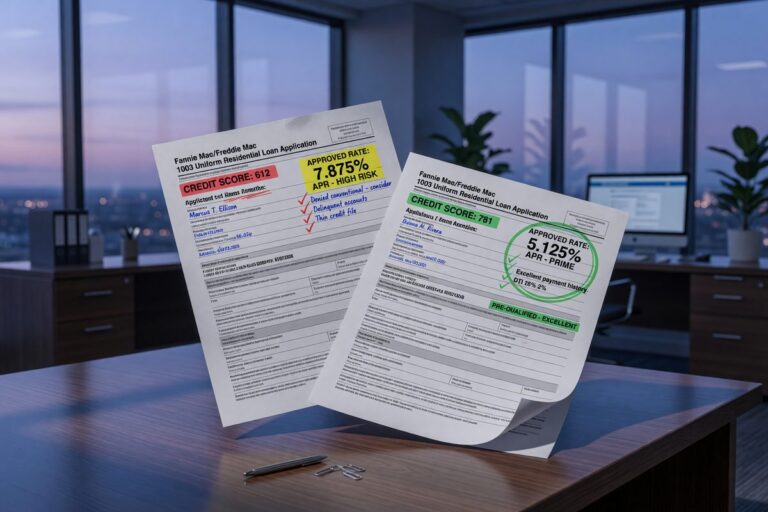
A 630 credit score co-borrower can raise your mortgage rate by 0.25–0.75%, costing $130–$200 monthly on a $400K loan. See when adding them actually makes sense.